Christiansborg Palace Travel Guide
Free Guide: Where medieval castle ruins, royal state rooms and Denmark’s modern parliament all share one imposing palace on a small island in the heart of Copenhagen.


A brief summary of Christiansborg Palace
Where medieval castle ruins, royal state rooms and Denmark’s modern parliament all share one imposing palace on a small island in the heart of Copenhagen.
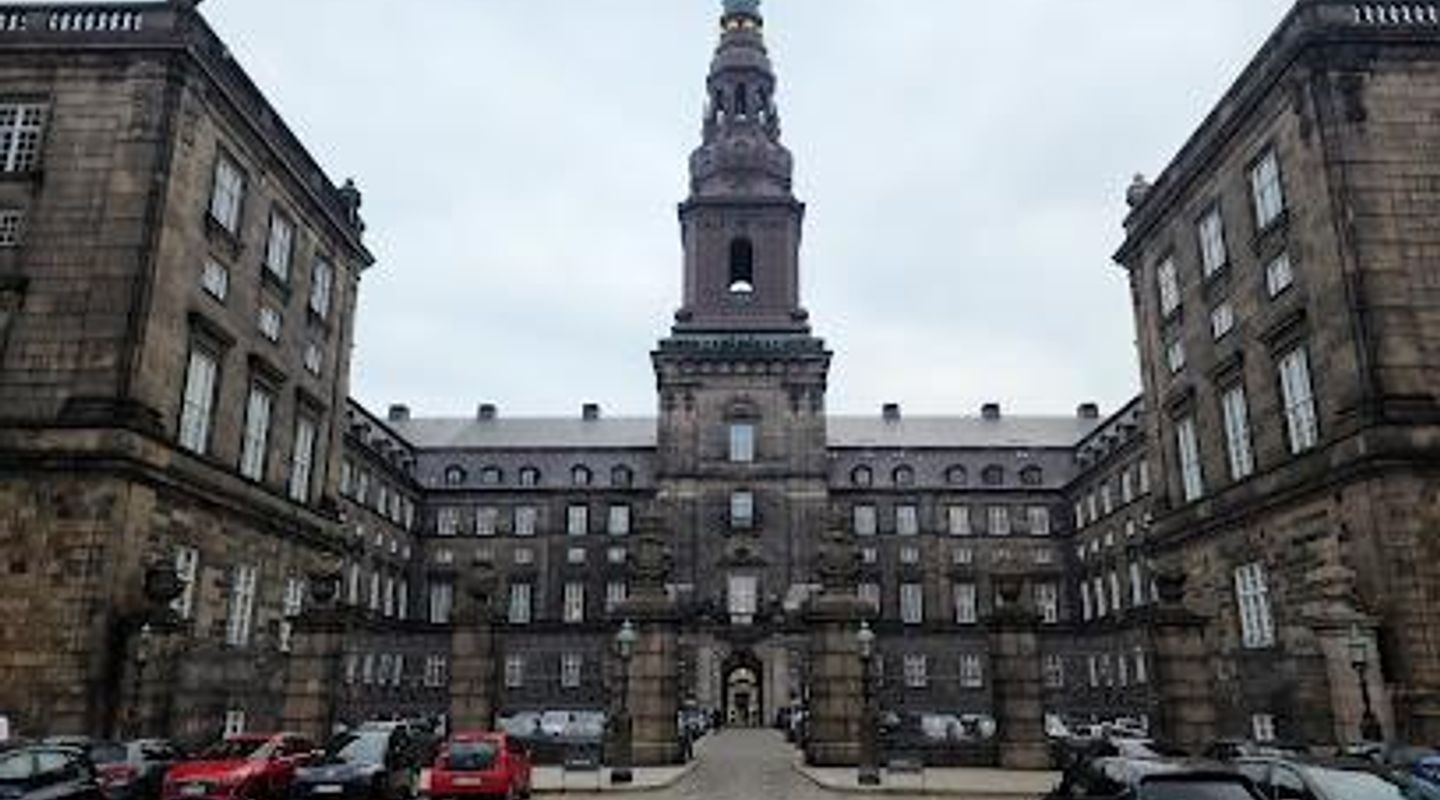
Rising over the tiny islet of Slotsholmen in central Copenhagen, Christiansborg Palace is Denmark’s modern seat of power and a showcase of 800 years of history. Today it uniquely houses Parliament, the Supreme Court and the Prime Minister’s Office while also containing the Royal Reception Rooms, palace chapel, royal stables, historic kitchen and atmospheric ruins from earlier castles, all wrapped in imposing neo‑Baroque stone and crowned by Copenhagen’s tallest tower.
On-site amenities
 Restrooms
 Drink options
 Drinking water
 Food options
 Seating areas
 Sheltered areas
 Trash bins
 Information boards
 Visitor centre
Opening hours
- MonClosed
- Tue10 am–5 pm
- Wed10 am–5 pm
- Thu10 am–5 pm
- Fri10 am–5 pm
- Sat10 am–5 pm
- Sun10 am–5 pm
Opening hours as listed on the venue’s Google Business Profile. Hours can change for services and special events, so check with the venue before you go.
- Address
- Prins Jørgens Gård 1, 1218 København
- Phone
- Website
Getting there
Metro
City bus
Bicycle
On foot from the historic centre
Discover more about Christiansborg Palace
A seat of power on Slotsholmen
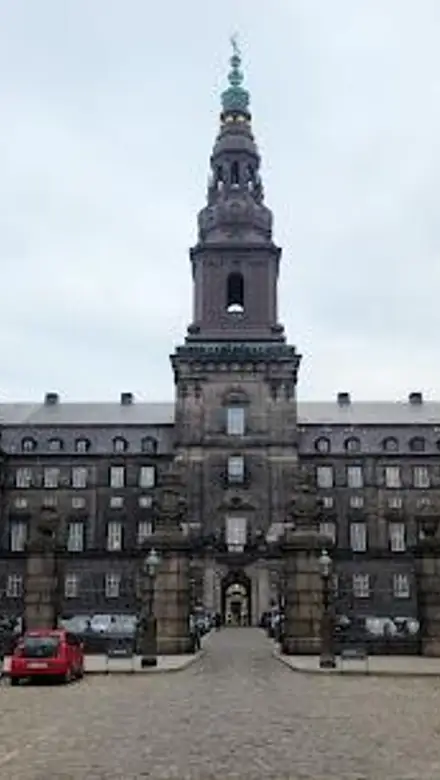
Christiansborg Palace dominates the small island of Slotsholmen, right in the historic heart of Copenhagen. For more than eight centuries this patch of ground has been the political centre of Denmark, evolving from medieval fortress to royal residence and, today, the hub of a modern parliamentary democracy. The present palace, with its deep stone façades and copper‑clad tower, forms a dramatic backdrop to the surrounding canals and bridges, making it one of the city’s defining silhouettes.Step into the spacious outer courtyards and you immediately sense the formality of a working seat of government. Vehicles and bicycles share space with tour groups, while security posts, flags and official cars underline that this is not a frozen monument but an active power centre. Yet amid the bustle there is an air of ceremony, especially when the royal horses cross the cobbles on their way to the stables.
Layers of castles, palaces and fires
Long before the current palace, this site was home to a fortified stronghold built in the 12th century by Bishop Absalon, often regarded as the founder of Copenhagen. That fortress was destroyed in the 14th century, replaced by Copenhagen Castle, which became the main royal residence and seat of government. In the 1700s King Christian VI swept aside the aging castle to create the first Christiansborg Palace, a lavish baroque complex that briefly ranked among northern Europe’s grandest.Fire reshaped the site again and again. The first Christiansborg burned in 1794, prompting the royal family to move permanently to Amalienborg. A second Christiansborg rose in the early 1800s, only to be devastated by another blaze in 1884. The current palace, completed in 1928, was designed to house democratic institutions rather than a resident monarch, but it still nods to its predecessors in its historicist blend of baroque and neoclassical elements.
Gilded halls and royal ceremonies
Much of the palace’s enduring fascination lies in the Royal Reception Rooms, which the monarchy still uses for state occasions. Approaching via the grand King’s Staircase, you emerge into a sequence of richly decorated salons, each with its own colour scheme, chandeliers, stucco and portraits. The Abildgaard and Alexander Rooms preserve paintings and sculptures rescued from earlier palaces, creating a sense of continuity despite the fires.At the heart of this suite is the Great Hall, a 40‑metre gallery famous for its series of modern tapestries by artist Bjørn Nørgaard. Woven in vivid colours between 1990 and 2000, they depict a thousand years of Danish history in a dense tapestry of kings, battles and cultural milestones. Nearby, the Oval Throne Room leads to the balcony from which new monarchs are traditionally proclaimed to the people gathered below, giving this otherwise quiet space a powerful symbolic weight.
Ruins, stables and chapel
Below ground, a different world awaits. Here, atmospheric ruins reveal foundations and walls from Absalon’s fortified castle and later Copenhagen Castle. Dim lighting, exposed stone and interpretive displays bring to life sieges, demolitions and centuries of rebuilding, offering a tangible link to the city’s medieval origins. It is one of the most evocative parts of any visit, especially for those fascinated by archaeology and urban history.In the palace’s outbuildings, the Royal Stables maintain the tradition of ceremonial horse‑drawn carriages. Stalls, harness rooms and carriages illustrate how royal transport has evolved, while the scent of hay and the sound of hooves contrast sharply with the formality of the state rooms. The neoclassical palace chapel, reconstructed in the 1800s, has hosted royal christenings, weddings and lying‑in‑state ceremonies, its restrained interior providing a calm, echoing counterpoint to the ornamented halls nearby.
The tower and today’s visitor experience
Crowning the complex is Christiansborg Tower, the tallest in Copenhagen. A lift ride brings you to a viewing platform with sweeping panoramas of the inner city’s spires, rooftops and waterways, making it a favourite spot for orienting yourself in the capital. On clear days you can trace the line of canals to the harbour and pick out landmarks like the stock exchange spire and the domes of other royal palaces.A visit typically weaves between these varied spaces: from open‑air courtyards into formal interiors, down into the cool semi‑darkness of the ruins and up again to light‑filled views. Interpretive panels and changing exhibitions explain both the architectural story and the ongoing political role of the complex. Combined tickets allow access to several areas, and it is easy to spend a good part of a day exploring the many layers of Christiansborg Palace.
Evendo Review Centre
 Google
Guest reviews
Best time to go
Quietest: Jan, Feb & Mar · before 7am or from 9pm
Busy times are Evendo estimates for a typical year, to help you plan. Actual crowds vary with events, school holidays and the weather.
Explore Christiansborg Palace on the map
A handpicked selection of must-see spots near Christiansborg Palace, mapped for you.
Get your free copy of our complete guide to Christiansborg Palace, delivered straight to you.
Everything on this page, from opening hours and how to get there to Eve’s tips and the best time to go, in one PDF you can read offline, print or share.
Already have an account? Sign in
Your Christiansborg Palace guide is ready.
We'll send it to · Not you? Sign out

Getting your guide ready…
We are putting together a fresh copy of the Christiansborg Palace guide. This can take up to a minute.
This can take a few moments. If your browser asks, choose Allow so the download can start. You'll find the guide in your Downloads folder.
Nothing happened? Download it again
Sorry, the guide is taking longer than usual. Please try again in a minute, or get it by email instead.
Unlock the best of Christiansborg Palace
Skip-the-line tickets, guided tours with entry, and walking tours of the area, booked in a few clicks.
 Tour with entry
Copenhagen Self-Guided Tour
from $7.43 Tour with entry
Half Day Self-Guided Audio Walking Private Tour in Copenhagen
from $14.10 Tour with entry
GhostWalk Copenhagen: Self-Guided Audio Experience from StoryHunt
from $14.10 Tour with entry
The Murder by Christiansborg Palace: Interactive Mystery Hunt
from $26.54


Other nearby places you may find interesting
The closest places of the same kind, if this one is not quite what you had in mind.
-
Frederikssund Viking Village Open‑air Viking village and legendary summer saga play on the shores of Roskilde Fjord, where costumed warriors, longhouses and Norse myths come vividly to life.
-
Gummistranden Compact urban beach on Helsingør’s waterfront, with Kronborg Castle on the horizon, easy promenade access and big Øresund views just minutes from the town centre.
-
Esrum Kloster & Møllegård A 12th-century Cistercian abbey turned cultural hub, where red-brick history, herb gardens and North Zealand’s gentle landscapes meet around Esrum Lake.
-
Island of imagination A quiet royal ruin on a forested lake, where fragments of a 19th‑century retreat invite you to weave Nordic myths, royal tales and your own stories together.
-
Udsigtsplateau A modest wooden platform with a million‑kroner view over Øresund, Kronborg’s silhouette and the Swedish coast, perfect for a quiet coastal pause in Helsingør.
Swipe for more places
More to explore near Christiansborg Palace

 Best experiences near Christiansborg Palace
 Best hotels near Christiansborg Palace
 Best landmarks near Christiansborg Palace
 Best attractions near Christiansborg Palace
 Best shops near Christiansborg Palace
 Best restaurants near Christiansborg Palace
 Best bars near Christiansborg Palace
Do you manage this location?
Take control to get all the benefits, like improved information, better appearance, and stronger visibility across AI-powered discovery.
Explore more

Explore more of North Zealand
Explore North Zealand, Denmark's enchanting region of castles, beaches, and royal estates, perfect for history buffs, nature enthusiasts, and seaside lovers.
Explore North Zealand
Explore more of Denmark
Discover Denmark: A perfect blend of history, modern design, and the cozy concept of hygge. Explore vibrant cities, serene landscapes, and world-class cuisine.
Explore Denmark