Urskoven, North Jutland Travel Guide
Ancient beech forest untouched for centuries, where nature evolves freely in Denmark's largest woodland.
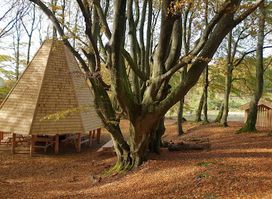
Urskoven is an ancient old-growth forest within Denmark's largest forest, Rold Skov, near Skørping in northern Jutland. This pristine woodland features beech trees up to 300 years old, left untouched to develop naturally. The forest offers peaceful hiking through diverse tree ages and species, creating an immersive experience in one of Denmark's most significant natural landscapes.
A brief summary to Urskoven
- Unnamed Road, Skørping, 9520, DK
- Duration: 1.5 to 4 hours
- Free
-
 Outdoor
- Mobile reception: 3 out of 5

Know before you go
Hi, I'm Eve. Here are a few practical things to know before exploring Urskoven.
- Park at Pumpevejen parking area, approximately 1 km from the forest entrance. Parking is free and provides direct access to marked trails.
- Visit in autumn or spring for optimal conditions—fallen leaves create a rich forest floor in autumn, while spring brings new growth and wildlife activity.
- Bring sturdy walking shoes as trails can be uneven with natural obstacles like fallen trees and roots typical of old-growth forests.
- Allow time for quiet observation—the forest's value lies in its undisturbed ecology, so slow exploration reveals more wildlife and natural details.
- Combine your visit with nearby attractions like Troldeskoven, Store Økssø, and Rebild Bakker to experience the full diversity of Rold Skov.
Do you manage this location?
Take control to get all the benefits, like improved information, better appearance, and stronger visibility across AI-powered discovery. Learn more about listing your business on Evendo
Activate your presenceOther nearby places you may find interesting
The closest places of the same kind, if this one is not quite what you had in mind.
Explore Urskoven on the Map
A handpicked selection of must-see spots near Urskoven, mapped for you.
Getting There
-
Train and Bus
From Aalborg, take a regional train to Skørping Station (approximately 45–60 minutes). From Skørping Station, board a local bus toward Rold or Rebild (service varies; check local schedules as frequency may be limited). Travel time from station to forest area is approximately 20–30 minutes. Single bus fare is approximately 24 DKK. From the bus stop, follow marked trails into the forest.
-
Private Vehicle
From Skørping town center, follow signs toward Rold Skov. Drive approximately 5–8 kilometers to Pumpevejen parking area, which provides free parking near Urskoven's main entrance. Journey time is approximately 10–15 minutes. Parking is generally available year-round, though capacity may be limited during peak weekends and holiday periods.
-
Cycling
From Skørping town center, follow regional cycling routes toward Rold Skov (approximately 8–12 kilometers depending on route). The journey takes 30–45 minutes on mixed terrain. Bike parking is available at Pumpevejen. This option suits visitors with moderate fitness levels and provides scenic views of the surrounding landscape.
-
Walking from Skørping
From Skørping town center, walking to Urskoven is possible but requires 2–3 hours (approximately 8–10 kilometers). The route follows regional paths and forest roads. This option suits dedicated hikers and allows immersion in the broader Rold Skov landscape. Wear appropriate footwear and bring water.
For the on-the-go comforts that matter to you
-
 Parking Areas
-
 Information Boards
-
 Trash Bins
Discover more about Urskoven
A Living Testament to Ancient Woodland
Urskoven represents one of Denmark's most precious natural treasures—an old-growth forest that has been deliberately left untouched for generations. Located within Rold Skov, Denmark's largest forest, this woodland sanctuary near Skørping showcases beech trees that have stood for centuries, with the oldest specimens reaching approximately 300 years of age. Unlike many European forests shaped by human intervention, Urskoven has been protected as designated untouched forest, where fallen trees remain where they fall and new growth emerges naturally from the gaps they create.The Forest's Unique Character and Composition
What distinguishes Urskoven from its neighboring Troldeskoven (Troll Forest) is its historical management. While Troldeskoven was once a communal forest used by local farmers for grazing, pollarding, and resource extraction—resulting in its characteristic multi-stemmed beeches—Urskoven belonged to the manor of Kyø and received far less exploitation. This gentler history allowed the forest to develop naturally, creating a woodland with single-stemmed beeches and a rich diversity of tree species at varying ages and sizes. The forest's designation as old-growth came from renowned Danish forester Jens Hvass, who recognized its ecological significance and named it to reflect its ancient character.Ecology and Natural Management
The forest operates under strict ecological principles. In untouched forests like Urskoven, no trees are deliberately felled or replanted. When a tree dies or falls, it remains in place, becoming part of the forest ecosystem. These natural gaps allow sunlight to reach the forest floor, enabling new seedlings to establish themselves. This process creates a dynamic woodland with multiple generations of trees coexisting—young saplings growing beside mature specimens and ancient giants. The result is a forest of remarkable biological complexity, supporting diverse plant and animal life within its protective canopy.Visiting and Practical Access
Urskoven is accessible via the Pumpevejen parking area, located approximately 1 kilometer from the forest entrance. The location is marked on official Rebild Bakker maps, making it straightforward to find. The forest is part of the Danish Nature Agency's protected areas and is managed by the Department of the Environment. Visitors can explore marked trails that wind through the ancient woodland, offering opportunities for quiet contemplation and nature observation. The forest's integration within the larger Rold Skov complex means it sits within a broader landscape of natural and cultural significance.Integration Within Rold Skov's Landscape
Urskoven does not exist in isolation but forms part of Rold Skov's intricate tapestry of natural experiences. The broader forest encompasses diverse habitats, from the fairytale-like Troldeskoven with its twisted, multi-stemmed beeches to serene lakes such as Store Økssø and Lake Madum. Rebild Bakker, a national park featuring heather-covered hills and historic sites, lies nearby. This concentration of natural and cultural attractions makes the Skørping area a significant destination for those seeking authentic forest experiences and Danish heritage.












Your all‑in‑one travel companion app
Explore expert travel guides, compare and book tours, experiences, hotels, and more—all from the palm of your hand. Download now for seamless trip planning wherever your wanderlust takes you.


Explore More of North Jutland
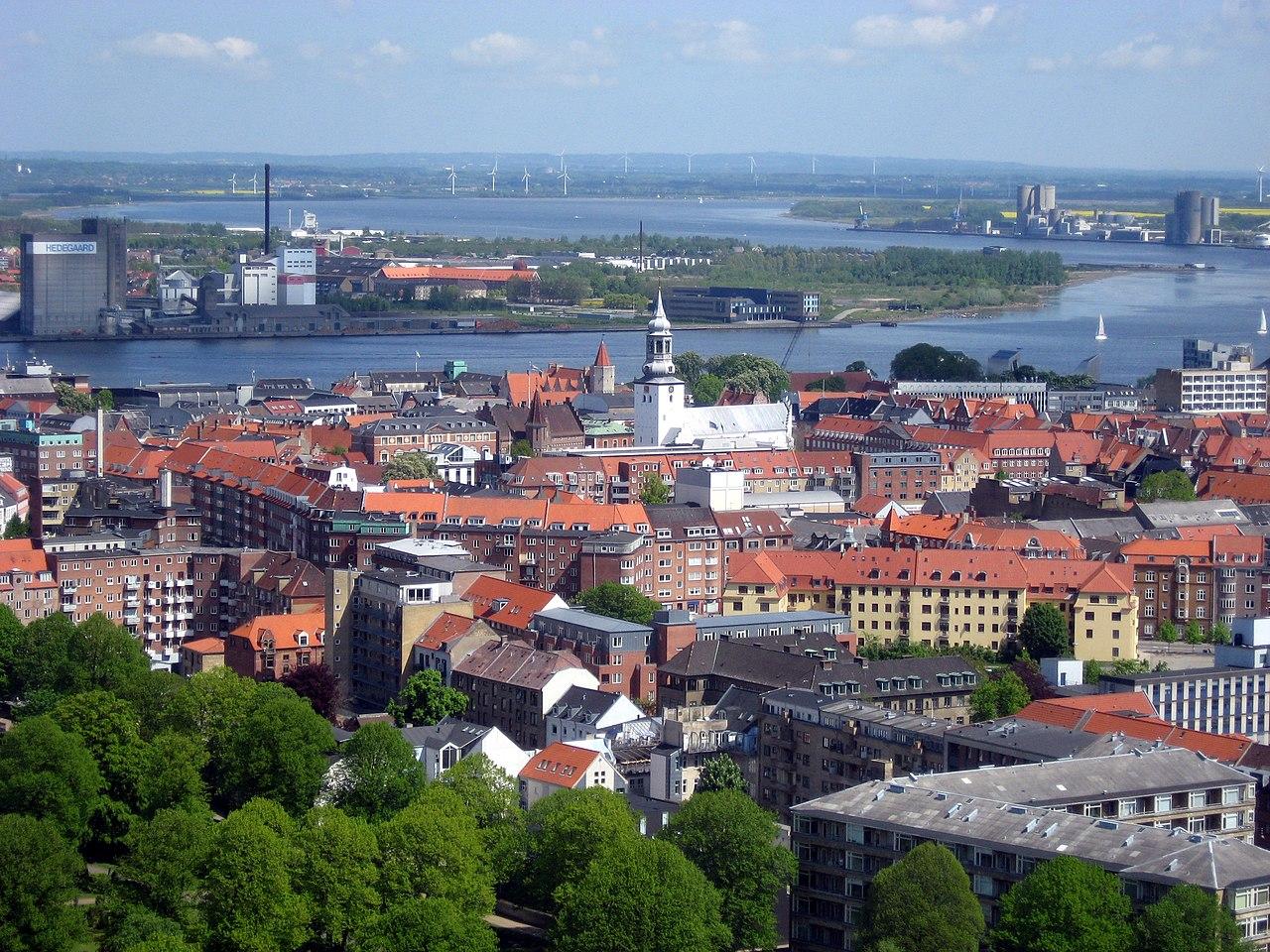
Looking beyond Urskoven? Discover North Jutland for broader travel guides, local hot-spots, and regional highlights.
Explore North Jutland