Bolundstenen, Roskilde Travel Guide
A garnet‑studded glacial boulder in a quiet corner of Roskilde Fjord, Bolundstenen reveals deep‑time geology amid meadows, low moraines and wide Danish skies.
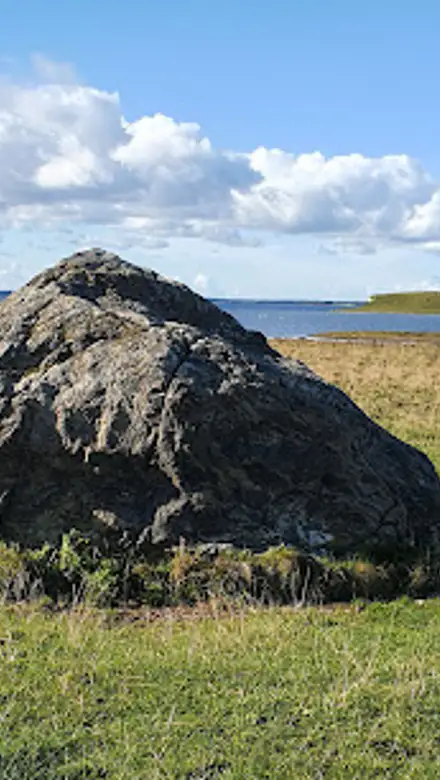
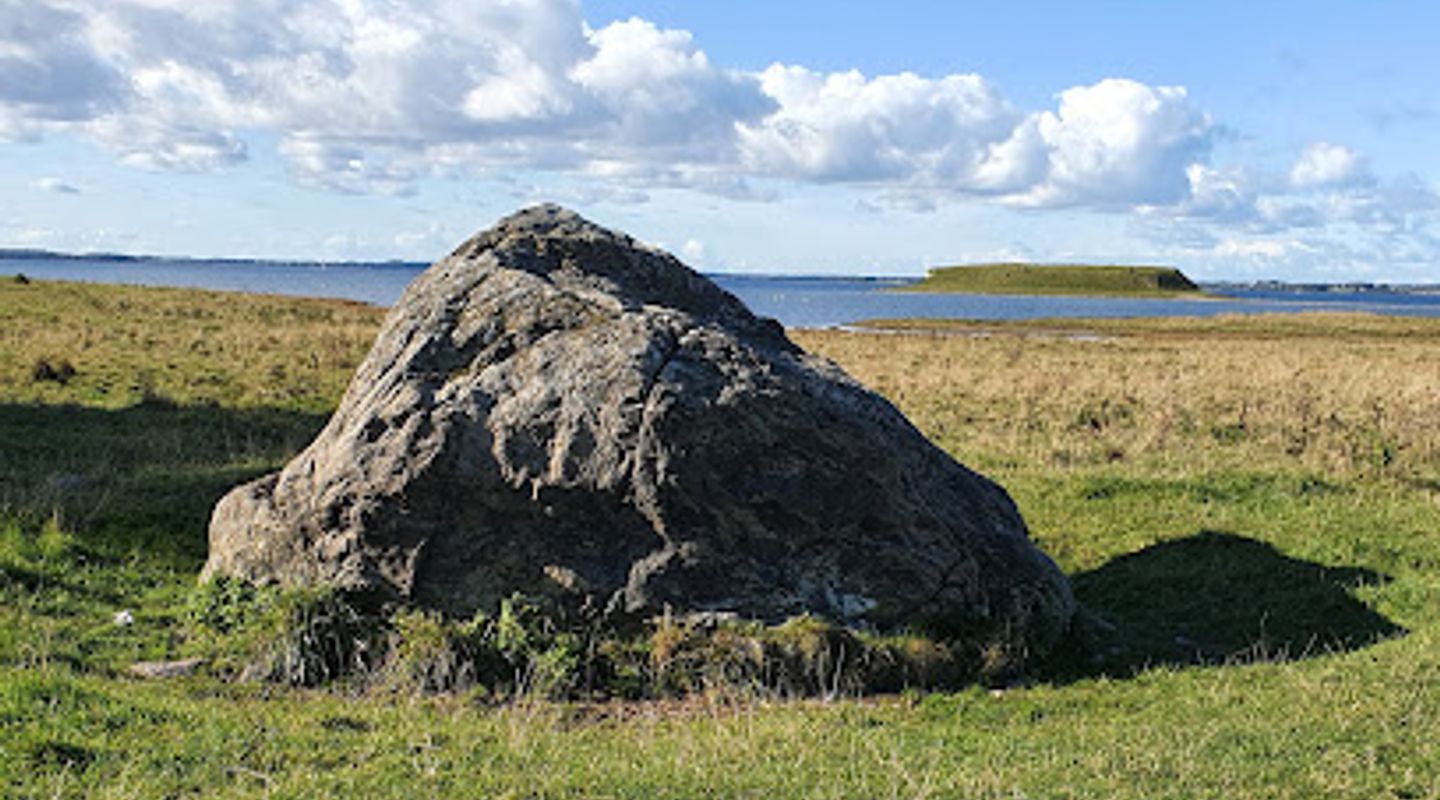
Bolundstenen is a striking glacial boulder lying in the meadows by Roskilde Fjord, just off the small peninsula of Bolund north of Roskilde. Carried here by ice during the last Ice Age, the stone is famous for its beautiful garnet crystals embedded in striped gneiss, revealing a journey from deep within the Earth’s crust to this windswept coastal landscape. It is part of a protected fjord scenery of low hills, salt meadows and birdlife, ideal for a quiet, educational nature stop.
A brief summary to Bolundstenen
- Roskilde, 4000, DK
- Click to display
- Duration: 0.5 to 1.5 hours
- Free
-
 Outdoor
- Mobile reception: 3 out of 5

Know before you go
Hi, I'm Eve. Here are a few practical things to know before exploring Bolundstenen.
- Wear waterproof or sturdy shoes; the meadow around Bolundstenen can be wet and uneven, especially after rain or in winter.
- Bring a simple hand lens or use your phone’s macro mode to see the garnet crystals and banded gneiss textures up close.
- Combine the stop with a walk on the Bolund peninsula for broader views of Roskilde Fjord and more glacial landscape features.
Do you manage this location?
Take control to get all the benefits, like improved information, better appearance, and stronger visibility across AI-powered discovery. Learn more about listing your business on Evendo
Activate your presenceOther nearby places you may find interesting
The closest places of the same kind, if this one is not quite what you had in mind.

Explore Bolundstenen on the Map
A handpicked selection of must-see spots near Bolundstenen, mapped for you.
Getting There
-
Car from central Roskilde
Driving from central Roskilde towards the area north of Risø typically takes around 15–20 minutes depending on traffic. Expect to cover roughly 10–15 km on ordinary paved roads through suburban and semi‑rural surroundings. Parking is usually informal along nearby small roads or at lay‑bys, and may be limited in wet conditions as verges can be soft. There is no specific parking fee for visiting the meadow by Bolundstenen, but always check local signage and avoid blocking farm access or private driveways.
-
Bus and short walk from Roskilde
Regional buses run between Roskilde and settlements towards Jyllinge and the Risø area, with journey times typically around 20–30 minutes from Roskilde Station depending on route and time of day. A standard single ticket within the local fare zones usually costs in the range of 25–40 DKK and can be bought via ticket machines or mobile apps. From the nearest bus stop you should expect an on‑foot approach of 1–3 km on minor roads and farm tracks across gently undulating terrain, which may be muddy in wet weather and is not ideal for wheelchairs or prams.
-
Cycling from Roskilde
For a more active option, cycling from Roskilde towards the fjord north of Risø takes about 30–40 minutes each way for an average cyclist, covering roughly 10–15 km on a mix of local roads and possible cycle paths. The route is mostly flat to gently rolling and exposed to wind off the fjord, so conditions can feel tougher on breezy days. There is no charge for bringing your own bike, but if you rent one in Roskilde expect typical daily prices in the range of 100–200 DKK depending on type. Bring lights and reflective gear outside summer daylight hours, as stretches can be semi‑rural with limited lighting.
For the on-the-go comforts that matter to you
-
 Information Boards
Discover more about Bolundstenen
A giant from the depths of the Earth
Bolundstenen is one of the most eye‑catching glacial boulders along Roskilde Fjord, resting in a meadow just inland from the shallow water north of Risø near Roskilde. It looks at first like an oversized, weathered rock, but its story reaches deep into the Earth’s crust and far back into geological time. The block was carried to this spot by moving ice during the last Ice Age and left behind when the glacier melted, a classic example of what geologists call an erratic.Look closely at the stone’s surface and you see its true character: striped gneiss flecked with dark red crystals of garnet. These garnets formed under high pressure and temperature deep within the crust, before being exhumed, broken off and transported north by ice sheets. The contrast between the banded, grey‑white gneiss and the rounded garnet crystals turns the boulder into a natural textbook of metamorphic geology.The landscape of Bolund and the fjord
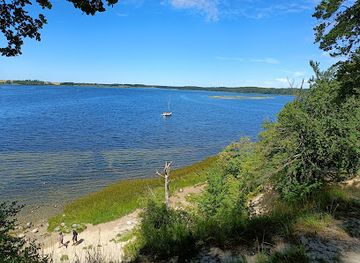
Bolundstenen takes its name from nearby Bolund, a low, grass‑covered moraine hill that rises about 12 metres above Roskilde Fjord and is connected to the mainland by a narrow spit of land. From the meadows around the stone you can see the steep sides of Bolund dropping into the shallow water and the scattered stones that mark where the peninsula once extended further into the fjord before waves and currents gnawed it back.The wider setting is a protected fjord landscape of salt meadows, reed beds and open water. Eiders, swans and wading birds use the shoreline, and in summer the grassland around the boulder fills with wildflowers and insects. The combination of low relief, wide skies and the calm water surface gives the area a quietly dramatic character, especially when wind riffles the fjord or mist hangs over the fields.A natural classroom in the open air
Bolundstenen is frequently used as an outdoor classroom for geology and nature interpretation. The large, accessible surface allows you to see mineral textures with the naked eye and to trace the gneiss banding with your hand. It illustrates in a single object the processes of deep burial, metamorphism, uplift, glacial transport and finally landscape formation by water and ice.Because the site is open and informal, it works as much for a curious family with children as for specialist field groups. Simple explanations on nearby materials or pre‑trip notes can turn a short stop into a compact lesson in Earth history. The surrounding meadows add context, showing how glacial deposits, boulders and low moraines shape the gentle fjord terrain around Roskilde.Atmosphere through the seasons
The mood around Bolundstenen changes with the time of day and year. On clear days the boulder stands out sharply against blue water and pale sky, and the striped gneiss seems almost polished in strong sunlight. In overcast or misty weather it becomes a subdued, moss‑touched presence in a narrow palette of greys and greens, fitting the quiet character of the fjord.Spring and summer bring softer ground, more bird activity and flowering plants, making it pleasant to linger in the meadow. In autumn and winter the site can feel raw and windswept, but low light emphasises the stone’s relief and the sculpted sides of Bolund across the water. Sturdy footwear and windproof clothing make these seasons rewarding for photography and contemplation.Planning a visit and treading lightly
A visit to Bolundstenen is usually a short, low‑key stop, often combined with a walk on Bolund itself or other viewpoints along Roskilde Fjord. The terrain near the boulder is generally easy, though the grass can be wet or muddy after rain, and the stone sits in open ground with little shelter from wind or sun. Bringing water, an extra layer and shoes that can handle damp grass makes the experience more comfortable.The area forms part of a protected fjord landscape, so staying on established paths, avoiding disturbance of birds and vegetation, and leaving no trace are important. The boulder invites touch and close inspection, but carving, hammering or chipping at the rock damages both the scientific value and the visual experience. Treated with care, Bolundstenen remains a small but vivid window into the ancient foundations beneath Zealand and the power of the ice that once covered it.












Your all‑in‑one travel companion app
Explore expert travel guides, compare and book tours, experiences, hotels, and more—all from the palm of your hand. Download now for seamless trip planning wherever your wanderlust takes you.


Explore More of Roskilde
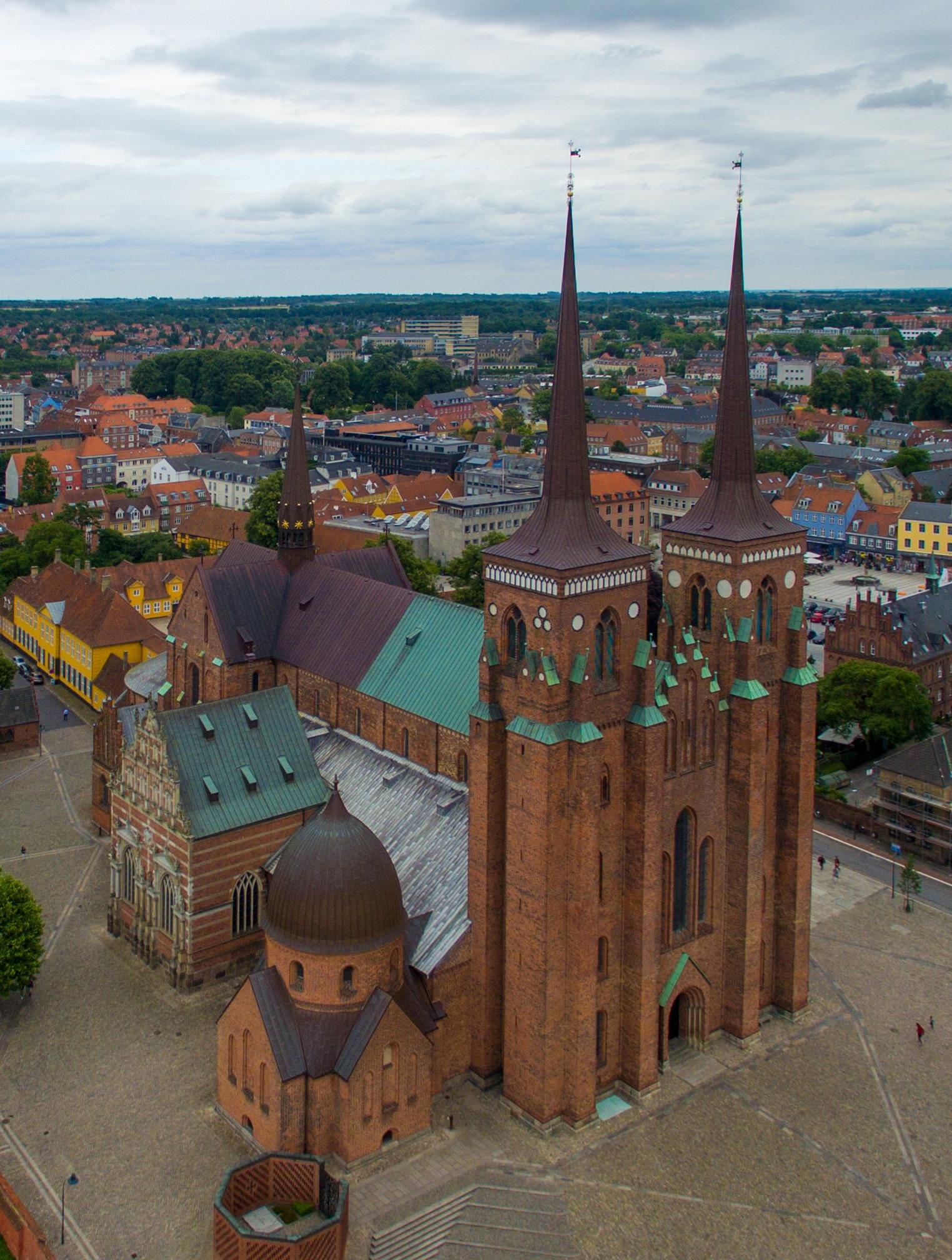
Looking beyond Bolundstenen? Discover Roskilde for broader travel guides, local hot-spots, and regional highlights.
Explore Roskilde
Historic fjordside harbour where Viking heritage, a modern marina and relaxed waterfront life meet beneath the towers of Roskilde Cathedral.
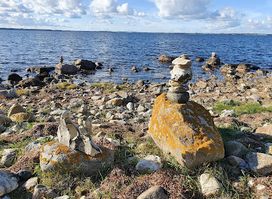
A small Ice Age peninsula with big fjord views, rare coastal flora and lively birdlife, Bolund is Roskilde’s closest taste of wild, windswept nature.