Skjoldnaes Lighthouse Travel Guide
Free Guide: Granite beacon at Ærø’s northwestern tip, Skjoldnæs Lighthouse pairs sweeping sea views and Ice Age landscape with maritime heritage, night skies and seaside fairways.


A brief summary of Skjoldnaes Lighthouse
Granite beacon at Ærø’s northwestern tip, Skjoldnæs Lighthouse pairs sweeping sea views and Ice Age landscape with maritime heritage, night skies and seaside fairways.
Skjoldnæs Lighthouse crowns the northwestern tip of Ærø, rising in pale Bornholm granite above windswept cliffs, rolling fairways and the Baltic Sea. Built in 1881 by Swedish stonemasons, this compact, 22 m tower offers far‑reaching views over the South Funen Archipelago, from Als and Lyø to distant German shores. Open around the clock for a modest fee, it combines maritime history, geology, stargazing and a serene coastal atmosphere, with a golf course and legend‑laden Queen’s Cavern right next door.
On-site amenities
 Restrooms
 Seating areas
 Trash bins
 Information boards
- Address
- Skjolnæs Fyr, Skjoldnæsvej, 5985 Søby Ærø
Getting there
Car from Søby
Bicycle from Søby
Walking from nearby village of Haven
Discover more about Skjoldnaes Lighthouse
Granite tower at the edge of the Danish South Sea
Skjoldnæs Lighthouse stands like a pale granite exclamation mark at the very tip of Ærø’s northwestern peninsula, where land narrows to a low headland ringed by sea on three sides. Built in 1881 by skilled Swedish stonemasons, its round shaft is constructed from finely cut Bornholm granite, giving the tower a light, almost silvery tone against the often steel-blue Baltic. The lantern sits about 22 metres above the ground, high enough that its flash can be picked out by shipping far out in the South Funen Archipelago.The lighthouse marked an important improvement in safety for coastal traffic weaving between islands, shoals and sandbanks. Unlike many more utilitarian beacons, Skjoldnæs was conceived as a showpiece for the island, beautifully detailed in stone with a dignified keeper’s house beside it. Today its light still turns, but the emphasis is as much on heritage and experience as on navigation.
Climbing to a panorama of islands and sea lanes
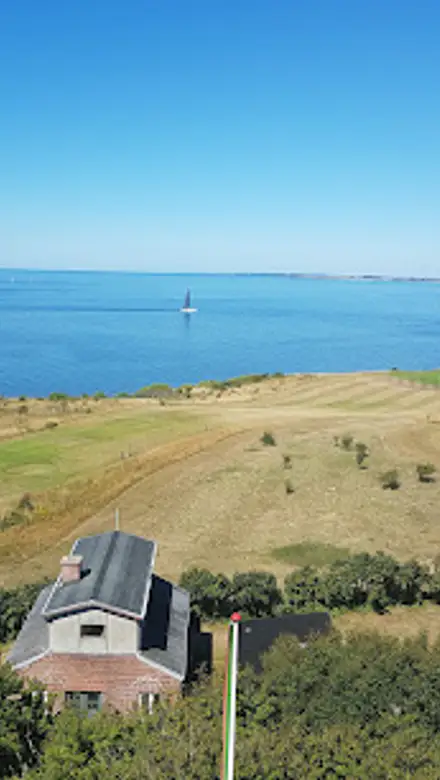
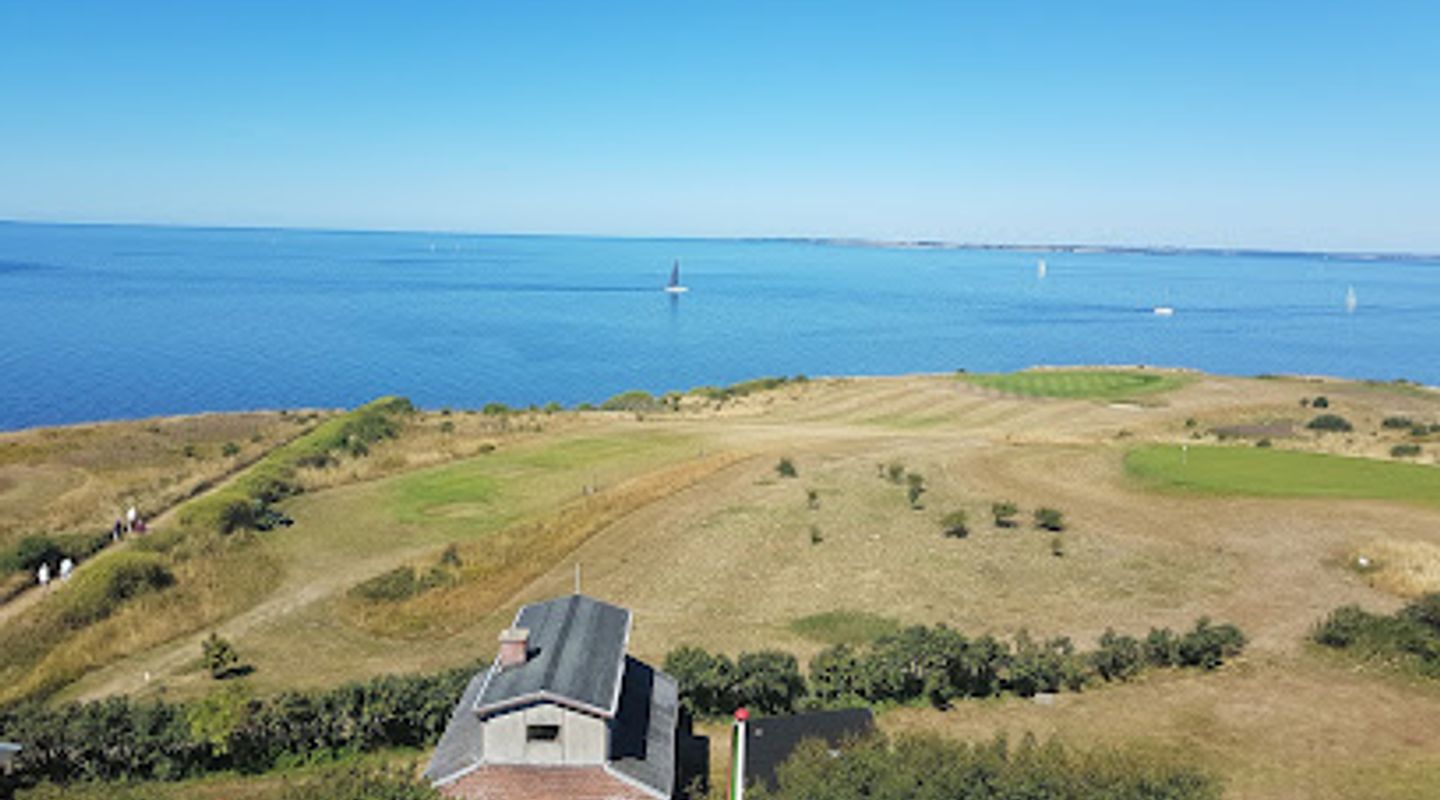
Inside the tower, a narrow staircase curls upwards through the thick walls, the stone cool to the touch even on a summer day. As you climb, small windows let in glimpses of sea and sky before you step out at the top to a near‑circular balcony. In clear weather the view is startlingly wide: across to Als, Lyø, Bjørnø and Avernakø, towards the Funen “Alps” inland, and on the horizon the low line of the German coast.Frequent winds keep the air sharp and clear, and you can often trace the geometry of shipping routes by the wakes of passing ferries and cargo vessels. Looking back towards Ærø, the peninsula stretches out as a patchwork of fields, rough grass and fairways, with the lighthouse sitting like a white pawn at the end of a long green board.
Landscape shaped by ice and a restless shoreline
The Skjoldnæs peninsula is a lesson in geology set out at full scale. Its long, slender shape reflects the movement of glaciers that crossed Ærø during the last Ice Age, leaving behind dead‑ice hollows and softly rolling terrain. Along the coastal bluffs, older layers of clay and marine sediments are exposed where the sea has bitten into the land, telling of warmer interglacial seas and changing shorelines.On the northeast side, opposing currents have built an angular foreland known locally as Næbbet – “the Beak” – where salt marsh, shingle and shallow lagoons form a distinct triangular jut into the sea. The coast is still changing: wave action, storms and shifting sands continually redraw the exact outline of beaches and low cliffs, reminding visitors that even a solid granite lighthouse stands beside a living, moving edge.
Golf fairways, Queen’s Cavern and traces of work
Where keeper’s gardens and rough pasture once surrounded the tower, you now find one of Denmark’s most striking seaside golf courses. Greens and tees roll away between old field boundaries, with bunkers and rough merging into natural dunes and coastal meadows. The former lighthouse master’s residence has become the clubhouse, tying modern recreation to maritime tradition.A short walk from the tower, a path leads down towards the beach past a hollow known as the Queen’s Cavern. Local legend tells of a young queen from nearby Lyø, drowned in a storm and washed ashore here, giving the depression its mournful name. Elsewhere on the peninsula, subtle traces hint at previous industry and defence: small borrow pits where stone was once extracted, and faint earthworks from past military activity.
Experiencing Skjoldnæs from dawn glow to night skies
Most visitors come for the view, but the changing light makes Skjoldnæs worth experiencing at different times of day. Early mornings can bring calm seas, low mist over the fields and a delicate wash of colour behind the lantern. On clear evenings, the sun drops into the Baltic, turning water and granite alike a warm coppery hue before the lighthouse lamp becomes the brightest feature on the headland.After dark the tower takes on a quieter role. With little artificial lighting nearby, this is an excellent place for stargazing; on moonless nights the Milky Way arches above, while the slow sweep of the beam adds a rhythmic counterpoint. Even on blustery days, when whitecaps chase across the water and the wind tugs at jackets, there is a certain calm in watching waves build and break along this exposed yet oddly sheltered tip of Ærø.
Practical comforts in a windswept setting
Despite its remote feel, Skjoldnæs is not an isolated wilderness. A small parking area near the lighthouse and basic toilet facilities make short visits straightforward, and paths around the headland allow for easy, low‑level walks with constant sea views. The compact scale of the site means you can explore the tower, wander a loop along the shoreline and linger on a bench or low wall, all within a couple of unhurried hours.The combination of built heritage, active golf course, accessible coastal scenery and the simple drama of a lighthouse at land’s end makes Skjoldnæs a varied yet cohesive stop on any Ærø itinerary. Whether you are drawn by maritime history, island landscapes or just the appeal of standing where land finally gives way to sea, this modest granite tower rewards unhurried attention.
Evendo Review Centre
 Google
Guest reviews
Best time to go
Quietest: Jan, Feb & Mar · before 7am or at 10pm
Busy times are Evendo estimates for a typical year, to help you plan. Actual crowds vary with events, school holidays and the weather.
Explore Skjoldnaes Lighthouse on the map
A handpicked selection of must-see spots near Skjoldnaes Lighthouse, mapped for you.
Get your free copy of our complete guide to Skjoldnaes Lighthouse, delivered straight to you.
Everything on this page, from opening hours and how to get there to Eve’s tips and the best time to go, in one PDF you can read offline, print or share.
Already have an account? Sign in
Your Skjoldnaes Lighthouse guide is ready.
We'll send it to · Not you? Sign out

Getting your guide ready…
We are putting together a fresh copy of the Skjoldnaes Lighthouse guide. This can take up to a minute.
This can take a few moments. If your browser asks, choose Allow so the download can start. You'll find the guide in your Downloads folder.
Nothing happened? Download it again
Sorry, the guide is taking longer than usual. Please try again in a minute, or get it by email instead.
Other nearby places you may find interesting
The closest places of the same kind, if this one is not quite what you had in mind.
-
-
-
-
-


Swipe for more places
More to explore near Skjoldnaes Lighthouse

 Best experiences near Skjoldnaes Lighthouse
 Best hotels near Skjoldnaes Lighthouse
 Best landmarks near Skjoldnaes Lighthouse
 Best attractions near Skjoldnaes Lighthouse
 Best shops near Skjoldnaes Lighthouse
 Best restaurants near Skjoldnaes Lighthouse
 Best bars near Skjoldnaes Lighthouse
Do you manage this location?
Take control to get all the benefits, like improved information, better appearance, and stronger visibility across AI-powered discovery.
Explore more

Explore more of The South Funen Archipelago
Discover the South Funen Archipelago: A tranquil haven of over 55 islands with lush landscapes, serene beaches, and rich cultural heritage in the Baltic Sea.
Explore The South Funen Archipelago
Explore more of Denmark
Discover Denmark: A perfect blend of history, modern design, and the cozy concept of hygge. Explore vibrant cities, serene landscapes, and world-class cuisine.
Explore Denmark