

Kastellet Travel Guide
Free Guide: A perfectly preserved star fortress where scarlet barracks, a windmill and grassy ramparts turn Copenhagen’s historic defences into a peaceful waterfront park.


A brief summary of Kastellet
A perfectly preserved star fortress where scarlet barracks, a windmill and grassy ramparts turn Copenhagen’s historic defences into a peaceful waterfront park.
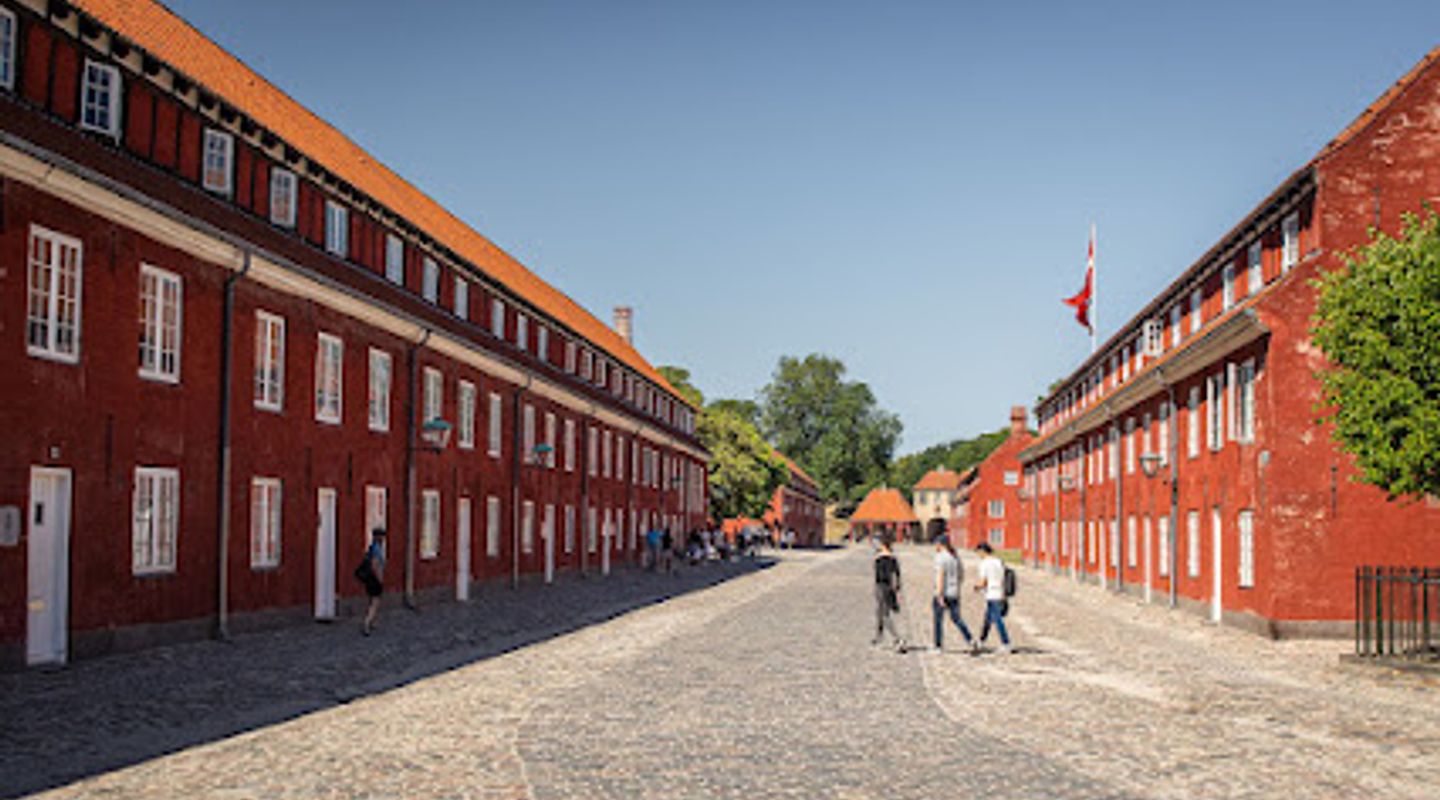
Kastellet is a remarkably well-preserved 17th‑century star fortress on Copenhagen’s waterfront, still functioning as a military site while doubling as one of the city’s most atmospheric parks. Grassy ramparts, a broad moat, red‑brick barracks, a historic windmill and a Baroque chapel create a rare blend of fortification and calm green space. It is free to enter, open daily from early morning to evening, and ideal for slow walks, history-themed explorations and harbour views close to the Little Mermaid.
On-site amenities
 Restrooms
 Seating areas
 Trash bins
 Information boards
Opening hours
- Every day6 am–8 pm
Opening hours as listed on the venue’s Google Business Profile. Hours can change for services and special events, so check with the venue before you go.
- Address
- Gl. Hovedvagt, Kastellet 1, 2100 København
- Website
Getting there
Metro and Bus from central Copenhagen
City bus from inner districts
Walking from the historic centre
Bicycle via Copenhagen’s cycle network
Discover more about Kastellet
Citadel on the Edge of the Harbour
Kastellet, also known as the Citadel, is one of Northern Europe’s best-preserved star-shaped fortresses, tucked into Copenhagen’s harbourfront just beyond the city’s royal quarter. Built as part of the capital’s defensive ring, its five-pointed form is immediately recognisable on any map, but on the ground it feels more like a self-contained village crowned by grassy ramparts and encircled by a wide moat.Commissioned in the 17th century under King Christian IV and completed during the reign of Frederick III, the citadel once formed a crucial link in Copenhagen’s fortifications. Earthworks, bastions and water obstacles were carefully laid out according to Renaissance military thinking, giving defenders long, clear sightlines in all directions. Today those same lines create open views of the harbour, church domes and the city skyline.
From Battlefield Engineering to Everyday Calm
Although Kastellet has seen conflict and occupation over the centuries, including use by German forces during the Second World War, its role has gradually shifted from frontline defence to administrative and symbolic duties. Several units of the Danish armed forces still use buildings within the walls, lending an air of quiet formality: uniforms, flags and the occasional ceremony gently remind visitors that this is not just a park but a living garrison.For most people, however, Kastellet is experienced as a tranquil green lung. Locals jog the perimeter paths at sunrise, office workers cut through the gates at lunchtime, and families stroll the ramparts in the late afternoon light. The combination of clipped grass, carefully maintained embankments and the ever-present water of the moat creates a sense of ordered nature rather than wilderness.
Windmill, Chapel and Scarlet Barracks
Inside the pentagon, streets of low, bright-red barracks buildings line up with almost geometric precision. These 18th-century structures, with their white-paned windows and simple gables, once housed soldiers but now accommodate military offices and support functions. Their bold colour contrasts with the green slopes above and the blue of the moat below, making Kastellet one of Copenhagen’s most photogenic ensembles.A short walk uphill brings you to the fortress windmill, dating from the 19th century, perched on the ramparts where the wind could best catch its sails. It originally ground grain for the garrison and now serves as a picturesque reminder of the citadel’s self-sufficiency. Nearby stands the Baroque Citadel Church, a modest yet elegant building that still hosts services and occasional concerts. Together, these structures give a sense of how Kastellet once functioned as a small, self-contained town.
Walking the Bastions and Watching the Water
The highlight for many visitors is the circuit along the bastions. Paths follow the crown of the ramparts, rising above the water with long views toward the harbour, naval facilities and the copper-domed silhouette of Frederiks Kirke in the distance. Benches and grassy patches invite pauses to watch passing ships or study the geometry of the fortress from above.Down at moat level, tree-lined tracks skirt the water’s edge, offering a more sheltered route beneath the slopes. Bridges lead across to the two main gateways, the King’s Gate facing the inner city and the Norway Gate opening toward the harbour. Passing through them, with their coats of arms and sturdy timber doors, gives a tangible sense of moving through a defensive threshold into a protected world.
A Free Open-Air Museum in the City Centre
Kastellet functions as an open-air museum that you can explore at your own pace, with no ticket barriers or fixed route. Discreet information boards and memorials scattered around the grounds highlight episodes from Denmark’s military engagements and international peacekeeping efforts. In fine weather, grassy areas near the moat become informal picnic spots, while the ramparts stay breezy even on warm days.The fortress’s location makes it easy to combine with nearby sights such as the Little Mermaid and the grand squares of the royal district. Yet once inside the walls, the noise of the city drops away. Whether you are tracing the angles of early modern military engineering, timing a golden-hour photo session at the windmill, or simply seeking a contemplative walk under big skies, Kastellet offers one of Copenhagen’s most distinctive urban escapes.
Evendo Review Centre
 Google
Guest reviews
Best time to go
Quietest: Jan, Feb & Mar · before 6am or from 10pm
Busy times are Evendo estimates for a typical year, to help you plan. Actual crowds vary with events, school holidays and the weather.
Explore Kastellet on the map
A handpicked selection of must-see spots near Kastellet, mapped for you.
Get your free copy of our complete guide to Kastellet, delivered straight to you.
Everything on this page, from opening hours and how to get there to Eve’s tips and the best time to go, in one PDF you can read offline, print or share.
Already have an account? Sign in
Your Kastellet guide is ready.
We'll send it to · Not you? Sign out

Getting your guide ready…
We are putting together a fresh copy of the Kastellet guide. This can take up to a minute.
This can take a few moments. If your browser asks, choose Allow so the download can start. You'll find the guide in your Downloads folder.
Nothing happened? Download it again
Sorry, the guide is taking longer than usual. Please try again in a minute, or get it by email instead.
Unlock the best of Kastellet
Skip-the-line tickets, guided tours with entry, and walking tours of the area, booked in a few clicks.
 Tour with entry
A Self-Guided Nordic Exploration in Copenhagen's Hidden Hygge
from $1.05 Tour with entry
Self-Guided Tour In Copenhagen with 100 Captivating Audio Stories
from $3.17 Tour with entry
Copenhagen Self Guided Audio Experience
from $5.70 Tour with entry
Copenhagen Walking Tour with Audioguide on Your Smartphone
from $10.61


Other nearby places you may find interesting
The closest places of the same kind, if this one is not quite what you had in mind.
-
Springvandet i Amaliehaven af Arnaldo Pomodoro A dramatic bronze fountain at the heart of Amaliehaven, where modern sculpture, royal views and harbor breezes meet in a tranquil geometric garden.
-
Ripley's Believe It or Not! Scandinavia's only museum of genuine oddities, curiosities, and human extremes.
-
Statue of Andersen A larger-than-life Hans Christian Andersen sits in bronze on Copenhagen’s City Hall Square, book in hand, gazing toward Tivoli Gardens in the city’s vibrant heart.
-
Naturpark Åmosen Zealand’s last wilderness: a vast lowland of bogs, lakes and forests where rare wildlife, ancient rituals and Viking power echo across the mists of Åmosen.
-
Little Tilde by Thomas Dambo - Troll #16 A recycled-wood troll with a heart for birds, Little Tilde watches over Vallensbæk Mose and invites you into a gentle treasure hunt through Copenhagen’s wild marshland.
Swipe for more places
More to explore near Kastellet

 Best experiences near Kastellet
 Best hotels near Kastellet
 Best landmarks near Kastellet
 Best attractions near Kastellet
 Best shops near Kastellet
 Best restaurants near Kastellet
 Best bars near Kastellet
Do you manage this location?
Take control to get all the benefits, like improved information, better appearance, and stronger visibility across AI-powered discovery.
Explore more
Explore more of Zealand
Discover the charm of Zealand, Denmark's largest island, blending vibrant city life in Copenhagen with serene coastal beauty and rich cultural heritage.
Explore Zealand
Explore more of Denmark
Discover Denmark: A perfect blend of history, modern design, and the cozy concept of hygge. Explore vibrant cities, serene landscapes, and world-class cuisine.
Explore Denmark
