Langelinieparken
Leafy waterfront lawns, sculptures and sea views where cruise ships, mythic fountains and Copenhagen’s Little Mermaid all meet along a single harbourfront walk.
Harbourfront Greenery Where City Meets Sea
Langelinieparken stretches like a soft green edge along Copenhagen’s busy inner harbour, cushioning the water with lawns, trees and flowerbeds while ships glide past just beyond the promenade. This long, linear park sits between the fortifications of Kastellet and the deep-water Langelinie Pier, so freighters and gleaming cruise liners can appear startlingly close as you walk. The sense of space is unusual for the city centre: wide views over the Øresund, open sky, and a constant play of light on the water. Despite its maritime backdrop, the park itself feels intimate. Winding paths snake between clumps of mature trees, clipped hedges and planted beds that erupt with colour in spring and summer. Benches face either the harbour or the sheltered lawns, so you can choose between ship‑spotting and quiet people‑watching. It is as much a place for a slow, contemplative amble as for crossing between headline attractions.From Exclusive Promenade to Public Park
Langelinie’s story reaches back to the 17th century, when this strip by the water formed part of Copenhagen’s outer fortifications. For a long time civilians were kept away; later, in the 18th and early 19th centuries, it evolved into a fashionable promenade and landscaped park reserved for the bourgeoisie, with access controlled by a toll. Only after political upheavals in 1848 did the area truly open to everyone, turning this once exclusive walk into a democratic waterfront green. The harbour itself changed, too. In the 1890s, Langelinie Pier was built as part of the new free port, with deep-water quays capable of handling large ocean-going vessels. Today, seeing a cruise ship tower above the tree line has become part of the park’s character. The coexistence of old defensive earthworks, 19th-century engineering and contemporary ships gives the area a layered, quietly dramatic history that you sense even during an ordinary stroll.Sculptures, Memorials and the Ivar Huitfeldt Column
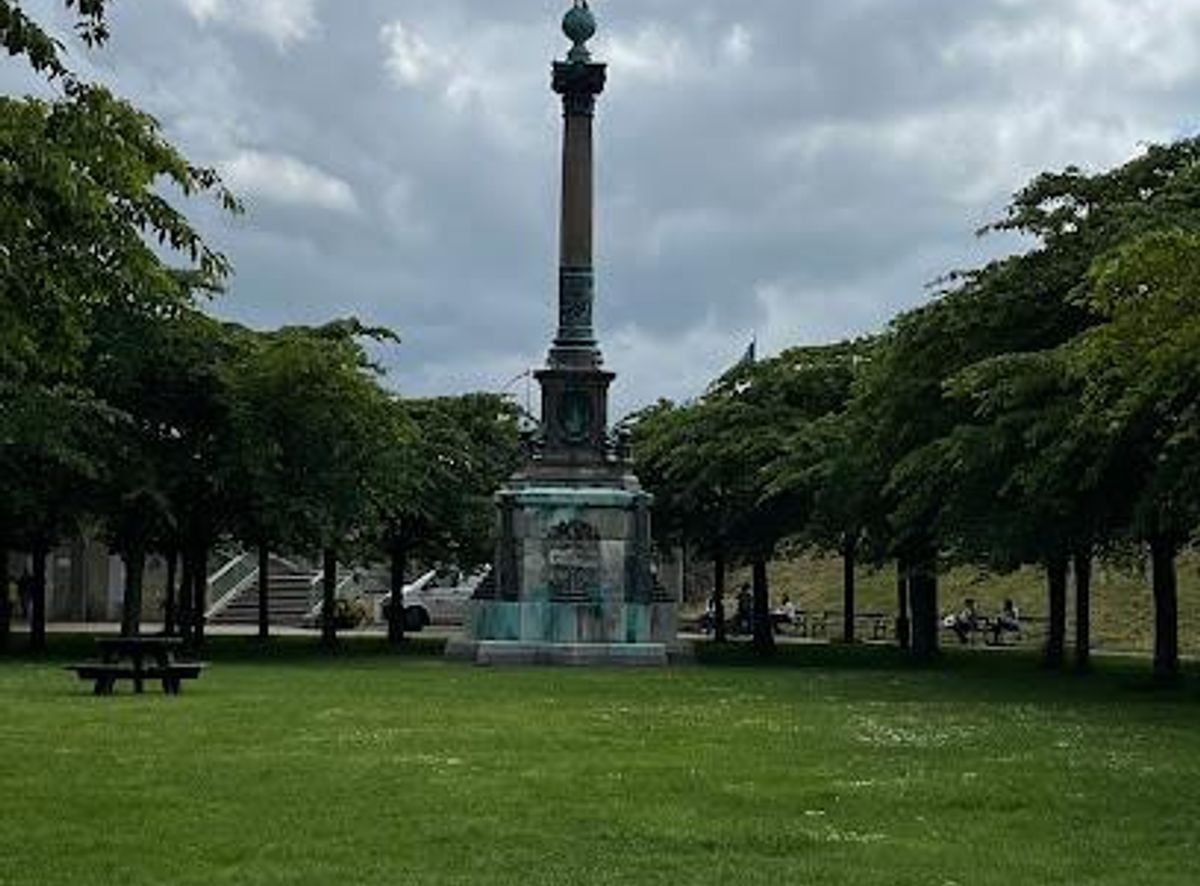
Within the park’s lawns and groves you encounter a small open‑air collection of Danish sculpture. Pathways curve toward statues and memorials, some tucked among trees, others standing proudly against the harbour backdrop. The most striking is the Ivar Huitfeldt memorial, a tall column crowned by a gilded Victory figure that commemorates the admiral and his crew, who died during the Great Northern War. Its vertical silhouette becomes a landmark for much of the waterfront. Other monuments and figures in bronze and stone punctuate the route, adding moments of reflection to what might otherwise be a purely scenic walk. Together, they turn Langelinieparken into a quiet lesson in Danish history and artistic taste, one you absorb almost unconsciously between glances at the ships and the play of families on the grass.Gateway to Iconic Copenhagen Landmarks
Langelinieparken forms part of a broader waterfront sequence that includes several of Copenhagen’s most recognisable sights. At one end lies the Gefion Fountain, an enormous, dynamic bronze group depicting the Norse goddess driving her oxen, framed by cascades of water and stone basins. From here the promenade unfurls toward the open harbour, passing war memorials and greenery before reaching the famous Little Mermaid perched on her rock beside the park. Just behind the trees, the star-shaped earthworks of Kastellet rise above the path, inviting a brief detour onto ramparts and into red‑roofed barracks. This proximity of fort, fountain, mermaid and pier makes the park an informal connector of Copenhagen’s harbour icons. Yet the green strip never feels like a mere corridor; it offers enough benches, viewpoints and play areas that many visitors simply linger here rather than rushing between landmarks.A Waterfront Walk for All Seasons
The experience of Langelinieparken shifts with the weather and time of day. On clear mornings, joggers trace the promenade while the rising sun glints off moored ships. By midday, office workers appear with takeaway lunches, sailors come and go from docked vessels, and the lawns fill with picnics. In the softer light of late afternoon, the harbour surface often becomes a mirror, with silhouettes of masts and cranes reflected between patches of sky. Breezy days bring a sharper edge: the wind whipping off the water, flags snapping on the pier, and waves slapping rhythmically against the quay. Even then, sheltered corners under trees offer quieter pockets of calm. Because the park is essentially flat and paved paths run its length, it remains accessible in most conditions, from crisp winter walks among bare branches to fragrant summer evenings when the air carries a mix of sea salt and flowers.Everyday Comforts Along the Promenade
Though primarily a green space, Langelinieparken is threaded with small practical comforts. Benches are frequent, encouraging unhurried pauses with a harbour view. Near the promenade and pier, small kiosks and carts appear in warmer months, offering coffee, ice cream or a quick snack to accompany your walk. Trash bins help keep the waterfront tidy, and there are restrooms in the wider Langelinie area and at nearby visitor facilities. The park’s gentle gradients, smooth paths and open sightlines make it suitable for prams, wheelchairs and casual cyclists, turning it into a shared backyard for the surrounding city. Whether you come for a brisk walk, a slow exploration of sculptures and memorials, or simply to watch a cruise ship ease slowly past the skyline, Langelinieparken folds these experiences into a single, easygoing stretch of Copenhagen’s shore.Local tips
- Aim for a weekday morning or early evening for a quieter stroll along the waterfront and easier photo stops near the main monuments.
- Bring a light windproof layer, as even warm days can feel cool and breezy along the exposed harbour edge.
- Combine your walk through the park with visits to the nearby Gefion Fountain, Kastellet fortress ramparts and the Little Mermaid statue.
- Allow time simply to sit on a bench facing the water; ship‑spotting can be as rewarding as seeing the landmarks themselves.
- The paths are largely flat and paved, making the park convenient for wheelchairs, strollers and relaxed cycling at a gentle pace.
A brief summary to Langelinieparken
- Langelinie 25, Langelinieparken, Copenhagen, Indre By, 2100, DK
- +4533663366
- Visit website
- Monday 12 am-12 am
- Tuesday 12 am-12 am
- Wednesday 12 am-12 am
- Thursday 12 am-12 am
- Friday 12 am-12 am
- Saturday 12 am-12 am
- Sunday 12 am-12 am
Getting There
-
Metro and Walk
From central Copenhagen, take the M3 Cityringen metro to Østerport Station, a ride of about 5–10 minutes from hubs such as Nørreport. From Østerport it is roughly a 15–20 minute flat walk on paved paths through the Kastellet area to Langelinieparken, suitable for most visitors including those with strollers or wheelchairs. A standard single metro ticket within the city zones typically costs around 20–30 DKK.
-
Bus Connection
Several city bus lines run between the inner city and the area around Østerport and Nordre Toldbod in roughly 10–20 minutes, depending on traffic. From nearby stops it is about 10–15 minutes on foot to reach the park along the waterfront. Buses use the same ticket system as the metro, with single fares generally in the 20–30 DKK range; services are frequent during the day but thin out late at night.
-
Harbour Bus by Water
For a scenic approach in good weather, use Copenhagen’s harbour bus boats that run along the inner harbour in about 15–30 minutes from central piers such as Nyhavn or the Opera area toward stops near Nordre Toldbod. From there, it is a short, mostly level walk on the quayside to Langelinieparken. Harbour buses are part of the regular public transport network, with fares similar to metro and bus tickets, generally around 20–30 DKK per journey.
-
Cycling from City Centre
Copenhagen’s extensive cycle lanes make it straightforward to reach Langelinieparken by bike from districts like Indre By, Nørreport or Vesterbro in approximately 10–20 minutes. The route follows mainly segregated bike lanes and quiet harbourfront stretches, almost entirely flat. Visitors without bikes can rent city bikes or from private rental shops; expect typical rental prices from about 100–150 DKK for a half‑day, with helmets and locks commonly available.
Attractions Nearby to Langelinieparken
-
Langelinie Park
-
Langelinie Pavillonen
-
ZinkGlobal by Kim Michael
-
Gefion Fountain
-
The Little Mermaid
-
St Alban's Church
-
Monument to Denmark's international activities after 1948
-
Kongeskibet Dannebrog
-
Kastellet
-
Museum of Danish Resistance
-
Inugsuk
-
Designmuseum Danmark
-
Bredgade Kunsthandel
-
Reffen - Skøjteøen
-
Medicinsk Museion