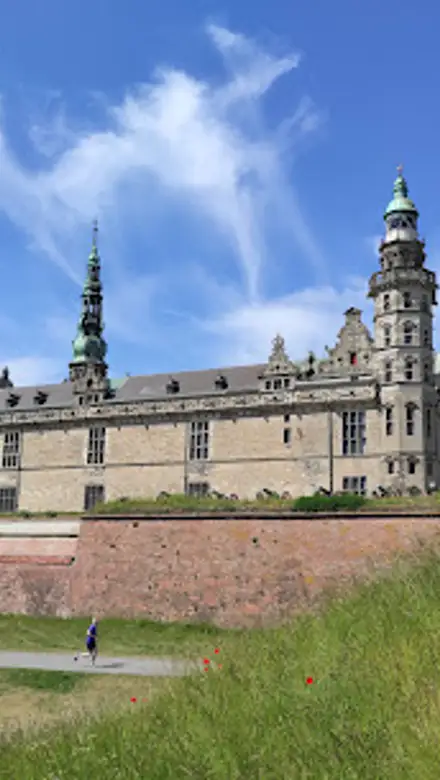
Kronborg Castle Travel Guide
Free Guide: UNESCO‑listed Hamlet’s Castle: a Renaissance fortress of kings, sea power and legends, guarding the Øresund with grand halls, casemates and sweeping views.


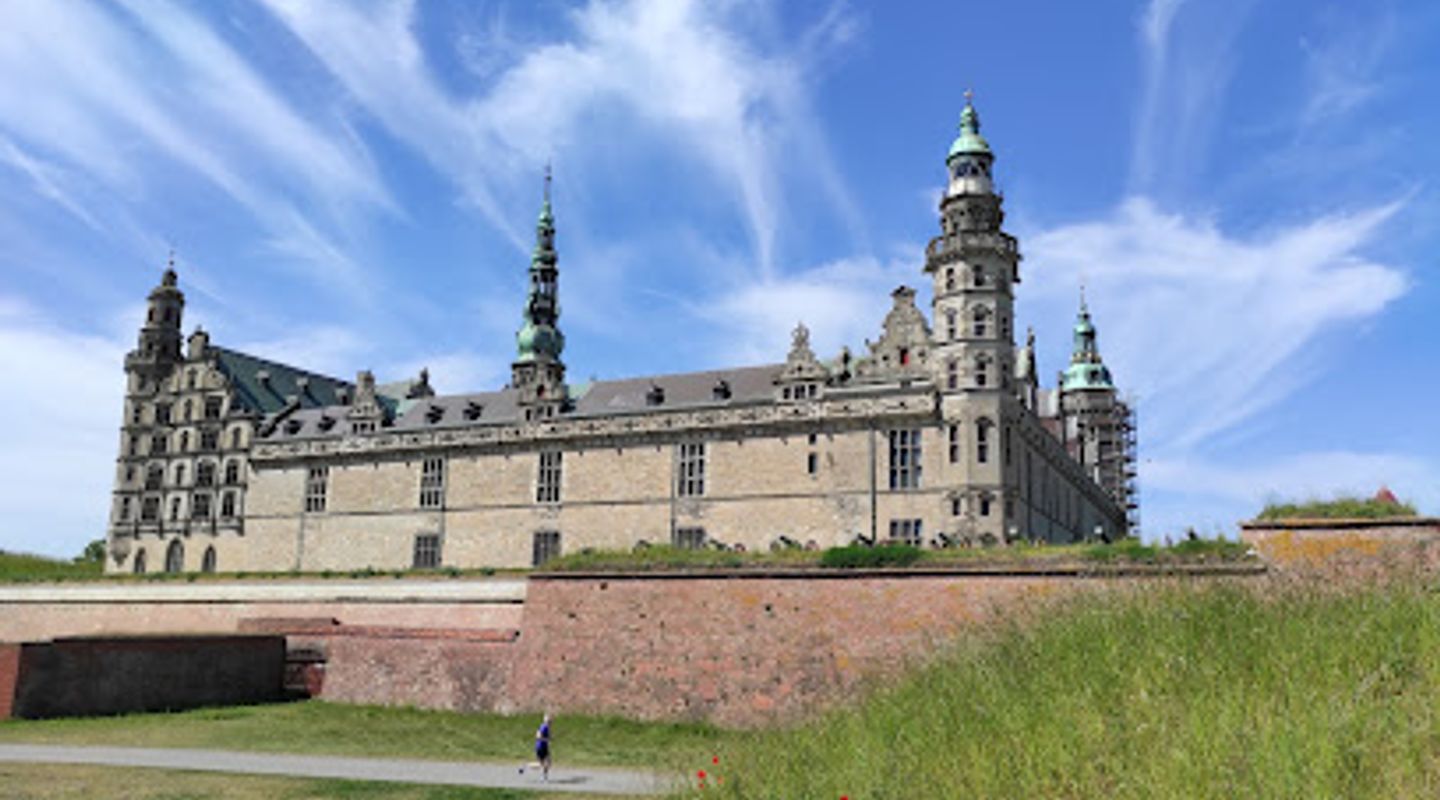
A brief summary of Kronborg Castle
UNESCO‑listed Hamlet’s Castle: a Renaissance fortress of kings, sea power and legends, guarding the Øresund with grand halls, casemates and sweeping views.
Commanding the narrowest point of the Øresund Strait, Kronborg Castle is a UNESCO‑listed Renaissance fortress in Helsingør and the legendary setting of Shakespeare’s Hamlet. Built in the late 1500s atop an earlier stronghold, it once controlled lucrative tolls from ships entering the Baltic. Today its vast ramparts, grand ballroom, chapel, casemates and views across to Sweden reveal centuries of royal power, maritime history and myth, including the sleeping hero Holger the Dane.
On-site amenities
 Restrooms
 Drink options
 Drinking water
 Food options
 Seating areas
 Sheltered areas
 Picnic areas
 Trash bins
 Information boards
 Visitor centre
Opening hours
- Every day10 am–6 pm
Opening hours as listed on the venue’s Google Business Profile. Hours can change for services and special events, so check with the venue before you go.
- Address
- Kronborg, 3000 Helsingør
- Phone
- Website
Getting there
Regional train from Copenhagen
Car from Copenhagen and North Zealand
Train and foot from North Zealand towns
Ferry and foot from Helsingborg (Sweden)
Discover more about Kronborg Castle
Renaissance Powerhouse at the Edge of the Sound
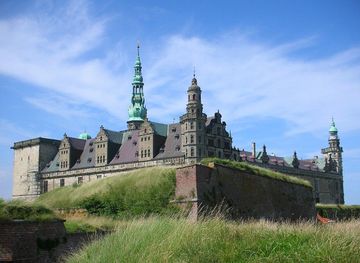
Kronborg Castle rises at the northeastern tip of Zealand, where Denmark all but shakes hands with Sweden across the Øresund Strait. From here, kings once watched the maritime traffic that made their fortunes. The present Renaissance castle, completed in 1585 under Frederik II, turned an earlier medieval fortress into a showpiece of power, its copper roofs and tall spires financed by tolls paid by passing ships.Walk through the outer fortifications and you move from grassy ramparts and bastions into an unexpectedly elegant complex. Four wings frame a large cobbled courtyard, their pale sandstone facades banded and ornamented with intricate carvings. Despite centuries of war, fire and military use, the silhouette remains much as it did in the late 16th century, the era when Kronborg helped shape the balance of power in northern Europe.
Hamlet’s Elsinore and a Stage of Stone
Kronborg is better known to much of the world by another name: Elsinore, the setting of Shakespeare’s Hamlet. The playwright drew on tales of intrigue and excess at the Danish court, and his tragedy fixed this castle in the cultural imagination. Standing in the courtyard or gazing up at the high walls, it is easy to picture scenes of royal plotting, ghostly apparitions and existential doubt unfolding in these very spaces.The connection lives on through theatre. Each summer, the castle’s walls and lawns become a dramatic backdrop for open‑air performances of Shakespeare’s plays, with Hamlet naturally taking pride of place. Hearing familiar lines echo against old stone, with the wind off the water and gulls wheeling overhead, adds a physical dimension to a story that has travelled the world for centuries.
Royal Splendour and Everyday Court Life
Inside, Kronborg’s rooms tell their own stories of ceremony and routine. The most striking is the Great Hall, an immense banqueting chamber once famed throughout Europe. Here monarchs hosted lavish feasts for visiting diplomats, merchants and nobility, surrounding themselves with tapestries, carved wood and symbol‑laden decoration that advertised their wealth and reach.Elsewhere, you find royal apartments renovated in the 17th century under Christian IV, whose initials still appear throughout the interiors. Exhibits and furnished rooms illustrate how the castle functioned as both royal residence and administrative centre for the lucrative Sound Dues. Narrow staircases, thick walls and occasional glimpses of the sea remind you that this was always a fortress as well as a palace, built to impress but also to endure.
Casemates, Legends and the Sleeping Hero
Beneath the courtyard, Kronborg’s character shifts dramatically. The casemates are a maze of low, vaulted passages and chambers, designed in the 1570s as bomb‑proof quarters where hundreds of soldiers could hold out for weeks during a siege. The air is cooler here, the light dim, and the sense of isolation strong, hinting at the hardships of garrison life in earlier centuries.In the deepest part of this underworld sits Holger the Dane, a massive stone figure from Danish legend. According to the story, this warrior sleeps until Denmark is in mortal danger, when he will rise to defend the realm. Meeting him in the half‑dark is part history, part folklore, a reminder that castles are not only collections of facts and dates but also anchors for collective imagination and national identity.
Sea Views, Ramparts and the Wider Landscape
Back in the open air, the ramparts and cannon batteries frame wide views over the Øresund. You can trace the narrow shipping lane that once delivered such wealth to Helsingør, and look across to the Swedish town of Helsingborg, whose own fortress once formed a twin gate to the Baltic Sea. The combination of bristling defences, manicured lawns and the constant movement of modern ferries underlines how this stretch of water has remained important for centuries.The castle grounds invite unhurried exploration. Grassy slopes, moats and outer works reveal layers of military engineering, while the surrounding harbour and historic town complete the picture of a place shaped entirely by the sea. Whether you come for Shakespeare, architecture, maritime history or simply the coastal scenery, Kronborg offers multiple stories in a single, compact setting.
Evendo Review Centre
 Google
Guest reviews
Best time to go
Quietest: Jan, Feb & Mar · before 8am or at 8pm
Busy times are Evendo estimates for a typical year, to help you plan. Actual crowds vary with events, school holidays and the weather.
Explore Kronborg Castle on the map
A handpicked selection of must-see spots near Kronborg Castle, mapped for you.
Get your free copy of our complete guide to Kronborg Castle, delivered straight to you.
Everything on this page, from opening hours and how to get there to Eve’s tips and the best time to go, in one PDF you can read offline, print or share.
Already have an account? Sign in
Your Kronborg Castle guide is ready.
We'll send it to · Not you? Sign out

Getting your guide ready…
We are putting together a fresh copy of the Kronborg Castle guide. This can take up to a minute.
This can take a few moments. If your browser asks, choose Allow so the download can start. You'll find the guide in your Downloads folder.
Nothing happened? Download it again
Sorry, the guide is taking longer than usual. Please try again in a minute, or get it by email instead.
Unlock the best of Kronborg Castle
Skip-the-line tickets, guided tours with entry, and walking tours of the area, booked in a few clicks.




Other nearby places you may find interesting
The closest places of the same kind, if this one is not quite what you had in mind.
-
-
-
-
-


Swipe for more places
More to explore near Kronborg Castle

 Best experiences near Kronborg Castle
 Best hotels near Kronborg Castle
 Best landmarks near Kronborg Castle
 Best attractions near Kronborg Castle
 Best shops near Kronborg Castle
 Best restaurants near Kronborg Castle
 Best bars near Kronborg Castle
Do you manage this location?
Take control to get all the benefits, like improved information, better appearance, and stronger visibility across AI-powered discovery.
Explore more
Explore more of Zealand
Discover the charm of Zealand, Denmark's largest island, blending vibrant city life in Copenhagen with serene coastal beauty and rich cultural heritage.
Explore Zealand
Explore more of Denmark
Discover Denmark: A perfect blend of history, modern design, and the cozy concept of hygge. Explore vibrant cities, serene landscapes, and world-class cuisine.
Explore Denmark