

Holger Danske castillo copado, Helsingor Travel Guide
Free Guide: The legendary sleeping warrior beneath Kronborg Castle, waiting to awaken and defend Denmark in its darkest hour.


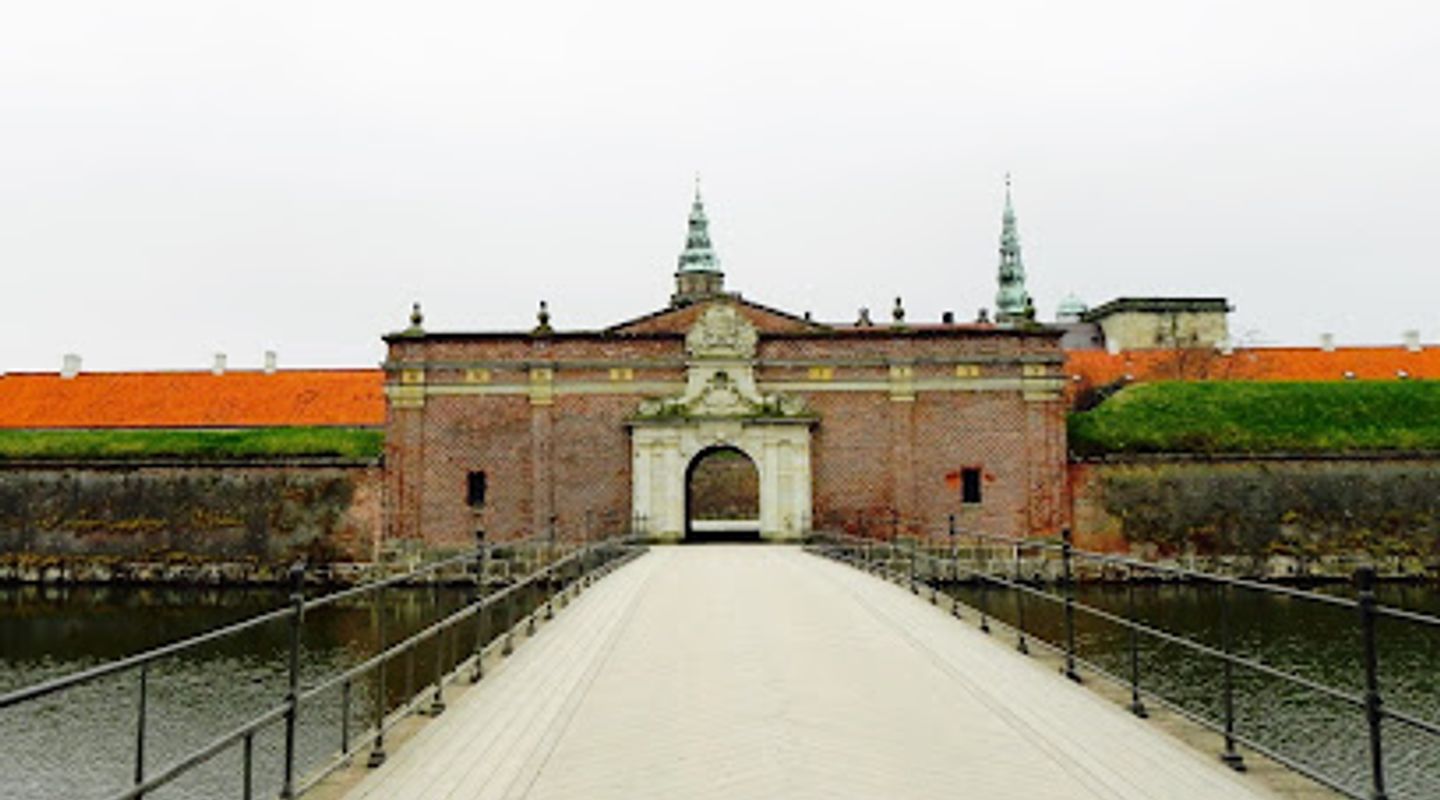
A brief summary of Holger Danske castillo copado
The legendary sleeping warrior beneath Kronborg Castle, waiting to awaken and defend Denmark in its darkest hour.
Deep beneath Kronborg Castle in Helsingør lies one of Denmark's most iconic symbols: a monumental concrete statue of Holger Danske, the legendary warrior who sleeps in the casemates until Denmark faces its darkest hour. According to Danish folklore, this mythical protector will awaken to defend the nation when danger threatens. The statue, originally cast in bronze in 1907 by sculptor Hans Peder Pedersen-Dan, has become a powerful emblem of Danish identity and resilience, immortalized in Hans Christian Andersen's 1846 fairy tale.
On-site amenities
 Restrooms
 Drink options
 Food options
 Seating areas
 Information boards
 Visitor centre
- Address
- Kronborg 1B, 3000 Helsingør
- Website
Getting there
Train from Copenhagen
Car from Copenhagen
Bus from Copenhagen
Guided tour from Copenhagen
Discover more about Holger Danske castillo copado
A Legend Rooted in European Folklore
Holger Danske originated not as a Danish hero but as Ogier the Dane, a legendary knight from medieval French literature who served at Charlemagne's court. The character first appeared in the Chanson de Roland, one of the principal works of French medieval literature. However, the Danes adopted and transformed this foreign legend with such enthusiasm that it became fundamentally Danish in character and meaning. By the 16th century, Danish chronicles had rewritten Holger's story, giving him a new pedigree as Olaf, son of King Gøtrik, and anchoring him firmly within Danish cultural identity. Over centuries, the legend evolved into a powerful symbol of Danish nationalism and patriotism, eventually becoming as essential to Danish identity as any native myth.
Hans Christian Andersen's Transformative Vision
While Holger Danske had circulated in Danish folklore for centuries before the 19th century, it was Hans Christian Andersen who fundamentally transformed the legend and secured its place in the national consciousness. In his 1846 fairy tale "Holger Danske," Andersen made a crucial creative decision: he placed the sleeping warrior in the casemates—the underground fortifications—beneath Kronborg Castle. This placement was inspired and deliberate. Andersen envisioned Holger resting in these subterranean chambers with his beard grown so long it merged with the marble table beneath him, waiting in eternal slumber. According to Andersen's version, an angel visits Holger every Christmas Eve to assure him that Denmark remains safe, allowing him to continue sleeping. However, should Denmark ever face grave peril, Holger will awaken, draw his sword, and rise to defend the fatherland. Andersen's narrative gave the ancient legend new emotional resonance and transformed Holger into a symbol of hope and protection that resonated deeply with Danish readers.
Kronborg's Strategic Significance and Symbolic Alignment
The connection between Holger Danske and Kronborg Castle extends far beyond Andersen's literary imagination. Kronborg occupies one of Europe's most strategically vital locations: the narrowest point of the Øresund Strait, the channel separating Denmark from Sweden. For centuries, Danish kings controlled access to the Baltic Sea from this fortress, collecting tolls from every merchant ship that passed through these waters. This made Kronborg far more than a military stronghold; it was the physical embodiment of Danish sovereignty and national power. The castle's history dates to the 1420s, when King Eric VII built the original fortress called Krogen. In the 16th century, King Frederick II transformed the medieval stronghold into a magnificent Renaissance castle, complete with advanced bastions and fortifications designed to withstand modern artillery. The symbolic pairing of Holger Danske—the legendary protector of Denmark—with Kronborg—the fortress that historically defended the nation's economic and military interests—was therefore inevitable and profoundly meaningful. Holger became the perfect mythical guardian for a castle that had genuinely guarded Denmark's interests for centuries.
The Statue's Journey and Material Evolution
The concrete figure visitors encounter today in Kronborg's casemates has an interesting history distinct from the legend itself. In 1907, the Hotel Marienlyst in Helsingør commissioned Danish sculptor Hans Peder Pedersen-Dan to create a bronze statue of Holger Danske. Rather than casting directly in bronze, Pedersen-Dan first created a large plaster model. This plaster version was placed in the casemates of Kronborg, where it was intended to be temporary. However, the plaster statue quickly captured public imagination and became far more famous than the bronze original, which remained outside the hotel. The plaster version endured in the damp, humid environment of the casemates for decades, gradually deteriorating from moisture exposure. In 1985, recognizing that the original plaster could not survive the relentless dampness, conservators replaced it with a concrete cast of the same design. This concrete version remains on display today, dramatically lit to emphasize its monumental presence in the underground chambers. The bronze statue, meanwhile, stood outside Hotel Marienlyst until 2013, when it was sold and relocated to the city of Skjern, where it continues to represent the legend in a different context.
Holger Danske in Modern Danish Identity
During World War II, Holger Danske transcended folklore to become a living symbol of resistance. One of Denmark's largest resistance groups fighting against German occupation adopted the name Holger Danske, drawing inspiration from the legend's message of a protector who awakens to defend the nation in its darkest hour. These resistance fighters risked their lives to protect Danish values, innocent civilians, and the country's sovereignty—embodying the spirit of the sleeping warrior who would rise when danger threatened. This historical connection transformed Holger from a fairy-tale character into a symbol of real Danish courage and sacrifice. Today, every Danish child grows up knowing the story of Holger Danske, and the figure remains one of the most recognizable national symbols in Denmark. The legend persists as a powerful expression of Danish identity, resilience, and the belief that protection and strength lie dormant, ready to emerge when needed most.
The Casemates: A Fortress Within a Fortress
The casemates where Holger rests are themselves historically significant. Built between 1574 and 1576 as part of Frederick II's Renaissance transformation of Kronborg, these underground fortifications were designed as a sophisticated military installation. The maze-like passages and chambers could shelter soldiers, horses, and provisions sufficient to sustain 1,000 men for up to six weeks. Small windows allowed defenders to fire cannons and other weapons while remaining protected. The damp, cold environment—with water running down stone walls and uneven "potato paving" worn smooth by centuries of footsteps—creates an atmospheric setting perfectly suited to the legend of a sleeping warrior. Visitors descending into these chambers experience not merely a tourist attraction but a genuine historical space that once served Denmark's defense, now housing a symbol of eternal vigilance.
Evendo Review Centre
 Google
Guest reviews
Best time to go
Quietest: Jan, Feb & Nov · before 7am or from 8pm
Busy times are Evendo estimates for a typical year, to help you plan. Actual crowds vary with events, school holidays and the weather.
Explore Holger Danske castillo copado on the map
A handpicked selection of must-see spots near Holger Danske castillo copado, mapped for you.
Get your free copy of our complete guide to Holger Danske castillo copado, delivered straight to you.
Everything on this page, from opening hours and how to get there to Eve’s tips and the best time to go, in one PDF you can read offline, print or share.
Already have an account? Sign in
Your Holger Danske castillo copado guide is ready.
We'll send it to · Not you? Sign out

Getting your guide ready…
We are putting together a fresh copy of the Holger Danske castillo copado guide. This can take up to a minute.
This can take a few moments. If your browser asks, choose Allow so the download can start. You'll find the guide in your Downloads folder.
Nothing happened? Download it again
Sorry, the guide is taking longer than usual. Please try again in a minute, or get it by email instead.
Other nearby places you may find interesting
The closest places of the same kind, if this one is not quite what you had in mind.
-
-
-
-
-


Swipe for more places
More to explore near Holger Danske castillo copado
-
 Best experiences near Holger Danske castillo copado
-
 Best hotels near Holger Danske castillo copado
-
 Best landmarks near Holger Danske castillo copado
-
 Best attractions near Holger Danske castillo copado
-
 Best shops near Holger Danske castillo copado
-
 Best restaurants near Holger Danske castillo copado
-
 Best bars near Holger Danske castillo copado


Do you manage this location?
Take control to get all the benefits, like improved information, better appearance, and stronger visibility across AI-powered discovery.
Explore more

Explore more of Helsingor
Discover Helsingør, Denmark's historic coastal city, home to Kronborg Castle and a vibrant cultural scene, offering a blend of history, scenic beauty, and local charm.
Explore Helsingor
Explore more of Denmark
Discover Denmark: A perfect blend of history, modern design, and the cozy concept of hygge. Explore vibrant cities, serene landscapes, and world-class cuisine.
Explore Denmark
