Børsen, Zealand Travel Guide
Renaissance trading hub transformed into a symbol of Danish commerce, now rising from fire.
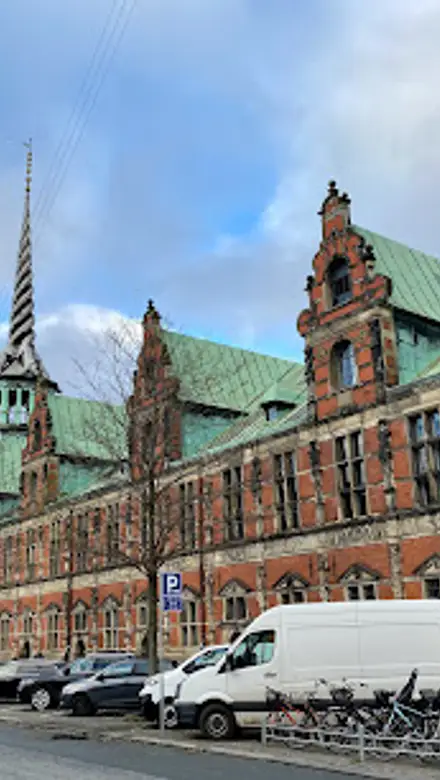
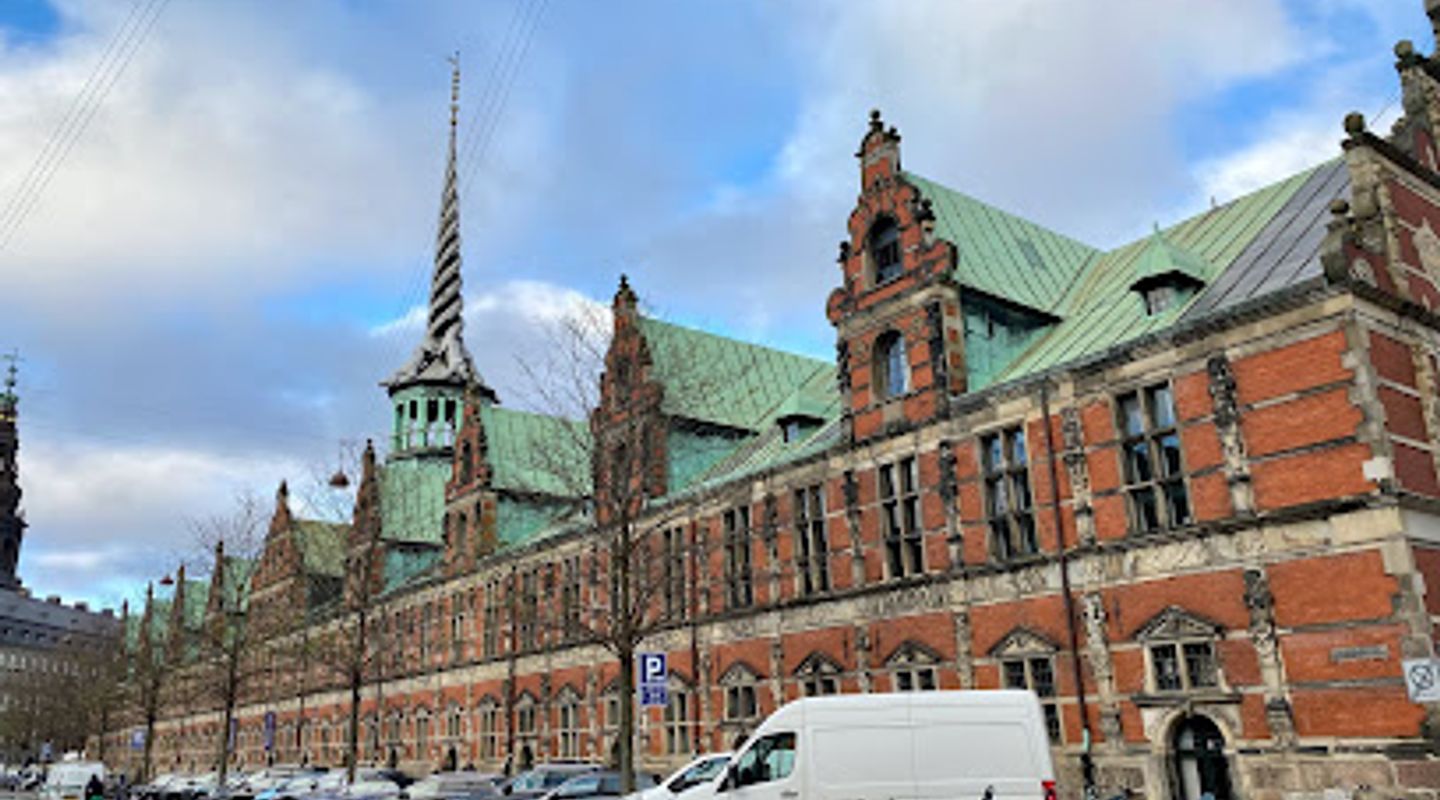
Børsen is Copenhagen's iconic Renaissance stock exchange building, completed in 1624 under Christian IV. This architectural masterpiece features a distinctive dragon spire and intricate Dutch Renaissance design. Once a vibrant marketplace and trading hub, it evolved into a modern financial center housing offices and meeting spaces. The building suffered significant fire damage in April 2024 and is undergoing comprehensive reconstruction to restore its historical grandeur while serving contemporary functions.
A brief summary to Børsen
- København K, København K, 1217, DK
- Click to display
- Click to display
- Duration: 0.5 to 2 hours
- Free
-
 Outdoor
- Mobile reception: 5 out of 5

Know before you go
Hi, I'm Eve. Here are a few practical things to know before exploring Børsen.
- The building is currently undergoing major reconstruction following the April 2024 fire. Check ahead for access and viewing opportunities, as public access may be limited during restoration work.
- The dragon spire (dragespir) is Børsen's most recognizable feature. Historically, the original lead roof was partially melted down for cannonballs during the 1658–1659 Swedish siege—a fascinating detail of Copenhagen's military past.
- Børsen's interior underwent significant changes over four centuries. The grand Børssalen was created in 1857 when the building transitioned from a physical marketplace to a modern stock exchange, reflecting major shifts in commercial practice.
- The building's 482 sandstone sculptures and decorative elements represent masterful Renaissance craftsmanship. Many of these details were restored in the 2022–2024 conservation project before the fire.
- Børsen was strategically positioned on the causeway between Slotsholmen and Christianshavn to maximize ship docking capacity. This urban planning decision reflects Christian IV's deliberate strategy to strengthen Copenhagen's role as a trading center.
Do you manage this location?
Take control to get all the benefits, like improved information, better appearance, and stronger visibility across AI-powered discovery. Learn more about listing your business on Evendo
Activate your presenceOther nearby places you may find interesting
The closest places of the same kind, if this one is not quite what you had in mind.
Explore Børsen on the Map
A handpicked selection of must-see spots near Børsen, mapped for you.
Unlock the Best of Børsen
Buy tickets
-
No tickets available
Book tours with entry


Getting There
-
Metro
Copenhagen Metro Line M1 or M2 to Gammel Strand station, approximately 2–3 minutes walk from Børsen. Journey time from central Copenhagen approximately 5–10 minutes depending on origin. Frequent service throughout the day. Single ticket approximately 24–36 DKK.
-
Bus
Multiple bus routes serve the area, including routes 2A, 6A, and 9A, stopping near Børsen or within 5–10 minutes walk. Journey times vary from 10–25 minutes depending on starting point and traffic. Single ticket approximately 24 DKK. Service runs regularly throughout the day.
-
Walking
Børsen is centrally located in Copenhagen's historic inner city. Walking from Nyhavn takes approximately 8–10 minutes via Kongens Nytorv and Strøget. From Tivoli Gardens, approximately 12–15 minutes. The route is flat, well-paved, and passes through pedestrian-friendly streets with clear signage.
-
Bicycle
Copenhagen's extensive cycle network provides easy access. Bike lanes lead directly to Børsen from most central locations. Journey times approximately 5–10 minutes from central areas. Public bike-sharing systems (Bycyklen) available throughout the city with stations near the location. No rental fee required for short trips.
For the on-the-go comforts that matter to you
-
 Information Boards
-
 Nearby Food Options
-
 Nearby Restrooms
Discover more about Børsen
A Monument to Christian IV's Vision for Trade
Børsen stands as one of Copenhagen's most significant architectural achievements, built between 1620 and 1624 under the patronage of King Christian IV. The building was strategically positioned on a narrow causeway connecting Slotsholmen to the newly established district of Christianshavn, serving as a physical embodiment of the king's ambition to transform Copenhagen into a major Nordic trading center. Designed by the van Steenwinckel brothers—Lorenz and Hans—the structure exemplifies Dutch Renaissance architecture, with its distinctive dragon spire becoming an iconic silhouette on the Copenhagen skyline. The building's placement was deliberately calculated to maximize the number of ships that could dock simultaneously, reflecting its primary purpose as a commercial hub where merchants, shipowners, financiers, and traders converged.From Marketplace to Financial Institution
Originally conceived as a simple sales hall with storage rooms on the ground floor and shops and offices above, Børsen quickly became the beating heart of Copenhagen's commercial life. In its early decades, the building housed approximately 40 street-level shops, the city's first post office, and its first bookshop—establishments that would become standard features of urban centers. The structure's function underwent a dramatic transformation in 1857 when architect H.C. Stilling redesigned it as a modern stock exchange, converting the main hall into the grand Børssalen that became synonymous with financial trading. This evolution from physical marketplace to securities exchange marked a pivotal moment in the building's history, reflecting broader economic shifts in European commerce.Architectural Evolution and Restoration Challenges
Throughout its four centuries of existence, Børsen has undergone numerous modifications that have both preserved and altered its character. A particularly significant intervention occurred between 1880 and 1883, when the original red and yellow flamed brickwork was replaced with thin red brick tiles set in cement mortar—a decision that would later compromise the building's structural integrity. The building's original lead roof was partially dismantled during the Swedish siege of Copenhagen in 1658–1659, with the metal repurposed into cannonballs; the resulting damage was only partially repaired with sheet metal and tile until a copper roof was installed in the late nineteenth century. By 2022, the building's facades had deteriorated significantly, prompting a comprehensive restoration initiative that included a new copper roof, replacement of damaged brickwork, and restoration of 482 intricate sandstone sculptures and decorative elements.The April 2024 Fire and Path Forward
On April 16, 2024, a devastating fire destroyed approximately half of the Børsen building, consuming the historic Børssalen, the library, the iconic dragon spire, and numerous ground-floor offices. This catastrophic event marked a turning point in the building's long history, necessitating not merely restoration but comprehensive reconstruction. The fire has prompted a reimagining of Børsen's future role in Copenhagen's cultural and commercial landscape. Current reconstruction plans envision the building serving a dual purpose: housing offices for Dansk Erhverv (Danish Business) alongside public-facing cultural and historical programming. The reconstruction is conceived not as a simple replica but as a new chapter in the building's evolving narrative, with proposals including a modern interpretation of the historic Børssalen and a public dining space that functions as both workplace cafeteria and public restaurant.Ownership and Institutional Significance
Since 1855, Børsen has been owned by Grosserer-Societetet Børsen, which later became Dansk Erhverv (formerly known as Det Danske Handelskammer). This continuity of ownership has ensured the building's preservation as a functioning commercial and cultural institution rather than a museum piece. The building's significance extends beyond its architectural merit; it represents a tangible connection to Copenhagen's development as a trading metropolis and embodies the evolution of commercial practices from medieval marketplace to modern financial center. Its role in housing Denmark's business community for nearly two centuries has made it a symbol of Danish entrepreneurship and economic development.Architectural Heritage and Cultural Meaning
Børsen ranks among Denmark's most important architectural works and represents one of the relatively few surviving Renaissance buildings in Northern Europe. The structure's Dutch Renaissance style, characterized by its ornate sandstone decorations, distinctive spire, and carefully proportioned facades, demonstrates the sophisticated architectural knowledge brought to Copenhagen through international trade networks. The building's cultural significance lies not only in its aesthetic qualities but in its role as a physical manifestation of how architecture shapes commercial and social life. The ongoing reconstruction efforts, informed by hundreds of historical photographs and architectural drawings preserved in Copenhagen's archives, represent a commitment to maintaining this connection between past and present, ensuring that future generations can experience the building's historical layers while engaging with contemporary functions and meanings.












Your all‑in‑one travel companion app
Explore expert travel guides, compare and book tours, experiences, hotels, and more—all from the palm of your hand. Download now for seamless trip planning wherever your wanderlust takes you.


Explore More of Zealand
Looking beyond Børsen? Discover Zealand for broader travel guides, local hot-spots, and regional highlights.
Explore Zealand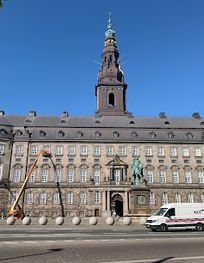
Historic palace in central Copenhagen featuring lavish royal halls, government chambers, ancient ruins, and sweeping tower views in the heart of Indre By.
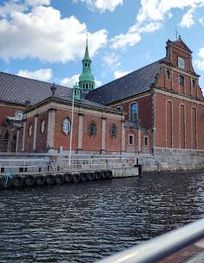
A Renaissance gem transformed from anchor forge to naval sanctuary, where maritime heritage and royal history converge.