

Holmens Bro, Copenhagen Travel Guide
A modest granite arch in central Copenhagen that quietly connects Slotsholmen’s palaces with the city’s streets, offering classic harbour views and everyday urban life.
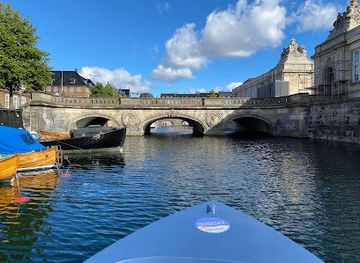
Holmens Bro is a low granite arch bridge spanning the inner harbour in central Copenhagen, linking the historic island of Slotsholmen with the city’s bustling core. Built in 1954 to replace an ornate 19th-century bridge, it sits amid a cluster of major sights, with views toward Christiansborg Palace, the former stock exchange, and the harbourfront. Today it is a busy crossing for cyclists, buses, and pedestrians, and a fine vantage point for appreciating the city’s blend of water, history, and architecture.
A brief summary to Holmens Bro
- Copenhagen, Indre By, DK
- Duration: 0.5 to 1 hours
- Free
-
 Outdoor
- Mobile reception: 5 out of 5

Know before you go
Hi, I'm Eve. Here are a few practical things to know before exploring Holmens Bro.
- Pause midway across the bridge to look both up and down the harbour; the perspective ties together Christiansborg Palace, historic commercial buildings, and the busy canals.
- Combine a walk over Holmens Bro with a canal boat tour departing nearby to appreciate the bridge and surrounding architecture from water level.
- Visit around early evening on a clear day when the low light and building lamps create reflections on the water and a more atmospheric view.
Do you manage this location?
Take control to get all the benefits, like improved information, better appearance, and stronger visibility across AI-powered discovery. Learn more about listing your business on Evendo
Activate your presenceOther nearby places you may find interesting
The closest places of the same kind, if this one is not quite what you had in mind.


Explore Holmens Bro on the Map
A handpicked selection of must-see spots near Holmens Bro, mapped for you.
Unlock the Best of Holmens Bro
Buy tickets
-
No tickets available
Book tours with entry
-
No tours available
Book tours without entry

Getting There
-
Metro and short walk
From Nørreport Station, take the M1 or M2 metro one stop to Kongens Nytorv, a journey of about 2–3 minutes. Trains run every few minutes throughout the day and a single zone ticket typically costs around 20–25 DKK. From Kongens Nytorv it is an easy 10–15 minute walk on mostly level pavements to Holmens Bro. This option is suitable for most visitors, though some cobblestone sections can be uneven for wheelchairs or prams.
-
City bus
Several central city bus routes run along the streets adjoining Slotsholmen and the inner harbour, with typical journey times of 10–20 minutes from hubs such as Copenhagen Central Station depending on traffic. Expect to pay roughly 20–25 DKK for a single ticket purchased via the official public transport app or ticket machines. Buses are generally low-floor and accessible, but they can be crowded at peak commuter hours and service frequency may reduce late at night and on some holidays.
-
Bicycle
Cycling to Holmens Bro from central districts such as Vesterbro, Nørrebro or Østerbro usually takes 10–20 minutes along Copenhagen’s dedicated bike lanes. Many hotels and local shops rent bicycles, with typical daily rental prices starting around 120–180 DKK depending on style and duration. Traffic is used to cyclists, but visitors should be comfortable riding in busy bike lanes and observing local cycling etiquette, especially during morning and late afternoon rush hours.
For the on-the-go comforts that matter to you
-
 Trash Bins
-
 Information Boards
-
 Seating Areas
Discover more about Holmens Bro
A modest bridge in the historic heart of Copenhagen
Holmens Bro may not look dramatic at first glance, but place yourself at its centre and the geography of Copenhagen suddenly makes sense. The single-span granite arch reaches over the inner harbour between the island of Slotsholmen, home to the country’s political power, and the commercial streets of Indre By. Traffic hums steadily past, yet the water below and the stone beneath your feet evoke a calmer, older city built around its harbour.Stand at the railing and you are effectively on a balcony between two different faces of the capital: royal and civic on one side, mercantile and modern on the other. It is this position, more than any ornament, that gives Holmens Bro its quiet importance.From ornate 19th‑century crossing to 1950s granite arch
The present Holmens Bro dates from 1954, when it replaced an earlier bridge from 1878 designed by Vilhelm Dahlerup, a prolific architect of Copenhagen’s late‑19th‑century boom. That first iron structure, richly decorated in the style of the period, reflected a time when the city was eager to show off its growing prosperity.By the mid‑20th century, heavier traffic and new engineering standards led to a more robust, restrained design. The current bridge is a closed‑spandrel arch in granite, its curves simple and solid rather than showy. Even so, you can still imagine how its predecessor once framed the harbour as part of a grander ensemble of quays, towers, and spires.Slotsholmen’s palaces, churches and spires all around
Holmens Bro sits at the edge of Slotsholmen, the island that has housed castles, palaces, and government buildings since the Middle Ages. From the bridge you can look toward Christiansborg Palace, seat of the Danish Parliament and a symbol of the state’s continuity, with its tower rising above the rooftops.Nearby, the distinctive silhouette of the old stock exchange building and other historic façades trace the story of Copenhagen as a trading city. To the east lies the harbour that once carried herring fleets and merchant ships, later warships and ferries, and now sightseeing boats, harbour buses, and kayaks. Holmens Bro is less a destination in itself than a vantage point on this layered cityscape.Everyday rhythms on a key urban crossing
Although short, the bridge is one of the small structural hinges that keep Copenhagen moving. Buses glide over its gentle rise, cyclists stream in both directions, and office workers and students cross on foot throughout the day. At rush hour, the flow of bikes and buses underlines the city’s reputation for human‑scaled transport, while in quieter moments the bridge can feel almost contemplative.Looking down, tour boats slide beneath the arch, their guides’ voices drifting up. Gulls circle overhead and the slap of water against the quay adds a soft soundtrack. The bridge is a reminder that in Copenhagen, infrastructure and public space often blur—this is simultaneously a transport link, a tiny viewing platform, and an informal meeting point.Experiencing the harbour light and changing seasons
Holmens Bro rewards those who linger for a few minutes. On clear days, the low northern light glints off the water and the stone, sharpening the outlines of towers and gables. In winter, mist can soften the scene so that buildings appear almost as silhouettes across the canal. At night, reflections from streetlamps and illuminated façades ripple on the surface below.Seasons change the feel of the bridge as much as the view. Summer can bring a steady murmur of sightseeing boats and the buzz of outdoor cafés along nearby quays. On cold days, a brisk wind off the harbour adds bite to the air and makes the brief crossing feel more elemental. Yet in every season, Holmens Bro offers a quick, revealing snapshot of how Copenhagen lives with its water.












Your all‑in‑one travel companion app
Explore expert travel guides, compare and book tours, experiences, hotels, and more—all from the palm of your hand. Download now for seamless trip planning wherever your wanderlust takes you.


Explore More of Copenhagen
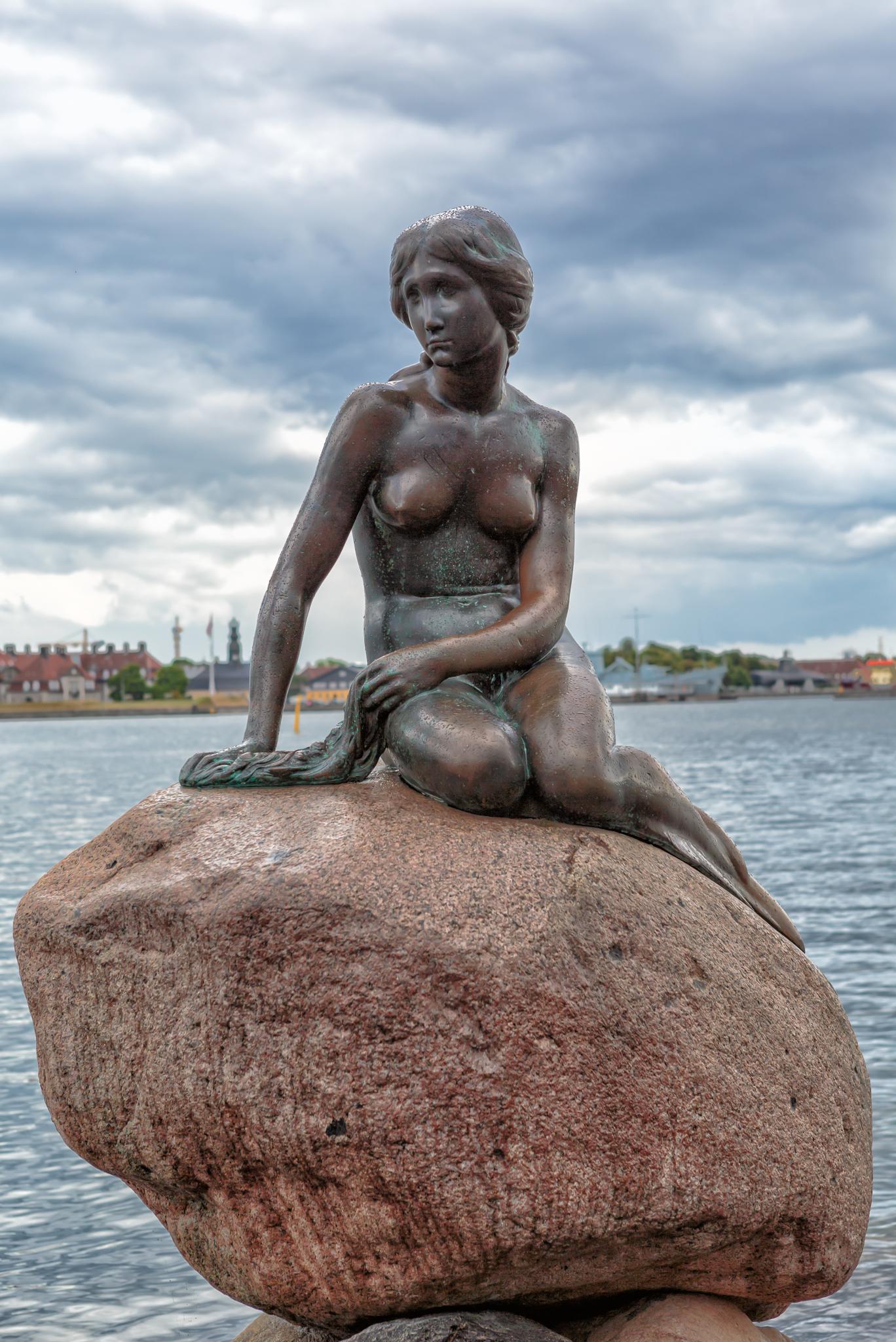
Looking beyond Holmens Bro? Discover Copenhagen for broader travel guides, local hot-spots, and regional highlights.
Explore Copenhagen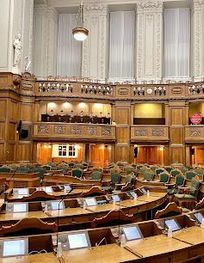
Where granite walls, royal ceremony and daily debates meet: the Danish Parliament at Christiansborg is Copenhagen’s living monument to centuries of power.
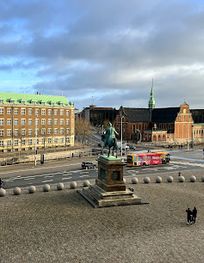
Bronze monument in central Copenhagen commemorating King Frederik VII and Denmark’s 19th-century transition to constitutional monarchy, steps from political landmarks.
