

Famine Stela Travel Guide
Free Guide: Explore the ancient Famine Stela in Aswan, a Ptolemaic inscription recounting Pharaoh Djoser's response to a devastating seven-year drought.


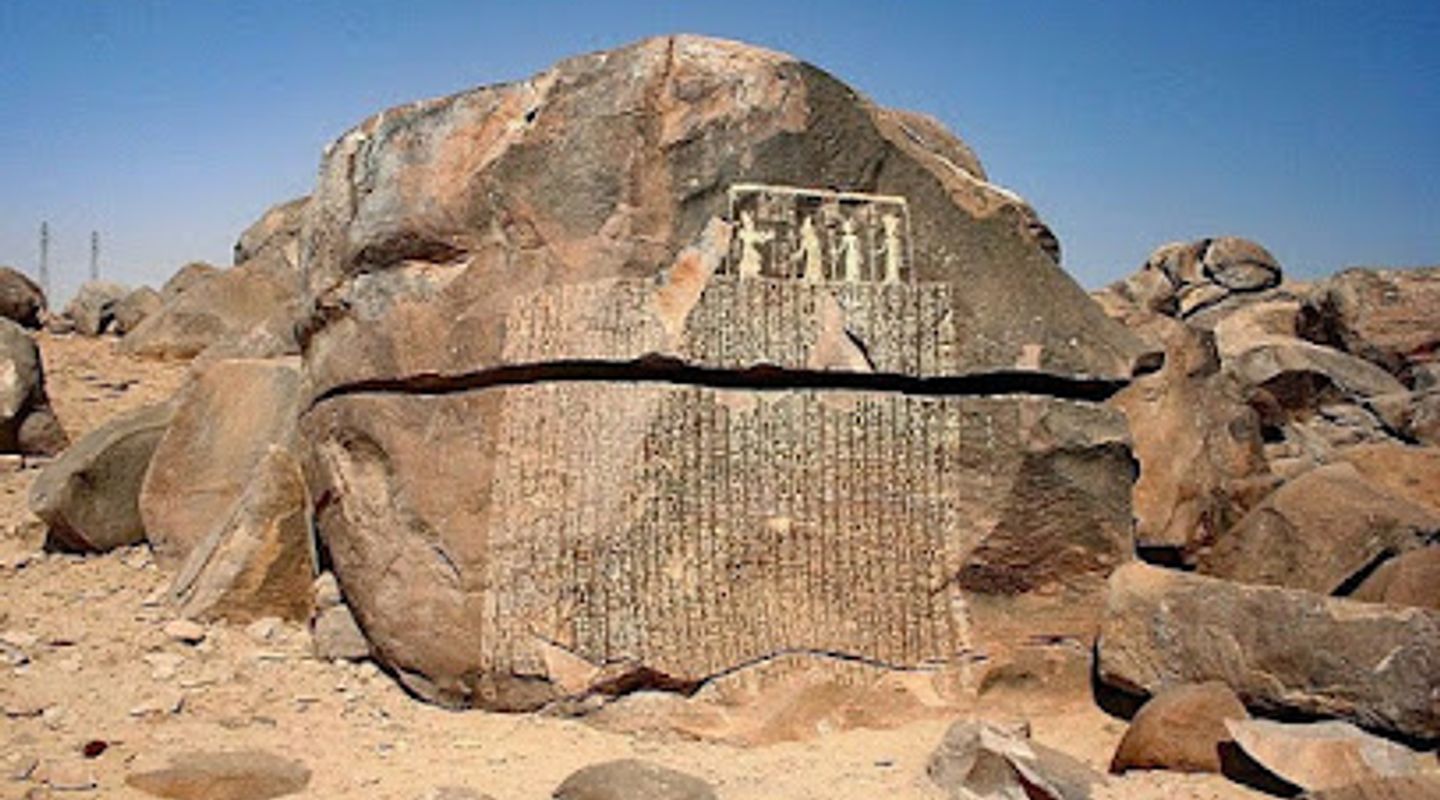
A brief summary of Famine Stela
Explore the ancient Famine Stela in Aswan, a Ptolemaic inscription recounting Pharaoh Djoser's response to a devastating seven-year drought.
The Famine Stela, located on Sehel Island near Aswan, is an ancient Egyptian inscription recounting a seven-year drought and famine during the reign of Pharaoh Djoser. Carved during the Ptolemaic Kingdom, it offers insights into ancient Egyptian beliefs and their response to natural disasters.
- Address
- 3V5F+2MG, Sheyakhah Thaneyah, Aswan 1, Aswan Governorate 1240712
Getting there
Public Transport
Taxi
Car
Discover more about Famine Stela
Overview
The Famine Stela is an inscription carved into a granite block on Sehel Island in the Nile near Aswan. The inscription tells the story of a seven-year drought and famine during the reign of Pharaoh Djoser of the Third Dynasty. Although the story is set during Djoser's reign (around 2650 BC), the stela itself is believed to have been inscribed during the Ptolemaic Kingdom (332 to 31 BC).The stela depicts Djoser making offerings to the gods Khnum, Satis, and Anuket. The text describes the king's distress over the famine and his appeal to the priests to seek a solution. The priests advised Djoser to make offerings to Khnum, the god of water in the Aswan region, and to provide his temple with property. The inscription consists of 32 columns of hieroglyphs. The stela provides insights into the religious beliefs and practices of ancient Egyptians, as well as their methods of coping with natural disasters.Visitors to the Famine Stela can appreciate the intricate hieroglyphics and the historical context of the inscription. The surrounding landscape of the Nile River and the Aswan desert adds to the experience.
Evendo Review Centre
 Google
Guest reviews
Explore Famine Stela on the map
A handpicked selection of must-see spots near Famine Stela, mapped for you.
Get your free copy of our complete guide to Famine Stela, delivered straight to you.
Everything on this page, from opening hours and how to get there to Eve’s tips and the best time to go, in one PDF you can read offline, print or share.
Already have an account? Sign in
Your Famine Stela guide is ready.
We'll send it to · Not you? Sign out

Getting your guide ready…
We are putting together a fresh copy of the Famine Stela guide. This can take up to a minute.
This can take a few moments. If your browser asks, choose Allow so the download can start. You'll find the guide in your Downloads folder.
Nothing happened? Download it again
Sorry, the guide is taking longer than usual. Please try again in a minute, or get it by email instead.
Other nearby places you may find interesting
The closest places of the same kind, if this one is not quite what you had in mind.
-
-
-
-
-


Swipe for more places
More to explore near Famine Stela

 Best experiences near Famine Stela
 Best hotels near Famine Stela
 Best landmarks near Famine Stela
 Best attractions near Famine Stela
 Best shops near Famine Stela
 Best restaurants near Famine Stela
 Best bars near Famine Stela
Do you manage this location?
Take control to get all the benefits, like improved information, better appearance, and stronger visibility across AI-powered discovery.
Explore more

Explore more of Lower Egypt
Discover the timeless wonders of Lower Egypt, from the iconic Pyramids of Giza to the historic treasures of Alexandria, all set against the backdrop of the majestic Nile Delta.
Explore Lower Egypt
Explore more of Egypt
Discover Egypt: From the timeless pyramids to the vibrant Red Sea, experience a land where ancient wonders meet modern adventures.
Explore Egypt
