Abu Simbel Temples Travel Guide
Free Guide: Discover the majestic Abu Simbel temples, a testament to ancient Egyptian power and architectural prowess, relocated to preserve its legacy.


A brief summary of Abu Simbel Temples
Discover the majestic Abu Simbel temples, a testament to ancient Egyptian power and architectural prowess, relocated to preserve its legacy.
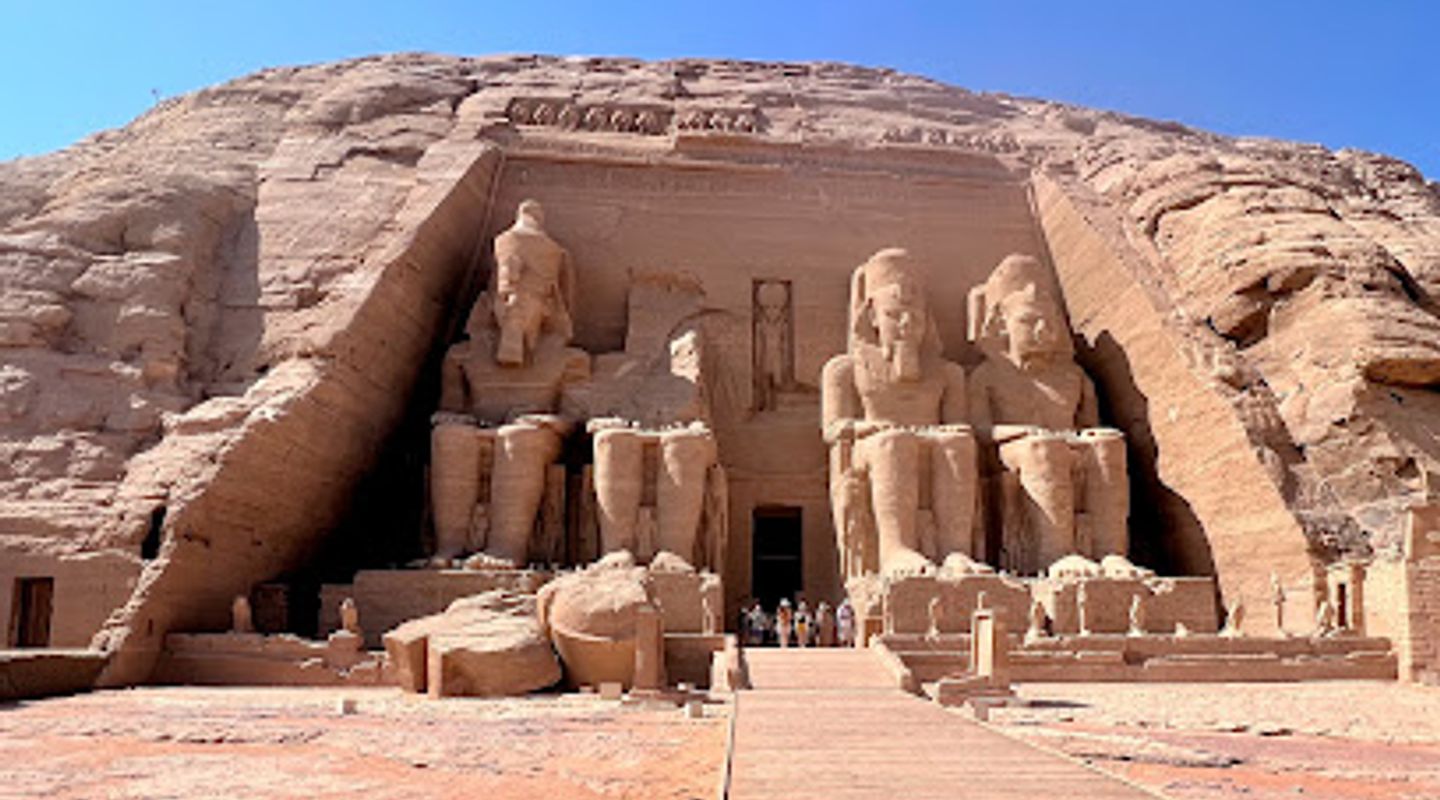
The Abu Simbel temples, located in southern Egypt, are a stunning testament to the power and ambition of Pharaoh Ramesses II. Carved into a mountainside in the 13th century BC, the twin temples were dedicated to the gods and to Ramesses II and his wife Nefertari. Relocated in the 1960s to save them from the rising waters of the Aswan High Dam, they remain an awe-inspiring sight.
Opening hours
- Every day5 am–6 pm
Opening hours as listed on the venue’s Google Business Profile. Hours can change for services and special events, so check with the venue before you go.
- Address
- Abu Simbel, Aswan Governorate 1211501
- Phone
- Website
Getting there
Flight
Taxi
Tour Bus
Discover more about Abu Simbel Temples
Overview
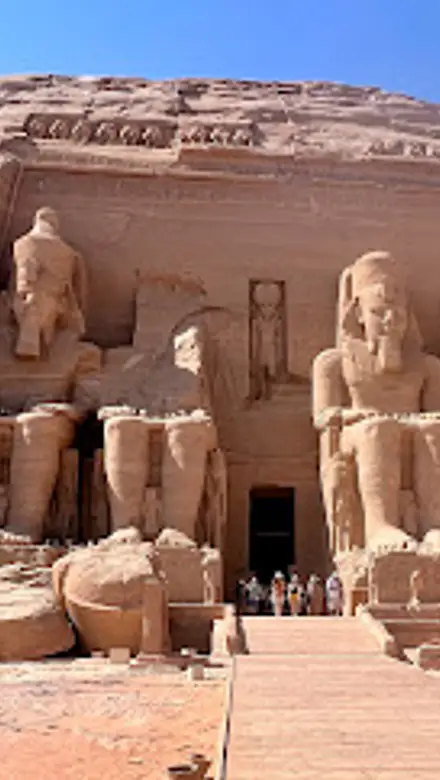
The Abu Simbel temples, located on the western bank of Lake Nasser, stand as a remarkable feat of ancient engineering and a lasting symbol of Pharaoh Ramesses II's reign. Constructed in the 13th century BC, during the 19th Dynasty, the complex comprises two main temples: the Great Temple, dedicated to Ramesses II himself and the gods Amun-Ra, Ra-Horakhty, and Ptah, and the Small Temple, dedicated to his beloved wife Nefertari and the goddess Hathor.The Great Temple's facade is dominated by four colossal statues of Ramesses II, each over 20 meters tall, carved directly into the rock face. These imposing figures were designed to project the pharaoh's power and divinity. Inside, a series of halls and chambers are adorned with intricate carvings and artwork depicting Ramesses' military victories, religious rituals, and scenes of daily life.The Small Temple, located a short distance north of the Great Temple, features six statues on its facade: four of Ramesses II and two of Nefertari. Unusually, Nefertari's statues are almost the same size as those of the pharaoh, highlighting her importance and the great affection Ramesses II held for her. The interior of the Small Temple is decorated with scenes of the royal couple making offerings to the gods.In the 1960s, the temples faced a major threat due to the construction of the Aswan High Dam, which would have submerged them under the rising waters of Lake Nasser. An international rescue effort, led by UNESCO, dismantled the entire complex and relocated it to higher ground, preserving it for future generations. Today, Abu Simbel is a UNESCO World Heritage site and a major tourist destination, attracting visitors from around the world who come to marvel at its grandeur and learn about its fascinating history.Twice a year, around February 22 and October 22, a remarkable phenomenon occurs at the Great Temple. The rays of the rising sun penetrate the entire length of the temple, illuminating the statues of the gods in the innermost sanctuary, except for Ptah, the god of the underworld, who remains in shadow. This event, known as the Abu Simbel Sun Festival, draws crowds of people who gather to witness this incredible display of ancient Egyptian engineering and astronomical knowledge.
Evendo Review Centre
 Google
Guest reviews
Explore Abu Simbel Temples on the map
A handpicked selection of must-see spots near Abu Simbel Temples, mapped for you.
Get your free copy of our complete guide to Abu Simbel Temples, delivered straight to you.
Everything on this page, from opening hours and how to get there to Eve’s tips and the best time to go, in one PDF you can read offline, print or share.
Already have an account? Sign in
Your Abu Simbel Temples guide is ready.
We'll send it to · Not you? Sign out

Getting your guide ready…
We are putting together a fresh copy of the Abu Simbel Temples guide. This can take up to a minute.
This can take a few moments. If your browser asks, choose Allow so the download can start. You'll find the guide in your Downloads folder.
Nothing happened? Download it again
Sorry, the guide is taking longer than usual. Please try again in a minute, or get it by email instead.
Unlock the best of Abu Simbel Temples
Skip-the-line tickets, guided tours with entry, and walking tours of the area, booked in a few clicks.


 Tour with entry
Abu Simbel Temple Day Trip - guide upon request
from $33.25 Tour with entry
Private Giza Pyramids with Local Breakfast (Foul & Falafel)
from $33.25 Tour with entry
Cairo night tour : khan el khalili, dinner and a free felucca
from $35.15 Tour with entry
Tour to Abu Simbel Temple with a small group and a Professional tour guide
from $38.00


Other nearby places you may find interesting
The closest places of the same kind, if this one is not quite what you had in mind.
-
-
-
-
-


Swipe for more places
More to explore near Abu Simbel Temples

 Best experiences near Abu Simbel Temples
 Best hotels near Abu Simbel Temples
 Best landmarks near Abu Simbel Temples
 Best attractions near Abu Simbel Temples
 Best shops near Abu Simbel Temples
 Best restaurants near Abu Simbel Temples
 Best bars near Abu Simbel Temples
Do you manage this location?
Take control to get all the benefits, like improved information, better appearance, and stronger visibility across AI-powered discovery.
Explore more

Explore more of Upper Egypt
Explore Upper Egypt: A Journey Through Ancient Temples, Majestic Tombs, and the Timeless Beauty of the Nile River in the Heart of Egypt.
Explore Upper Egypt
Explore more of Egypt
Discover Egypt: From the timeless pyramids to the vibrant Red Sea, experience a land where ancient wonders meet modern adventures.
Explore Egypt