

Maison des Quatrans, Caen Travel Guide
Free Guide: Discover the Maison des Quatrans in Caen, a beautifully restored 15th-century half-timbered house offering a captivating glimpse into the city's medieval past and rich cultural heritage.


A brief summary of Maison des Quatrans
Discover the Maison des Quatrans in Caen, a beautifully restored 15th-century half-timbered house offering a captivating glimpse into the city's medieval past and rich cultural heritage.
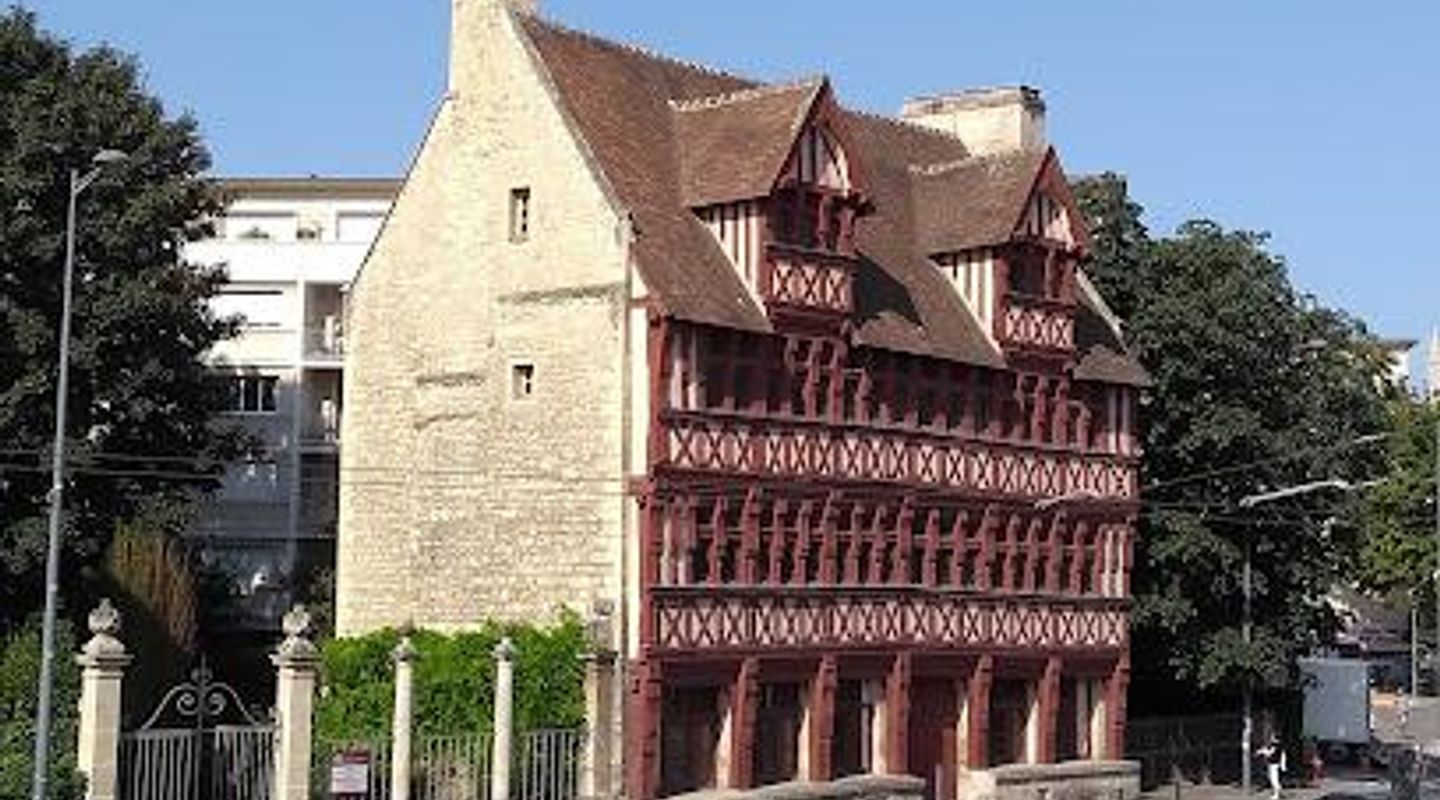
The Maison des Quatrans, a remarkable half-timbered house dating back to the 1460s, stands as one of Caen's rare surviving examples of medieval domestic architecture. Located on Rue de Geôle, in the heart of the old city center, this historical landmark offers visitors a captivating glimpse into the region's rich cultural heritage. Despite sustaining damage during the Battle of Caen in 1944, the Maison des Quatrans has been carefully restored, preserving its original features and charm. Today, it houses several cultural associations and serves as a testament to the enduring legacy of French history and craftsmanship. Its proximity to other significant sites, such as the Château de Caen and the Musée de Normandie, makes it an ideal starting point for exploring the city's historical treasures. A visit here provides an immersive experience, connecting you with the vibrant tapestry of Caen's past and offering a unique perspective on medieval urban life.
- Address
- 25 Rue de Geôle, 14000 Caen
- Phone
Getting there
Public Transport
Walking
Taxi/Ride-Share
Driving
Discover more about Maison des Quatrans
Overview
The Maison des Quatrans, nestled in the heart of Caen's historic center, is a captivating testament to the city's rich medieval past. Constructed in the 1460s, this half-timbered house stands as one of the few remaining examples of pre-war architecture in Caen, offering a tangible link to a bygone era. Located on Rue de Geôle, once a vital thoroughfare connecting Porte Saint-Julien to Place Saint-Pierre, the Maison des Quatrans provides a glimpse into the daily life and architectural styles of medieval Caen. Originally known as the Hôtel des Quatrans, the house derives its name from a historical mix-up with another manor, the Manoir du Four Quatrans, which belonged to the Quatrans family, royal tabellions in Caen. The land on which the Maison des Quatrans stands was acquired by Michel Le Fevre, a wealthy tanner, in the mid-15th century. Le Fevre constructed the house around 1460, featuring a long facade facing the street and establishing a tannery along the Petit Odon river to the south. Over the centuries, the Maison des Quatrans underwent several modifications. In the early 16th century, Jean Le Fevre, Michel's son, adorned the first-floor wall of the main building. Louis Le Fevre further transformed the residence, adding a Renaissance-style staircase tower in the courtyard in 1541. The dormer windows on either side of the turret, framed by pilasters and topped with intricate pediments, mirrored those of the Hôtel d'Escoville, built during the same period. Before 1944, the Maison des Quatrans was part of a dense neighborhood, forming a chain of private mansions along Rue de Geôle. However, during the Battle of Caen in 1944, the house suffered significant damage from bombings, with its roofs blown off and masonry severely shaken. The south gable and staircase turret were particularly affected. Despite the destruction, the Maison des Quatrans was classified as a historical monument in 1953, recognizing its cultural and architectural significance. In the years following the war, architect Marcel Poutaraud took a keen interest in the building, envisioning its rehabilitation. In the 1950s, the administration of historical monuments was established there. From 1958 to 1960, a garden project was designed, enclosing the area with a grid to allow views into the interior. This archaeological garden displays carved stones recovered from the ruins, some belonging to the Society of Antiquaries of Normandy. Today, the Maison des Quatrans houses several cultural associations, continuing its legacy as a center for arts and heritage. Its architecture, characterized by half-timbered construction and intricate detailing, reflects the aesthetic preferences of medieval Caen. The facade facing the street is primarily wood-paneled, while the main structure is made of Caen stone, a testament to the region's abundant resources. The polygonal staircase tower, topped with a rectangular upper chamber, is a typical feature of the region's architecture. Visiting the Maison des Quatrans offers a unique opportunity to step back in time and experience the atmosphere of medieval Caen. Its central location makes it easily accessible and a perfect starting point for exploring other historical landmarks in the city, such as the Château de Caen, the Musée de Normandie, and the Église Saint-Pierre. The Maison des Quatrans stands as a symbol of resilience and cultural preservation, inviting visitors to discover the enduring legacy of Caen's past. Exploring the surrounding area, visitors can appreciate the blend of historic and modern architecture that defines Caen. The nearby Vaugueux district, miraculously spared from the bombings of World War II, features half-timbered houses and a lively atmosphere with numerous restaurants and shops. Rue Froide, the oldest street in Caen, offers a charming cobbled alley with independent shops and bookshops, providing a glimpse into the city's medieval character. The Maison des Quatrans not only showcases the architectural beauty of the past but also serves as a reminder of the city's historical struggles and triumphs. Its preservation and restoration reflect a commitment to honoring Caen's heritage and providing future generations with a tangible connection to their roots. As visitors wander through its rooms and gardens, they can imagine the lives of those who once inhabited this remarkable building, gaining a deeper understanding of Caen's cultural identity and its place in the broader narrative of French history. The Maison des Quatrans is more than just a historical site; it is a living testament to the enduring spirit of Caen and its people.
Evendo Review Centre
 Google
Guest reviews
Explore Maison des Quatrans on the map
A handpicked selection of must-see spots near Maison des Quatrans, mapped for you.
Get your free copy of our complete guide to Maison des Quatrans, delivered straight to you.
Everything on this page, from opening hours and how to get there to Eve’s tips and the best time to go, in one PDF you can read offline, print or share.
Already have an account? Sign in
Your Maison des Quatrans guide is ready.
We'll send it to · Not you? Sign out

Getting your guide ready…
We are putting together a fresh copy of the Maison des Quatrans guide. This can take up to a minute.
This can take a few moments. If your browser asks, choose Allow so the download can start. You'll find the guide in your Downloads folder.
Nothing happened? Download it again
Sorry, the guide is taking longer than usual. Please try again in a minute, or get it by email instead.
Unlock the best of Maison des Quatrans
Skip-the-line tickets, guided tours with entry, and walking tours of the area, booked in a few clicks.

Other nearby places you may find interesting
The closest places of the same kind, if this one is not quite what you had in mind.
-
-
-
-
-


Swipe for more places
More to explore near Maison des Quatrans

 Best experiences near Maison des Quatrans
 Best hotels near Maison des Quatrans
 Best landmarks near Maison des Quatrans
 Best attractions near Maison des Quatrans
 Best shops near Maison des Quatrans
 Best restaurants near Maison des Quatrans
 Best bars near Maison des Quatrans
Do you manage this location?
Take control to get all the benefits, like improved information, better appearance, and stronger visibility across AI-powered discovery.
Explore more

Explore more of Caen
Discover Caen: A city where history meets modern vibrancy. From medieval abbeys to bustling markets, explore the rich heritage and vibrant culture of Normandy's hidden gem.
Explore Caen
Explore more of France
Explore France: A land of romance, history, and unparalleled beauty, from the iconic streets of Paris to the serene landscapes of Provence and the luxury of the French Riviera.
Explore France
