

Vieux Port (La Rochelle) Travel Guide - Free
Explore Vieux Port in La Rochelle with Evendo's free guide. Find the best shops, historic streets, restaurants, and gems on web or mobile.


Vieux Port in La Rochelle pairs medieval harbour towers, Atlantic history, waterfront cafés, seafood markets and walkable quays with easy access to the old town.
A Harbour at the City’s Centre
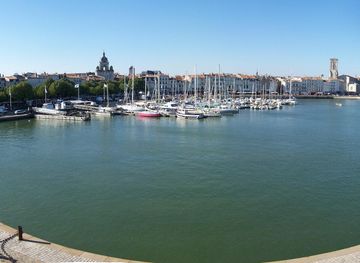
Vieux Port is the historic waterfront of La Rochelle, where the old town opens towards the Atlantic through a screen of medieval fortifications. The harbour stretches inland from the sea between the Tour Saint-Nicolas and Tour de la Chaîne, while the smaller Tour de la Lanterne stands nearby along the former defensive waterfront. Their pale stone façades, shaped by centuries of salt air and changing light, give the port its instantly recognisable character. Along the quays, fishing boats, sailing vessels and pleasure craft share the water with ferries and harbour excursions, while cafés and restaurants occupy the edges of the pedestrianised centre.Read more about Vieux Port
Quays, Streets and Everyday Life
Atlantic Culture and Waterfront Discovery
Explore Vieux Port on the map
A handpicked selection of must-see spots in Vieux Port, mapped for you.
Best hotels in Vieux Port
Vieux Port essentials
Getting There
Getting Around
Safety
Emergency Situations
Do's and Don'ts
Local Tips

From Eve
Local phrases worth knowing
You don't need to get them perfect. A few words go a long way, and locals appreciate the effort.
Basics
| English | Local | Say it |
|---|---|---|
| Hello | Bonjour | [bohn-zhoor] |
| Goodbye | Au revoir | [oh ruh-vwahr] |
| Yes | Oui | [wee] |
| No | Non | [nohn] |
| Please/You're welcome | S'il vous plaît/De rien | [seel voo pleh/duh ryen] |
| Thank you | Merci | [mehr-see] |
| Excuse me/Sorry | Excusez-moi/Désolé | [ehks-kew-zay mwa/deh-zoh-lay] |
| How are you? | Comment ça va? | [koh-mohn sah vah] |
| Fine. And you? | Bien. Et toi? | [byehn/ay twah] |
| Do you speak English? | Parlez-vous anglais? | [par-lay voo ahn-glay] |
| I don't understand | Je ne comprends pas | [zhuh nuh kohm-prahnd pah] |
Eating & Drinking
| English | Local | Say it |
|---|---|---|
| I'd like to see the menu, please | Je voudrais voir la carte, s'il vous plaît | [zhuh voo-dray vwahr lah kahrt, seel voo pleh] |
| I don't eat meat | Je ne mange pas de viande | [zhuh nuh mahnj pah duh vyand] |
| Cheers! | Santé! | [sahn-tay] |
| I would like to pay, please | Je voudrais payer, s'il vous plaît | [zhuh voo-dray pay-yay, seel voo pleh] |
Emergencies
| English | Local | Say it |
|---|---|---|
| Help! | Au secours! | [oh suh-koor] |
| Go away! | Allez-vous en! | [ah-lay voo zahn] |
| Call the Police! | Appelez la police! | [ah-peh-lay lah poh-lees] |
| Call a doctor! | Appelez un médecin! | [ah-peh-lay uh may-duh-sahn] |
| I'm lost | Je suis perdu | [zhuh swee pehr-doo] |
| I'm ill | Je suis malade | [zhuh swee mah-lahd] |
Shopping
| English | Local | Say it |
|---|---|---|
| I'd like to buy... | Je voudrais acheter... | [zhuh voo-dray ah-shuh-tay] |
| I'm just looking | Je regarde juste | [zhuh ruh-gard zhewst] |
| How much is it? | Combien ça coûte? | [kohm-byen sah koot] |
| That's too expensive | C'est trop cher | [say troh shehr] |
| Can you lower the price? | Pouvez-vous baisser le prix? | [poo-vey voo bay-say luh pree] |
Time & Numbers
| English | Local | Say it |
|---|---|---|
| What time is it? | Quelle heure est-il? | [kell ur ay-teel] |
| It's one o'clock | Il est une heure | [eel ay tun ur] |
| Half past (10) | Dix et demie | [dees ay duh-mee] |
| Morning | Matin | [mah-tahn] |
| Afternoon | Après-midi | [ah-pray mee-dee] |
| Evening | Soir | [swahr] |
| Yesterday | Hier | [yehr] |
| Today | Aujourd'hui | [oh-zhoor-dwee] |
| Tomorrow | Demain | [duh-mahn] |
| 1 | Un | [uhn] |
| 2 | Deux | [duh] |
| 3 | Trois | [twah] |
| 4 | Quatre | [katr] |
| 5 | Cinq | [sank] |
| 6 | Six | [sees] |
| 7 | Sept | [sept] |
| 8 | Huit | [wheat] |
| 9 | Neuf | [nuf] |
| 10 | Dix | [dees] |
Transport & Directions
| English | Local | Say it |
|---|---|---|
| Where's a/the...? | Où est...? | [oo ay] |
| What's the address? | Quelle est l'adresse? | [kell ay la-dress] |
| Can you show me (on the map)? | Pouvez-vous me montrer (sur la carte)? | [poo-vey voo muh mohn-tray (soor lah kahrt)] |
| When's the next (bus)? | Quand est le prochain (bus)? | [kahnd ay luh proh-shahn (boos)] |
| A ticket (to ....) | Un billet (pour ....) | [uhn bee-yay (poor)] |
History of Vieux Port
A Medieval Port Takes Shape
La Rochelle developed as an important Atlantic port during the medieval period, and the harbour became the physical and economic centre of the settlement. The entrance was progressively protected by substantial masonry defences, including the Tour de la Chaîne on the southern side and the Tour Saint-Nicolas opposite it. Their chains could be drawn across the harbour mouth to control access, while the Tour de la Lanterne served defensive and maritime functions farther along the waterfront. The port connected the town with coastal trade and wider Atlantic routes, helping La Rochelle grow beyond a small local settlement. The surviving towers are therefore not isolated monuments but fragments of a defensive system created to protect commerce, shipping and the town itself.
Trade, Religion and Siege
During the sixteenth century La Rochelle became a major centre of Protestantism, and its religious alignment shaped the history of the harbour city. The most dramatic episode was the siege of 1627–1628, when royal forces blockaded La Rochelle by land and sea. The harbour was central to the confrontation because controlling maritime access meant controlling supplies and the city’s possible connection with Protestant allies. After the surrender, royal authority was strengthened and the town’s political position changed. The Vieux Port’s towers and waterfront defences preserve the setting in which these conflicts unfolded, although the modern quays are far more open and commercially oriented than the fortified harbour of the seventeenth century.
Commercial Expansion Beyond the Walls
From the seventeenth century onwards, La Rochelle’s maritime economy developed through Atlantic commerce, fishing, shipbuilding and connections with overseas territories. As the port’s activities expanded, the waterfront and adjoining streets acquired a denser mixture of warehouses, merchants’ premises, inns and houses. The harbour remained the point where goods, people and information entered the town, while the arcades and trading streets behind it provided shelter for commerce. Later port functions increasingly extended beyond the historic harbour, allowing the Vieux Port to retain its symbolic and civic importance even as larger ships and specialised facilities required different spaces. Its present character reflects this transition from working commercial harbour to historic waterfront and visitor-oriented public centre.
From Working Harbour to Civic Waterfront
Modern La Rochelle has continued to use its maritime setting while adapting the historic harbour for public life, tourism and pleasure boating. Fishing, sailing and coastal transport remain part of the wider port identity, but the Vieux Port is now chiefly experienced through its pedestrian quays, historic towers, harbour views and direct connection with the old town. Cultural institutions such as the Musée Maritime and the nearby La Rochelle Aquarium extend the waterfront’s educational role, while cafés and restaurants occupy spaces once associated more closely with trade and harbour work. This transformation has not erased the port’s history: the defensive towers, boats, tidal water and surviving urban fabric continue to make maritime activity the defining reference point of the neighbourhood.
Vieux Port in Photos
Browse through our photo collection highlighting the charm and character of the destination.
Neighbourhoods near Vieux Port
The closest neighbourhoods to Vieux Port, if you have time for more than one stop.
-

-

-


Swipe for more neighbourhoods
Explore more
Explore more of La Rochelle
La Rochelle blends medieval harbour towers, Atlantic seafood, Île de Ré access and maritime culture with elegant streets and lively markets today.
Explore La Rochelle