

Mines Bruoux Travel Guide
Free Guide: Explore the depths of Provence's ochre history at the Mines de Bruoux in Gargas, a subterranean world of vibrant colors and fascinating stories from the region's industrial past.


A brief summary of Mines Bruoux
Explore the depths of Provence's ochre history at the Mines de Bruoux in Gargas, a subterranean world of vibrant colors and fascinating stories from the region's industrial past.
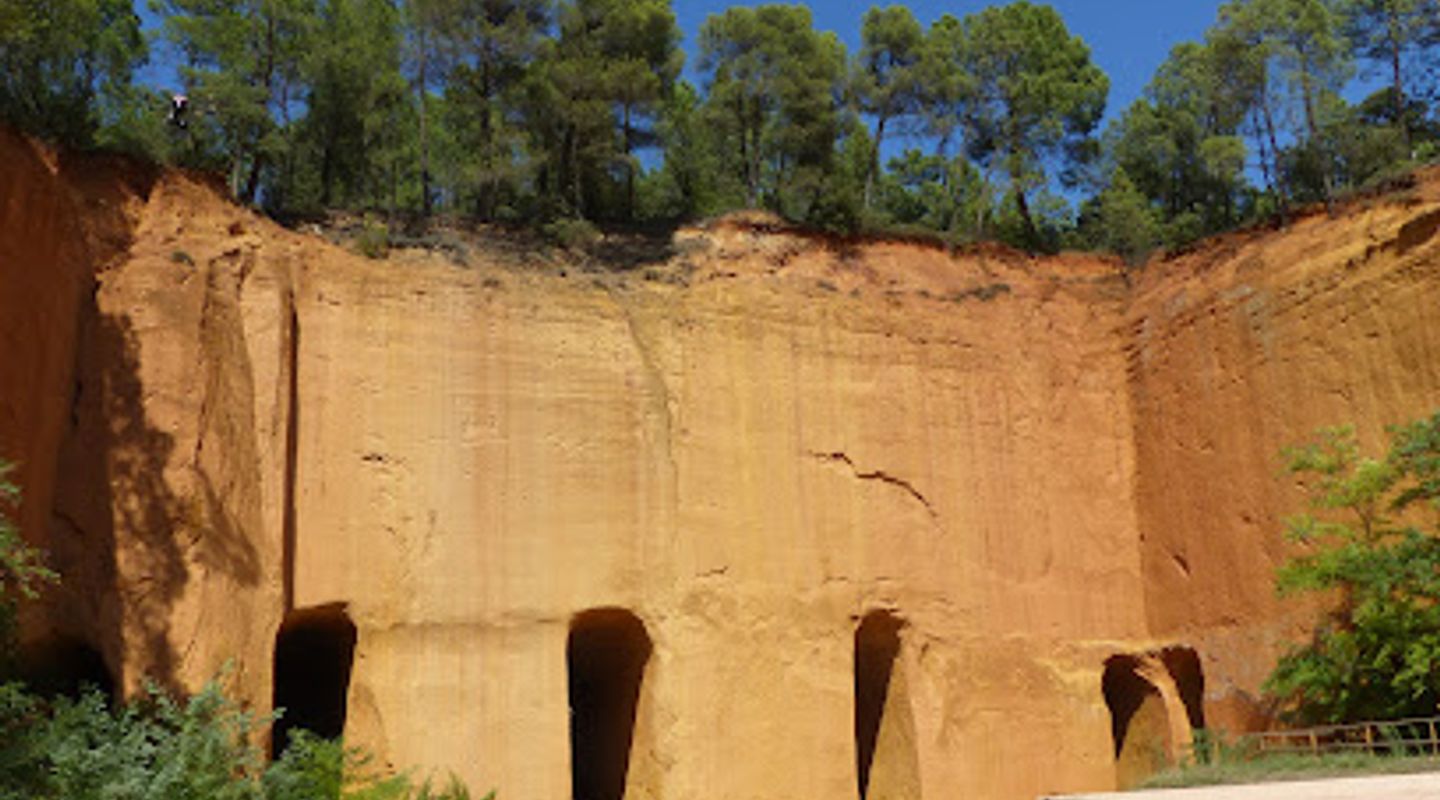
Descend into the heart of the Luberon's ochre history at the Mines de Bruoux, a former ochre mining site in Gargas. Explore a portion of the 40km of underground galleries, some reaching heights of 15 meters, on a guided tour that unveils the story of ochre extraction and the lives of the miners. The mines offer a unique and mysterious setting, where the vibrant colors of the ochre blend with the impressive scale of the man-made caverns. Remember to wear warm clothing, as the temperature inside remains a constant 10°C, even in summer. Booking in advance is essential to secure your place on a tour of this subterranean world, a testament to the region's industrial past and natural beauty. The site also offers a relaxation area, gift shop, and free parking, making it a convenient and fascinating destination for all ages.
Opening hours
- Every day10 am–6 pm
Opening hours as listed on the venue’s Google Business Profile. Hours can change for services and special events, so check with the venue before you go.
- Address
- 1434 Rte de Croagne, 84400 Gargas
- Phone
- Website
Getting there
Driving
Public Transport
Discover more about Mines Bruoux
Overview
Venture into the ochre-rich landscape of the Luberon and discover the Mines de Bruoux, a captivating journey into the heart of Provence's industrial past. Located in Gargas, near Apt, these former ochre mines offer a unique glimpse into a subterranean world shaped by human endeavor and geological forces. The Mines de Bruoux are not just a historical site; they are an immersive experience. Visitors descend into a portion of the extensive network of underground galleries, remnants of a once-thriving ochre mining industry. These galleries, stretching over 40 kilometers in total, were painstakingly carved by generations of miners, their pickaxe marks still visible on the walls. The scale of the mines is truly impressive, with some galleries reaching heights of up to 15 meters, creating a cathedral-like atmosphere deep beneath the surface. The history of ochre mining in the Luberon dates back centuries, but it was in the late 19th century that the industry experienced a significant boom. The Mines de Bruoux opened in 1848 and operated for over 100 years, becoming a major economic driver for the region. At its peak, the mines employed 150 workers and produced 40,000 tonnes of ochre annually. The ochre extracted from these mines was highly valued for its quality and was used in a variety of applications, including as a pigment for paints, coatings, and lime washes, as well as a thickener in rubber manufacturing. The guided tours of the Mines de Bruoux provide a fascinating insight into the lives of the miners and the techniques they used to extract the ochre. Equipped with safety helmets, visitors walk through approximately 650 meters of the underground galleries, accompanied by knowledgeable guides who bring the history of ochre mining to life. The guides explain the extraction methods, discuss the working conditions of the miners, and share anecdotes about the site's past. The constant temperature of 10°C inside the mines creates a unique atmosphere, a cool respite from the Provençal heat, but also a reminder of the challenging conditions faced by the miners. Beyond the human history, the Mines de Bruoux also offer a glimpse into the geological processes that created the ochre landscape. The ochre formations are the result of the alteration of sands rich in kaolinite and iron, creating colorful sediments that range from pale yellow to deep red. The Gargas region, located between Provence and the Luberon, rests on a limestone bedrock dating back to the Tertiary era, shaped by erosion and marine sediment deposits. This geological history is evident in the layers of ochre that line the walls of the mines, a testament to the power of nature and time. After the decline of the ochre industry, the Mines de Bruoux were repurposed for a time as a mushroom farm, taking advantage of the constant temperature and humidity inside the galleries. However, in 2009, the mines were reopened as a cultural site, offering visitors the opportunity to explore this unique subterranean world and learn about its history and geology. Today, the Mines de Bruoux are a popular tourist destination, attracting visitors from around the world. The site offers a range of amenities, including a relaxation area where visitors can enjoy refreshments, a gift shop selling local crafts and souvenirs, and free parking. The mines are open from March 24 to October 31, with guided tours available at set times throughout the day. Booking in advance is essential, as tours are limited to 30 people. English-language tours are available during July and August. The site is accessible to strollers and people with reduced mobility with an attendant. A visit to the Mines de Bruoux is a journey through time, a chance to explore the hidden depths of the Luberon and discover the stories of the people who shaped this unique landscape. It is an experience that combines history, geology, and human endeavor, leaving visitors with a newfound appreciation for the ochre that colors this corner of Provence. While in Gargas, take the time to explore the village itself, a charming Provençal community with a rich history and a connection to the surrounding landscape. Visit the church of Saint Denis, which dates back to the 17th century, and explore the remains of a Roman oppidum and a chapel dating from the 16th century on the top of Perréal hill. Gargas is also surrounded by vineyards of the Côtes de Ventoux appellation, offering opportunities for wine tasting and exploration of the local terroir. The village is a gateway to the Luberon Regional Natural Park, a protected area that encompasses a diverse range of landscapes, from forests and valleys to perched villages and isolated sheepfolds. The park is home to over 270 different species of vertebrates, making it a haven for nature lovers and ornithology enthusiasts. The Mines de Bruoux and the village of Gargas offer a unique and authentic Provençal experience, a chance to step off the beaten path and discover the hidden gems of the Luberon. It is a journey that will leave you with lasting memories of the region's history, culture, and natural beauty.
Evendo Review Centre
 Google
Guest reviews
Explore Mines Bruoux on the map
A handpicked selection of must-see spots near Mines Bruoux, mapped for you.
Get your free copy of our complete guide to Mines Bruoux, delivered straight to you.
Everything on this page, from opening hours and how to get there to Eve’s tips and the best time to go, in one PDF you can read offline, print or share.
Already have an account? Sign in
Your Mines Bruoux guide is ready.
We'll send it to · Not you? Sign out

Getting your guide ready…
We are putting together a fresh copy of the Mines Bruoux guide. This can take up to a minute.
This can take a few moments. If your browser asks, choose Allow so the download can start. You'll find the guide in your Downloads folder.
Nothing happened? Download it again
Sorry, the guide is taking longer than usual. Please try again in a minute, or get it by email instead.
Unlock the best of Mines Bruoux
Skip-the-line tickets, guided tours with entry, and walking tours of the area, booked in a few clicks.

Other nearby places you may find interesting
The closest places of the same kind, if this one is not quite what you had in mind.
-
-
-
-
-


Swipe for more places
More to explore near Mines Bruoux

 Best experiences near Mines Bruoux
 Best hotels near Mines Bruoux
 Best landmarks near Mines Bruoux
 Best attractions near Mines Bruoux
 Best shops near Mines Bruoux
 Best restaurants near Mines Bruoux
 Best bars near Mines Bruoux
Do you manage this location?
Take control to get all the benefits, like improved information, better appearance, and stronger visibility across AI-powered discovery.
Explore more

Explore more of Luberon
Discover Luberon, a stunning region in Provence, France, known for its charming villages, beautiful landscapes, and rich cultural heritage.
Explore Luberon
Explore more of France
Explore France: A land of romance, history, and unparalleled beauty, from the iconic streets of Paris to the serene landscapes of Provence and the luxury of the French Riviera.
Explore France
