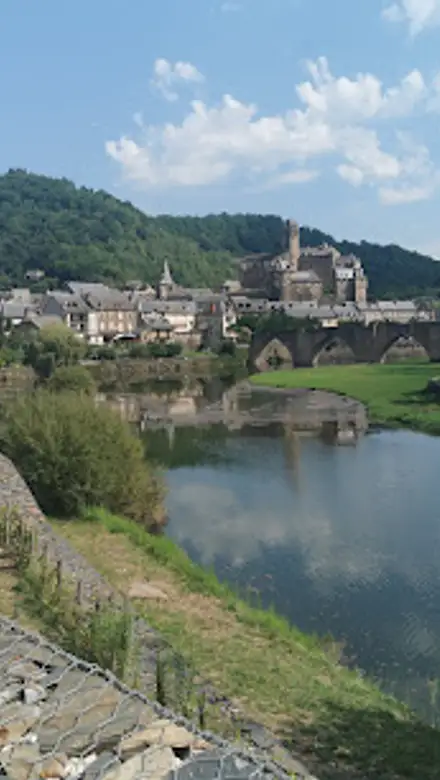
Pont d'Estaing, Midi Pyrenees Travel Guide
Cross the historic Pont d'Estaing, a UNESCO-listed Gothic bridge on the Santiago de Compostela pilgrimage route, and discover the medieval charm of Estaing, France.
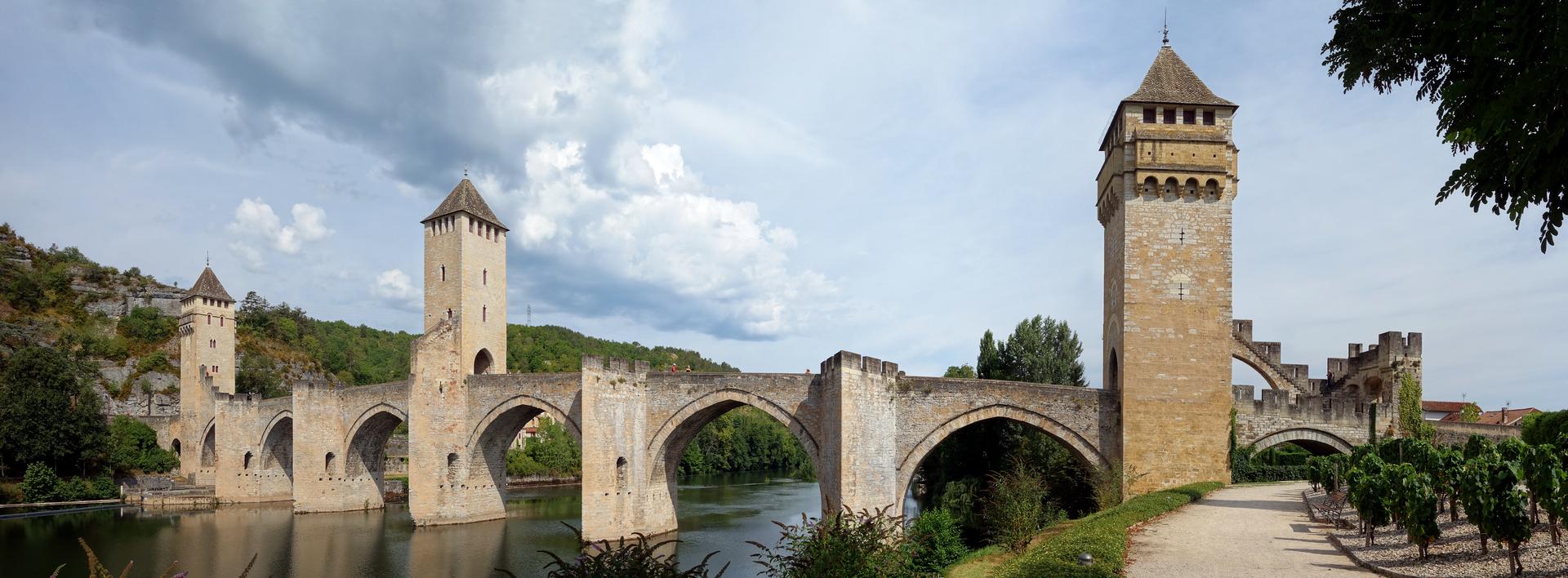
The Pont d'Estaing, a magnificent Gothic bridge, gracefully arches over the Lot River, connecting Estaing and Sébrazac. Built between the late 15th and early 16th centuries, this UNESCO World Heritage site stands as a testament to medieval engineering and architectural prowess. Adorned with a statue of François d'Estaing, the bishop who initiated its construction, and a striking iron cross, the bridge offers breathtaking views of the picturesque village and surrounding landscape. As part of the Santiago de Compostela pilgrimage route, it welcomes travelers and history enthusiasts alike, inviting them to step back in time and experience the charm of a bygone era. The bridge is a must-see landmark, embodying the rich cultural heritage of the Aveyron region and offering a glimpse into the lives of pilgrims who once traversed this very path.
A brief summary to Pont d'Estaing
- 2 D22, Estaing, 12190, FR
- Click to display

Know before you go
Hi, I'm Eve. Here are a few practical things to know before exploring Pont d'Estaing.
- Visit the bridge during the golden hour (shortly after sunrise or before sunset) for the most stunning photographic opportunities.
- Explore the Château d'Estaing for panoramic views of the village and surrounding area.
- Attend the Fête de Saint Fleuret (first Sunday in July) or the Médiévales (second weekend in September) for a unique cultural experience.
- Take a leisurely stroll through the village's narrow streets to discover hidden architectural gems and local artisan shops.
- Enjoy a picnic along the banks of the Lot River for a relaxing and scenic experience.
Do you manage this location?
Take control to get all the benefits, like improved information, better appearance, and stronger visibility across AI-powered discovery. Learn more about listing your business on Evendo
Activate your presenceOther nearby places you may find interesting
The closest places of the same kind, if this one is not quite what you had in mind.
Explore Pont d'Estaing on the Map
A handpicked selection of must-see spots near Pont d'Estaing, mapped for you.
Getting There
-
Walking
From the center of Estaing (e.g., Place Raynaldy), the Pont d'Estaing is easily accessible on foot. Follow Rue François d'Estaing towards the Lot River. The bridge is a short walk, approximately 5-10 minutes, and is clearly visible. The walk is mostly flat and paved. As you approach the bridge, you'll pass the Tourist Office and several shops and cafes. There are no tolls or special access fees required to walk across the bridge.
-
Driving
If arriving by car, parking is available near the Quai d'Amiral d'Estaing. From the parking area, walk towards the river and the bridge will be immediately visible. Parking du Quai is available, but can be limited during peak season. Be aware of narrow streets in the village.
-
Public Transport
The bus line Estaing/Espalion/Estaing runs every day from Monday to Friday, except on Sundays and public holidays. From the bus stop (Quai Amiral d'Estaing), the bridge is a short walk. Follow the signs towards the city center and the Lot River. The bridge will be visible within a few minutes. A single ticket costs approximately €2-4.
Discover more about Pont d'Estaing













Your all‑in‑one travel companion app
Explore expert travel guides, compare and book tours, experiences, hotels, and more—all from the palm of your hand. Download now for seamless trip planning wherever your wanderlust takes you.


Explore More of Midi Pyrenees
Looking beyond Pont d'Estaing? Discover Midi Pyrenees for broader travel guides, local hot-spots, and regional highlights.
Explore Midi Pyrenees
Discover the Arcs de Saint-Pierre near Saint-Pierre-des-Tripiers: a stunning natural stone archway carved by time in the Causse Méjean.
Discover a Cistercian abbey where centuries of history meet exquisite handcrafted chocolate in the tranquil Aveyron countryside, offering a unique spiritual and culinary experience.