

Mont Saint-Michel Travel Guide - Free Web & App
Your ultimate guide to Mont Saint-Michel. Discover top landmarks, proposed trips, and local tips. Free on the web or via the Evendo companion app.


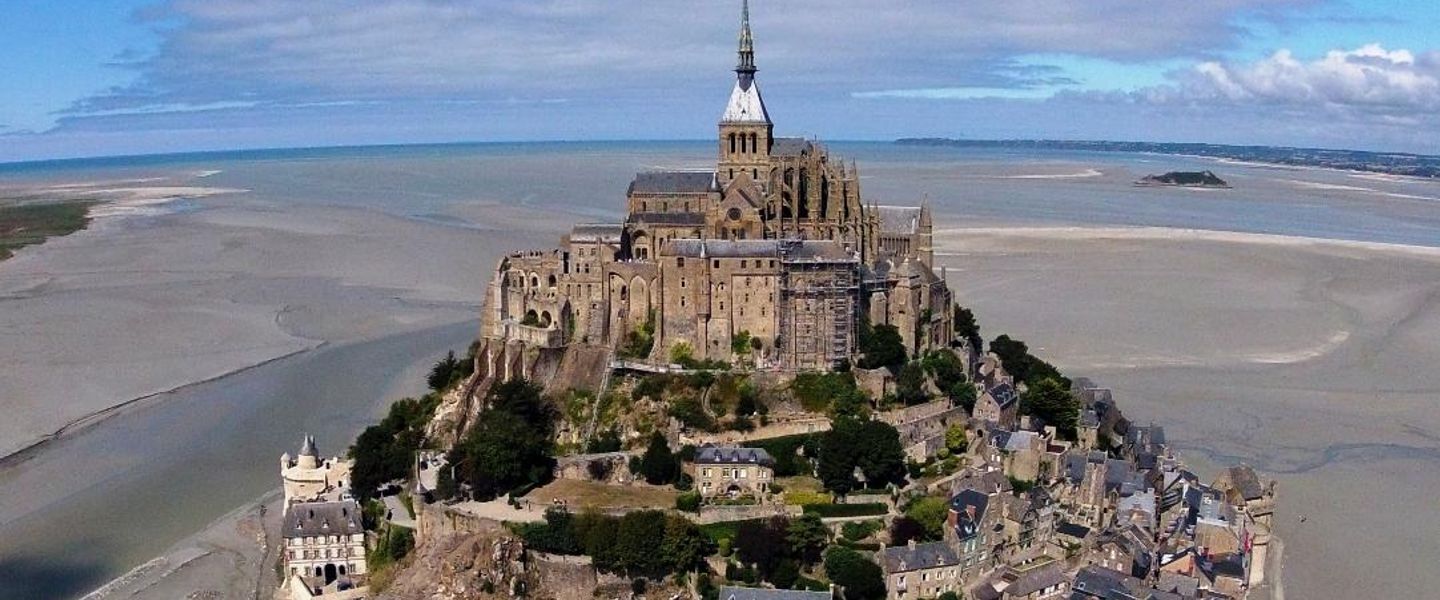


Mont Saint-Michel in France combines a medieval abbey, dramatic tides, a UNESCO-listed bay, coastal walks and historic village streets for an atmospheric visit.
An Island Above the Bay
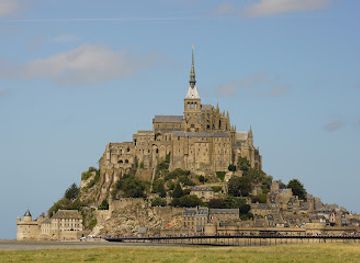
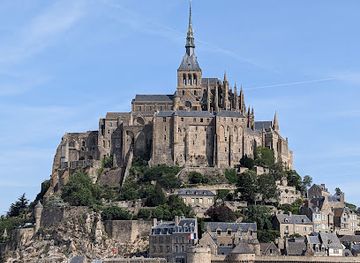
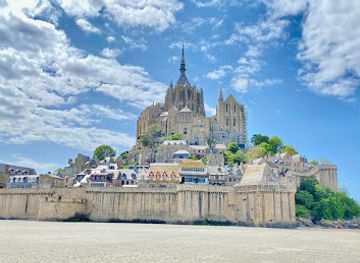
Mont Saint-Michel rises from the tidal flats of Normandy like a compact granite citadel, crowned by the spire of its celebrated medieval abbey. Although often described as an island, its appearance changes with the sea: at low water, broad sand and mudflats surround the rock, while incoming tides transform the setting into a maritime landscape. The mount and its immediate historic settlement form a small commune, while the wider bay extends across Normandy and neighbouring Brittany, with the Couesnon River marking the modern regional boundary.Read more about Mont Saint-Michel
Abbey, Village and Living Heritage
The Bay in Perspective
When is the best time to visit Mont Saint-Michel?
Best: June–August · 22–24°C| Month | High (°C) | Rainfall (mm) |
|---|---|---|
| January | 10 | 50 |
| February | 11 | 45 |
| March | 12 | 40 |
| April | 15 | 35 |
| May | 18 | 30 |
| June (best) | 22 | 25 |
| July (best) | 24 | 20 |
| August (best) | 24 | 20 |
| September | 22 | 25 |
| October | 17 | 35 |
| November | 13 | 40 |
| December | 11 | 45 |
Getting to and around Mont Saint-Michel
How to get there
Transportation
Best attractions in Mont Saint-Michel
The Abbey of Mont Saint-Michel is the principal attraction, rising above the village with Romanesque and Gothic spaces, a cloister, refectory and elevated views across the bay. The historic settlement below it is entered through fortified gateways and unfolds along steep lanes lined with old buildings, small museums, cafés and shops. The ramparts form a rewarding circuit around the rock, revealing the changing relationship between the granite mount, bridge and tidal flats. Beyond the walls, the bay itself is the defining natural attraction: guided walks can explain its sands, channels, salt-marsh margins and powerful tides without treating the foreshore as ordinary beach terrain. The approach across the modern bridge provides broad views back towards the abbey, while the mainland shore offers perspectives of the entire silhouette. Visitors interested in wider heritage can use Mont Saint-Michel as a base for exploring nearby Normandy and Brittany, although attractions beyond the mount should be planned as separate excursions.
-
Abbey
Abbaye du Mont-Saint-Michel
Discover the Abbaye du Mont-Saint-Michel, a breathtaking medieval abbey perched on a tidal island, blending history, architecture, and spirituality in a stunning Normandy setting.
-
Zoo
ALLIGATOR BAY
Discover Europe's largest alligator collection at Alligator Bay near Mont Saint-Michel, a thrilling reptile zoo with over 700 animals, interactive exhibits, and conservation efforts.
-
Tourist attraction
Moulin de Moidrey
Explore Moulin de Moidrey, a historic windmill in Pontorson, showcasing Normandy's rich cultural heritage and stunning countryside views.
-
Weir
Barrage du Mont Saint Michel
Discover the Barrage du Mont Saint Michel in Normandy: an engineering marvel preserving the iconic Mont, offering stunning views, and blending nature with innovation.


Best landmarks in Mont Saint-Michel
The granite rock, the Abbey of Mont Saint-Michel and the fortified village form a closely connected landmark ensemble whose significance lies in both architecture and setting. The abbey's Romanesque church and Gothic La Merveille occupy the summit, while the medieval walls and ramparts define the outer edge of the settlement. The causeway and modern bridge are important contemporary features because they regulate how visitors approach the mount while preserving views across the tidal landscape. Around them, the Bay of Mont Saint-Michel is the dominant natural landmark, recognised for its wide intertidal sands, shifting channels and dramatic changes in water level. The mount's silhouette has long served as a religious and cultural symbol in Normandy, and its inclusion with the bay on the UNESCO World Heritage List reflects the inseparable relationship between monument, pilgrimage, fortified settlement and coastal environment.
-
Historical landmark
Tour du Nord
Discover the Tour du Nord at Mont Saint-Michel, a stunning historical landmark that showcases medieval architecture and breathtaking views.
-
Monument
The Center for National Monuments
Explore the historical wonder of the Center for National Monuments, a UNESCO World Heritage site that showcases the stunning architecture and rich cultural heritage of Mont Saint-Michel.
-
Tourist attraction
Porte de l'avancée
Explore the captivating Porte de l'avancée, a historic gateway to Mont Saint-Michel with stunning architecture and breathtaking views.
-
Historical landmark
Freedom Tower
Discover the stunning Freedom Tower at Mont Saint-Michel, a historical gem where centuries of heritage meet breathtaking views.
Explore Mont Saint-Michel on the map
Plan your trip on one map. See where the top attractions, landmarks, restaurants and hotels are, and book hotels and experiences in a few clicks.
Best hotels in Mont Saint-Michel
Best restaurants in Mont Saint-Michel
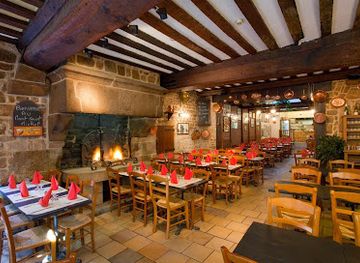
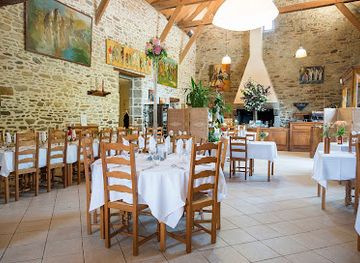
Dining on Mont Saint-Michel is concentrated within the historic village and is shaped by the needs of a major heritage and pilgrimage destination. Traditional crêpes, galettes made with buckwheat flour, seafood from the wider coastal region, Normandy dairy products and cider are among the regional flavours visitors may encounter in restaurants, cafés and crêperies. The mount is also associated with the imposing omelette tradition developed for pilgrims and travellers, although individual menus and opening arrangements vary. For a broader choice of supermarkets, bakeries and everyday provisions, mainland settlements such as Pontorson are more practical than the rock itself. Visitors staying around the bay will find dining in village inns, hotels and restaurants in nearby communities, with local specialities often reflecting both Norman produce and the maritime setting. Advance planning can be useful during busy periods, particularly when day visitors and organised groups arrive together.
-
 Restaurant
Hotel La Mère Poulard
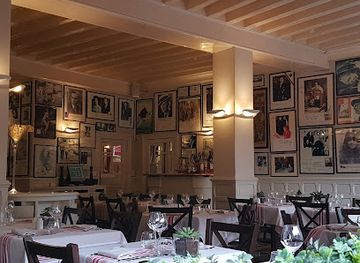
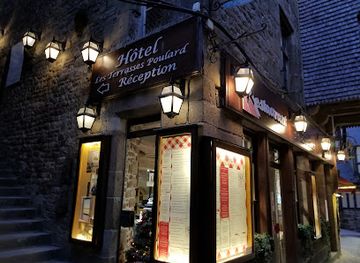
Discover exceptional French cuisine at Hotel La Mère Poulard on Mont Saint-Michel – where tradition meets taste.
-
French
Restaurant La Confiance
Experience authentic French cuisine at Restaurant La Confiance in Mont-Saint-Michel—where every meal is a taste of tradition and elegance.
-
Restaurant
LES TERRASSES DE LA BAIE
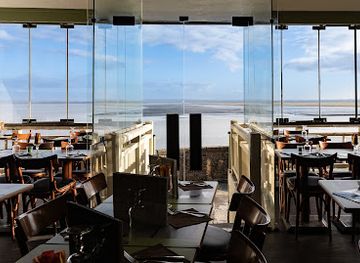
Experience exquisite French cuisine with breathtaking views at Les Terrasses de la Baie on Mont-Saint-Michel.
-
Restaurant
Relais Saint-Michel
Savor exquisite French cuisine with breathtaking views of Mont-Saint-Michel at Relais Saint-Michel.
Best bars in Mont Saint-Michel
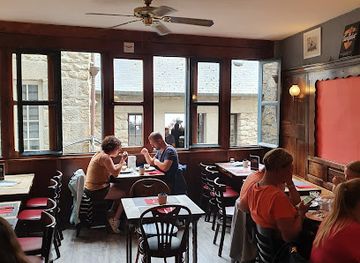
Mont Saint-Michel is not a nightlife destination, and evening entertainment is generally quiet, seasonal and closely connected with restaurants, hotel bars and traditional hospitality venues in the historic village. The atmosphere changes noticeably after many day visitors have departed, when the illuminated abbey and emptying lanes create a more subdued setting for an evening meal or drink. Traditional Norman cider, regional beers and other drinks may appear on local menus, but the mount has no substantial clubbing district or late-night entertainment scene. Visitors seeking a wider choice of pubs, music venues or evening restaurants should look towards mainland towns and larger regional centres such as Pontorson, Avranches, Saint-Malo or Granville, depending on their accommodation and transport. Rural communities around the bay tend towards village pubs and inns rather than purpose-built nightlife venues, with opening patterns varying by season and day of the week.
-
Restaurant
Hotel La Mère Poulard
Experience exquisite dining at Hotel La Mère Poulard, a historic restaurant in Mont-Saint-Michel known for its legendary omelettes and stunning views.
-
French
Restaurant La Confiance
Experience the authentic taste of French cuisine at Restaurant La Confiance in the enchanting Mont Saint-Michel.
-
Restaurant
LES TERRASSES DE LA BAIE
Experience exquisite dining with breathtaking views at Les Terrasses de la Baie in Mont-Saint-Michel, where local flavors and stunning scenery unite.
-
Restaurant
Relais Saint-Michel
Experience the essence of Mont-Saint-Michel through exquisite local cuisine at Relais Saint-Michel, where stunning views and delightful dishes await.


Best nightclubs in Mont Saint-Michel
Mont Saint-Michel is not a nightlife destination, and evening entertainment is generally quiet, seasonal and closely connected with restaurants, hotel bars and traditional hospitality venues in the historic village. The atmosphere changes noticeably after many day visitors have departed, when the illuminated abbey and emptying lanes create a more subdued setting for an evening meal or drink. Traditional Norman cider, regional beers and other drinks may appear on local menus, but the mount has no substantial clubbing district or late-night entertainment scene. Visitors seeking a wider choice of pubs, music venues or evening restaurants should look towards mainland towns and larger regional centres such as Pontorson, Avranches, Saint-Malo or Granville, depending on their accommodation and transport. Rural communities around the bay tend towards village pubs and inns rather than purpose-built nightlife venues, with opening patterns varying by season and day of the week.
-
French
Restaurant La Confiance
Experience a culinary journey with authentic French cuisine at Restaurant La Confiance in the heart of Mont-Saint-Michel.
-
French
La Ferme Saint-Michel
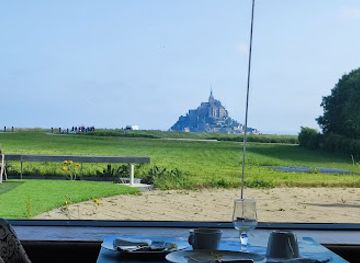
Discover authentic French cuisine at La Ferme Saint-Michel, where every meal is a delightful experience amidst stunning views of Mont-Saint-Michel.
-
Bar
Auberge Saint Pierre
Experience the charm of Mont Saint-Michel at Auberge Saint Pierre, where history meets comfort in a stunning coastal setting.
-
Bar
Le Tripot
Discover the culinary delights of Le Tripot, where local flavors meet the enchanting atmosphere of Mont Saint-Michel.
Best shops in Mont Saint-Michel
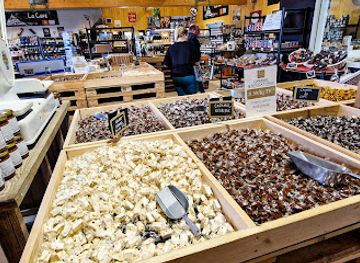
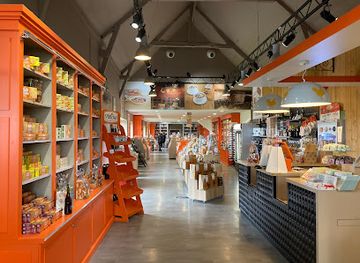
Shopping on Mont Saint-Michel is compact and primarily directed towards visitors, with small outlets in the historic village selling souvenirs, postcards, religious objects, regional food products, clothing and locally themed gifts. The destination's strongest retail identity comes from its medieval setting and pilgrimage history rather than from a large independent shopping scene. Norman specialities such as cider, biscuits, caramel, preserves and other farm-produced foods may be available, while broader craft and food shopping can be found in mainland towns and villages around the bay. Pontorson is more useful for everyday provisions and practical supplies, and larger nearby towns provide a greater range of shops. Visitors interested in authentic regional products should check labelling and provenance, since the popularity of the monument means that generic souvenirs are sold alongside genuinely local goods. There is no extensive shopping district beyond the historic lanes and surrounding mainland settlements.
-
Confectionery store
Maison Pèlerin
Indulge in artisanal French sweets at Maison Pèlerin, a charming confectionery near Mont Saint-Michel, perfect for a sweet escape.
-
Store
Biscuiterie de la Baie du Mont St Michel
Explore the sweet side of France at Biscuiterie de la Baie du Mont St Michel, a delightful cookie shop in Pontorson.
-
Gift shop
L'Epicerie de la Baie
Experience the essence of Normandy at L'Epicerie de la Baie, where local gifts, artisanal cider, and delicious crepes await every traveler.
-
Gift shop
Les Galeries Du Mont-Saint Michel
Discover unique souvenirs and local crafts at Les Galeries Du Mont-Saint-Michel, your go-to gift shop in the stunning Mont-Saint-Michel.

Get your free copy of our complete guide to Mont Saint-Michel, delivered straight to you.
Everything on this page, from attractions and restaurants to essentials and local phrases, in one PDF you can read offline, print or share.
Already have an account? Sign in
Your Mont Saint-Michel guide is ready.
We'll send it to · Not you? Sign out

Getting your guide ready…
We are putting together a fresh copy of the Mont Saint-Michel guide. This can take up to a minute.
This can take a few moments. If your browser asks, choose Allow so the download can start. You'll find the guide in your Downloads folder.
Nothing happened? Download it again
Sorry, the guide is taking longer than usual. Please try again in a minute, or get it by email instead.
Mont Saint-Michel essentials
Currency and Payment
Safety
Emergency Situations
Do's and Don'ts
Local Tips
From Eve
Local phrases worth knowing
You don't need to get them perfect. A few words go a long way, and locals appreciate the effort.
Basics
| English | Local | Say it |
|---|---|---|
| Hello | Bonjour | [bon-zhoor] |
| Goodbye | Au revoir | [oh ruh-vwar] |
| Yes | Oui | [wee] |
| No | Non | [noh] |
| Please/You're welcome | S'il vous plaît/De rien | [seel voo pleh/duh ryen] |
| Thank you | Merci | [mehr-see] |
| Excuse me/Sorry | Excusez-moi/Désolé | [ex-kew-zay mwah/dey-zoh-lay] |
| How are you? | Comment ça va? | [koh-mahn sah vah] |
| Fine. And you? | Bien. Et vous? | [byen. ay voo] |
| Do you speak English? | Parlez-vous anglais? | [par-lay voo ahn-glay] |
| I don't understand | Je ne comprends pas | [zhuh nuh kohm-prahn pah] |
Eating & Drinking
| English | Local | Say it |
|---|---|---|
| I'd like to see the menu, please | Je voudrais voir la carte, s'il vous plaît | [zhuh voo-dray vwahr lah kart, seel voo pleh] |
| I don't eat meat | Je ne mange pas de viande | [zhuh nuh mahnj pah duh vee-and] |
| Cheers! | Santé! | [sahn-tay] |
| I would like to pay, please | Je voudrais payer, s'il vous plaît | [zhuh voo-dray pay-ay, seel voo pleh] |
Emergencies
| English | Local | Say it |
|---|---|---|
| Help! | À l'aide! | [ah lehd] |
| Go away! | Allez-vous en! | [ah-lay voo zahn] |
| Call the Police! | Appelez la police! | [ah-peh-lay lah poh-lees] |
| Call a doctor! | Appelez un médecin! | [ah-peh-lay uh meh-deh-sahn] |
| I'm lost | Je suis perdu | [zhuh swee pehr-doo] |
| I'm ill | Je suis malade | [zhuh swee mah-lahd] |
Shopping
| English | Local | Say it |
|---|---|---|
| I'd like to buy... | Je voudrais acheter... | [zhuh voo-dray ash-tay...] |
| I'm just looking | Je ne fais que regarder | [zhuh nuh fay keuh ruh-gar-day] |
| How much is it? | Combien ça coûte? | [kohm-byen sah koot] |
| That's too expensive | C'est trop cher | [say troh shair] |
| Can you lower the price? | Pouvez-vous baisser le prix? | [poo-vez voo bay-say luh pree] |
Time & Numbers
| English | Local | Say it |
|---|---|---|
| What time is it? | Quelle heure est-il? | [kell er ay-teel] |
| It's one o'clock | Il est une heure | [eel ay oon er] |
| Half past (10) | Dix heures et demie | [dees er ay duh-mee] |
| Morning | Matin | [mah-tan] |
| Afternoon | Après-midi | [ah-pray mee-dee] |
| Evening | Soir | [swahr] |
| Yesterday | Hier | [yehr] |
| Today | Aujourd'hui | [oh-zhoor-dwee] |
| Tomorrow | Demain | [duh-mahn] |
| 1 | Un | [uhn] |
| 2 | Deux | [duh] |
| 3 | Trois | [trwah] |
| 4 | Quatre | [kat-ruh] |
| 5 | Cinq | [sank] |
| 6 | Six | [sees] |
| 7 | Sept | [sett] |
| 8 | Huit | [wheat] |
| 9 | Neuf | [nuhf] |
| 10 | Dix | [dees] |
Transport & Directions
| English | Local | Say it |
|---|---|---|
| Where's a/the...? | Où est...? | [oo ay...] |
| What's the address? | Quelle est l'adresse? | [kell ay lah-dress] |
| Can you show me (on the map)? | Pouvez-vous me montrer (sur la carte)? | [poo-vez voo muh mon-tray (sur lah kart)] |
| When's the next (bus)? | Quand est le prochain (bus)? | [kahn ay luh proh-shahn (bus)] |
| A ticket (to ....) | Un billet (pour ...) | [uhn bee-yay (poor ...)] |
History of Mont Saint-Michel
Granite Rock and Tidal Landscape
Mont Saint-Michel is a rocky tidal islet formed from resistant granite within a bay shaped by sediment movement, rivers and some of Europe's greatest tidal ranges. Its relationship with the surrounding shore has altered over time as channels migrated and deposits accumulated. Human interventions, including causeways and later attempts to regulate the nearby river and sands, affected the flow of water around the mount. Modern restoration work has sought to improve the circulation of seawater and preserve the island character of the site, while the bay remains a dynamic environment rather than a fixed scenic backdrop.
The Origins of the Sanctuary
According to longstanding tradition, the archangel Michael appeared to Aubert, bishop of Avranches, in the early eighth century, prompting the creation of a sanctuary on the rock. The site became an important place of pilgrimage, and its dedication to Saint Michael connected it with a wider medieval network of religious journeys. A community of Benedictine monks was established at Mont Saint-Michel in 966 under the patronage of Richard I, Duke of Normandy. The sanctuary's spiritual reputation and difficult approach across the bay helped shape the mount's enduring identity.
Medieval Abbey and Fortress
The abbey expanded significantly during the eleventh to thirteenth centuries, when Romanesque buildings were followed by the Gothic complex known as La Merveille, or the Marvel. Its refectory, cloister and supporting structures were engineered around the steep rock, creating a remarkable combination of monastery and fortress. Medieval rulers supported the site, while its position near the frontier between Normandy and Brittany gave it strategic importance. During the Hundred Years' War, Mont Saint-Michel resisted English attacks and became a symbol of Norman allegiance, protected by its walls and difficult tidal setting.
From Monastery to Prison
Religious life changed radically during the French Revolution, when the abbey was closed and its buildings were used as a prison. The institution, known as Mont Saint-Michel prison, held political and common prisoners until its closure in 1863. Industrial use and alterations caused damage to parts of the medieval complex, but growing nineteenth-century interest in historic monuments encouraged restoration. Writers and artists also helped renew public appreciation of the mount, shifting its reputation from an isolated religious foundation and prison towards a major historic attraction.
Restoration and World Heritage
Mont Saint-Michel was designated a historic monument in 1874, beginning a long process of conservation and architectural restoration. The bay and mount were inscribed together on the UNESCO World Heritage List in 1979 for their religious, historical, architectural and landscape significance. Later environmental works addressed the silting effects associated with earlier access arrangements, and the modern bridge opened in 2014 as part of a project intended to restore the island's relation with the tides. Today, the abbey remains a place of worship as well as a carefully managed heritage site.
Mont Saint-Michel in Photos
Browse through our photo collection highlighting the charm and character of the destination.
Neighbouring destination travel guides
The closest destinations to Mont Saint-Michel, if you have time for more than one.
-

-

-

-

-


Swipe for more destinations
Explore more
Explore more of Brittany
Discover Brittany, France's enchanting northwest region, renowned for its stunning coastlines, medieval towns, and rich Celtic heritage.
Explore Brittany
Explore more of France
Explore France: A land of romance, history, and unparalleled beauty, from the iconic streets of Paris to the serene landscapes of Provence and the luxury of the French Riviera.
Explore France