

Schloss Allstedt Travel Guide
Free Guide: Discover a millennium of history at Schloss Allstedt, from its imperial roots to its Reformation significance and architectural grandeur.


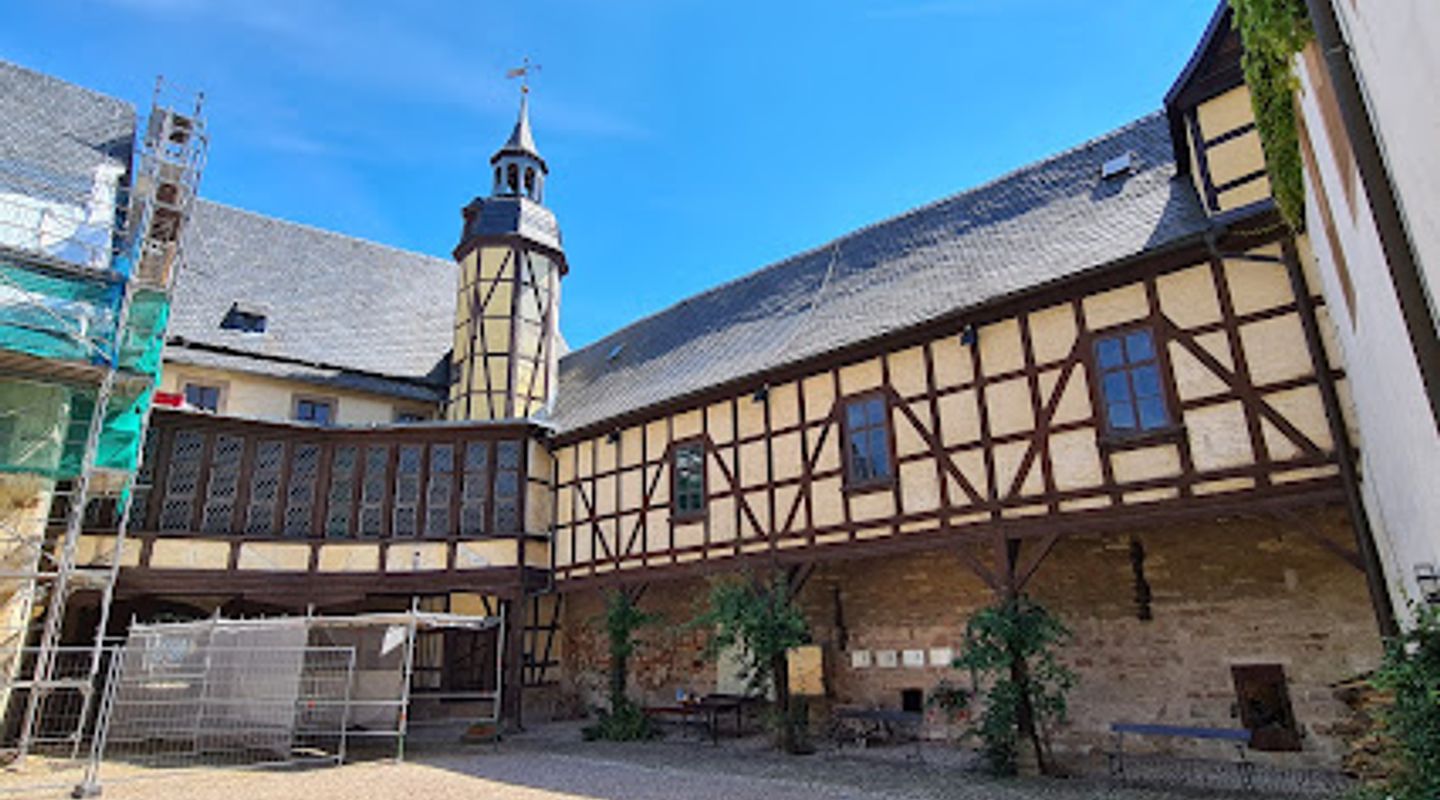
A brief summary of Schloss Allstedt
Discover a millennium of history at Schloss Allstedt, from its imperial roots to its Reformation significance and architectural grandeur.
Explore Schloss Allstedt, a castle with over a thousand years of history, from its origins as an Imperial Palace to its role in the Reformation and its transformation into a Baroque residence. Witness the blend of Romanesque, Renaissance, and Baroque architectural styles.
- Address
- Schloß 8, 06542
- Phone
- Website
Getting there
Public Transport
Driving
Discover more about Schloss Allstedt
Overview
Schloss Allstedt, perched high above the town of Allstedt, boasts a rich history spanning over a millennium. Originally mentioned as "Alstediburg" in the late 9th century, it evolved into a significant political hub of the Holy Roman Empire for over 250 years. The castle showcases a captivating blend of architectural styles, bearing traces of Romanesque, Renaissance, Baroque, and Historicism influences.During the Carolingian era, under Charlemagne, Allstedt was a primary fortress within the Saale and Unstrut castle system. Later, Henry I expanded it to protect against Hungarian raids. From 935 to 1200, nearly all German kings and emperors resided here, holding several Reichstags and princely assemblies. In 1524, the reformer Thomas Müntzer delivered his famous sermon in the Hofstube to Duke Johann the Constant and his son, a pivotal event in Reformation history. Johann Wolfgang von Goethe also frequented the castle between 1776 and 1782.The castle complex features the late Gothic castle kitchen, known for having one of Europe's largest chimneys. The museum within the core castle displays the diverse history of the palace, castle, and town. Visitors can explore exhibitions about Thomas Müntzer and Goethe.Currently, Schloss Allstedt is undergoing extensive renovations, with selected areas of the main castle expected to reopen to the public in 2025. These areas will host exhibition activities related to the state exhibition "Gerechtigkeyt - Thomas Müntzer & 500 Jahre Bauernkrieg".
Evendo Review Centre
 Google
Guest reviews
Explore Schloss Allstedt on the map
A handpicked selection of must-see spots near Schloss Allstedt, mapped for you.
Get your free copy of our complete guide to Schloss Allstedt, delivered straight to you.
Everything on this page, from opening hours and how to get there to Eve’s tips and the best time to go, in one PDF you can read offline, print or share.
Already have an account? Sign in
Your Schloss Allstedt guide is ready.
We'll send it to · Not you? Sign out

Getting your guide ready…
We are putting together a fresh copy of the Schloss Allstedt guide. This can take up to a minute.
This can take a few moments. If your browser asks, choose Allow so the download can start. You'll find the guide in your Downloads folder.
Nothing happened? Download it again
Sorry, the guide is taking longer than usual. Please try again in a minute, or get it by email instead.
Other nearby places you may find interesting
The closest places of the same kind, if this one is not quite what you had in mind.
-
-
-
-
-


Swipe for more places
More to explore near Schloss Allstedt

 Best experiences near Schloss Allstedt
 Best hotels near Schloss Allstedt
 Best landmarks near Schloss Allstedt
 Best attractions near Schloss Allstedt
 Best shops near Schloss Allstedt
 Best restaurants near Schloss Allstedt
 Best bars near Schloss Allstedt
Do you manage this location?
Take control to get all the benefits, like improved information, better appearance, and stronger visibility across AI-powered discovery.
Explore more

Explore more of Anhalt
Explore Anhalt, Germany: A blend of historical treasures, stunning gardens, and scenic landscapes perfect for culture enthusiasts and nature lovers alike.
Explore Anhalt
Explore more of Germany
Experience Germany: where history meets innovation, and urban energy blends with natural beauty. Discover diverse cultures, delicious cuisine, and stunning landscapes.
Explore Germany
