

Fontaine de Janus Travel Guide
Free Guide: A symbolic fountain in Strasbourg representing the city's dual French and German identity and its rich Roman history.


A brief summary of Fontaine de Janus
A symbolic fountain in Strasbourg representing the city's dual French and German identity and its rich Roman history.
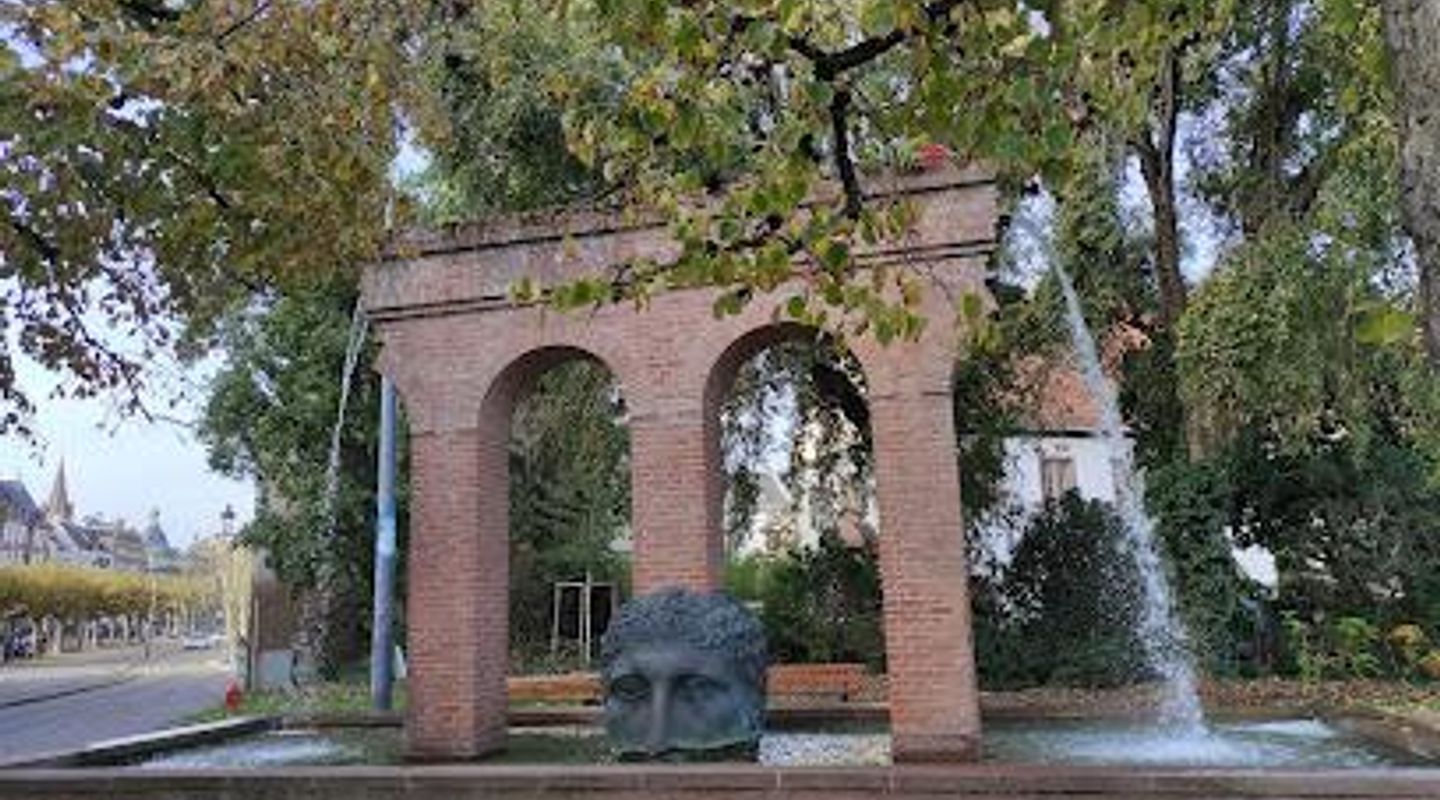
The Fontaine de Janus, or Janus Fountain, is a unique sculpture in Strasbourg, created by Tomi Ungerer in 1988 to celebrate the city's 2000th anniversary. Named after the Roman god Janus, it symbolizes Strasbourg's dual French and German cultural identity with its two-faced design.
Opening hours
- Every dayOpen 24 hours
Opening hours as listed on the venue’s Google Business Profile. Hours can change for services and special events, so check with the venue before you go.
- Address
- 18 Pl. Broglie, 67000 Strasbourg
Getting there
Walking
Public Transport
Discover more about Fontaine de Janus
Overview
Located on Place Broglie, near the Opera House, the Fontaine de Janus is a distinctive landmark in Strasbourg. Created by Alsatian artist Tomi Ungerer in 1988, it commemorated the city's 2000th anniversary, marking its Roman origins as Argentoratum.The fountain's design embodies Strasbourg's unique Franco-German identity. The two faces of Janus, the Roman god of duality, reflect the city's position as a crossroads of European cultures. One face looks towards Strasbourg's historic center, representing its French legacy, while the other faces the Neustadt, the German imperial quarter. The fountain also features an aqueduct-like structure made from 5,000 bricks, symbolizing Strasbourg's Roman past, though no actual Roman aqueduct has been discovered in the city. The inscriptions “Argentoratum MM” and “Strasbourg 2000” on either side of the aqueduct further emphasize this historical connection.The Fontaine de Janus serves as a reminder of Strasbourg's complex history and its role as a bridge between different cultures. It stands as a testament to the city's ability to embrace its dual heritage and its continued importance as a European crossroads.
Evendo Review Centre
 Google
Guest reviews
Explore Fontaine de Janus on the map
A handpicked selection of must-see spots near Fontaine de Janus, mapped for you.
Get your free copy of our complete guide to Fontaine de Janus, delivered straight to you.
Everything on this page, from opening hours and how to get there to Eve’s tips and the best time to go, in one PDF you can read offline, print or share.
Already have an account? Sign in
Your Fontaine de Janus guide is ready.
We'll send it to · Not you? Sign out

Getting your guide ready…
We are putting together a fresh copy of the Fontaine de Janus guide. This can take up to a minute.
This can take a few moments. If your browser asks, choose Allow so the download can start. You'll find the guide in your Downloads folder.
Nothing happened? Download it again
Sorry, the guide is taking longer than usual. Please try again in a minute, or get it by email instead.
Unlock the best of Fontaine de Janus
Skip-the-line tickets, guided tours with entry, and walking tours of the area, booked in a few clicks.


Other nearby places you may find interesting
The closest places of the same kind, if this one is not quite what you had in mind.
-
-
-
-
-


Swipe for more places
More to explore near Fontaine de Janus

 Best experiences near Fontaine de Janus
 Best hotels near Fontaine de Janus
 Best landmarks near Fontaine de Janus
 Best attractions near Fontaine de Janus
 Best shops near Fontaine de Janus
 Best restaurants near Fontaine de Janus
 Best bars near Fontaine de Janus
Do you manage this location?
Take control to get all the benefits, like improved information, better appearance, and stronger visibility across AI-powered discovery.
Explore more

Explore more of Baden
Discover Baden: A serene escape in the heart of Germany's Black Forest, renowned for its healing thermal baths, historic charm, and breathtaking natural beauty.
Explore Baden
Explore more of Germany
Experience Germany: where history meets innovation, and urban energy blends with natural beauty. Discover diverse cultures, delicious cuisine, and stunning landscapes.
Explore Germany
