

Schnoor (Bremen) Travel Guide - Free
Explore Schnoor in Bremen with Evendo's free guide. Find the best shops, historic streets, restaurants, and gems on web or mobile.


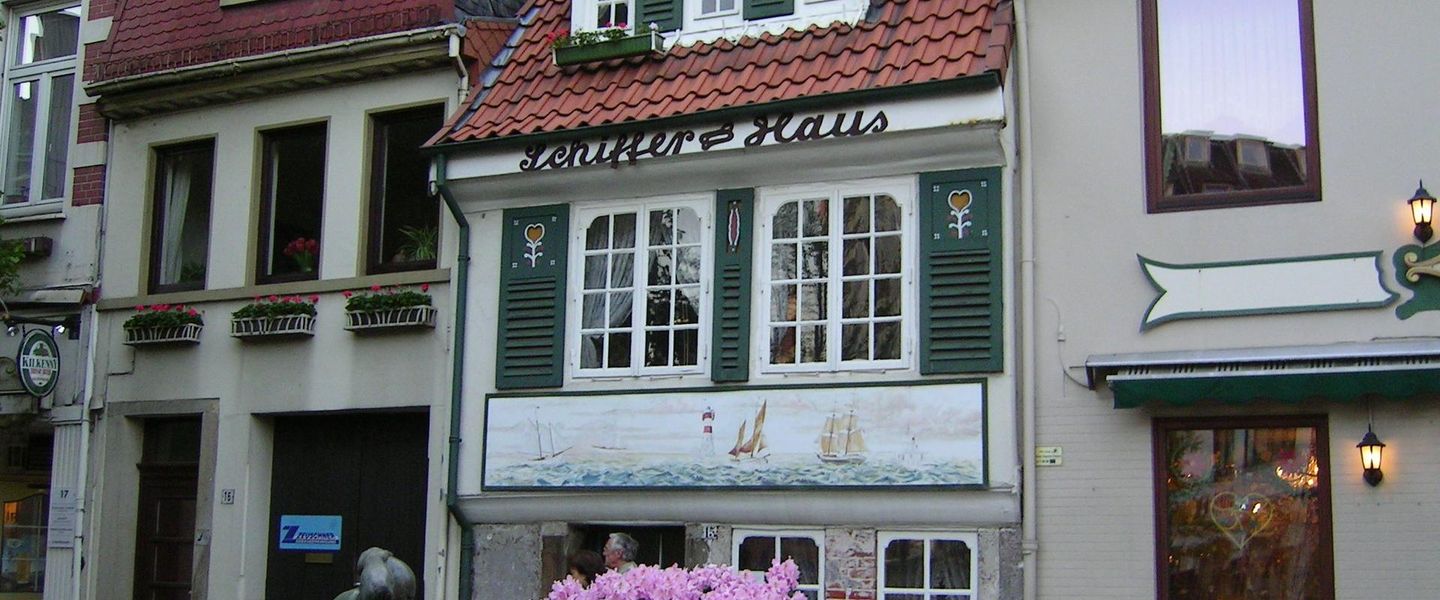


Schnoor in Bremen charms visitors with medieval lanes, tiny historic houses, craft shops, cafés, St Johann church and easy walks through the old town.
A Compact Historic Quarter
Schnoor is Bremen’s oldest surviving neighbourhood, a small maze of narrow, cobbled lanes immediately south-east of the historic market square. Its name is commonly linked to the Low German word for string or cord, reflecting the former presence of rope-makers and other maritime trades. Today, the district is defined by closely packed houses, many of them timber-framed or rendered façades dating from the fifteenth to the nineteenth centuries, with lanes so narrow that the buildings often seem to lean towards one another.Read more about Schnoor
Streets, Houses and Everyday Character
Churches, Culture and the Old Town
Best attractions in Schnoor
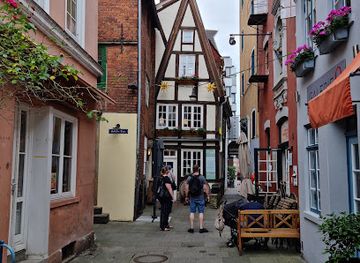
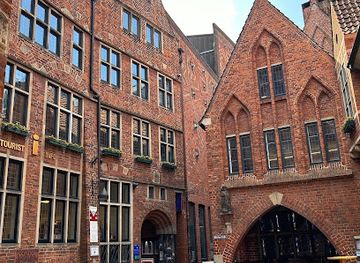
Schnoor’s principal attraction is the quarter itself: a walk through Schnoor, Marterburg, Stavendamm and Lange Wieren reveals an unusually concentrated group of small historic houses, narrow passages, courtyards and elaborately detailed façades. St Johann church provides a major cultural and architectural stop, while the lanes contain craft workshops, galleries, cafés and specialist shops in buildings adapted from former homes and workshops. Look for changing rooflines, timber framing, carved entrances and the close-set façades that make the district distinctive. Schnoor is also well placed for nearby sightseeing without absorbing it into the neighbourhood: Bremen’s Marktplatz and cathedral are just north, Böttcherstraße lies close by, and the Weser promenade is within an easy walk. These surrounding sights help visitors understand the quarter’s setting within Bremen’s old town, but Schnoor’s main experience remains its intimate historic street plan.
-
Historical landmark
Schnoor
Discover the enchanting historical district of Schnoor in Bremen, where cobblestone streets meet charming shops and delightful cafés.
1 min walk · 0.1 km from neighbourhood centre
-
Tourist attraction
Bremen Market Square
Discover the historical charm of Bremen Market Square, a UNESCO World Heritage Site filled with stunning architecture, lively markets, and local delicacies.
4 min walk · 0.3 km from neighbourhood centre
-
State park
Wallanlagen
Discover the beauty and tranquility of Wallanlagen, Bremen's historic state park, where nature and history intertwine for an unforgettable experience.
6 min walk · 0.5 km from neighbourhood centre
-
Tourist attraction
Kunsthalle Bremen
Discover the captivating art and culture at Kunsthalle Bremen, showcasing masterpieces from various eras and innovative exhibitions in a stunning setting.
4 min walk · 0.3 km from neighbourhood centre


Best landmarks in Schnoor
Schnoor’s most important landmark is its preserved urban fabric: tightly packed historic houses, narrow cobbled lanes and irregular plots that record the quarter’s origins as a working district close to Bremen’s river-oriented economy. St Johann church is the principal religious building within Schnoor and a reminder of the area’s Franciscan history and continuing ecclesiastical importance. The small houses along Schnoor, Marterburg and Stavendamm are significant collectively rather than as one monumental structure, with timber framing, plastered fronts, brickwork and later alterations showing how buildings changed over centuries. The quarter’s relationship with the wider old town is also legible at its edges, where lanes lead towards the cathedral and Marktplatz. Nearby Böttcherstraße is a separate historic ensemble, not part of Schnoor, but its proximity makes the contrast between Bremen’s medieval working quarter and its twentieth-century architectural set-piece especially clear.
-
Historical landmark
Schnoor
Explore Bremen's oldest district: a charming maze of cobblestone streets, half-timbered houses, artisan shops, and cozy cafes, offering a glimpse into the city's medieval past and vibrant present.
1 min walk · 0.1 km from neighbourhood centre
-
Tourist attraction
Town Musicians of Bremen
Discover Bremen's iconic fairy tale: The Town Musicians statue embodies unity and hope, a must-see landmark in the heart of this historic Hanseatic city, inspiring visitors worldwide.
4 min walk · 0.4 km from neighbourhood centre
-
Cathedral
St. Petri Dom Bremen
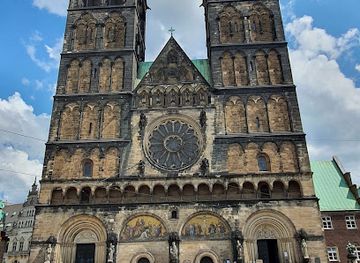
Discover Bremen's iconic St. Petri Dom, a magnificent cathedral with over 1200 years of history, stunning Gothic architecture, and a captivating blend of art, history, and spirituality.
3 min walk · 0.3 km from neighbourhood centre
-
Historical landmark
Glockenspiel House
Experience the enchanting chimes and historical artistry of Bremen's Glockenspiel House, a captivating landmark in the heart of Böttcherstraße, showcasing German heritage and architectural brilliance.
4 min walk · 0.3 km from neighbourhood centre

Explore Schnoor on the map
A handpicked selection of must-see spots in Schnoor, mapped for you.
Best hotels in Schnoor
Best restaurants in Schnoor
Dining in Schnoor is shaped by the quarter’s small historic premises and strongly pedestrian character. Cafés, tea rooms, wine bars and restaurants occupy former houses along the principal lanes, creating compact interiors and occasional secluded courtyards rather than large dining rooms. Menus in the area commonly reflect northern German and European cooking, while coffee, cake and light meals suit visitors taking a break between architectural walks. Long-established local establishments such as Kleiner Olymp are associated with the quarter’s traditional restaurant culture, although individual businesses and menus can change. The surrounding Altstadt broadens the choice considerably, with the Marktplatz and streets around the cathedral offering further dining nearby rather than inside Schnoor itself. Visitors should distinguish the neighbourhood’s atmospheric, small-scale eateries from Bremen’s wider restaurant scene and expect narrow entrances or close-set tables in some historic buildings.
-
German
Gaststätte Kleiner Olymp
Discover authentic German cuisine at Gaststätte Kleiner Olymp in Bremen - where tradition meets taste in a cozy setting.
1 min walk · 0.1 km from neighbourhood centre
-
German
Beck's in'n Snoor
Experience authentic German cuisine at Beck's in'n Snoor, nestled in Bremen's historic Schnoor district with delightful dishes and a cozy atmosphere.
1 min walk · 0.1 km from neighbourhood centre
-
Restaurant
Aioli im Schnoor
Experience exquisite Mediterranean cuisine in Bremen's historic Schnoor district at Aioli im Schnoor - where flavor meets tradition.
1 min walk · 0.1 km from neighbourhood centre
-
Restaurant
Restaurant Katzen-Café - Bremen
Discover the delightful fusion of sushi and café culture at Restaurant Katzen-Café in Bremen's historic Schnoor district.
1 min walk · 0.1 km from neighbourhood centre


Best bars in Schnoor
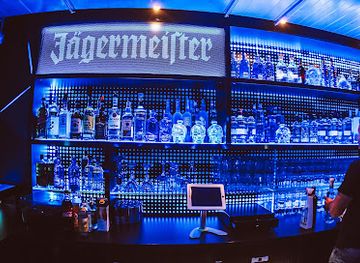
Schnoor is not Bremen’s main clubbing district, and its evening character is better described as intimate and genteel than late-night or boisterous. A selection of wine bars, traditional restaurants and small drinking places offers opportunities for a quiet drink after the shops close, with the historic buildings providing much of the atmosphere. Some venues around the quarter are associated with long-established local hospitality, while the nearby Altstadt and the streets beyond Marktplatz provide a broader choice of pubs, cocktail bars, theatres and music venues. Because Schnoor includes homes as well as visitor businesses, noise carries easily through the narrow lanes; evening visitors should keep conversations and departures considerate. Opening arrangements and entertainment programmes vary, so the neighbourhood is best approached as a place for an unhurried drink rather than a guaranteed night out.
-
Cafe
Teestübchen im Schnoor, Restaurant & Café
Experience the charm of Teestübchen im Schnoor, Bremen's cozy café offering exquisite teas, aromatic coffee, and delightful pastries in a historic setting.
1 min walk · 0.1 km from neighbourhood centre
-
German
Beck's in'n Snoor
Experience the charm of Bremen at Beck's in'n Snoor, where traditional German cuisine meets a cozy atmosphere in the historic Schnoor district.
1 min walk · 0.1 km from neighbourhood centre
-
Irish pub
Little Mary's Irish Pub - Bremen
Discover Little Mary's Irish Pub, a charming Irish escape in Bremen's historic Schnoor district, perfect for food, drinks, and good company.
1 min walk · 0.1 km from neighbourhood centre
-
Restaurant
Aioli im Schnoor
Experience the essence of Mediterranean cuisine at Aioli im Schnoor, a delightful restaurant in Bremen's historic district with a warm ambiance.
1 min walk · 0.1 km from neighbourhood centre


Best nightclubs in Schnoor
Schnoor is not Bremen’s main clubbing district, and its evening character is better described as intimate and genteel than late-night or boisterous. A selection of wine bars, traditional restaurants and small drinking places offers opportunities for a quiet drink after the shops close, with the historic buildings providing much of the atmosphere. Some venues around the quarter are associated with long-established local hospitality, while the nearby Altstadt and the streets beyond Marktplatz provide a broader choice of pubs, cocktail bars, theatres and music venues. Because Schnoor includes homes as well as visitor businesses, noise carries easily through the narrow lanes; evening visitors should keep conversations and departures considerate. Opening arrangements and entertainment programmes vary, so the neighbourhood is best approached as a place for an unhurried drink rather than a guaranteed night out.
-
Disco club
La VIVA Clubdiscotheque - Bremen
Experience the vibrant nightlife of Bremen at La VIVA Clubdiscotheque, where music, dancing, and fun collide in an unforgettable atmosphere.
11 min walk · 0.8 km from neighbourhood centre
-
Disco club
2RaumClub dein Techno Club
Discover the electrifying nightlife at 2RaumClub, Bremen's top destination for techno music and vibrant clubbing experiences.
11 min walk · 0.8 km from neighbourhood centre
-
Disco club
NFF Club
Discover Bremen's nightlife at NFF Club, the ultimate disco experience with electrifying music and a vibrant atmosphere.
6 min walk · 0.5 km from neighbourhood centre
-
Disco club
Shagall Klub - Bremen
Discover the energetic nightlife of Bremen at Shagall Klub, a premier disco club offering an unforgettable experience filled with music and dancing.
11 min walk · 0.9 km from neighbourhood centre



Best shops in Schnoor
Shopping in Schnoor centres on small-scale independent retail set within historic houses rather than department stores or conventional high-street chains. The lanes contain craft shops, galleries, jewellers, gift shops, book and design-led retailers, with stock often oriented towards handmade objects, Bremen souvenirs, decorative goods and locally themed artworks. The pleasure lies as much in browsing the buildings and displays as in covering a large shopping distance; narrow doorways and compact interiors are part of the experience. Schnoor’s commercial identity grew from the restoration and reuse of former homes and workshops, so retail is closely tied to the quarter’s heritage character. Bremen’s larger central shopping streets begin beyond the old town’s historic core, while the nearby Marktplatz and Böttcherstraße provide additional visitor-oriented retail without belonging to Schnoor itself.
-
Art gallery
Schnoor One
Explore Schnoor One, Bremen's artistic haven for unique art and furniture, nestled in the historic Schnoor district.
2 min walk · 0.1 km from neighbourhood centre
-
Gift shop
Die Perlerie, Inh. A. Kroll
Explore the charm of Bremen through unique gifts and local crafts at Die Perlerie, a treasure trove for every visitor.
1 min walk · 0.1 km from neighbourhood centre
-
Store
Erzgebirge im Schnoor
Experience the artistic heritage of Bremen at Erzgebirge im Schnoor, where traditional craftsmanship meets modern charm in a delightful shopping atmosphere.
1 min walk · 0.1 km from neighbourhood centre
-
Clothing store
OLLIPAC
Explore OLLIPAC in Bremen for unique fashion that blends modern style with local craftsmanship.
1 min walk · 0.1 km from neighbourhood centre


Schnoor essentials
Getting There
Getting Around
Safety
Emergency Situations
Do's and Don'ts
Local Tips
History of Schnoor
Medieval Settlement by the Weser
Schnoor developed on slightly raised ground close to Bremen’s medieval town and the Weser, in an area associated with small-scale maritime trades, fishing and craft production. Its name is generally connected with the Low German word for string or cord, often interpreted as a reference to rope-makers’ workshops. The district’s irregular layout preserves the tightly packed pattern of an old working quarter rather than the broad, planned streets introduced elsewhere as Bremen expanded. Although most visible buildings are later than the Middle Ages, the narrow lanes retain the grain of the historic settlement and its close relationship with the river-oriented economy.
Craftsmen and Merchant Houses
From the early modern period into the nineteenth century, Schnoor housed craftsmen, boatmen, small traders and working families in buildings adapted to limited plots. Houses were repeatedly altered or rebuilt, creating the mixture of timber framing, brick, plaster and later façades seen today. St Johann’s church, rooted in the Franciscan presence in the quarter, became an important religious landmark. The neighbourhood was never Bremen’s grand political centre; its significance lay in the everyday urban life of workshops, modest homes, religious institutions and businesses serving the wider port city.
Industrial Change and Decline
Bremen’s industrial growth, port expansion and changing transport patterns gradually weakened the traditional economic role of Schnoor. Small workshops and old-fashioned housing were increasingly viewed as difficult to maintain, while some buildings deteriorated and the quarter lost residents. Twentieth-century wartime damage affected Bremen, though Schnoor retained an unusually substantial concentration of historic structures. Post-war planning debates placed the area between redevelopment pressures and growing recognition of its architectural value, helping to prevent wholesale replacement by modern buildings.
Restoration and Heritage Quarter
From the mid-twentieth century onwards, restoration projects and heritage-minded urban policy reshaped Schnoor’s public image. Historic houses were repaired and adapted for specialist shops, galleries, restaurants and cultural uses, while the lanes became an important part of Bremen’s visitor landscape. This preservation also changed the social and commercial balance of the quarter: a former working neighbourhood became a highly visited historic district, with businesses concentrated along the principal lanes and homes remaining in quieter corners. Schnoor’s contemporary identity therefore combines preserved urban fabric with the pressures and opportunities of central-city tourism.
Schnoor in Photos
Browse through our photo collection highlighting the charm and character of the destination.
Neighbourhoods near Schnoor
The closest neighbourhoods to Schnoor, if you have time for more than one stop.
-

-

-


Swipe for more neighbourhoods
Explore more

Explore more of Bremen
Bremen, Germany blends Hanseatic history, UNESCO landmarks, riverside walks, lively arts, distinctive museums and local culture for rewarding city sightseeing.
Explore Bremen