

Medienhafen (Dusseldorf) Travel Guide - Free
Explore Medienhafen in Dusseldorf with Evendo's free guide. Find the best shops, historic streets, restaurants, and gems on web or mobile.


Medienhafen Düsseldorf blends Gehry architecture, Rhine views, creative offices, design-led dining and late-night bars in a former harbour district.
From Working Harbour to Design District
Medienhafen occupies the southwestern edge of Düsseldorf’s central area, where former docklands meet the Rhine. Once a utilitarian harbour serving the city’s trade, it has been reshaped into a business, architecture and hospitality quarter without losing the waterborne infrastructure that gives it character. Brick warehouses, old quay walls and working harbour details sit alongside contemporary offices, restaurants and hotels, creating a setting that feels more layered than a conventional new development.Read more about Medienhafen
Architecture on the Quayside
Work, Food and Evening Life
Best attractions in Medienhafen
Medienhafen’s attractions are concentrated in its architecture, waterfront setting and public spaces. Neuer Zollhof, Frank Gehry’s celebrated group of three buildings, is the district’s essential visual encounter: each structure has a different surface and angle, and together they frame the harbour with a sculptural presence. Nearby, the Stadttor rises above the southern approach, while the Rheinturm offers a high viewpoint over Düsseldorf and the Rhine. Walking the quays around Speditionstraße and the adjoining basins reveals a changing sequence of brick warehouses, reflective façades, office buildings and working harbour details. The Rhine promenade adds open views, passing boats and a more spacious rhythm, particularly at sunset. Medienhafen is less a museum-style collection of sights than an outdoor architectural circuit, where the relationship between old industrial infrastructure, contemporary design and the river forms the main experience.
-
Communications tower
Rhine Tower
Discover breathtaking views of Düsseldorf from the Rhine Tower, an architectural marvel and a must-visit destination for every traveler.
4 min walk · 0.3 km from neighbourhood centre
-
Tourist attraction
Rheinpromenade
Explore the scenic beauty and vibrant culture of Düsseldorf at Rheinpromenade, a picturesque riverside promenade along the Rhine River.
13 min walk · 1.1 km from neighbourhood centre
-
Tourist attraction
Gehry Bauten
Discover the stunning architectural masterpieces of Gehry Bauten in Düsseldorf, where modern design meets the picturesque Rhine waterfront.
4 min walk · 0.3 km from neighbourhood centre
-
Tourist attraction
Aussichtspunkt auf den Rheinturm
Experience breathtaking views of Düsseldorf from the iconic Rheinturm Observation Deck, a must-visit for every traveler.
5 min walk · 0.4 km from neighbourhood centre


Best landmarks in Medienhafen
Medienhafen’s landmarks express the meeting of Düsseldorf’s industrial past and its late twentieth-century redevelopment. Neuer Zollhof, completed in 1998 to designs by Frank Gehry, is the district’s defining architectural group, recognised for its leaning volumes, rippling façades and contrasting materials. The Stadttor marks the southern approach with a large contemporary office structure whose form creates a gateway-like presence. The Rheinturm, built beside the Rhine before the harbour’s later transformation, is the area’s most prominent vertical marker and remains useful for orientation across the city. Around these major buildings, brick warehouse façades, quay walls, harbour basins and surviving infrastructure provide a quieter historical vocabulary. Their importance is not based solely on age or monument status: together they show how a working port landscape was adapted into one of Düsseldorf’s most recognisable urban quarters.
-
Communications tower
Rhine Tower
Experience Düsseldorf from Above: Ascend the Rhine Tower for breathtaking panoramic views, a revolving restaurant, and the world's largest digital clock, a true icon of the city.
4 min walk · 0.3 km from neighbourhood centre
-
Tourist attraction
Rheinuferpromenade Düsseldorf
Experience Düsseldorf's vibrant heart on the Rheinuferpromenade: a scenic riverside walk connecting history and modernity, offering stunning views, lively culture, and a taste of Rhineland charm.
8 min walk · 0.6 km from neighbourhood centre
-
Tourist attraction
Rheinpromenade
Experience Düsseldorf's vibrant heart on the Rheinpromenade: a scenic riverfront walkway blending history, culture, and modern design, offering stunning views and a tranquil escape.
13 min walk · 1.1 km from neighbourhood centre
-
Tourist attraction
Tritonenbrunnen
Discover the Tritonenbrunnen on Düsseldorf's Königsallee: a stunning fountain embodying the city's rich history, artistic heritage, and status as a cultural and commercial center.
5 min drive · 1.6 km from neighbourhood centre


Explore Medienhafen on the map
A handpicked selection of must-see spots in Medienhafen, mapped for you.
Best hotels in Medienhafen
Best restaurants in Medienhafen
Dining in Medienhafen is shaped by its waterfront setting and its role as a destination for office workers, business visitors and evening diners. Restaurants and cafés are concentrated around Kaistraße, Speditionstraße and the quays, where converted industrial buildings and contemporary offices provide very different settings. The range typically runs from informal lunches and coffee to modern European cooking, international food, hotel dining and polished riverside venues, with menus reflecting Düsseldorf’s cosmopolitan business culture more than a single local cuisine. The district is also within easy reach of Unterbilk, whose surrounding streets add a broader choice of independent cafés and restaurants beyond the harbour itself. Visitors should distinguish the atmosphere of the working week, when lunch and after-work dining are prominent, from quieter periods when the large office landscape becomes more apparent.
-
Hamburger
HANS IM GLÜCK - DÜSSELDORF Medienhafen
Experience gourmet burgers in Düsseldorf's Medienhafen at HANS IM GLÜCK - where taste meets ambiance in every bite.
7 min walk · 0.6 km from neighbourhood centre
-
Asian
Okinii Düsseldorf Medienhafen
Experience authentic Japanese flavors at Okinii Düsseldorf Medienhafen—where sushi meets style in a stunning waterfront setting.
7 min walk · 0.6 km from neighbourhood centre
-
Mediterranean
MEERBAR Restaurant
Discover the essence of Mediterranean dining at MEERBAR Restaurant in Düsseldorf - where exquisite seafood meets stunning riverside views.
4 min walk · 0.3 km from neighbourhood centre
-
Asian
Mongo's Restaurant Düsseldorf
Experience an unforgettable Mongolian barbecue journey at Mongo's Restaurant in Düsseldorf - perfect for food lovers with diverse tastes!
7 min walk · 0.6 km from neighbourhood centre


Best bars in Medienhafen
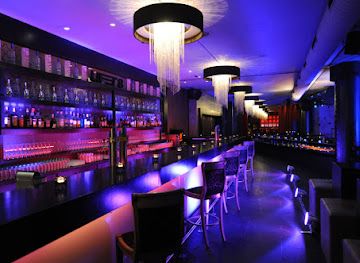
Medienhafen’s nightlife is centred on bars, hotel lounges and restaurants rather than on a dense club strip. The quays around Speditionstraße and Kaistraße attract after-work drinks, dinner-led evenings and occasional late-night socialising, with contemporary interiors reflecting the district’s design-conscious image. Hotel bars provide a more settled option, while nearby Unterbilk and the Altstadt offer a wider range of pubs, music venues and clubs when the harbour’s selection feels limited. Evening activity varies sharply between the busy restaurant cluster and the quieter office streets, so the neighbourhood is best understood as a waterfront night-out area rather than Düsseldorf’s principal party district. The Rheinturm and illuminated office façades give late walks a distinctive setting, but visitors should remain on public routes and take normal care around the water and traffic.
-
Bar
MEERBAR Restaurant
Experience the elegance of Mediterranean dining at MEERBAR, where exquisite seafood meets stunning riverside views in Düsseldorf.
4 min walk · 0.3 km from neighbourhood centre
-
Restaurant
The VIEW Skylounge & Bar
Discover the exquisite flavors and stunning views at The VIEW Skylounge & Bar, a premier dining destination in Düsseldorf.
9 min walk · 0.7 km from neighbourhood centre
-
Bar
DOX Restaurant & Bar
Discover the perfect blend of modern dining and vibrant bar culture at DOX Restaurant & Bar in Düsseldorf.
6 min walk · 0.5 km from neighbourhood centre
-
Bar
Boothby's Bar
Discover the charm of Boothby's Bar in Düsseldorf, where vibrant nightlife meets exceptional drinks in a stylish setting.
6 min drive · 1.9 km from neighbourhood centre


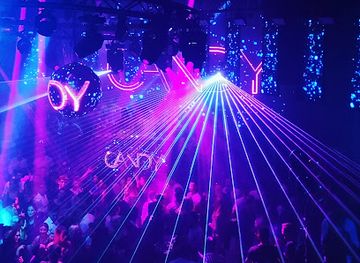
Best nightclubs in Medienhafen
Medienhafen’s nightlife is centred on bars, hotel lounges and restaurants rather than on a dense club strip. The quays around Speditionstraße and Kaistraße attract after-work drinks, dinner-led evenings and occasional late-night socialising, with contemporary interiors reflecting the district’s design-conscious image. Hotel bars provide a more settled option, while nearby Unterbilk and the Altstadt offer a wider range of pubs, music venues and clubs when the harbour’s selection feels limited. Evening activity varies sharply between the busy restaurant cluster and the quieter office streets, so the neighbourhood is best understood as a waterfront night-out area rather than Düsseldorf’s principal party district. The Rheinturm and illuminated office façades give late walks a distinctive setting, but visitors should remain on public routes and take normal care around the water and traffic.
-
Disco club
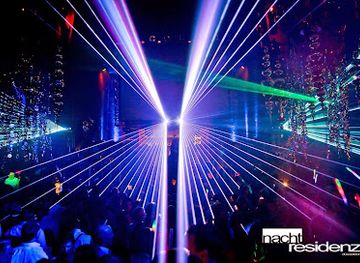
The Nachtresidenz Düsseldorf
Discover the vibrant nightlife at Nachtresidenz Düsseldorf, where electrifying music and stylish ambiance create unforgettable memories.
5 min drive · 1.6 km from neighbourhood centre
-
Night club
Rudas Studios Club
Dive into Düsseldorf's nightlife at Rudas Studios Club, where music and style converge for an unforgettable experience.
8 min walk · 0.6 km from neighbourhood centre
-
Night club
The Eight - Eventlocation & Club in Düsseldorf
Discover Düsseldorf's nightlife at The Eight, where music, dance, and vibrant energy create unforgettable experiences along the Rhine.
15 min walk · 1.2 km from neighbourhood centre
-
Night club
Schickimicki Club
Dive into Düsseldorf's nightlife at Schickimicki Club, where great music, dancing, and an electric atmosphere await every night.
18 min walk · 1.5 km from neighbourhood centre

Best shops in Medienhafen
Shopping is not Medienhafen’s principal activity, and the district has fewer traditional retail streets than central Düsseldorf or neighbouring Unterbilk. Its commercial landscape is dominated by offices, hospitality and design-oriented businesses, with occasional specialist, lifestyle and convenience retail linked to the working population and visitors. The main reason to browse here is the architecture and the setting rather than a concentration of independent shops: the quays lead past contemporary buildings, converted harbour structures and hospitality interiors rather than continuous storefronts. For a fuller selection of fashion, books, records, vintage goods and everyday shopping, visitors can continue towards the city centre or explore Unterbilk’s streets outside the harbour. This relative lack of retail density is part of Medienhafen’s character, preserving the sense that it is primarily a redeveloped business and waterfront quarter.
-
Gift shop
Unlicht - Die Düsseldorfer Szene-Boutique! Auf 200qm! Mittelalter, Gothic & mehr!
Explore Unlicht, Düsseldorf's premier boutique for medieval, gothic, and alternative fashion, offering unique gifts and accessories.
5 min drive · 1.6 km from neighbourhood centre
-
Clothing store
APROPOS The Concept Store
Discover stylish clothing, exquisite cosmetics, and unique perfumes at APROPOS The Concept Store in Düsseldorf, a fashion destination for every traveler.
16 min walk · 1.3 km from neighbourhood centre
-
Women's clothing store
Anziehend Store
Explore Anziehend Store, Düsseldorf's charming women's boutique offering stylish clothing and accessories for the modern woman.
14 min walk · 1.1 km from neighbourhood centre
-
Vaporizer store
Dampfshop Medienhafen
Explore Düsseldorf's premier vaporizer store, Dampfshop Medienhafen, featuring a wide range of products and expert staff ready to assist you.
9 min walk · 0.8 km from neighbourhood centre


Medienhafen essentials
Getting There
Getting Around
Safety
Emergency Situations
Do's and Don'ts
Local Tips

From Eve
Local phrases worth knowing
You don't need to get them perfect. A few words go a long way, and locals appreciate the effort.
Basics
| English | Local | Say it |
|---|---|---|
| Hello | Hallo | [hah-loh] |
| Goodbye | Auf Wiedersehen | [owf vee-der-zay-en] |
| Yes | Ja | [yah] |
| No | Nein | [nine] |
| Please/You're welcome | Bitte | [bit-teh] |
| Thank you | Danke | [dahn-keh] |
| Excuse me/Sorry | Entschuldigung | [ent-shool-dee-goong] |
| How are you? | Wie geht es dir? | [vee gayt es deer] |
| Fine. And you? | Gut. Und dir? | [goot oont deer] |
| Do you speak English? | Sprichst du Englisch? | [shprikhst doo eng-lish] |
| I don't understand | Ich verstehe nicht | [ikh fer-shteh-eh nikt] |
Eating & Drinking
| English | Local | Say it |
|---|---|---|
| I'd like to see the menu, please | Ich hätte gerne die Speisekarte, bitte | [ikh heh-teh gehr-neh dee shpigh-ze-kahr-teh, bit-teh] |
| I don't eat meat | Ich esse kein Fleisch | [ikh es-seh kine flysh] |
| Cheers! | Prost! | [prohst] |
| I would like to pay, please | Ich möchte bitte zahlen | [ikh mehrkhte bit-teh tsah-len] |
Emergencies
| English | Local | Say it |
|---|---|---|
| Help! | Hilfe! | [hil-feh] |
| Go away! | Geh weg! | [geh vehg] |
| Call the Police! | Rufen Sie die Polizei! | [roo-fen zee dee poh-lee-tsay] |
| Call a doctor! | Rufen Sie einen Arzt! | [roo-fen zee i-nen ahrts] |
| I'm lost | Ich habe mich verlaufen | [ikh hah-beh meeh fer-lou-fen] |
| I'm ill | Ich bin krank | [ikh been krank] |
Shopping
| English | Local | Say it |
|---|---|---|
| I'd like to buy... | Ich möchte kaufen... | [ikh mehrkhte kou-fen] |
| I'm just looking | Ich schaue nur | [ikh shou-eh noor] |
| How much is it? | Wie viel kostet es? | [vee feel kohs-tet es] |
| That's too expensive | Das ist zu teuer | [dahs ist tsoo toy-er] |
| Can you lower the price? | Können Sie den Preis senken? | [kuh-nen zee den prees zehn-ken] |
Time & Numbers
| English | Local | Say it |
|---|---|---|
| What time is it? | Wie spät ist es? | [vee shpeht ist es] |
| It's one o'clock | Es ist ein Uhr | [es ist iyn oor] |
| Half past (10) | Halb (zehn) | [halb (tsayn)] |
| Morning | Morgen | [mor-gen] |
| Afternoon | Nachmittag | [nahkh-mit-tahg] |
| Evening | Abend | [ah-bent] |
| Yesterday | Gestern | [geh-stern] |
| Today | Heute | [hoy-teh] |
| Tomorrow | Morgen | [mor-gen] |
| 1 | eins | [ynes] |
| 2 | zwei | [tsvey] |
| 3 | drei | [dry] |
| 4 | vier | [feer] |
| 5 | fünf | [foonf] |
| 6 | sechs | [zeks] |
| 7 | sieben | [zee-ben] |
| 8 | acht | [ahkt] |
| 9 | neun | [noyn] |
| 10 | zehn | [tsayn] |
Transport & Directions
| English | Local | Say it |
|---|---|---|
| Where's a/the...? | Wo ist ein/der...? | [vo ist iyn/dehr] |
| What's the address? | Wie lautet die Adresse? | [vee lowt-et dee ah-dreh-seh] |
| Can you show me (on the map)? | Können Sie mir zeigen (auf der Karte)? | [kuh-nen zee meer tsy-gen (owf dehr kahr-teh)] |
| When's the next (bus)? | Wann kommt der nächste (Bus)? | [vahn kohmt dehr nekh-ste (boos)] |
| A ticket (to ....) | Eine Fahrkarte (nach ....) | [i-ne fahr-kahr-teh (nahkh ....)] |
History of Medienhafen
The Harbour’s Commercial Beginnings
Medienhafen developed from Düsseldorf’s harbour facilities on the Rhine, an area shaped by quays, warehouses and access for commercial shipping rather than by residential streets. The harbour formed part of the city’s wider effort to strengthen its trading and industrial infrastructure during the nineteenth century. Its water basins and practical buildings supported the movement and storage of goods, giving the district a distinctly functional identity. Unlike Düsseldorf’s historic centre, this was a working edge of the city, separated from everyday urban life by its industrial purpose and large-scale infrastructure.
Warehouses and Changing Harbour Trade
During the twentieth century, the harbour remained associated with freight, storage and commercial activity, although patterns of transport and industry gradually changed. As port functions became less dependent on central urban quays, parts of the site lost their original intensity of use. Existing warehouses, silos and quay structures nevertheless preserved evidence of the district’s working past. The area’s later redevelopment benefited from this combination of substantial waterfront space and an unusually central location, while the retained harbour geometry continued to distinguish it from a newly planned office quarter.
A New Role for the Docklands
From the late twentieth century, Düsseldorf began redirecting Medienhafen towards offices, media companies, design practices, hospitality and cultural uses. The redevelopment did not follow a single uniform architectural style: older brick and industrial structures were joined by assertive contemporary buildings, producing the visual contrast for which the district is known. Frank Gehry’s Neuer Zollhof complex, completed in 1998, became the best-known expression of this transformation. The project helped establish Medienhafen as a symbol of Düsseldorf’s modern business and creative image while leaving the harbour basins as a reminder of its earlier purpose.
The Contemporary Medienhafen
Today, Medienhafen is a mixed commercial and leisure district rather than a conventional residential neighbourhood. It accommodates offices, hotels, restaurants and bars alongside surviving traces of port infrastructure, with the Rheinturm and the Rhine providing major points of orientation. Its identity depends on the tension between preservation and reinvention: the area is marketed through striking new architecture, yet its appeal also comes from brick façades, loading edges and open water. Visitors encounter a place shaped by redevelopment, but not stripped entirely of its harbour vocabulary.
Medienhafen in Photos
Browse through our photo collection highlighting the charm and character of the destination.
Neighbourhoods near Medienhafen
The closest neighbourhoods to Medienhafen, if you have time for more than one stop.
-

-

-


Swipe for more neighbourhoods
Explore more

Explore more of Dusseldorf
Düsseldorf blends Rhine-side promenades, modern architecture, art museums, elegant shopping, Altstadt breweries and Japanese-influenced culture in Germany.
Explore Dusseldorf