

Oberkassel (Dusseldorf) Travel Guide - Free
Explore Oberkassel in Dusseldorf with Evendo's free guide. Find the best shops, historic streets, restaurants, and gems on web or mobile.


Oberkassel in Düsseldorf pairs Rhine promenades with Gründerzeit streets, village-like squares, cafés, local dining and convenient tram links across the river.
Across the Rhine
Oberkassel occupies Düsseldorf’s left bank of the Rhine, reached from the city centre by the Oberkasseler Brücke or a short journey on the Stadtbahn. Its identity is distinct from the commercial centre across the water: this is a largely residential quarter of broad avenues, mature trees, carefully maintained historic façades and a long riverside edge. The Rhine meadows open the neighbourhood towards wide skies, while the streets behind the embankment create a more composed urban rhythm.Read more about Oberkassel
Historic Streets and Local Squares
Riverside Life
Best attractions in Oberkassel
Oberkassel’s principal attractions are its river landscape and the experience of moving through a well-preserved early twentieth-century urban quarter. The Rheinallee provides a long promenade beside the Rhine, with open views towards Düsseldorf’s Altstadt, the Rhine Tower and the central riverfront beyond the Oberkasseler Brücke. Behind it, Luegallee and the streets around Belsenplatz offer a succession of historic apartment façades, local shops and cafés rather than a concentrated museum district. The Rheinwiesen are especially appealing for an unstructured walk, with broad lawns and changing views of the river and bridges. Visitors interested in transport and engineering can observe the Stadtbahn crossing and the scale of the Oberkasseler Brücke. The neighbouring quarter of Niederkassel, immediately to the north, contains the EKO-Haus Japanese Culture Centre, but it should not be mistaken for an attraction within Oberkassel itself.
-
Tourist attraction
Rheinuferpromenade Düsseldorf
Explore the charming Rheinuferpromenade in Düsseldorf, a scenic riverside walk filled with cafes, culture, and stunning views of the Rhine River.
17 min walk · 1.4 km from neighbourhood centre
-
Tourist attraction
Rheinuferpromenade
Discover the enchanting Rheinuferpromenade in Düsseldorf, where stunning river views meet vibrant local culture and delectable cuisine.
14 min walk · 1.2 km from neighbourhood centre
-
Tourist attraction
Ständehauspark
Discover tranquility at Ständehauspark, Düsseldorf's lush urban oasis, perfect for relaxation, wildlife photography, and leisurely strolls amidst vibrant landscapes.
6 min drive · 2.1 km from neighbourhood centre
-
Tourist attraction
Julia Stoschek Collection / Foundation e.V.
Explore the Julia Stoschek Collection in Düsseldorf, a hub for contemporary art that inspires and challenges perspectives through innovative installations.
11 min walk · 0.9 km from neighbourhood centre


Best landmarks in Oberkassel
The Oberkasseler Brücke is the neighbourhood’s most recognisable structure, linking the left bank with central Düsseldorf and defining many of the district’s river views. Its broad approaches and Stadtbahn alignment also illustrate how transport has shaped Oberkassel since the first permanent bridge opened in 1898. Along the water, Rheinallee and the adjacent Rheinwiesen form a civic landscape rather than a single monument, with the riverbank serving as the neighbourhood’s open counterpart to its dense residential streets. Belsenplatz is another local landmark: a historic transport focus whose trams, mature streets and surrounding shops give it a recognisable everyday identity. The streets around Luegallee contain numerous Gründerzeit and Jugendstil-influenced buildings, important collectively for their urban character even when individual façades are not major tourist monuments. St Antonius Church also contributes to the neighbourhood’s architectural and community landscape near Luegallee.
-
Park
Hofgarten
Discover Düsseldorf's oldest public park, a green oasis blending history, art, and nature in the heart of the city, offering a tranquil escape and cultural experiences for all.
5 min drive · 1.7 km from neighbourhood centre
-
 Bridge
Oberkasselerbrücke
Experience Düsseldorf's iconic Oberkasseler Bridge: a symbol of resilience, offering panoramic views, pedestrian-friendly walkways, and access to the city's vibrant culture and stunning Rhine River scenery.
12 min walk · 0.9 km from neighbourhood centre
-
Historical landmark
Stadterhebungsmonument
Discover Düsseldorf's origins at the Stadterhebungsmonument, a captivating bronze sculpture in the heart of the Altstadt, commemorating the city's rise and rich history.
15 min walk · 1.2 km from neighbourhood centre
-
Museum
Julia Stoschek Collection / Foundation e.V.
Explore groundbreaking time-based media art at the Julia Stoschek Collection in Düsseldorf, a dynamic space for artistic expression, social commentary, and technological innovation. Currently closed for renovation, reopening in 2026.
11 min walk · 0.9 km from neighbourhood centre


Explore Oberkassel on the map
A handpicked selection of must-see spots in Oberkassel, mapped for you.
Best hotels in Oberkassel
Best restaurants in Oberkassel
Oberkassel’s dining scene follows the neighbourhood’s settled, affluent residential character, with restaurants and cafés concentrated along Luegallee, around Belsenplatz and on adjoining streets. Visitors can expect a mixture of German and European cooking, Italian restaurants, cafés, bakeries and international choices, alongside places suited to everyday meals rather than destination dining. The commercial avenues are useful for a relaxed breakfast, coffee or early dinner before a walk beside the Rhine, while the riverfront itself is more associated with strolling and outdoor leisure than with a continuous restaurant strip. Independent food shops and bakeries contribute to the local rhythm, particularly around the tram-served centres of the neighbourhood. Restaurant identities and opening patterns change, so current information is worth checking locally; Oberkassel is best approached as a neighbourhood dining area with a broad, dependable choice rather than a single defining speciality.
-
Italian
Spaghetti & Stars
Indulge in authentic Italian cuisine at Spaghetti & Stars in Düsseldorf - where every dish is a celebration of flavor and tradition.
10 min walk · 0.8 km from neighbourhood centre
-
Restaurant
Brasserie Hülsmann
Experience culinary excellence at Brasserie Hülsmann in Düsseldorf, where exquisite flavors meet elegant dining.
6 min walk · 0.5 km from neighbourhood centre
-
Steak
The Lox
Experience the finest steaks at The Lox in Düsseldorf—where quality meets exceptional taste in an elegant setting.
9 min walk · 0.7 km from neighbourhood centre
-
Restaurant
Saittavini
Discover authentic Italian cuisine at Saittavini in Düsseldorf—where every dish tells a story.
3 min walk · 0.3 km from neighbourhood centre


Best bars in Oberkassel
Oberkassel is not one of Düsseldorf’s principal clubbing districts, and its evenings are generally quieter than those in the Altstadt or MedienHafen. Nightlife centres on restaurants, wine bars, cafés and relaxed local meeting places along Luegallee and around Belsenplatz, with some venues extending the day into a sociable evening. The riverside is attractive after sunset for views of the illuminated city, but the Rheinwiesen and stretches of Rheinallee are public open spaces rather than a continuous entertainment zone. Visitors seeking live music, large clubs or a dense concentration of late-night bars will find a wider choice across the Rhine in central Düsseldorf, easily reached by Stadtbahn. In Oberkassel, the appeal lies in an unhurried dinner, a drink close to home and the contrast between lit apartment façades and the dark river.
-
Brewery
Alter Bahnhof Oberkassel
Discover the authentic flavors of Germany at Alter Bahnhof Oberkassel, a charming brewery and gastropub in Düsseldorf, renowned for its craft beers and traditional cuisine.
7 min walk · 0.6 km from neighbourhood centre
-
Bar
Muggel
Discover Muggel, Düsseldorf's vibrant bar and café, where locals and tourists come together for delightful drinks and delicious meals in a cozy atmosphere.
3 min walk · 0.2 km from neighbourhood centre
-
Bar
Bar Cherie - Düsseldorf
Experience the vibrant nightlife of Düsseldorf at Bar Cherie, where stylish ambiance meets exquisite drinks in a friendly atmosphere.
16 min walk · 1.3 km from neighbourhood centre
-
Bar
SASSAFRAS
Experience the best of Düsseldorf's nightlife at SASSAFRAS - a bar that blends exquisite drinks with live jazz in an inviting atmosphere.
5 min walk · 0.4 km from neighbourhood centre


Best nightclubs in Oberkassel
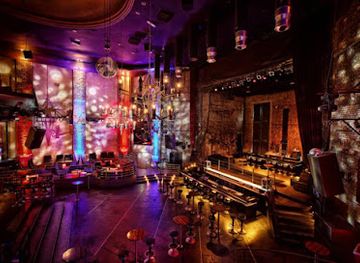
Oberkassel is not one of Düsseldorf’s principal clubbing districts, and its evenings are generally quieter than those in the Altstadt or MedienHafen. Nightlife centres on restaurants, wine bars, cafés and relaxed local meeting places along Luegallee and around Belsenplatz, with some venues extending the day into a sociable evening. The riverside is attractive after sunset for views of the illuminated city, but the Rheinwiesen and stretches of Rheinallee are public open spaces rather than a continuous entertainment zone. Visitors seeking live music, large clubs or a dense concentration of late-night bars will find a wider choice across the Rhine in central Düsseldorf, easily reached by Stadtbahn. In Oberkassel, the appeal lies in an unhurried dinner, a drink close to home and the contrast between lit apartment façades and the dark river.
-
Disco club
The Nachtresidenz Düsseldorf
Unleash your nightlife experience at Düsseldorf's vibrant Nachtresidenz, a premier disco club and event venue, where unforgettable memories await.
6 min drive · 2.2 km from neighbourhood centre
-
Night club
Rudas Studios Club
Discover Düsseldorf's nightlife at Rudas Studios Club, a vibrant night club offering exceptional music, stylish ambiance, and unforgettable events.
5 min drive · 1.8 km from neighbourhood centre
-
Night club
Oh Baby Anna
Dive into the electrifying nightlife of Düsseldorf at Oh Baby Anna, a premier night club renowned for its lively atmosphere and top-notch entertainment.
17 min walk · 1.4 km from neighbourhood centre
-
Night club
The Eight - Eventlocation & Club in Düsseldorf
Experience the electrifying nightlife of Düsseldorf at The Eight, a premier night club offering unforgettable music and vibrant atmosphere.
15 min walk · 1.2 km from neighbourhood centre


Best shops in Oberkassel
Shopping in Oberkassel is concentrated along Luegallee, around Belsenplatz and on nearby side streets, where the retail mix serves residents as much as visitors. Expect bakeries, delicatessens, cafés, florists, pharmacies, specialist food shops and independent services, with boutiques and small lifestyle businesses adding variety without turning the area into a large-scale shopping destination. The streets are well suited to browsing between architectural stops, and the neighbourhood’s cafés make it easy to pause rather than shop at speed. Belsenplatz provides a useful local orientation point, while Luegallee has the more continuous commercial frontage. Visitors looking for major department stores, extensive souvenir shopping or large international chains will find a broader selection across the Rhine in central Düsseldorf. Oberkassel’s retail interest lies in its everyday quality, independent atmosphere and relationship to residential street life.
-
Shopping mall
KÖ Shopping Mall
Explore KÖ Shopping Mall in Düsseldorf: A luxurious shopping destination with high-end brands, stylish accessories, and delightful dining options.
6 min drive · 1.9 km from neighbourhood centre
-
Department store
GALERIA Düsseldorf Königsallee
Explore the exquisite shopping experience at GALERIA Düsseldorf Königsallee, where luxury brands meet local treasures in a stunning setting.
5 min drive · 1.6 km from neighbourhood centre
-
Clothing store
Breuninger Düsseldorf
Discover Breuninger Düsseldorf: the ultimate luxury shopping destination for fashion lovers and trendsetters in the heart of the city.
6 min drive · 1.8 km from neighbourhood centre
-
Store
No129 concept store
Experience the essence of contemporary fashion at No129 Concept Store in Düsseldorf, where style meets elegance in every piece.
6 min drive · 2.1 km from neighbourhood centre


Oberkassel essentials
Getting There
Getting Around
Safety
Emergency Situations
Do's and Don'ts
Local Tips

From Eve
Local phrases worth knowing
You don't need to get them perfect. A few words go a long way, and locals appreciate the effort.
Basics
| English | Local | Say it |
|---|---|---|
| Hello | Hallo | [ha-lo] |
| Goodbye | Auf Wiedersehen | [owf vee-der-zay-en] |
| Yes | Ja | [ya] |
| No | Nein | [nine] |
| Please/You're welcome | Bitte | [bit-te] |
| Thank you | Danke | [dahn-kuh] |
| Excuse me/Sorry | Entschuldigung | [ent-shool-di-gung] |
| How are you? | Wie geht es dir? | [vee gayt es deer] |
| Fine. And you? | Gut. Und du? | [goot oont doo] |
| Do you speak English? | Sprechen Sie Englisch? | [shpre-khen zee eng-lish] |
| I don't understand | Ich verstehe nicht | [ikh fer-shtay-uh nikht] |
Eating & Drinking
| English | Local | Say it |
|---|---|---|
| I'd like to see the menu, please | Ich möchte bitte die Speisekarte sehen | [ikh mehrkhtuh bit-tuh dee shpy-zuh-kahr-teh zay-en] |
| I don't eat meat | Ich esse kein Fleisch | [ikh es-seh kine flysh] |
| Cheers! | Prost! | [prohst] |
| I would like to pay, please | Ich möchte bitte bezahlen | [ikh mehrkhtuh bit-tuh bez-ah-len] |
Emergencies
| English | Local | Say it |
|---|---|---|
| Help! | Hilfe! | [hil-feh] |
| Go away! | Gehen Sie weg! | [geh-en zee vekh] |
| Call the Police! | Rufen Sie die Polizei! | [roo-fen zee dee poh-lee-tsai] |
| Call a doctor! | Rufen Sie einen Arzt! | [roo-fen zee i-nen ahrts] |
| I'm lost | Ich habe mich verirrt | [ikh hah-buh mikh feh-rit] |
| I'm ill | Ich bin krank | [ikh been krank] |
Shopping
| English | Local | Say it |
|---|---|---|
| I'd like to buy... | Ich möchte kaufen... | [ikh mehrkhtuh kow-fen] |
| I'm just looking | Ich schaue nur | [ikh sh-ow-uh noor] |
| How much is it? | Wie viel kostet es? | [vee feel kohs-tet es] |
| That's too expensive | Das ist zu teuer | [dahs ist tsoo toy-er] |
| Can you lower the price? | Können Sie den Preis senken? | [ker-nen zee den prys zen-ken] |
Time & Numbers
| English | Local | Say it |
|---|---|---|
| What time is it? | Wie spät ist es? | [vee shpeht ist es] |
| It's one o'clock | Es ist ein Uhr | [es ist iyn oor] |
| Half past (10) | Halb (zehn) | [halb (tsayn)] |
| Morning | Morgen | [mawr-ghen] |
| Afternoon | Nachmittag | [nahk-mit-tahk] |
| Evening | Abend | [ah-bent] |
| Yesterday | Gestern | [gehs-tern] |
| Today | Heute | [hoi-tuh] |
| Tomorrow | Morgen | [mawr-ghen] |
| 1 | Eins | [ines] |
| 2 | Zwei | [tsvai] |
| 3 | Drei | [dry] |
| 4 | Vier | [feer] |
| 5 | Fünf | [fuhnf] |
| 6 | Sechs | [zeks] |
| 7 | Sieben | [zee-ben] |
| 8 | Acht | [ahkt] |
| 9 | Neun | [noyn] |
| 10 | Zehn | [tsayn] |
Transport & Directions
| English | Local | Say it |
|---|---|---|
| Where's a/the...? | Wo ist ein/der...? | [voh ist iyn/dehr] |
| What's the address? | Was ist die Adresse? | [vahs ist dee ah-dreh-suh] |
| Can you show me (on the map)? | Können Sie mir das zeigen (auf der Karte)? | [ker-nen zee meer dahs tsy-gen (owf dehr kahr-teh)] |
| When's the next (bus)? | Wann fährt der nächste (Bus)? | [vahn fairt dehr nekhs-teh (boos)] |
| A ticket (to ....) | Eine Fahrkarte (nach ....) | [i-ne fahr-kahr-teh (nakh)] |
History of Oberkassel
Village Origins on the Left Bank
Oberkassel developed from a settlement on the left bank of the Rhine within the wider former municipality of Heerdt. Its location opposite Düsseldorf gave it an agricultural and semi-rural character for much of its early history, with fields and small-scale settlement shaped by the river’s floodplain. The name refers to its position as the upper or higher of settlements called Kassel in the area, although the exact linguistic history is more complex than a simple modern translation. Before urban expansion, the district was connected more closely to neighbouring left-bank communities than to the built-up city across the Rhine.
The Bridge Changes Oberkassel
The opening of the first permanent Düsseldorf–Oberkassel Rhine bridge in 1898 transformed the area’s prospects. It was built in association with the railway and electric tram connections developed by the Rheinische Bahngesellschaft, making regular travel across the river possible and encouraging new residential construction. Streets, villas and apartment blocks began to replace much of the former open land, while transport helped establish Oberkassel as a desirable suburb rather than a remote riverside settlement. Belsenplatz and the routes around Luegallee became important local points within this expanding urban network.
Urban Growth and Municipal Incorporation
Oberkassel’s early twentieth-century growth produced the architectural character still visible today: perimeter blocks, elegant apartment houses and detached residences in historicist and Jugendstil idioms. In 1909, Oberkassel became part of Düsseldorf along with Heerdt, Lörick and the associated left-bank territory, formalising its place within the growing city. The district’s shops, schools, religious buildings and transport stops developed alongside its residential streets, giving it a self-contained civic life while the Rhine continued to distinguish it geographically from the old city centre.
War, Reconstruction and the Modern Bridge
The Rhine crossing was destroyed during the final phase of the Second World War, interrupting the long-established connection between Oberkassel and central Düsseldorf. A successor bridge restored the link, and the present Oberkasseler Brücke was moved to its current position in 1976 as part of a major transport reorganisation. The bridge’s relocation altered approaches on both banks but preserved Oberkassel’s essential relationship with the river. Post-war rebuilding was comparatively restrained in many residential streets, allowing substantial pre-war building stock to remain alongside later infill.
A Residential Quarter with a Riverside Identity
In the later twentieth and early twenty-first centuries, Oberkassel consolidated its reputation as an established residential and commercial quarter rather than becoming a major entertainment district. Luegallee and Belsenplatz retained local shops, cafés and restaurants, while the Rheinallee and Rheinwiesen became increasingly important for leisure and public events. Rising property demand has brought renovation and changing retail patterns, but the neighbourhood’s defining mixture of historic architecture, tram-linked streets and open river landscape remains legible. Its contemporary identity is closely tied to everyday urban life across the Rhine from Düsseldorf’s centre.
Oberkassel in Photos
Browse through our photo collection highlighting the charm and character of the destination.
Neighbourhoods near Oberkassel
The closest neighbourhoods to Oberkassel, if you have time for more than one stop.
-

-

-


Swipe for more neighbourhoods
Explore more

Explore more of Dusseldorf
Düsseldorf blends Rhine-side promenades, modern architecture, art museums, elegant shopping, Altstadt breweries and Japanese-influenced culture in Germany.
Explore Dusseldorf