Erfurt Cathedral, Erfurt Travel Guide
Free Guide: Discover Erfurt Cathedral, a majestic Gothic landmark in the heart of Germany, boasting stunning architecture, rich history, and the world-famous Gloriosa bell.


A brief summary of Erfurt Cathedral
Discover Erfurt Cathedral, a majestic Gothic landmark in the heart of Germany, boasting stunning architecture, rich history, and the world-famous Gloriosa bell.
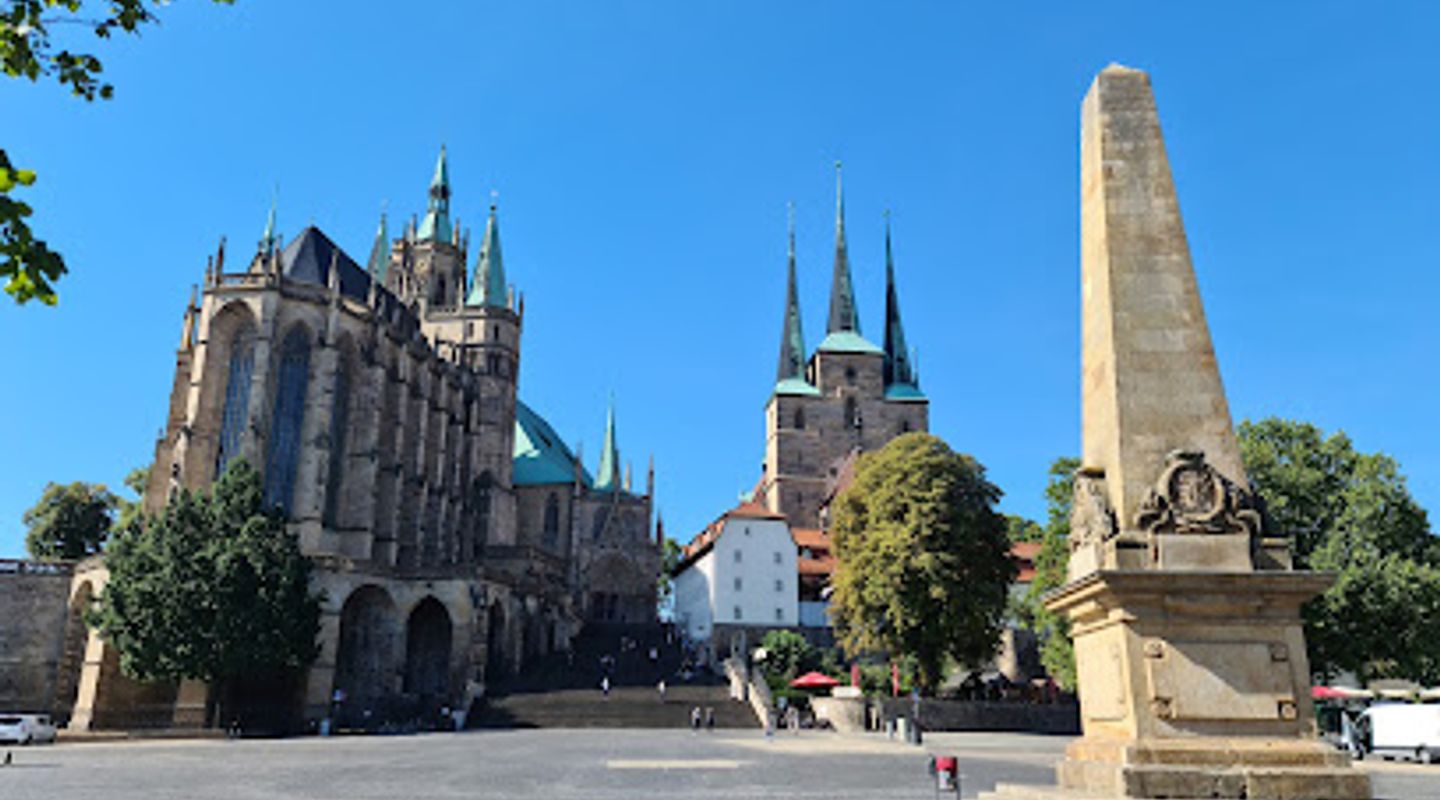
Erfurt Cathedral, or St. Mary's Cathedral, is a stunning example of Gothic architecture and a significant religious landmark in Germany. Rising majestically over the Domplatz, the cathedral's origins trace back to the 8th century, with its current Gothic form dating to the 14th and 15th centuries. Visitors are captivated by its towering spires, intricate stonework, and the grand staircase leading to its entrance. Inside, the cathedral houses invaluable treasures, including the Gloriosa bell, the tomb of Count von Gleichen, and stunning stained-glass windows. The cathedral is not only a place of worship but also a venue for concerts and events, making it a vibrant cultural hub in Erfurt. Its historical importance, architectural grandeur, and spiritual atmosphere make it a must-see destination for any traveler.
- Address
- Domstufen 1, 99084 Erfurt
- Phone
- Website
Getting there
Walking
Public Transport
Taxi/Ride-Share
Driving
Discover more about Erfurt Cathedral
Overview
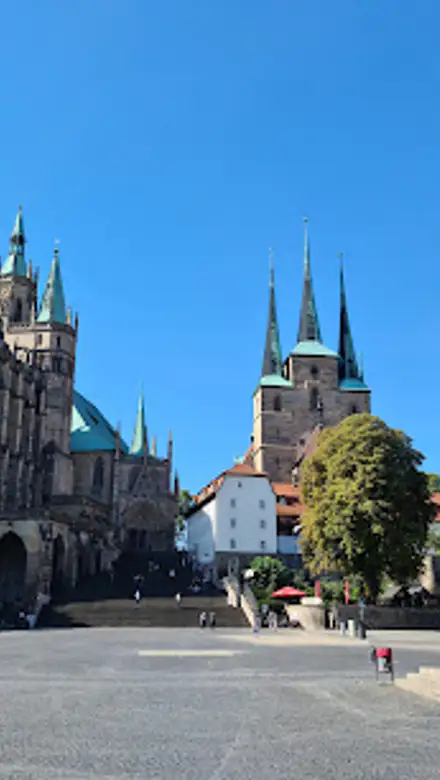
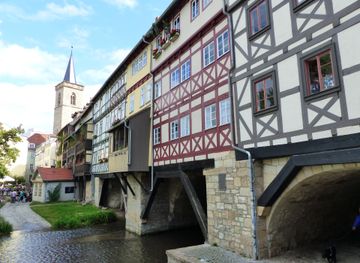
Erfurt Cathedral, officially known as the Cathedral Church of St. Mary at Erfurt (Hohe Domkirche St. Marien zu Erfurt), stands as the largest and oldest church building in the Thuringian city of Erfurt, Germany. This iconic structure, also referred to as St. Mary's Cathedral (Dom St. Marien), is the episcopal seat of the Roman Catholic Diocese of Erfurt and a testament to centuries of religious and architectural evolution. The cathedral's story begins in the 8th century when Saint Boniface established a church on the very mound where the cathedral now stands. Over the centuries, this original structure underwent numerous expansions and renovations, culminating in the magnificent Gothic cathedral seen today. The most significant transformation occurred during the 14th and 15th centuries, when the church was rebuilt in the Gothic style. This architectural overhaul resulted in the soaring spires, intricate stonework, and impressive stained-glass windows that continue to captivate visitors from around the world. Approaching the cathedral is an experience in itself. The Domstufen, a grand staircase of 70 stone steps, ascends from Domplatz, one of Europe's largest market squares, to the cathedral entrance. This dramatic ascent enhances the sense of reverence and grandeur, creating a breathtaking approach to the sacred site. The cathedral's elaborate façade showcases finely carved statues, intricate tracery, and soaring pointed arches, all hallmarks of Gothic architecture. Three towering spires reach skyward, further emphasizing its commanding presence over the city. Inside, the cathedral's lofty ceilings, ribbed vaults, and vast interior spaces create an atmosphere of both spirituality and artistic grandeur. Light streams through the stained-glass windows, casting a rainbow of colors across the stone floors. The richly decorated high altar, intricate wood carvings, and delicate sculptures further enhance the cathedral's artistic and spiritual significance. One of the cathedral's most prized possessions is the Gloriosa, the world's largest medieval free-swinging bell. Cast in 1497 by Geert van Wou, this massive bell resides in the central tower and is renowned for the purity of its tone. Hearing the Gloriosa ring is a rare and moving experience, as it is only rung on special occasions. The cathedral's interior houses many other treasures, including the tomb of the Count von Gleichen, who is said to be buried with both of his wives. The Wolfram Altar, a beautifully preserved Gothic altar adorned with intricate carvings and gold leaf, is another highlight. Visitors can also admire the stone tombs of medieval bishops, silent reminders of the cathedral's long-standing importance as a religious center. Erfurt Cathedral is closely associated with Martin Luther, the leader of the Protestant Reformation. Luther was ordained as a priest in the cathedral in 1507, adding another layer of historical significance to the site. The cathedral is an important stop on Eastern Germany's Luther Trail, attracting those interested in the reformer's life and legacy. Beyond its religious significance, Erfurt Cathedral serves as a venue for concerts, festivals, and open-air events. These cultural events welcome people of all backgrounds to experience the cathedral's awe-inspiring setting. Whether you are a lover of history, architecture, or simply seeking a quiet moment of reflection, Erfurt Cathedral offers a powerful and unforgettable experience. Visiting Erfurt Cathedral is free, although donations are welcome. Guided tours are available for those who wish to delve deeper into the cathedral's history and art. The cathedral is generally open daily, with slight variations for services and holidays. Visitors should check the official website for the most up-to-date information on opening hours and events. Erfurt itself is a city steeped in history and culture. Its well-preserved medieval Old Town features wealthy patrician houses, charming half-timbered buildings, and numerous churches. The Krämerbrücke, a unique bridge lined with shops and houses, is another must-see attraction. Erfurt's central location in Germany makes it easily accessible by train, car, and plane. Whether you are drawn to its architectural grandeur, its historical significance, or its spiritual atmosphere, Erfurt Cathedral is sure to leave a lasting impression. This iconic landmark is a testament to the enduring power of faith, art, and human ingenuity.
Evendo Review Centre
 Google
Guest reviews
Explore Erfurt Cathedral on the map
A handpicked selection of must-see spots near Erfurt Cathedral, mapped for you.
Get your free copy of our complete guide to Erfurt Cathedral, delivered straight to you.
Everything on this page, from opening hours and how to get there to Eve’s tips and the best time to go, in one PDF you can read offline, print or share.
Already have an account? Sign in
Your Erfurt Cathedral guide is ready.
We'll send it to · Not you? Sign out

Getting your guide ready…
We are putting together a fresh copy of the Erfurt Cathedral guide. This can take up to a minute.
This can take a few moments. If your browser asks, choose Allow so the download can start. You'll find the guide in your Downloads folder.
Nothing happened? Download it again
Sorry, the guide is taking longer than usual. Please try again in a minute, or get it by email instead.
Unlock the best of Erfurt Cathedral
Skip-the-line tickets, guided tours with entry, and walking tours of the area, booked in a few clicks.


Other nearby places you may find interesting
The closest places of the same kind, if this one is not quite what you had in mind.
-
-

-
-
-


Swipe for more places
More to explore near Erfurt Cathedral

 Best experiences near Erfurt Cathedral
 Best hotels near Erfurt Cathedral
 Best landmarks near Erfurt Cathedral
 Best attractions near Erfurt Cathedral
 Best shops near Erfurt Cathedral
 Best restaurants near Erfurt Cathedral
 Best bars near Erfurt Cathedral
Do you manage this location?
Take control to get all the benefits, like improved information, better appearance, and stronger visibility across AI-powered discovery.
Explore more
Explore more of Erfurt
Discover Erfurt: A medieval city with stunning architecture, rich history, and vibrant culture in the heart of Germany.
Explore Erfurt
Explore more of Germany
Experience Germany: where history meets innovation, and urban energy blends with natural beauty. Discover diverse cultures, delicious cuisine, and stunning landscapes.
Explore Germany