
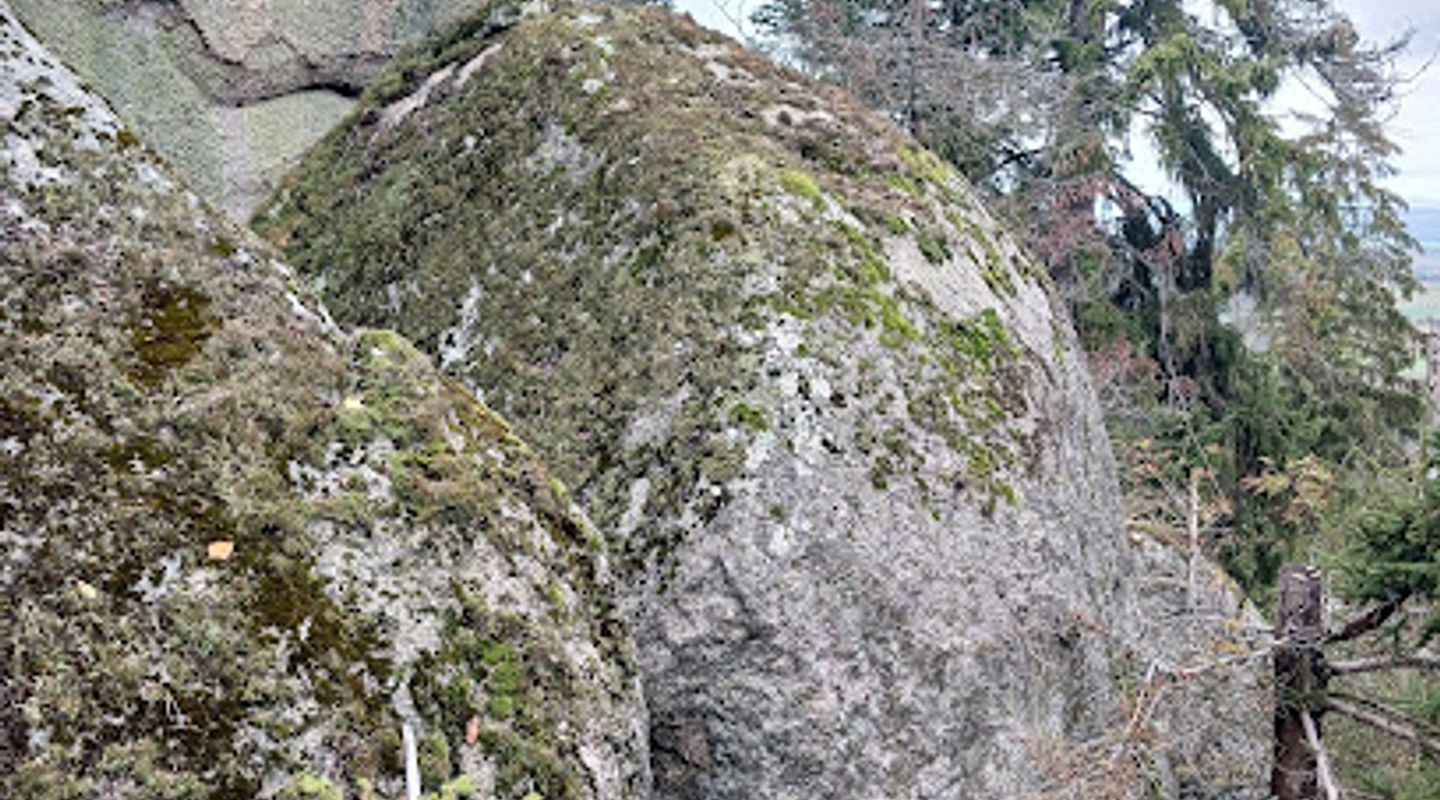
Bundeskreuz, Fichtel Mountains Travel Guide
Ascend to the Bundeskreuz in Wunsiedel's Luisenburg Rock Labyrinth for breathtaking panoramic views and a glimpse into the region's rich history and stunning natural beauty.
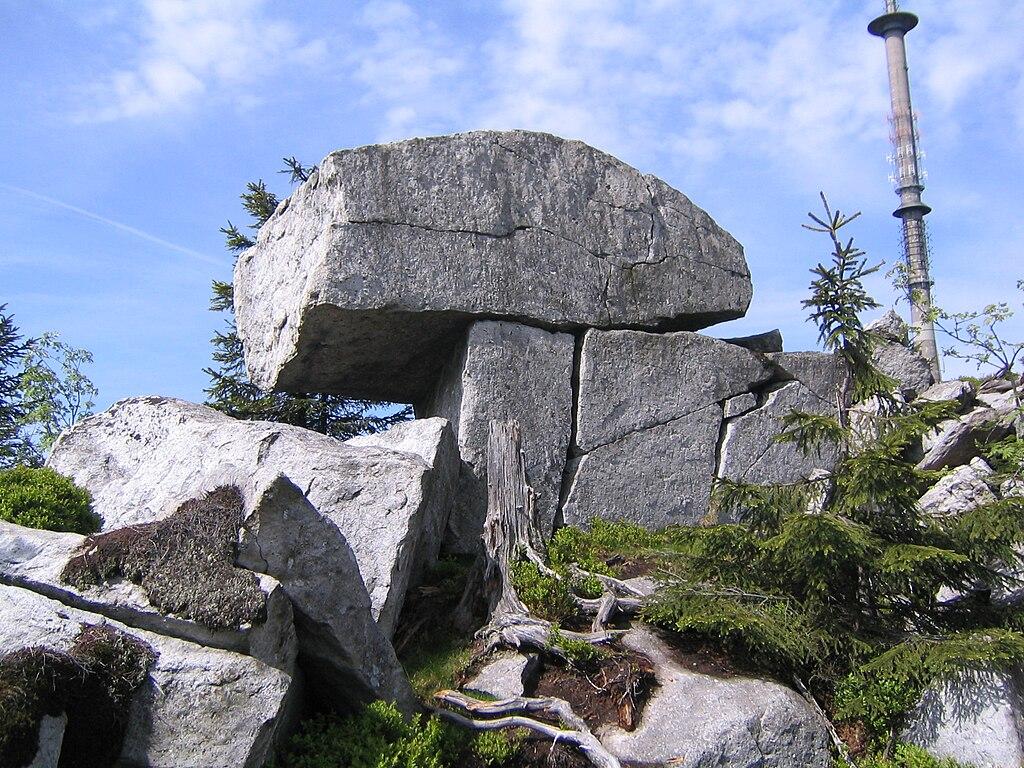
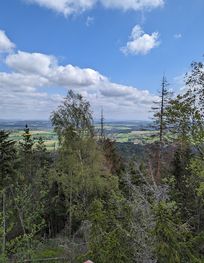
Ascend to the Bundeskreuz, the highest point within the Luisenburg Rock Labyrinth, for panoramic views of the Fichtel Mountains. This iconic landmark, topped with a wooden cross, offers a rewarding climb through a unique landscape of massive granite formations. Originally established in 1815, the Bundeskreuz has been rebuilt several times, most recently in 1984 with the help of American forces. The climb to the top via wooden stairs is moderately challenging but well worth the effort for the stunning vistas. Combine your visit with an exploration of the labyrinth itself and perhaps a performance at the Luisenburg Festspiele for a full day of cultural and natural immersion. Remember to wear sturdy shoes and allow ample time to fully appreciate this geological and historical treasure.
A brief summary to Bundeskreuz
- Wunsiedel, 95632, DE
- Click to display

Know before you go
Hi, I'm Eve. Here are a few practical things to know before exploring Bundeskreuz.
- Wear sturdy shoes suitable for hiking and climbing, as the terrain within the rock labyrinth can be uneven and slippery.
- Visit early in the day or during the off-season to avoid crowds and enjoy a more peaceful experience.
- Check the weather forecast before your visit, as the rocks can be particularly treacherous after rain.
- Combine your visit with a performance at the Luisenburg Festspiele for a full day of cultural and natural immersion.
- Allow at least 2-3 hours to fully explore the rock labyrinth and ascend to the Bundeskreuz.
Do you manage this location?
Take control to get all the benefits, like improved information, better appearance, and stronger visibility across AI-powered discovery. Learn more about listing your business on Evendo
Activate your presenceOther nearby places you may find interesting
The closest places of the same kind, if this one is not quite what you had in mind.
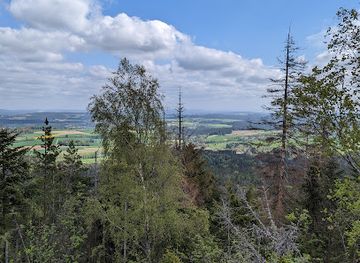
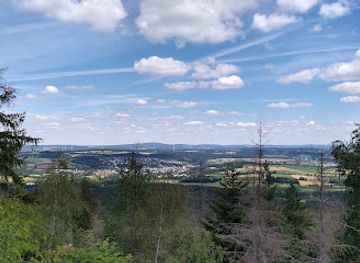
Explore Bundeskreuz on the Map
A handpicked selection of must-see spots near Bundeskreuz, mapped for you.
Getting There
-
Walking
From the Luisenburg Rock Labyrinth entrance, follow the well-marked trails towards the Bundeskreuz. The ascent involves a moderately challenging climb via wooden stairs. The walk is approximately 1.5 km and offers scenic views of the surrounding landscape. No additional costs are associated with this final approach beyond the entrance fee to the Luisenburg Rock Labyrinth (€6 for adults, €2 for youth under 18, children under 6 are free, family card is €14).
-
Public Transport
From Wunsiedel im Fichtelgebirge train station, take bus number 123 towards Luisenburg. Get off at the 'Wunsiedel, Luisenburg' stop. From there, follow the signs to the Luisenburg Rock Labyrinth entrance, and then proceed on foot to the Bundeskreuz as described above. The bus fare is approximately €2.50. Remember to factor in the entrance fee to the Luisenburg Rock Labyrinth (€6 for adults, €2 for youth under 18, children under 6 are free, family card is €14).
-
Driving
From Wunsiedel, follow the signs for Luisenburg. Park in the designated parking area near the Luisenburg Rock Labyrinth entrance. Parking fees typically range around €5 for the day. From the parking area, proceed on foot to the Bundeskreuz as described in the 'Walking' guidance. Remember to factor in the entrance fee to the Luisenburg Rock Labyrinth (€6 for adults, €2 for youth under 18, children under 6 are free, family card is €14).
Discover more about Bundeskreuz













Your all‑in‑one travel companion app
Explore expert travel guides, compare and book tours, experiences, hotels, and more—all from the palm of your hand. Download now for seamless trip planning wherever your wanderlust takes you.


Explore More of Fichtel Mountains
Looking beyond Bundeskreuz? Discover Fichtel Mountains for broader travel guides, local hot-spots, and regional highlights.
Explore Fichtel Mountains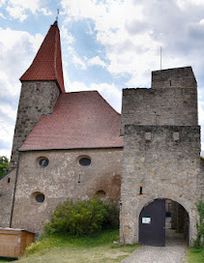
Experience history and nature at Burgruine Leuchtenberg, a captivating castle ruin offering breathtaking views and scenic hiking trails in Oberpfalz, Germany.
Explore Europe's largest rock labyrinth in Wunsiedel, Germany: a mesmerizing landscape of granite formations shaped over millions of years, offering adventure and natural beauty.
