Blade Gate Travel Guide
Free Guide: Discover the imposing Klingentor in Rothenburg ob der Tauber, a medieval gate showcasing the town's rich history, defensive prowess, and unique blend of military and ecclesiastical architecture.


A brief summary of Blade Gate
Discover the imposing Klingentor in Rothenburg ob der Tauber, a medieval gate showcasing the town's rich history, defensive prowess, and unique blend of military and ecclesiastical architecture.
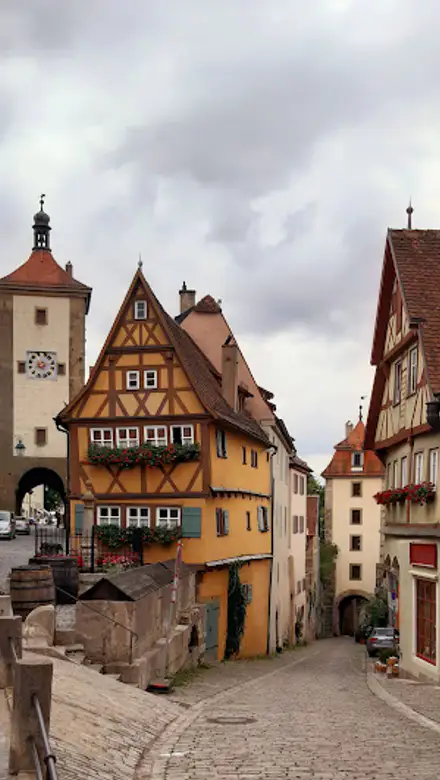
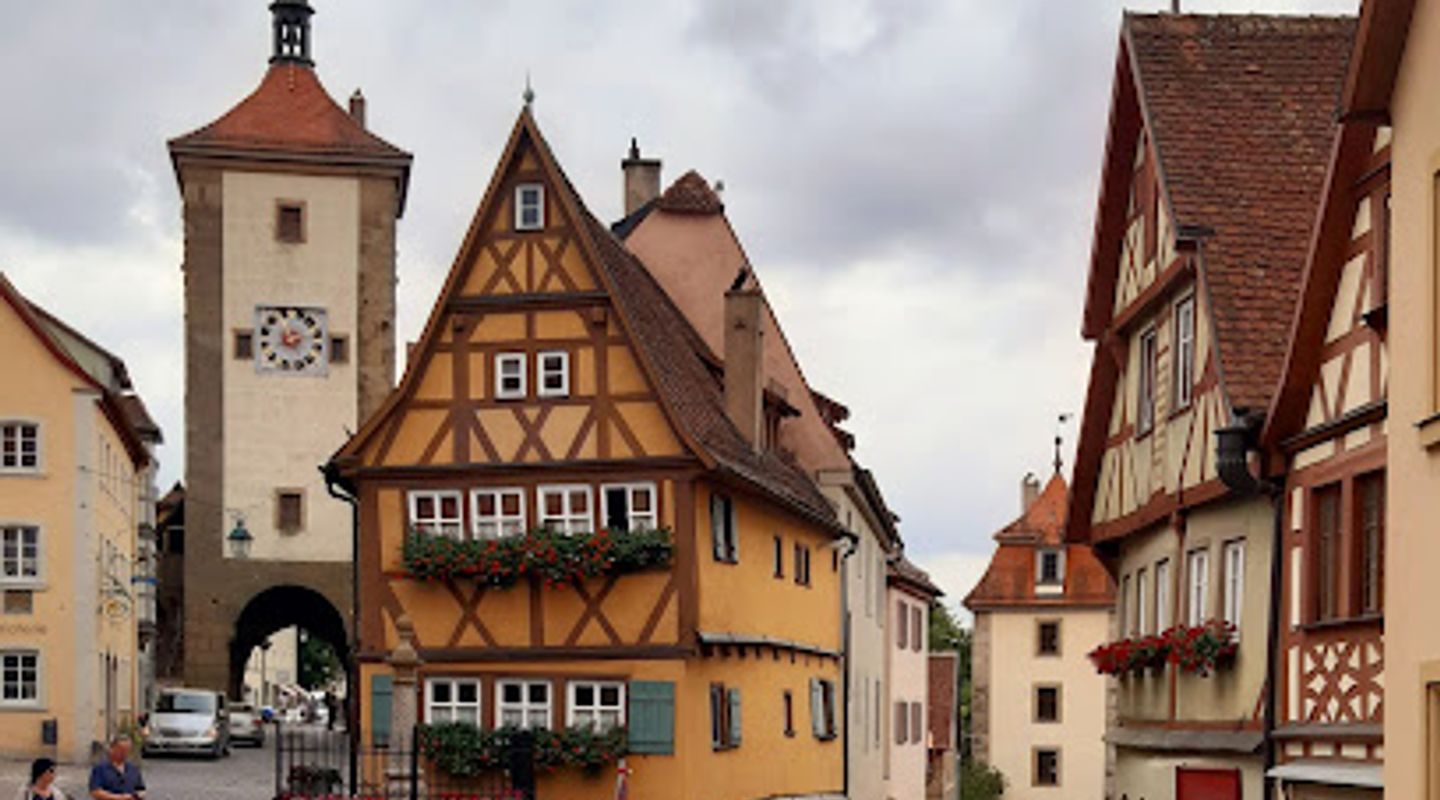
The Klingentor, or Blade Gate, is a captivating medieval gate in Rothenburg ob der Tauber, Germany, offering a glimpse into the town's rich history and defensive architecture. Built in the 14th century, it formed a vital part of the city's fortifications, protecting it from invaders. Its name, derived from a local ravine, adds to its unique charm. The gate's integration with the adjacent St. Wolfgang Church is a distinctive feature, showcasing a blend of military and ecclesiastical design. Visitors can explore the gate's imposing structure, walk along the adjacent city walls, and enjoy panoramic views of Rothenburg and the surrounding Tauber Valley. The Klingentor stands as a testament to Rothenburg's resilience and medieval heritage, making it a must-see attraction for history enthusiasts and travelers seeking an authentic glimpse into the past.
Opening hours
- Every dayOpen 24 hours
Opening hours as listed on the venue’s Google Business Profile. Hours can change for services and special events, so check with the venue before you go.
- Address
- Klingengasse 15, 91541 Rothenburg ob der Tauber
- Phone
- Website
Getting there
Walking
Public Transport
Driving
Discover more about Blade Gate
Overview
The Klingentor, also known as the Blade Gate, stands as a proud sentinel in Rothenburg ob der Tauber, a remarkably well-preserved medieval town in Bavaria, Germany. This imposing gate, with its robust stone walls and strategically positioned towers, offers visitors a tangible connection to the town's rich history and its enduring spirit of defense. Constructed in the 14th century, the Klingentor was an integral component of Rothenburg's fortifications. It served as a crucial entry point into the city, providing a formidable barrier against potential threats. The gate's design reflects a deep understanding of medieval military architecture, incorporating features that deterred attackers and protected the town's inhabitants. The name "Klingentor" is believed to originate from the steep ravine, locally known as "die Klinge" (the blade), near the gate. This connection to the natural landscape adds a layer of local lore and authenticity to the site. One of the most distinctive aspects of the Klingentor is its seamless integration with the neighboring St. Wolfgang Church. This unique architectural arrangement showcases a fascinating blend of military and ecclesiastical design. A passageway connected the church directly to the gate tower, allowing defenders to access the tower from within the church, transforming a place of worship into a strategic defensive position. This ingenious design ensured that even if attackers breached the outer ramparts, they would still face a determined defense from within the church and the gate tower. The Klingentor's imposing structure is a testament to the skill and ingenuity of medieval builders. The gate's thick stone walls, reaching up to three meters in some places, provided a robust defense against artillery attacks. The gate's towers, standing approximately 30 meters high, offered commanding views of the surrounding landscape, allowing defenders to monitor approaching threats. Throughout its history, the Klingentor has played a vital role in protecting Rothenburg from invaders. During the Thirty Years' War (1618-1648), the gate withstood numerous sieges and attacks, serving as a crucial line of defense for the town. Its robust construction and strategic design proved invaluable in safeguarding Rothenburg from destruction. Beyond its military significance, the Klingentor also served a practical purpose. In 1594, a water pipe was installed within the gate tower, supplying the town's fountains with water. A large copper vessel was placed in the tower to store water, showcasing the gate's versatility and its contribution to the daily lives of Rothenburg's residents. Today, the Klingentor stands as a symbol of Rothenburg's resilience and its enduring medieval heritage. Visitors can walk along the well-preserved city walls, eventually reaching the Klingentor. While the bastion itself is not always open for public tours, its impressive structure can be admired from the outside. The surrounding area is ideal for leisurely strolls, allowing tourists to soak in the picturesque landscape of Rothenburg, with its cobblestone streets and half-timbered houses. Exploring the Klingentor offers a unique opportunity to step back in time and experience the atmosphere of a medieval town. The gate's imposing presence, its strategic design, and its integration with the St. Wolfgang Church create a captivating and unforgettable experience for visitors. Whether you are a history enthusiast, an architecture lover, or simply seeking a glimpse into the past, the Klingentor promises an enriching and memorable visit to Rothenburg ob der Tauber. As you approach the Klingentor, imagine the soldiers who once stood guard on its walls, the merchants who passed through its gates, and the townspeople who sought refuge within its protective embrace. The Klingentor is more than just a gate; it is a living testament to Rothenburg's rich history and its enduring spirit.
Evendo Review Centre
 Google
Guest reviews
Explore Blade Gate on the map
A handpicked selection of must-see spots near Blade Gate, mapped for you.
Get your free copy of our complete guide to Blade Gate, delivered straight to you.
Everything on this page, from opening hours and how to get there to Eve’s tips and the best time to go, in one PDF you can read offline, print or share.
Already have an account? Sign in
Your Blade Gate guide is ready.
We'll send it to · Not you? Sign out

Getting your guide ready…
We are putting together a fresh copy of the Blade Gate guide. This can take up to a minute.
This can take a few moments. If your browser asks, choose Allow so the download can start. You'll find the guide in your Downloads folder.
Nothing happened? Download it again
Sorry, the guide is taking longer than usual. Please try again in a minute, or get it by email instead.
Unlock the best of Blade Gate
Skip-the-line tickets, guided tours with entry, and walking tours of the area, booked in a few clicks.

Other nearby places you may find interesting
The closest places of the same kind, if this one is not quite what you had in mind.
-
-
-
-
-


Swipe for more places
More to explore near Blade Gate

 Best experiences near Blade Gate
 Best hotels near Blade Gate
 Best landmarks near Blade Gate
 Best attractions near Blade Gate
 Best shops near Blade Gate
 Best restaurants near Blade Gate
 Best bars near Blade Gate
Do you manage this location?
Take control to get all the benefits, like improved information, better appearance, and stronger visibility across AI-powered discovery.
Explore more

Explore more of Franconia
Discover Franconia in Germany: A region bursting with medieval charm, natural beauty, and culinary delights, perfect for travelers seeking history, nature, and local flavors.
Explore Franconia
Explore more of Germany
Experience Germany: where history meets innovation, and urban energy blends with natural beauty. Discover diverse cultures, delicious cuisine, and stunning landscapes.
Explore Germany