

Marienberg Fortress Travel Guide
Free Guide: Explore the majestic Marienberg Fortress in Würzburg: a historic landmark offering breathtaking views, rich Franconian history, and stunning Baroque architecture.


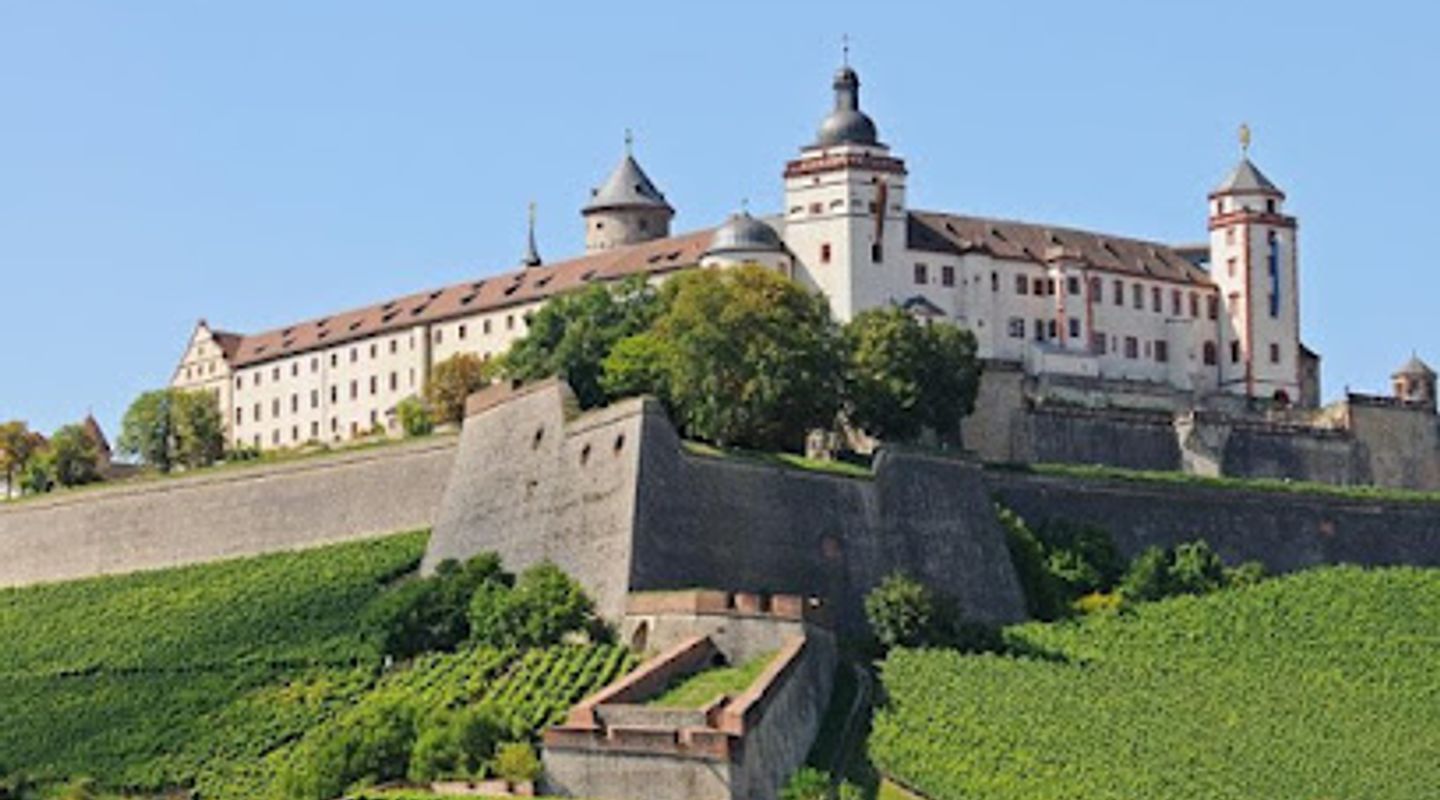
A brief summary of Marienberg Fortress
Explore the majestic Marienberg Fortress in Würzburg: a historic landmark offering breathtaking views, rich Franconian history, and stunning Baroque architecture.
Dominating the Würzburg skyline, Marienberg Fortress is a powerful symbol of the city's rich history and strategic importance. Originally a Celtic settlement and later a Franconian fort, the fortress evolved over centuries into a magnificent castle, serving as the residence of Würzburg's Prince-Bishops for nearly five centuries. Explore its imposing walls, towers, and the charming Käppele Chapel, each a testament to the fortress's enduring religious and cultural significance. The fortress offers panoramic views of Würzburg and the Main River valley, providing a breathtaking backdrop to your historical exploration. Delve into Franconian history at the Museum für Franken, housed within the fortress, and wander through the meticulously restored Princes' Garden, a tranquil oasis with stunning city views. A visit to Marienberg Fortress is a journey through time, offering a glimpse into the lives of those who shaped Würzburg's destiny.
Opening hours
- MonClosed
- Tue9 am–6 pm
- Wed9 am–6 pm
- Thu9 am–6 pm
- Fri9 am–6 pm
- Sat9 am–6 pm
- Sun9 am–6 pm
Opening hours as listed on the venue’s Google Business Profile. Hours can change for services and special events, so check with the venue before you go.
- Address
- Marienberg, 97012 Würzburg
- Phone
- Website
Getting there
Walking
Public Transport
Taxi/Ride-Share
Driving
Discover more about Marienberg Fortress
Overview
Marienberg Fortress, or Festung Marienberg, stands as a majestic sentinel overlooking the city of Würzburg, its imposing silhouette a constant reminder of the region's rich and often turbulent past. The fortress's origins stretch back to Celtic times, with evidence suggesting a defensive settlement on the Marienberg hill as early as 704 AD. This strategic location, high above the Main River, offered unparalleled views and control over the surrounding lands, making it a natural choice for a fortified stronghold. In the early 8th century, the Franconian-Thuringian dukes established a fort on the hill, complete with a church that would later become Würzburg's first bishop's church in 741 AD. This marked the beginning of Marienberg's long association with religious and secular power, a role it would maintain for centuries to come. Around 1200, construction began on a significantly larger castle, reflecting the growing importance of Würzburg and the need for a more formidable defense. Over the centuries, Marienberg Fortress underwent numerous expansions and modifications, each reflecting the prevailing architectural styles and military technologies of the time. The late Middle Ages and the Renaissance saw significant additions, transforming the castle into a sprawling complex of walls, towers, and residential buildings. However, it was the Thirty Years' War (1618-1648) that would leave the most indelible mark on the fortress. In 1631, the Swedish army, led by Gustavus Adolphus, captured Marienberg, causing significant damage. Following the Swedish occupation, Prince-Bishop Johann Philipp von Schönborn initiated a massive reconstruction project, transforming the fortress into a Baroque masterpiece. This involved encircling the castle with a ring of massive bastions, designed to withstand the artillery of the era. These bastions, which still dominate the fortress today, are a testament to the engineering prowess of the 17th century. For nearly five centuries, from 1253 until the 18th century, Marienberg Fortress served as the primary residence of the Würzburg Prince-Bishops. From this imposing perch, they ruled over the region, wielding both spiritual and temporal authority. However, in 1744, the Prince-Bishops moved their residence to the newly constructed Würzburg Residence, a grand palace in the city center. While no longer the seat of power, Marienberg Fortress remained an important military stronghold. The fortress saw repeated action in the wars of the late 18th and 19th centuries, serving as a strategic point of defense. However, it was the Second World War that brought the most devastating destruction to Marienberg. British bombs in March 1945 caused severe damage, leaving much of the fortress in ruins. In 1990, after decades of painstaking restoration, Marienberg Fortress was finally brought back to its former glory. Today, Marienberg Fortress is a major tourist attraction, drawing visitors from around the world. Its imposing architecture, rich history, and stunning views make it a must-see destination for anyone visiting Würzburg. Within the fortress walls, visitors can explore a variety of attractions, including the Mainfränkische Museum, which houses an extensive collection of art and artifacts from the Franconian region. Highlights of the museum include the world-renowned sculptures of Tilman Riemenschneider, as well as exhibits on the history of Würzburg and the surrounding area. The Fürstenbau Museum offers a glimpse into the lives of the Prince-Bishops who once resided in the fortress, showcasing period furniture, tapestries, and other historical artifacts. St. Mary's Church, with its Romanesque architecture and rich history, is another highlight of the fortress. Visitors can also explore the well house, which features a cistern over 100 meters deep, a testament to the engineering ingenuity of the past. The Princes' Garden, a meticulously restored Baroque garden, offers a tranquil oasis within the fortress walls. From its terraces and balustrades, visitors can enjoy panoramic views of Würzburg and the Main River valley. The garden's two pavilions, dating back to around 1700, add to its refined and elegant atmosphere. Walking along the fortress walls, visitors can appreciate the sheer scale and complexity of the fortifications. The massive bastions, with their intricate network of tunnels and casemates, provide a fascinating insight into the art of siege warfare. The Maschikuli Tower, a massive gun turret built in the 18th century, is another impressive example of military architecture. A visit to Marienberg Fortress is more than just a sightseeing trip; it's a journey through time, offering a glimpse into the lives of those who shaped Würzburg's destiny. From its Celtic origins to its role as a Prince-Bishop's residence to its destruction in World War II and its subsequent restoration, Marienberg Fortress stands as a symbol of resilience, power, and the enduring spirit of Würzburg.
Evendo Review Centre
 Google
Guest reviews
Explore Marienberg Fortress on the map
A handpicked selection of must-see spots near Marienberg Fortress, mapped for you.
Get your free copy of our complete guide to Marienberg Fortress, delivered straight to you.
Everything on this page, from opening hours and how to get there to Eve’s tips and the best time to go, in one PDF you can read offline, print or share.
Already have an account? Sign in
Your Marienberg Fortress guide is ready.
We'll send it to · Not you? Sign out

Getting your guide ready…
We are putting together a fresh copy of the Marienberg Fortress guide. This can take up to a minute.
This can take a few moments. If your browser asks, choose Allow so the download can start. You'll find the guide in your Downloads folder.
Nothing happened? Download it again
Sorry, the guide is taking longer than usual. Please try again in a minute, or get it by email instead.
Unlock the best of Marienberg Fortress
Skip-the-line tickets, guided tours with entry, and walking tours of the area, booked in a few clicks.




Other nearby places you may find interesting
The closest places of the same kind, if this one is not quite what you had in mind.
-
-
-
-
-


Swipe for more places
More to explore near Marienberg Fortress

 Best experiences near Marienberg Fortress
 Best hotels near Marienberg Fortress
 Best landmarks near Marienberg Fortress
 Best attractions near Marienberg Fortress
 Best shops near Marienberg Fortress
 Best restaurants near Marienberg Fortress
 Best bars near Marienberg Fortress
Do you manage this location?
Take control to get all the benefits, like improved information, better appearance, and stronger visibility across AI-powered discovery.
Explore more

Explore more of Franconia
Discover Franconia in Germany: A region bursting with medieval charm, natural beauty, and culinary delights, perfect for travelers seeking history, nature, and local flavors.
Explore Franconia
Explore more of Germany
Experience Germany: where history meets innovation, and urban energy blends with natural beauty. Discover diverse cultures, delicious cuisine, and stunning landscapes.
Explore Germany
