

Eiserner Steg, Frankfurt Travel Guide
Free Guide: Walk across Frankfurt's iconic Eiserner Steg, a historic bridge adorned with love locks, offering stunning skyline views and connecting the city's vibrant heart with the charming Sachsenhausen district.


A brief summary of Eiserner Steg
Walk across Frankfurt's iconic Eiserner Steg, a historic bridge adorned with love locks, offering stunning skyline views and connecting the city's vibrant heart with the charming Sachsenhausen district.
The Eiserner Steg, or Iron Bridge, is a Frankfurt landmark offering stunning views and a rich history. Built in 1868, it connects the city center with Sachsenhausen, becoming a symbol of unity and resilience after being rebuilt post-World War II. Today, it's famous for the thousands of 'love locks' attached by couples, representing their enduring affection. Stroll across this pedestrian bridge to soak in panoramic views of Frankfurt's skyline, especially beautiful at sunset. Easily accessible by public transport, the bridge is a must-see for any visitor, providing a perfect blend of history, romance, and architectural beauty. Don't miss the Greek inscription from Homer's Odyssey, a nod to Frankfurt's diverse population and the bridge's role as a connector.
- Address
- 60547 Frankfurt
Getting there
Public Transport
Walking
Taxi/Ride-Share
Driving
Discover more about Eiserner Steg
Overview
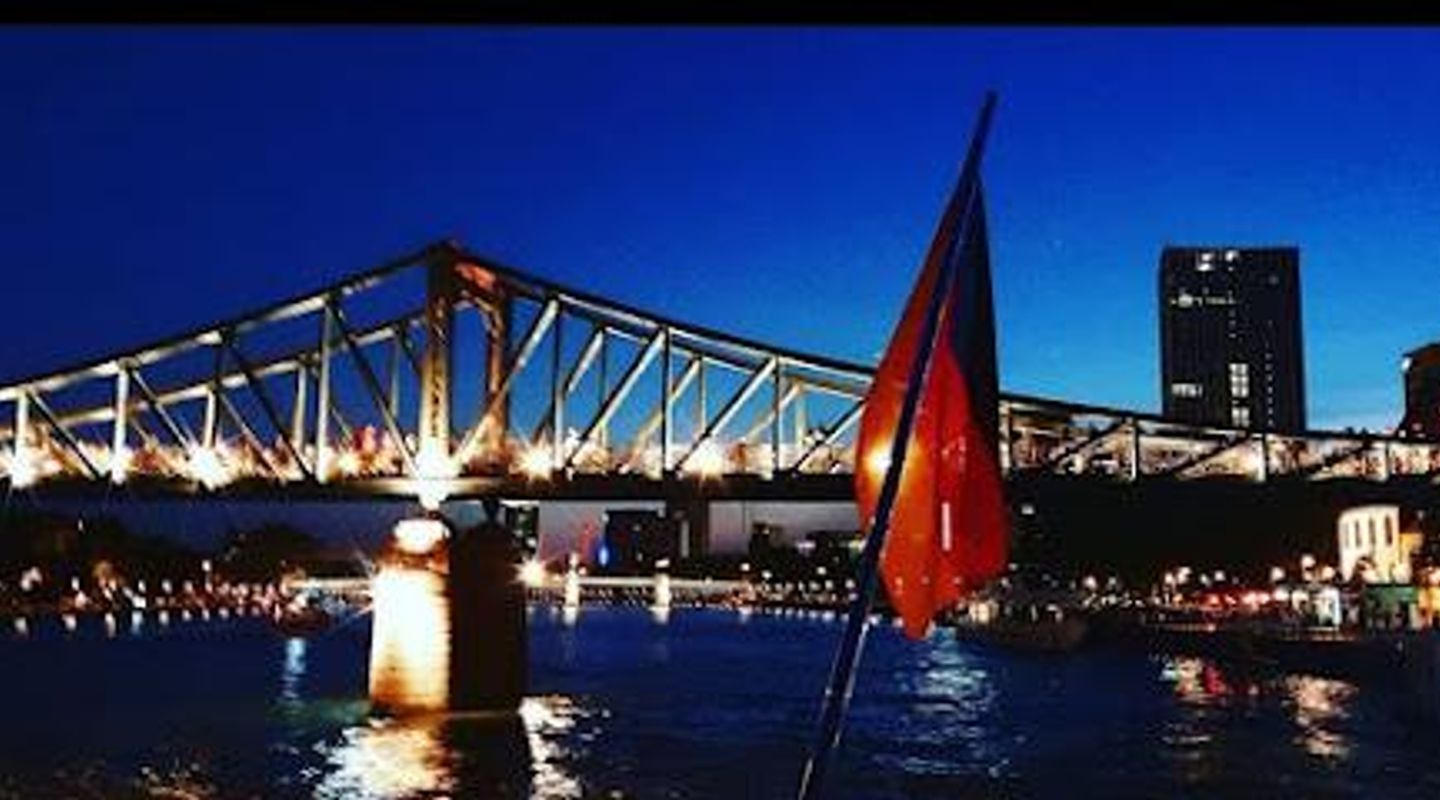
The Eiserner Steg, an iconic pedestrian bridge in Frankfurt am Main, gracefully spans the Main River, linking the bustling city center with the charming district of Sachsenhausen. More than just a crossing, it's a symbol of Frankfurt's history, resilience, and enduring spirit. Originally constructed in 1868, the Eiserner Steg (literally 'Iron Footbridge') emerged during a period of rapid industrialization and urban growth. Financed by Frankfurt citizens, the bridge was designed by Peter Schmick and served as a vital link between the city's core and the expanding residential areas across the river. Its wrought-iron construction, a marvel of 19th-century engineering, quickly became a defining feature of the Frankfurt skyline. In 1912, the original bridge was replaced with a larger, cantilever structure to accommodate increased pedestrian traffic and the growing demands of river navigation. While retaining its historical appearance, the new design ensured greater stability and a higher clearance for passing ships. This foresight proved crucial as Frankfurt continued to develop into a major European metropolis. Tragically, like much of Frankfurt, the Eiserner Steg was destroyed during the final days of World War II. Blown up by the Wehrmacht in 1945, the bridge lay in ruins, a stark reminder of the devastation wrought by the war. However, the people of Frankfurt, determined to rebuild their city, prioritized the restoration of this vital link. In 1946, just a year after the war's end, the Eiserner Steg was reconstructed, symbolizing the city's resilience and its commitment to a brighter future. Over the decades, the Eiserner Steg has undergone several renovations to ensure its structural integrity and preserve its historical character. The most recent major renovation took place in 1993, addressing corrosion and adding modern amenities such as elevators to improve accessibility for all visitors. Today, the Eiserner Steg is more than just a functional bridge; it's a beloved landmark and a popular destination for locals and tourists alike. Approximately 10,000 pedestrians cross it daily. Its neo-Gothic design, with riveted steel trusses and two prominent bridge piers, offers a picturesque backdrop for photographs and leisurely strolls. The bridge is particularly enchanting at night, when it's illuminated, casting a warm glow on the Main River. One of the most distinctive features of the Eiserner Steg is the thousands of 'love locks' that adorn its railings. Couples from around the world attach padlocks to the bridge, symbolizing their eternal love, and throw the keys into the river. This tradition, reminiscent of similar bridges in Paris and other romantic cities, has transformed the Eiserner Steg into a symbol of romance and commitment. Adding to the bridge's allure is a Greek inscription spanning the steel construction over the northern pillar. Taken from Homer's Odyssey, the quote translates to 'Sailing on the dark sea to people of another tongue.' This inscription, created by artist Hagen Bonifer in 1999, celebrates Frankfurt's multiculturalism and the bridge's role as a gateway to different cultures and perspectives. The Eiserner Steg connects the city center near Römerberg with Sachsenhausen, known for its traditional apple wine taverns, museums, and vibrant nightlife. Crossing the bridge allows visitors to easily explore both sides of the river, experiencing the diverse attractions that Frankfurt has to offer. From the bridge, visitors can enjoy panoramic views of Frankfurt's skyline, including the iconic spires of the Frankfurt Cathedral and the modern skyscrapers of the financial district. The Museumsufer, a string of renowned museums along the Sachsenhausen bank of the Main, is also easily visible from the bridge. The Eiserner Steg is easily accessible by public transportation, with several U-Bahn and S-Bahn stations located within walking distance. The bridge is open 24 hours a day, 7 days a week, and there is no admission fee, making it a convenient and affordable attraction for all. Whether you're a history buff, a hopeless romantic, or simply seeking a scenic stroll, the Eiserner Steg offers a unique and unforgettable experience. It's a place where history, culture, and romance converge, creating a lasting impression on all who cross its path. The Eiserner Steg is not just a bridge; it's a symbol of Frankfurt's past, present, and future, a testament to the city's enduring spirit and its commitment to connecting people and cultures.
Evendo Review Centre
 Google
Guest reviews
Explore Eiserner Steg on the map
A handpicked selection of must-see spots near Eiserner Steg, mapped for you.
Get your free copy of our complete guide to Eiserner Steg, delivered straight to you.
Everything on this page, from opening hours and how to get there to Eve’s tips and the best time to go, in one PDF you can read offline, print or share.
Already have an account? Sign in
Your Eiserner Steg guide is ready.
We'll send it to · Not you? Sign out

Getting your guide ready…
We are putting together a fresh copy of the Eiserner Steg guide. This can take up to a minute.
This can take a few moments. If your browser asks, choose Allow so the download can start. You'll find the guide in your Downloads folder.
Nothing happened? Download it again
Sorry, the guide is taking longer than usual. Please try again in a minute, or get it by email instead.
Other nearby places you may find interesting
The closest places of the same kind, if this one is not quite what you had in mind.
-
-

-
-
-


Swipe for more places
More to explore near Eiserner Steg

 Best experiences near Eiserner Steg
 Best hotels near Eiserner Steg
 Best landmarks near Eiserner Steg
 Best attractions near Eiserner Steg
 Best shops near Eiserner Steg
 Best restaurants near Eiserner Steg
 Best bars near Eiserner Steg
Do you manage this location?
Take control to get all the benefits, like improved information, better appearance, and stronger visibility across AI-powered discovery.
Explore more

Explore more of Frankfurt
Discover Frankfurt: A blend of modernity and history, offering skyscrapers, historic sites, cultural treasures, and vibrant shopping and dining experiences.
Explore Frankfurt
Explore more of Germany
Experience Germany: where history meets innovation, and urban energy blends with natural beauty. Discover diverse cultures, delicious cuisine, and stunning landscapes.
Explore Germany
