Background

Wiwilíbrücke: Freiburg's Blue Landmark

Freiburg's iconic 'Blue Bridge,' the Wiwilíbrücke, connects history and sustainability, offering stunning views and a vibrant pedestrian and cyclist experience in the heart of the city.

4.5

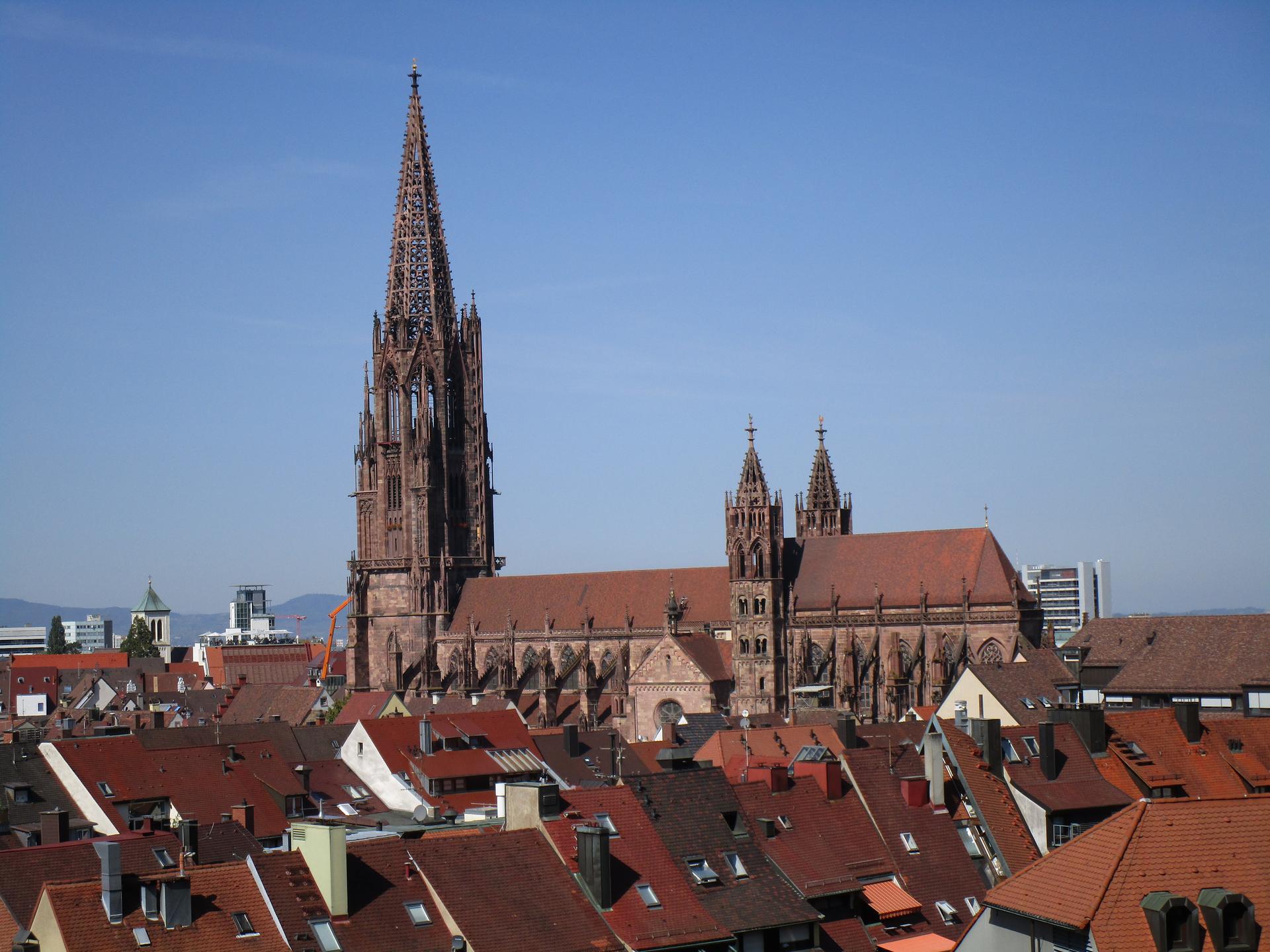
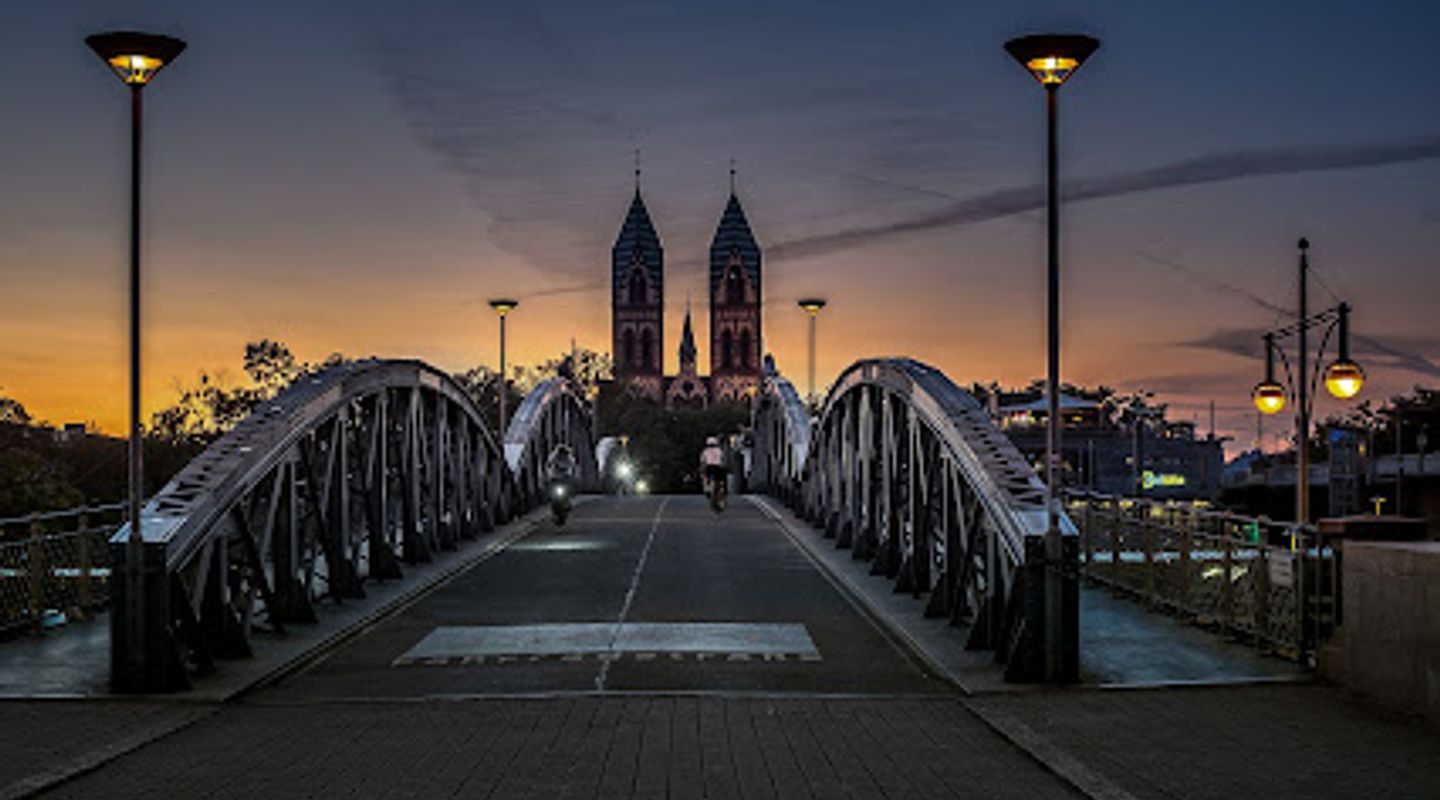
The Wiwilíbrücke, affectionately known as the Blue Bridge, is an iconic iron truss bridge in Freiburg im Breisgau, Germany, connecting the Stühlinger district to the city center. Built in 1885-86, it replaced a previous inaccessible railway crossing. Designed by Max Meckel, who also designed the Herz-Jesu Church nearby, the bridge initially bore the name Kaiser-Wilhelm-Brücke, but locals preferred 'Stühlingerbrücke.' Today, it's a pedestrian and cyclist haven, offering stunning views of the city, especially the Herz-Jesu Church and the Schönberg mountain. The bridge serves as a popular meeting spot, with people often relaxing on its arches. Its distinctive blue color and elegant design make it a beloved landmark and a vital link for the community, with up to 10,000 cyclists crossing it daily.

A brief summary to Wiwilíbrücke

Local tips

  • Visit during sunset for breathtaking views of the city skyline and the Herz-Jesu Church.
  • Rent a bike from the Radstation near the main train station and explore Freiburg's extensive network of bike paths, starting with a ride across the Wiwilíbrücke.
  • Check local event listings for tango dances or other community gatherings that sometimes take place on the bridge.
widget icon

Getting There

  • Walking

    From Freiburg Hauptbahnhof (main train station), exit towards the city center. The Wiwilíbrücke is directly adjacent to the station. Follow the signs for 'Stühlinger' or simply walk towards the large blue bridge visible from the station plaza. The bridge connects Konrad-Adenauer-Platz (in front of the station) with the Stühlinger district. No costs involved.

  • Public Transport

    If arriving by tram from other parts of Freiburg, disembark at the 'Freiburg Hauptbahnhof' stop. From there, follow the walking directions above. Tram single tickets cost €2.50 and are valid for one hour. A Kurzstrecke ticket, valid for three stops, costs €1.50.

  • Taxi/Ride-Share

    A taxi or ride-share from anywhere in Freiburg's city center to the Wiwilíbrücke will typically cost between €8 and €15, depending on the distance and traffic. Ask to be dropped off at Konrad-Adenauer-Platz, directly in front of the main train station.

  • Parking

    Parking is available at the Bahnhofsgarage (P1) parking garage located near the train station. From there, it's a short walk to the Wiwilíbrücke. Hourly parking rates typically range from €2 to €3, with daily maximums around €20.

Unlock the Best of Wiwilíbrücke

Buy tickets

    No tickets available

Book tours with entry

    No tours available

Book tours without entry

    No tours available

Discover more about Wiwilíbrücke

The Wiwilíbrücke, a beloved landmark in Freiburg im Breisgau, stands as a testament to the city's rich history and its commitment to sustainable urban living. More commonly known as the Blue Bridge due to its distinctive paint, this elegant iron truss bridge connects the Stühlinger district to the heart of Freiburg, offering pedestrians and cyclists a vital and scenic route. Constructed between 1885 and 1886, the Wiwilíbrücke replaced a previously inaccessible crossing over the railway tracks of the Grand Duchy of Baden State Railway. The bridge's design was entrusted to Max Meckel, a renowned architect who had also designed the nearby Herz-Jesu Church. The Eisenwerk in Kaiserslautern, an industrial company specializing in iron and steel construction, carried out the construction. Initially named Kaiser-Wilhelm-Brücke in honor of the then-head of state, the name never truly resonated with the local population, who affectionately dubbed it Stühlingerbrücke. The bridge spans 161.8 meters in length and 10.3 meters in width, its ironwork weighing over 540 metric tons. From 1909 to 1961, the bridge even carried trams, further solidifying its role in the city's transportation network. However, by the late 20th century, the bridge's condition had deteriorated, necessitating a refurbishment. In 1978, it became the property of the city of Freiburg. In 1996, as part of a broader redesign of the station area, the Wiwilíbrücke was closed to vehicular traffic, transforming it into a dedicated space for pedestrians and cyclists. This decision reflected Freiburg's commitment to prioritizing sustainable transportation and creating a more livable urban environment. The transformation was completed with the addition of a bicycle parking garage in 1999, further encouraging cycling as a primary mode of transport. In 2013, the bridge was officially renamed Wiwilíbrücke, honoring Freiburg's sister city of Wiwilí de Jinotega in Nicaragua. This symbolic gesture reflects the city's commitment to international solidarity and its recognition of the importance of global partnerships. In March 2008, a comprehensive renovation project commenced to address structural issues and enhance the bridge's longevity. The bridge was raised by 1.5 meters in five stages to facilitate work above the railway tracks. The renovation included replacing static steel parts, installing drainage channels to prevent corrosion, and raising the bridge piers by 50 cm to improve railway safety. During the renovation, asbestos pollution was discovered, requiring its removal, which significantly extended the duration and cost of the project. The renovation was completed in September 2009 at a cost of 6.3 million euros. Today, the Wiwilíbrücke stands as a vibrant symbol of Freiburg. Up to 10,000 cyclists cross the bridge daily, making it one of the busiest cycling routes in the city. The bridge offers stunning views of the Herz-Jesu Church, the Schönberg mountain, and the surrounding cityscape. Its arches have become a popular spot for people to relax, socialize, and enjoy the atmosphere of Freiburg. The bridge also serves as a venue for tango dances and other community events. The Wiwilíbrücke is more than just a bridge; it is a meeting place, a symbol of sustainable urban living, and a reminder of Freiburg's rich history and international connections. Whether you're a cyclist, a pedestrian, or simply a visitor seeking a picturesque spot to soak in the city's ambiance, the Wiwilíbrücke offers a unique and memorable experience. Crossing the Wiwilíbrücke provides a tangible connection to Freiburg's past and present. The views from the bridge showcase the city's architectural beauty, blending the historic with the modern. The Herz-Jesu Church, with its towering spires, provides a stunning backdrop, while the Schönberg mountain offers a glimpse of the natural beauty that surrounds Freiburg. The bridge's transformation from a vehicular thoroughfare to a pedestrian and cyclist haven reflects Freiburg's commitment to creating a sustainable and livable city. The Wiwilíbrücke stands as a testament to the power of urban planning to prioritize people and the environment. It is a place where cyclists can safely and efficiently navigate the city, where pedestrians can stroll and enjoy the views, and where the community can come together to celebrate the spirit of Freiburg. The Wiwilíbrücke is a must-see destination for anyone visiting Freiburg. Whether you're interested in history, architecture, sustainable urban living, or simply a beautiful view, the Blue Bridge offers something for everyone. Take a walk or bike ride across the bridge, soak in the atmosphere, and experience the unique charm of this iconic landmark.

Popular Experiences near Wiwilíbrücke

Popular Hotels near Wiwilíbrücke

Select Currency