

HafenCity (Hamburg) Travel Guide - Free
Explore HafenCity in Hamburg with Evendo's free guide. Find the best shops, historic streets, restaurants, and gems on web or mobile.


HafenCity Hamburg blends historic docks, contemporary architecture, the Elbphilharmonie, waterfront promenades, museums and modern dining beside Speicherstadt.
From Port District to City Quarter
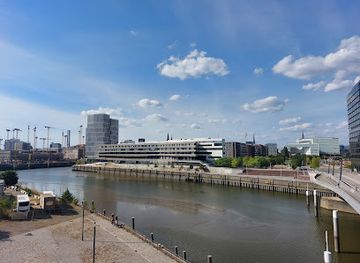
HafenCity stretches along Hamburg’s Elbe waterfront immediately south of the Altstadt, occupying former harbour and warehouse land between the Speicherstadt and the Elbbrücken. Its broad quays, canals and carefully planned streets reveal the area’s maritime origins, while new housing, offices, universities, museums and public spaces have transformed it into one of Europe’s most substantial inner-city developments. The neighbourhood is not a preserved historic quarter: cranes, construction sites and recently completed buildings remain part of its evolving character.Read more about HafenCity
Architecture beside the Elbe
Museums, Public Spaces and Everyday Life
Best attractions in HafenCity
HafenCity’s principal attractions combine culture, maritime history and open-air urban space. The Elbphilharmonie dominates the western waterfront, where its public plaza provides elevated views across the Elbe, harbour and city skyline when access is available. The International Maritime Museum occupies the former Kaispeicher B warehouse and presents extensive collections connected with seafaring and navigation. Around it, Magellan-Terrassen and Marco-Polo-Terrassen create stepped gathering places beside the water, while Lohsepark and Baakenpark show the district’s newer park design. The network of canals, bridges and quays is itself a defining attraction, particularly around Sandtorhafen, Grasbrookpark and Baakenhafen. At the northern edge, the Speicherstadt, Miniatur Wunderland and Deutsches Zollmuseum are immediately nearby but belong to the adjoining historic warehouse and Altstadt context rather than HafenCity proper.
-
Business center
Überseeboulevard
Explore Hamburg's vibrant Überseeboulevard, a perfect blend of business and leisure with stunning river views and delightful experiences.
4 min walk · 0.3 km from neighbourhood centre
-
Tourist attraction
Grasbrookpark
Explore Grasbrookpark: An urban retreat in Hamburg featuring lush landscapes, family-friendly playgrounds, and stunning views of the Elbe River.
3 min walk · 0.2 km from neighbourhood centre
-
Tourist attraction
Speicherstadtmuseum
Explore the maritime history of Hamburg at the Speicherstadtmuseum, where culture, heritage, and stunning architecture come together.
5 min walk · 0.4 km from neighbourhood centre
-
Tourist attraction
HafenCity Aussichtspunkt
Discover the stunning views of Hamburg's HafenCity from the observation deck, where modern architecture meets the tranquility of the Elbe River.
13 min walk · 1.1 km from neighbourhood centre


Best landmarks in HafenCity
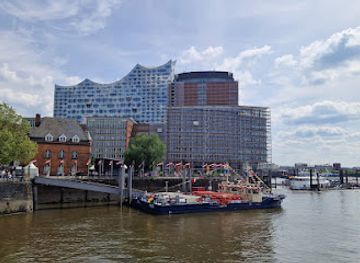
The Elbphilharmonie is HafenCity’s defining architectural landmark, combining a glass-crusted concert hall with the preserved brick Kaispeicher A warehouse on the former Sandtorhafen. Its form expresses the district’s central theme: a contemporary city built upon an active maritime past. The red-brick International Maritime Museum occupies Kaispeicher B, one of the older warehouse structures associated with Hamburg’s port, and provides a tangible link to seafaring commerce. The Magellan-Terrassen, Marco-Polo-Terrassen and surrounding quay walls are significant public works because they turn former working harbour edges into civic spaces. Eastwards, the striking bridges, flood-adapted ground levels and changing skyline around Baakenhafen reveal HafenCity’s ongoing urban experiment. The Speicherstadt warehouses are neighbouring landmarks across the northern boundary, not buildings within the modern district itself.
-
Tourist attraction
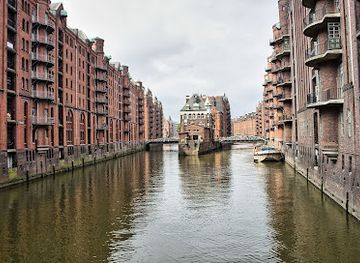
Speicherstadt
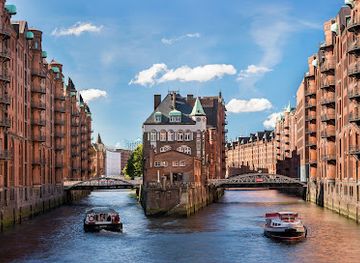
Explore Hamburg's historic Speicherstadt, a UNESCO World Heritage site of stunning red-brick warehouses, canals, and bridges, blending history, culture, and modern innovation.
9 min walk · 0.8 km from neighbourhood centre
-
Observation deck
HafenCity Aussichtspunkt
Experience breathtaking views and vibrant architecture at HafenCity Aussichtspunkt in Hamburg, a must-visit observation deck for every tourist.
13 min walk · 1.1 km from neighbourhood centre
-
Historical landmark
Kehrwiederspitze - Hamburg-Hafen
Explore Kehrwiederspitze in Hamburg's HafenCity: Where maritime history meets modern innovation, offering stunning harbor views and a gateway to the Speicherstadt.
9 min walk · 0.7 km from neighbourhood centre
-
Historical landmark
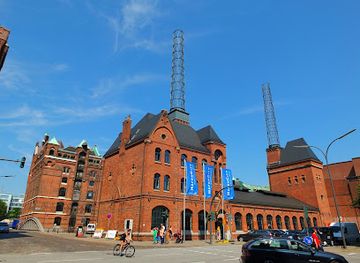
Old Boiler House
Explore Hamburg's industrial past at the Old Boiler House, now the HafenCity InfoCenter, where history meets modern urban development on the picturesque Sandtorkai.
3 min walk · 0.3 km from neighbourhood centre
Explore HafenCity on the map
A handpicked selection of must-see spots in HafenCity, mapped for you.
Best hotels in HafenCity
Best restaurants in HafenCity
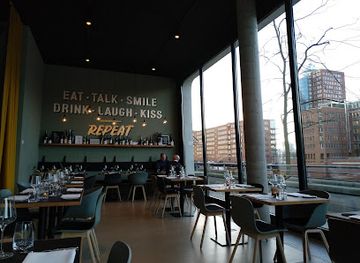
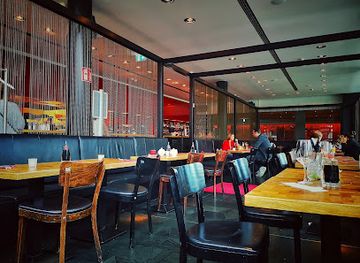
HafenCity’s dining scene reflects its mixed-use development rather than a single inherited culinary tradition. Restaurants, cafés and bars cluster around the Elbphilharmonie, Sandtorhafen, Überseequartier and the newer public squares, offering contemporary European cooking, international menus, coffee and casual food alongside more formal dining. The neighbourhood’s architecture means that many venues occupy ground floors of recent apartment, office and cultural buildings, with terraces and large windows making use of the waterfront setting. Dining around the International Maritime Museum and the eastern harbour basins is generally linked to daytime museum and office activity, while the area around the Elbphilharmonie becomes busier before performances. Visitors seeking the historic food atmosphere of Hamburg’s warehouse district can continue north into Speicherstadt and the Altstadt, where the restaurant landscape is more established and geographically distinct.
-
Israeli
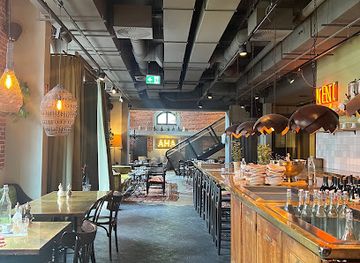
NENI Hamburg
Experience a fusion of Israeli and Mediterranean cuisines at NENI Hamburg – where eclectic flavors meet stunning city views.
5 min walk · 0.4 km from neighbourhood centre
-
Sushi
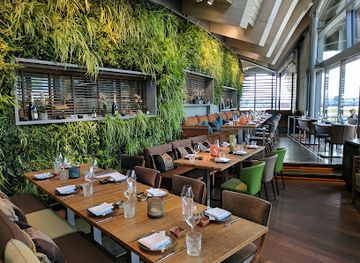
coast by east Hamburg
Discover exceptional sushi and seafood at Coast by East Hamburg – where exquisite flavors meet modern elegance in the heart of the city.
3 min walk · 0.2 km from neighbourhood centre
-
Italian
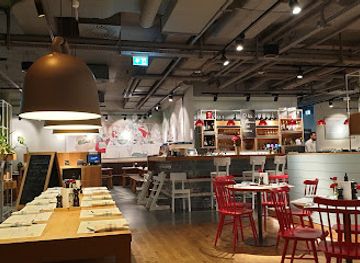
mama trattoria Hamburg Hafencity
Experience authentic Italian cuisine at Mama Trattoria in Hamburg's Hafencity—where every bite feels like a trip to Italy.
2 min walk · 0.1 km from neighbourhood centre
-
German
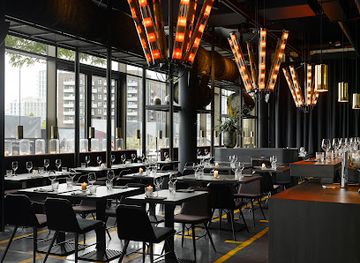
heimat restaurant
Experience authentic German cuisine at Heimat Restaurant in Hamburg, where tradition meets modern culinary artistry.
5 min walk · 0.4 km from neighbourhood centre
Best bars in HafenCity
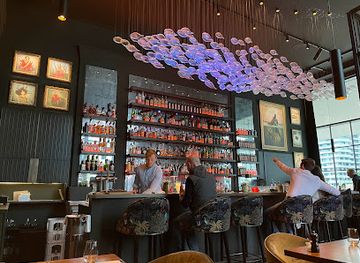
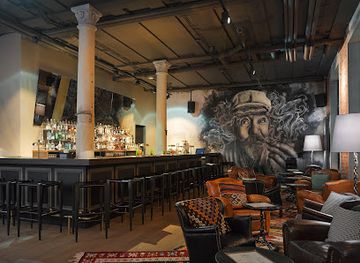
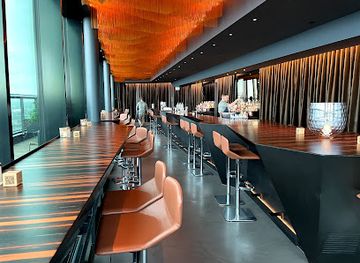
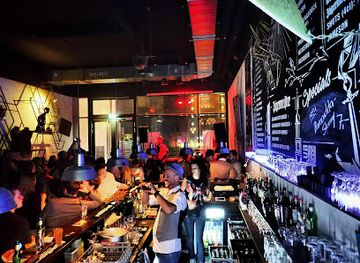
HafenCity is not one of Hamburg’s principal late-night club districts, and its evening life is shaped more by concerts, restaurants, hotel bars and occasional cultural programming than by a dense concentration of nightclubs. The Elbphilharmonie brings an audience to the western waterfront before and after performances, while bars and dining venues around Überseequartier and the newer squares provide places for a comparatively measured evening. The exposed promenades are attractive for an after-dinner walk, but many stretches become quiet once offices and museums close. Visitors looking for Hamburg’s established pub and club culture will find a much broader choice in St Pauli, Sternschanze and the Altstadt, all outside HafenCity and best reached by public transport rather than treated as part of the neighbourhood.
-
Bar
Bootshaus Grill & Bar - Hafencity
Discover culinary excellence and vibrant nightlife at Bootshaus Grill & Bar in Hamburg's stunning Hafencity. A must-visit for food lovers and cocktail enthusiasts.
2 min walk · 0.2 km from neighbourhood centre
-
Cocktail bar
The Boilerman Bar Hafenamt
Discover an extraordinary cocktail experience at The Boilerman Bar Hafenamt, where quality meets creativity in the heart of Hamburg.
4 min walk · 0.3 km from neighbourhood centre
-
Restaurant
Kinfelts Kitchen & Wine
Experience the culinary delights of Kinfelts Kitchen & Wine, a perfect blend of bistro charm and wine bar elegance in the heart of Hamburg.
5 min walk · 0.4 km from neighbourhood centre
-
Bar
Puzzle Bar
Experience the unique fusion of cocktails and puzzles at Puzzle Bar in Hamburg, where fun meets creativity in an engaging nightlife adventure.
12 min walk · 1.0 km from neighbourhood centre
Best nightclubs in HafenCity
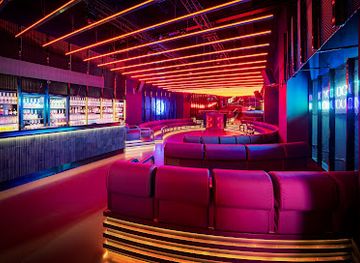
HafenCity is not one of Hamburg’s principal late-night club districts, and its evening life is shaped more by concerts, restaurants, hotel bars and occasional cultural programming than by a dense concentration of nightclubs. The Elbphilharmonie brings an audience to the western waterfront before and after performances, while bars and dining venues around Überseequartier and the newer squares provide places for a comparatively measured evening. The exposed promenades are attractive for an after-dinner walk, but many stretches become quiet once offices and museums close. Visitors looking for Hamburg’s established pub and club culture will find a much broader choice in St Pauli, Sternschanze and the Altstadt, all outside HafenCity and best reached by public transport rather than treated as part of the neighbourhood.
-
Restaurant
Chilli Club
Experience the vibrant flavors of Asia at Chilli Club, Hamburg's premier destination for sushi and authentic Asian cuisine.
2 min walk · 0.1 km from neighbourhood centre
-
Jazz
Cotton Club
Discover the vibrant jazz scene at Cotton Club Hamburg, where live music and a lively atmosphere create unforgettable nights.
15 min walk · 1.2 km from neighbourhood centre
-
Bar
Club 20457
Discover the vibrant blend of art, music, and cocktails at Club 20457, Hamburg's premier destination for nightlife and creativity.
5 min walk · 0.4 km from neighbourhood centre
-
Night club
Golden Cut - Hamburg
Experience the electrifying nightlife at Golden Cut, Hamburg's premier night club, where music and energy collide for an unforgettable evening.
5 min drive · 1.7 km from neighbourhood centre

Best shops in HafenCity
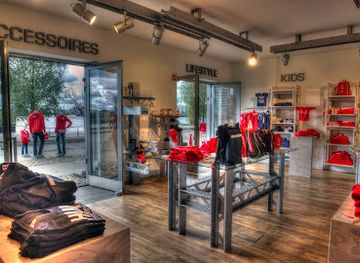
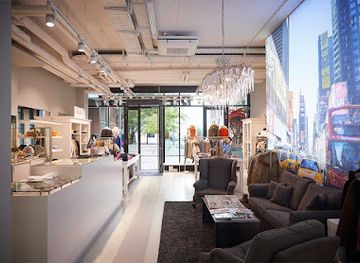
Shopping in HafenCity is concentrated in newer mixed-use developments rather than traditional independent shopping streets. Überseequartier provides the district’s principal retail and leisure concentration, while smaller cafés, design-oriented businesses and everyday services appear around the newer residential and office blocks. Visitors are more likely to encounter contemporary lifestyle retail, food outlets and services than antique shops, specialist bookshops or long-established market traders. The neighbourhood’s strongest commercial character lies in the relationship between shops, architecture and public space: wide pavements, plazas and waterfront routes connect the retail areas with museums and cultural venues. For traditional Hamburg shopping, the nearby Altstadt and Mönckebergstrasse offer a much larger range, while the Speicherstadt and adjacent Kontorhausviertel provide more distinctive historic surroundings rather than a separate HafenCity retail scene.
-
Clothing store
53 ° Hamburg | Store | CMD
Explore 53 ° Hamburg for unique clothing and custom souvenirs, celebrating local fashion along the beautiful Elbe River promenade.
4 min walk · 0.3 km from neighbourhood centre
-
Women's clothing store
D!FFERENT WOMEN | Hamburg-Hafencity
Explore Hamburg's chic women's clothing store, D!FFERENT WOMEN, featuring unique styles that elevate your fashion game in the city's Hafencity district.
4 min walk · 0.4 km from neighbourhood centre
-
Souvenir store
Shop des Maritimen Museums
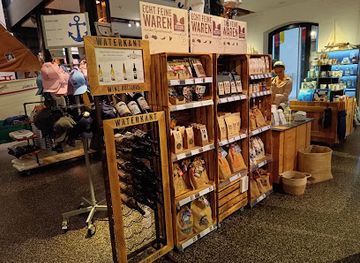
Discover Hamburg's maritime heritage through unique souvenirs at the Shop des Maritimen Museums, perfect for every traveler.
6 min walk · 0.5 km from neighbourhood centre
-
Gift shop
Speicher & Consorten
Discover unique gifts and local delicacies at Speicher & Consorten, a charming shop in Hamburg's historic Speicherstadt.
4 min walk · 0.3 km from neighbourhood centre
HafenCity essentials
Getting There
Getting Around
Safety
Emergency Situations
Do's and Don'ts
Local Tips

From Eve
Local phrases worth knowing
You don't need to get them perfect. A few words go a long way, and locals appreciate the effort.
Basics
| English | Local | Say it |
|---|---|---|
| Hello | Hallo | [HAH-loh] |
| Goodbye | Auf Wiedersehen | [owf VEE-der-zay-en] |
| Yes | Ja | [yah] |
| No | Nein | [nine] |
| Please/You're welcome | Bitte | [BIH-tuh] |
| Thank you | Danke | [DAHN-kuh] |
| Excuse me/Sorry | Entschuldigung | [ent-SHOOL-dee-goong] |
| How are you? | Wie geht es Ihnen? | [vee gayt es EE-nen] |
| Fine. And you? | Gut. Und Ihnen? | [goot oont EE-nen] |
| Do you speak English? | Sprechen Sie Englisch? | [SHPRE-khen zee ENG-lish] |
| I don't understand | Ich verstehe nicht | [eeh fer-SHTAY-uh nikht] |
Eating & Drinking
| English | Local | Say it |
|---|---|---|
| I'd like to see the menu, please | Ich hätte gerne die Speisekarte, bitte | [eekh HEH-teh GEHR-neh dee SHPY-ze-kahr-teh, BIH-tuh] |
| I don't eat meat | Ich esse kein Fleisch | [eekh EHS-se kine FLYSH] |
| Cheers! | Prost! | [prohst] |
| I would like to pay, please | Ich möchte bitte bezahlen | [eekh muhKH-teh BIH-tuh beh-TSAH-len] |
Emergencies
| English | Local | Say it |
|---|---|---|
| Help! | Hilfe! | [HEEL-feh] |
| Go away! | Gehen Sie weg! | [GAY-en zee vehk] |
| Call the Police! | Rufen Sie die Polizei! | [ROO-fen zee dee poh-lee-TSY] |
| Call a doctor! | Rufen Sie einen Arzt! | [ROO-fen zee EY-nehn ahrts] |
| I'm lost | Ich habe mich verirrt | [eekh HAH-beh meesh feh-RIRT] |
| I'm ill | Mir ist schlecht | [meer ist SHLEKHT] |
Shopping
| English | Local | Say it |
|---|---|---|
| I'd like to buy... | Ich möchte ... kaufen | [eekh muhKH-teh ... KOW-fen] |
| I'm just looking | Ich schaue nur | [eekh SHOW-eh noor] |
| How much is it? | Wie viel kostet es? | [vee feel KOH-stet es] |
| That's too expensive | Das ist zu teuer | [dahs ist tsoo TOO-er] |
| Can you lower the price? | Können Sie den Preis senken? | [KOON-nen zee den prees ZEN-ken] |
Time & Numbers
| English | Local | Say it |
|---|---|---|
| What time is it? | Wie spät ist es? | [vee SHPEHT ist es] |
| It's one o'clock | Es ist ein Uhr | [es ist ine OOR] |
| Half past (10) | Halb zehn | [halb tsehn] |
| Morning | Morgen | [MOHR-gehn] |
| Afternoon | Nachmittag | [NAKH-mee-tahk] |
| Evening | Abend | [AH-bent] |
| Yesterday | Gestern | [GEHS-tern] |
| Today | Heute | [HOY-teh] |
| Tomorrow | Morgen | [MOHR-gehn] |
| 1 | eins | [eyns] |
| 2 | zwei | [tsvay] |
| 3 | drei | [dry] |
| 4 | vier | [feer] |
| 5 | fünf | [fuhnf] |
| 6 | sechs | [zeks] |
| 7 | sieben | [zee-ben] |
| 8 | acht | [ahkt] |
| 9 | neun | [noyn] |
| 10 | zehn | [tsehn] |
Transport & Directions
| English | Local | Say it |
|---|---|---|
| Where's a/the...? | Wo ist ein/der...? | [voh ist ine/dehr] |
| What's the address? | Was ist die Adresse? | [vahs ist dee ah-dreh-seh] |
| Can you show me (on the map)? | Können Sie mir zeigen (auf der Karte)? | [KOO-nen zee meer TSY-gen (owf dehr KAHR-teh)] |
| When's the next (bus)? | Wann kommt der nächste (Bus)? | [vahn kohmt dehr NEKH-ste (boos)] |
| A ticket (to ....) | Eine Fahrkarte (nach ...) | [ey-ne fahr-KAR-teh (nahkh ...)] |
History of HafenCity
Harbour Basins and Warehouse Land
Before HafenCity was planned as a new urban quarter, the area formed part of Hamburg’s port, with quays, canals, warehouses and harbour basins supporting the city’s maritime economy. Its development was closely tied to the Speicherstadt and the free-port system, although the modern neighbourhood occupies a distinct area south of the historic warehouse district. The waterfront was organised for cargo handling rather than residential life, and much of the land was inaccessible to ordinary city pedestrians. The surviving basins and quay alignments still provide the clearest physical reminder of this earlier port landscape.
The Port Moves Downstream
During the twentieth century, containerisation and the expansion of Hamburg’s port shifted major cargo operations towards deeper-water facilities farther down the Elbe. Older inner-city harbour areas became less suited to large-scale modern shipping, leaving extensive land close to the city centre available for redevelopment. The change did not erase the port’s presence: industrial structures, quay walls and watercourses remained, but their economic role altered. This transition created the conditions for a new mixed-use district that could reconnect central Hamburg with stretches of waterfront previously dominated by logistics.
HafenCity Takes Shape
HafenCity emerged as a major urban redevelopment project in the late 1990s and early 2000s, with the intention of extending the central city southwards while preserving the relationship with the Elbe. New streets, squares, parks, bridges and flood-conscious building platforms were laid out across former harbour land. Residential development was combined with offices, cultural institutions, educational facilities, shops and public promenades rather than creating a single-purpose business district. The project’s scale and long construction period have made HafenCity a continuing process of urban change rather than a quarter completed in one phase.
Culture and a New Waterfront Identity
The opening of the Elbphilharmonie in 2017 gave HafenCity a powerful cultural landmark and a new international profile. Built around the retained Kaispeicher A warehouse, the concert hall made the district’s architectural ambition visible far beyond Hamburg. Other institutions, including the International Maritime Museum and HafenCity University, reinforced connections with maritime history, design and urban research. At the same time, new parks and promenades established public access to the waterfront. Contemporary HafenCity therefore combines an active building programme with an increasingly recognisable everyday identity shaped by residents, workers, students and visitors.
HafenCity in Photos
Browse through our photo collection highlighting the charm and character of the destination.
Neighbourhoods near HafenCity
The closest neighbourhoods to HafenCity, if you have time for more than one stop.
-

-

-

-


Swipe for more neighbourhoods
Explore more

Explore more of Hamburg
Hamburg blends North Sea maritime history, Speicherstadt warehouses, Elbphilharmonie concerts, lively districts and memorable harbour sightseeing.
Explore Hamburg