Background

Leibniz House: A Tribute to a Polymath

Explore the reconstructed Leibniz House in Hannover's Old Town, a tribute to the brilliant Gottfried Wilhelm Leibniz, a hub for international scholars, and a landmark of intellectual history.

4.6

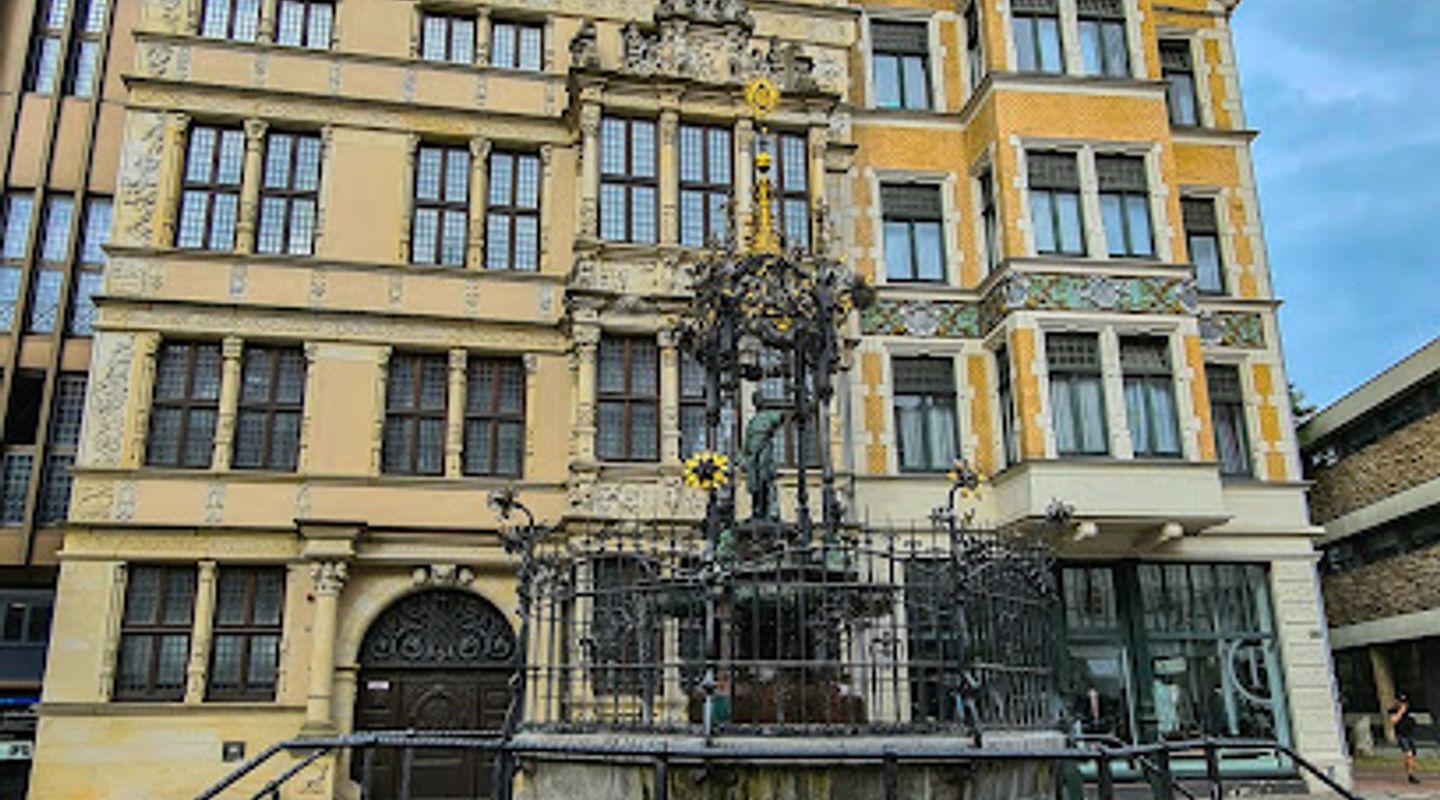
The Leibniz House in Hannover is a reconstructed historical building dedicated to Gottfried Wilhelm Leibniz, one of the most influential thinkers of the 17th and 18th centuries. Originally built in 1499, the house served as Leibniz's residence and workplace from 1698 until his death in 1716. It was destroyed during World War II, but its facade was meticulously reconstructed in 1983 at Holzmarkt Square, in the heart of Hannover's Old Town. Today, the Leibniz House functions as a guest house and conference center for Hannover's universities and colleges, hosting international scientists and scholars. Visitors can admire the intricate Renaissance facade, explore a small exhibition about Leibniz's life and work, and appreciate the building's role as a symbol of Hannover's intellectual heritage. The Leibniz House stands as a reminder of Leibniz's contributions to mathematics, philosophy, and science, and its central location makes it an easily accessible landmark for tourists exploring the city.

A brief summary to Leibniz House

Local tips

  • Check the opening hours before visiting, as they may vary depending on events and conferences.
  • Take a stroll around Holzmarkt Square and enjoy the atmosphere of Hannover's Old Town.
  • Visit the nearby Markthalle for a variety of food and drink options.
widget icon

Getting There

  • Public Transport

    From Hannover Hauptbahnhof (main train station), take tram line 3, 7, or 9 towards Wettbergen or Empelde. Get off at the Markthalle/Landtag stop. From there, walk approximately 5 minutes towards Holzmarkt. The Leibniz House will be on your right. A single ticket for the city zone costs approximately €3.40.

  • Walking

    If you are in the city center near Marktplatz (central square), walk southeast towards the Historisches Museum. Continue straight until you reach Holzmarkt. The Leibniz House will be on your right at Holzmarkt 5.

  • Taxi/Ride-Share

    A taxi or ride-share from Hannover Hauptbahnhof to Leibniz House will take approximately 5-10 minutes, depending on traffic. The estimated cost is between €10-€15.

Unlock the Best of Leibniz House

Buy tickets

    No tickets available

Book tours with entry

    No tours available

Book tours without entry

    No tours available

Discover more about Leibniz House

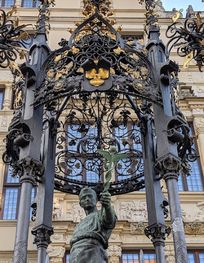
The Leibniz House, a prominent landmark in Hannover, stands as a testament to the life and legacy of Gottfried Wilhelm Leibniz, one of history's most versatile and influential intellectuals. Though the current structure is a reconstruction, it carries the weight of centuries of history and intellectual pursuit, making it a compelling destination for those interested in philosophy, mathematics, and European history. The original Leibniz House was built in 1499 as a patrician residence. Its significance grew when Gottfried Wilhelm Leibniz, a polymath whose contributions spanned mathematics, philosophy, logic, theology, and politics, took up residence there in 1698. The Elector of Hanover, recognizing Leibniz's genius, provided the house as both a residence and a space for the court library, of which Leibniz was the director. For nearly two decades, until his death in 1716, Leibniz lived and worked within these walls, developing groundbreaking concepts that would shape modern thought. During his time at the Leibniz House, Leibniz engaged in extensive correspondence with leading scientists, philosophers, and mathematicians across Europe. He developed his binary numeral system, a foundation of modern computing, and made significant advancements in calculus, independently of Isaac Newton. His philosophical work explored metaphysics, epistemology, and ethics, seeking to reconcile reason and faith. The house became a hub of intellectual activity, a place where ideas were exchanged and refined. Tragically, the original Leibniz House was destroyed during an air raid in 1943, during World War II. For nearly four decades, the site remained a void in Hannover's historical landscape. However, in the 1980s, a dedicated effort was launched to reconstruct the building, preserving its architectural heritage and honoring Leibniz's memory. Using original plans and historical records, the facade was painstakingly recreated, and in 1983, the reconstructed Leibniz House was unveiled at Holzmarkt Square, not far from its original location. The reconstructed Leibniz House is not merely a replica; it is a living institution. Today, it serves as a guest house and conference center for the universities and colleges of Hannover. It provides accommodation for visiting scientists and scholars from around the world, fostering international collaboration and intellectual exchange. The building also hosts academic events, conferences, and seminars, continuing Leibniz's legacy of intellectual inquiry. Visitors to the Leibniz House can admire the intricate details of its Renaissance facade, which features depictions of scenes from biblical and ancient stories. The building's architecture reflects the style of the 17th century, offering a glimpse into the world that Leibniz inhabited. Inside, a small exhibition provides insights into Leibniz's life, work, and enduring influence. Although the interior is modern, the exhibition helps visitors connect with the man who once lived and worked there. The Leibniz House is located in the heart of Hannover's Old Town, surrounded by other historical landmarks and cultural attractions. Its central location makes it easily accessible to tourists exploring the city. The Holzmarkt Square, where the house stands, is a vibrant public space, often hosting events and markets. The nearby Markthalle, a historic market hall, offers a variety of food and drink options, providing a perfect place to relax and soak in the atmosphere of Hannover. The Leibniz House stands as a symbol of Hannover's commitment to intellectual pursuits and its rich cultural heritage. It is a place where history, science, and philosophy converge, inviting visitors to reflect on the enduring legacy of Gottfried Wilhelm Leibniz and his contributions to the world. Whether you are a scholar, a history buff, or simply a curious traveler, a visit to the Leibniz House is sure to be a rewarding experience. While visiting the Leibniz House, take a moment to appreciate the Oscar Winter fountain nearby. This fountain, often referred to as a wishing well, adds to the charm of Holzmarkt Square. Legend has it that wishes come true for those who turn the wrought-iron ring near the fountain's basin. The Leibniz House is more than just a building; it is a reminder of the power of human intellect and the importance of preserving our cultural heritage. It is a place where the past meets the present, inspiring future generations to pursue knowledge and innovation. A visit to the Leibniz House is an opportunity to connect with the ideas and spirit of one of history's greatest minds, leaving you with a deeper appreciation for the world of philosophy, mathematics, and science. Leibniz's impact extends far beyond the walls of this reconstructed house. His work laid the groundwork for many of the technologies and ideas that shape our modern world. From computer science to international relations, Leibniz's influence can still be felt today. The Leibniz House serves as a focal point for understanding and celebrating this remarkable legacy. As you stand before the Leibniz House, consider the words of Leibniz himself: "The present is great with the future." This building, a reconstruction of a past residence, stands as a testament to the enduring power of ideas and the importance of preserving our intellectual heritage for generations to come.

Popular Experiences near Leibniz House

Popular Hotels near Leibniz House

Select Currency