

GutsMuths-Denkmal Travel Guide
Free Guide: Honoring Johann Christoph Friedrich GutsMuths, the 'grandfather of gymnastics,' this Quedlinburg monument celebrates his lasting impact on physical education and German culture.


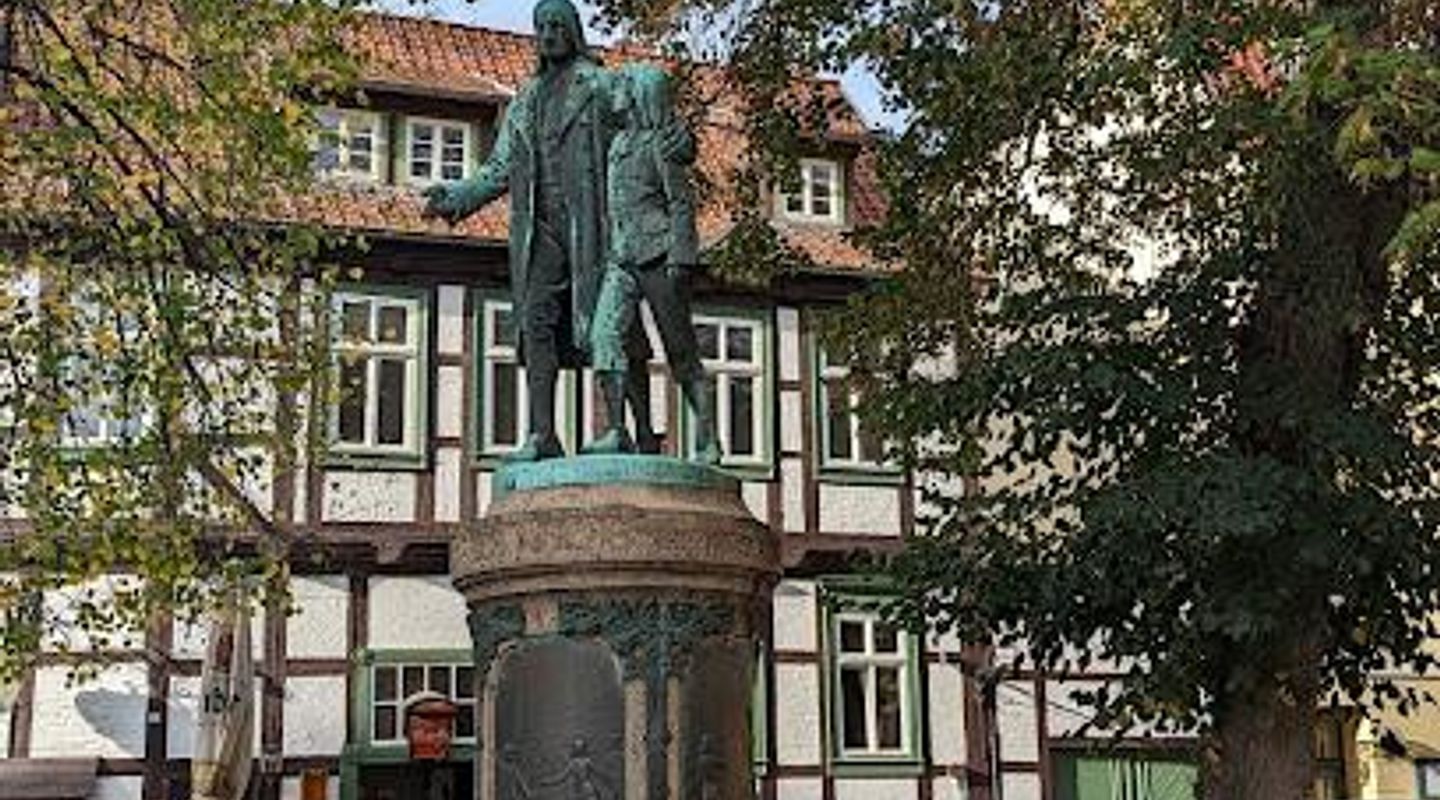
A brief summary of GutsMuths-Denkmal
Honoring Johann Christoph Friedrich GutsMuths, the 'grandfather of gymnastics,' this Quedlinburg monument celebrates his lasting impact on physical education and German culture.
The GutsMuths Monument in Quedlinburg honors Johann Christoph Friedrich GutsMuths, a key figure in the development of gymnastics and physical education in Germany. Erected in 1904, the monument depicts GutsMuths as a hiker accompanied by his student Carl Ritter, both natives of Quedlinburg. Located on GutsMuths-Platz, near GutsMuths' birthplace, the monument serves as a reminder of his contributions to education and the importance of physical activity. The monument not only celebrates GutsMuths' legacy but also provides a focal point for visitors exploring Quedlinburg's rich history and cultural heritage. The monument is a testament to Quedlinburg's commitment to preserving its historical figures and promoting the values they represent. A visit to the GutsMuths Monument offers a unique opportunity to connect with the past and appreciate the enduring impact of GutsMuths' work.
Opening hours
- Every dayOpen 24 hours
Opening hours as listed on the venue’s Google Business Profile. Hours can change for services and special events, so check with the venue before you go.
- Address
- Pölle, 06484 Quedlinburg
- Phone
- Website
Getting there
Walking
Taxi/Ride-Share
Parking
Discover more about GutsMuths-Denkmal
Overview
The GutsMuths Monument, situated on GutsMuths-Platz in Quedlinburg, Germany, stands as a lasting tribute to Johann Christoph Friedrich GutsMuths (1759-1839), a pivotal figure in the history of physical education and gymnastics. Born in Quedlinburg, GutsMuths dedicated his life to reforming education and promoting the importance of physical activity for overall well-being. The monument, created by sculptor Richard Anders, was erected in 1904 and features a bronze sculpture of GutsMuths depicted as a hiker alongside his favorite student, Carl Ritter, who was also a Quedlinburg native and a co-founder of modern geography. The choice of depicting GutsMuths as a hiker reflects his emphasis on outdoor exercise and the connection between physical activity and nature. The monument is mounted on a granite base that once featured Jugendstil reliefs depicting scenes from GutsMuths' life; these reliefs were reconstructed around 1995 but are no longer part of the monument. GutsMuths' contributions to education extend beyond physical activity. He was a proponent of a holistic approach to learning, emphasizing the importance of intellectual, moral, and physical development. His writings, including "Gymnastik für die Jugend" (Gymnastics for Youth), published in 1793, provided a systematic framework for physical education and influenced the development of gymnastics programs worldwide. GutsMuths advocated for incorporating games, exercises, and outdoor activities into the school curriculum to promote students' physical and mental health. GutsMuths' influence on the development of gymnastics is undeniable. He introduced systematic physical exercise into the school curriculum and developed the basic principles of artistic gymnastics. His work laid the foundation for the modern gymnastics movement and inspired generations of educators and athletes. He is considered by many to be the father of modern pole vaulting, as he described the jumping standards, the distance of the approach, recommendations on hand grip, and the principles of pole jumping. The location of the monument on GutsMuths-Platz, near GutsMuths' birthplace at Pölle 39, adds to its significance. The square, formerly known as Mummentalplatz, was renamed in 2009 to honor GutsMuths' legacy. The monument serves as a focal point for visitors exploring Quedlinburg's historic old town, a UNESCO World Heritage site renowned for its well-preserved medieval architecture. Visiting the GutsMuths Monument offers a unique opportunity to reflect on the importance of physical education and the enduring impact of GutsMuths' work. The monument stands as a symbol of Quedlinburg's commitment to preserving its cultural heritage and honoring the contributions of its notable citizens. The monument serves as a reminder of the importance of physical activity and education in shaping a well-rounded individual. Quedlinburg itself provides a captivating backdrop for the GutsMuths Monument. The town's rich history, charming cobblestone streets, and picturesque half-timbered houses create an enchanting atmosphere that transports visitors back in time. Exploring the town's other historical landmarks, such as the Quedlinburg Abbey and the Market Square, offers a deeper appreciation for Quedlinburg's cultural significance. The GutsMuths Monument is more than just a statue; it is a symbol of Quedlinburg's commitment to education, physical well-being, and the preservation of its rich cultural heritage. A visit to this monument offers a unique opportunity to connect with the past, appreciate the enduring impact of GutsMuths' work, and explore the captivating beauty of Quedlinburg.
Evendo Review Centre
 Google
Guest reviews
Explore GutsMuths-Denkmal on the map
A handpicked selection of must-see spots near GutsMuths-Denkmal, mapped for you.
Get your free copy of our complete guide to GutsMuths-Denkmal, delivered straight to you.
Everything on this page, from opening hours and how to get there to Eve’s tips and the best time to go, in one PDF you can read offline, print or share.
Already have an account? Sign in
Your GutsMuths-Denkmal guide is ready.
We'll send it to · Not you? Sign out

Getting your guide ready…
We are putting together a fresh copy of the GutsMuths-Denkmal guide. This can take up to a minute.
This can take a few moments. If your browser asks, choose Allow so the download can start. You'll find the guide in your Downloads folder.
Nothing happened? Download it again
Sorry, the guide is taking longer than usual. Please try again in a minute, or get it by email instead.
Unlock the best of GutsMuths-Denkmal
Skip-the-line tickets, guided tours with entry, and walking tours of the area, booked in a few clicks.

Other nearby places you may find interesting
The closest places of the same kind, if this one is not quite what you had in mind.
-
-
-
-
-


Swipe for more places
More to explore near GutsMuths-Denkmal

 Best experiences near GutsMuths-Denkmal
 Best hotels near GutsMuths-Denkmal
 Best landmarks near GutsMuths-Denkmal
 Best attractions near GutsMuths-Denkmal
 Best shops near GutsMuths-Denkmal
 Best restaurants near GutsMuths-Denkmal
 Best bars near GutsMuths-Denkmal
Do you manage this location?
Take control to get all the benefits, like improved information, better appearance, and stronger visibility across AI-powered discovery.
Explore more

Explore more of Harz
Discover the Harz Mountains: A blend of natural beauty, historical charm, and enchanting folklore in the heart of Germany.
Explore Harz
Explore more of Germany
Experience Germany: where history meets innovation, and urban energy blends with natural beauty. Discover diverse cultures, delicious cuisine, and stunning landscapes.
Explore Germany
