

Free Harz Travel Guide & Mobile App
Explore Harz with free travel guides. Discover regional history, expert tips, proposed trips, and audio guides on web or mobile app.


Explore the Harz mountains of Germany for Brocken walks, medieval timber-framed towns, historic mines, forests and steam railways.
Read more about Harz
When is the best time to visit Harz?
Best: June–August · 20–22°C| Month | High (°C) | Rainfall (mm) |
|---|---|---|
| January | 2 | 60 |
| February | 2 | 55 |
| March | 6 | 65 |
| April | 11 | 55 |
| May | 16 | 65 |
| June (best) | 20 | 80 |
| July (best) | 22 | 85 |
| August (best) | 21 | 80 |
| September | 18 | 70 |
| October | 14 | 65 |
| November | 7 | 70 |
| December | 3 | 75 |
Getting to and around Harz
How to get there
Transportation
Destinations in Harz
Resorts, valleys and scenic spots worth a trip of their own.
-

-


Swipe for more destinations
Best attractions in Harz
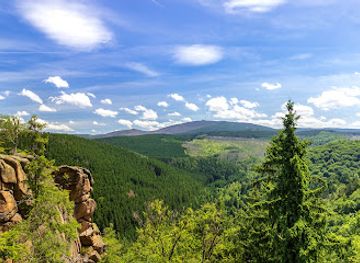
The Harz combines mountain scenery with an unusually dense concentration of heritage attractions. Harz National Park offers marked trails through upland forest and heath, with the Brocken as its best-known destination, while the surrounding valleys provide walking, cycling and reservoir landscapes. The Harz Narrow Gauge Railways connect several eastern and central settlements with steam-hauled journeys towards the high country. Mining heritage is represented by museums, visitor mines, historic waterworks and the Rammelsberg complex near Goslar. Historic town visits can be built around Goslar, Wernigerode, Quedlinburg and Stolberg, each with a different architectural character. Families may find cable cars, summer activity facilities and interpretation centres in larger resorts, while caves and geological features occur in parts of the southern Harz. The region’s appeal lies in combining outdoor routes with carefully preserved evidence of mining, trade, religion and princely administration rather than relying on one concentrated attraction.
-
Castle
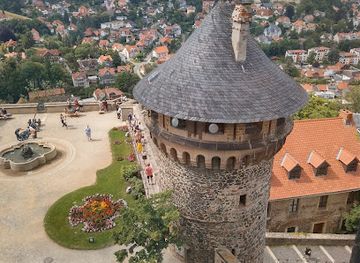
Wernigerode Castle
Discover the enchanting Wernigerode Castle, a fairytale fortress in the Harz Mountains, blending history with stunning natural beauty.
-
Tourist attraction
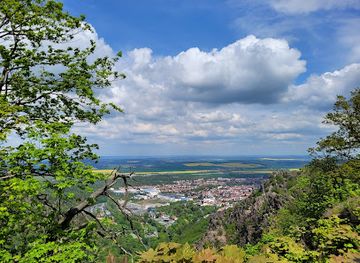
Hexentanzplatz Thale
Explore the enchanting Hexentanzplatz Thale in the Harz Mountains—a blend of breathtaking hikes, folklore, and stunning vistas await you.
-
Nature preserve
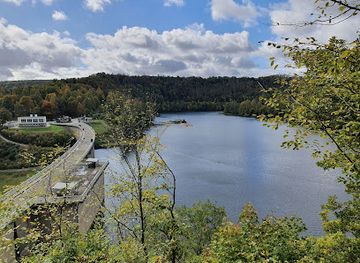
Landschaftsschutzgebiet Harz und südliches Harzvorland
Explore the breathtaking landscapes of the Harz Nature Preserve - a perfect getaway for nature lovers and adventure seekers in Germany.
-
Bridge
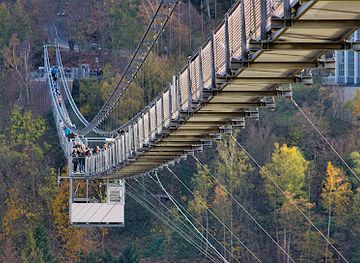
Titan RT
Discover the breathtaking Titan RT, a premier suspension bridge offering stunning views, exciting hikes, and unforgettable experiences in the heart of the Harz Mountains.
Best landmarks in Harz
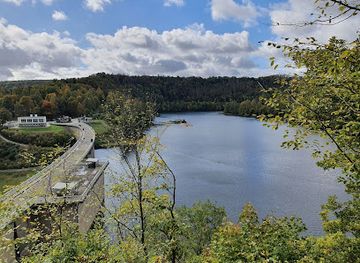
The Brocken is the Harz’s defining natural landmark, its rounded summit and exposed highland weather giving it a powerful presence in regional geography and history. Goslar’s Imperial Palace and the historic town around it express the area’s medieval political importance, while the Rammelsberg mine records the industrial wealth beneath the mountains. In Wernigerode, the castle above the town forms a prominent skyline landmark and complements the dense timber-framed centre below. Quedlinburg’s collegiate church and castle hill overlook one of Germany’s most important surviving medieval townscapes. The Stolberg valley is marked by its compact arrangement of half-timbered houses and the Renaissance Stolberg Castle. Across the Upper Harz, ponds, dams and water channels are landmarks of mining engineering as well as working landscape features, demonstrating how people redirected mountain water to power extraction over many centuries.
-
Castle
Wernigerode Castle
Discover Wernigerode Castle, a stunning neo-romantic palace with centuries of history, offering panoramic views and a glimpse into aristocratic life in the Harz Mountains.
-
Nature preserve
Landschaftsschutzgebiet Harz und südliches Harzvorland
Discover Germany's Harz National Park: A legendary mountain wilderness offering hiking, wildlife, and historical insights in a stunning natural setting across Lower Saxony and Saxony-Anhalt.
-
Bridge
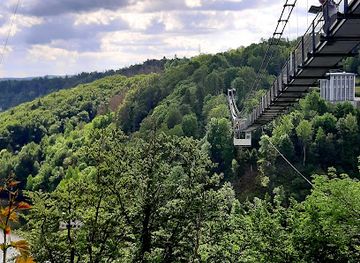
Titan RT
Experience the thrill of walking across one of the world's longest suspension bridges, suspended high above the stunning Rappbode Valley in the heart of the Harz Mountains, Germany.
-
National park
Harz National Park
Discover Germany's Harz National Park: A captivating blend of untamed wilderness, historic charm, and diverse landscapes, offering hiking, wildlife, and breathtaking views.

Explore Harz on the map
Plan your trip on one map. See where the top cities, national parks and sights are, and book hotels and experiences in a few clicks.
Best hotels in Harz
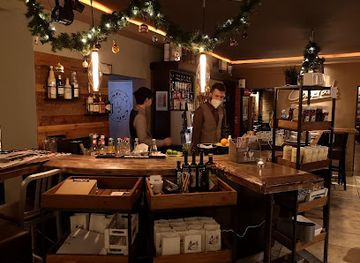
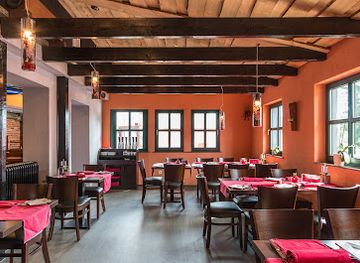
Best restaurants in Harz
Harz dining is grounded in filling central German food, with menus shaped by mountain farming, forestry and regional hospitality rather than a single codified cuisine. Harzer cheese, a low-fat sour-milk cheese traditionally associated with the wider Harz, appears in some regional shops and simple meals. Traditional inns serve potatoes, seasonal vegetables, soups, sausages and game where available, while trout and other freshwater dishes can appear near reservoirs and mountain streams. Goslar, Wernigerode and Quedlinburg offer the broadest range of cafés, bakeries, modern restaurants and international choices; smaller resorts tend towards guesthouse dining, rustic restaurants and hotel kitchens. Local beer is common, and menus often change with the season. Farmers’ shops and markets are useful for regional cheese, preserves, honey, baked goods and smoked products, though market schedules vary between towns.
-
Restaurant
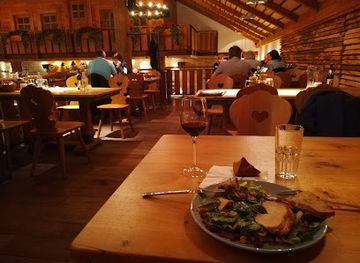
Bavaria Alm Torfhaus
Discover authentic Bavarian cuisine with stunning views at Bavaria Alm Torfhaus in Germany's beautiful Harz region.
-
Restaurant
JASPER Grill Bar & Lounge / Club
Discover culinary delights and vibrant nightlife at JASPER Grill Bar & Lounge in Braunlage – where every meal is an experience!
-
Steak
51° Nord - Steakhouse & Bar
Experience the best steaks at 51° Nord - Steakhouse & Bar in Braunlage, where quality meets exceptional service in a cozy atmosphere.
-
 Hotel
HotelHarz Hotel Altes Forsthaus Braunlage
Discover comfort and authentic German cuisine at Harz Hotel Altes Forsthaus in Braunlage - your gateway to the scenic beauty of the Harz mountains.
Best bars in Harz
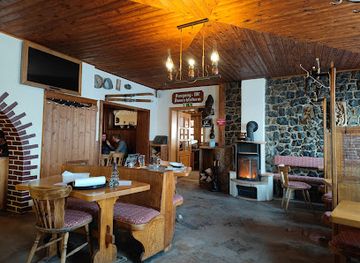
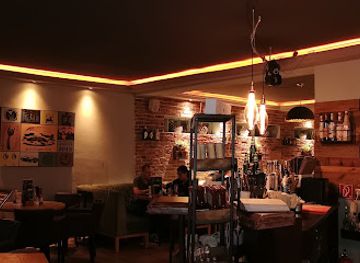
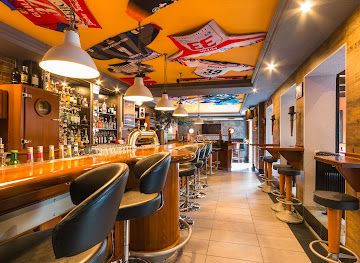
Evenings in the Harz are generally centred on traditional pubs, hotel bars, brewery-style restaurants and cafés rather than a large nightclub circuit. Goslar, Wernigerode and Quedlinburg have the widest choice of places for a drink after visiting historic centres, with some live music and cultural programming depending on the season. Mountain resorts such as Braunlage, Schierke and Bad Lauterberg offer relaxed après-walk settings, including bars attached to hotels or restaurants, but their activity can be seasonal. Smaller villages often become quiet once restaurants close. Local beer, spirits and non-alcoholic drinks are widely available, while nightlife around Walpurgis Night can be livelier in selected towns. Check local listings for current events rather than assuming regular club schedules.
-
Bar
Schirmbar Hexenritt
Experience the charm of the mountains at Schirmbar Hexenritt, a cozy bar in Braunlage offering stunning views and a vibrant atmosphere.
-
Restaurant
JASPER Grill Bar & Lounge / Club
Discover JASPER Grill Bar & Lounge in Braunlage, offering delicious grilled dishes, vibrant nightlife, and a welcoming atmosphere for all visitors.
-
Steak
51° Nord - Steakhouse & Bar
Experience the best steak in Braunlage at 51° Nord - Steakhouse & Bar, where culinary excellence meets a cozy atmosphere.
-
Grill
Karthi‘s
Experience the smoky goodness of grilled cuisine at Karthi's Grill in Braunlage, where every meal is a delightful culinary journey.

Best nightclubs in Harz
Evenings in the Harz are generally centred on traditional pubs, hotel bars, brewery-style restaurants and cafés rather than a large nightclub circuit. Goslar, Wernigerode and Quedlinburg have the widest choice of places for a drink after visiting historic centres, with some live music and cultural programming depending on the season. Mountain resorts such as Braunlage, Schierke and Bad Lauterberg offer relaxed après-walk settings, including bars attached to hotels or restaurants, but their activity can be seasonal. Smaller villages often become quiet once restaurants close. Local beer, spirits and non-alcoholic drinks are widely available, while nightlife around Walpurgis Night can be livelier in selected towns. Check local listings for current events rather than assuming regular club schedules.
-
Event venue
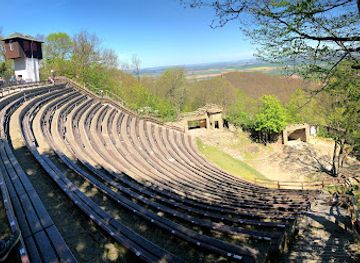
Bergtheater Thale
Discover the enchanting Bergtheater Thale, where captivating performances meet breathtaking views in the heart of the Harz Mountains.
-
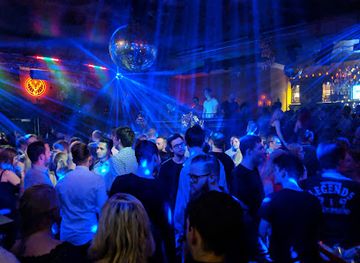
Disco club
Nachtschicht
Experience the vibrant nightlife of Goslar at Nachtschicht, where the dance floor comes alive with electrifying beats and an energetic crowd.
-
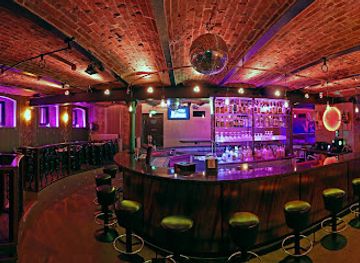
Disco club
Ars Vivendi Party Club Lounge Wernigerode
Discover the vibrant nightlife at Ars Vivendi Party Club Lounge in Wernigerode, where exceptional cocktails and pulsating dance beats await.
-
Live Music
Harz-Mountains Ranch
Discover the enchanting Harz-Mountains Ranch, a lively venue for live music and country club fun in the breathtaking Harz Mountains.
Best shops in Harz
Shopping in the Harz is strongest in its historic towns, where restored high streets combine everyday German retailers with independent bookshops, galleries, craft outlets, cafés and traditional food shops. Goslar and Quedlinburg offer the broadest selection, while Wernigerode’s centre is well suited to browsing timber-framed streets for regional gifts and artisan goods. Smaller resorts and villages focus more on practical outdoor equipment, local produce and souvenirs than on extensive retail. Look for Harz cheese, honey, preserves, herbal products, smoked foods and locally made confectionery, alongside carved wooden goods, ceramics, textiles and artwork inspired by the mountains. Mining-themed objects and railway souvenirs are common around heritage sites, while Christmas markets and seasonal town markets bring additional craft stalls at particular times of year. Check market dates locally, as they vary by municipality and season.
-
Nature preserve
Landschaftsschutzgebiet Harz und südliches Harzvorland
Explore the breathtaking beauty of Landschaftsschutzgebiet Harz und südliches Harzvorland, a premier nature preserve in Germany, perfect for outdoor adventures.
-
Confectionery store
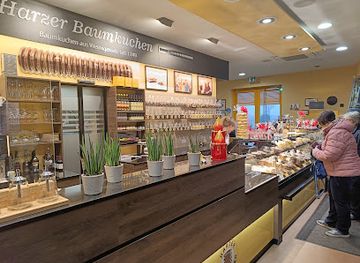
Harzer-Baumkuchen Baumkuchenhaus
Experience the unique flavors of traditional Baumkuchen in the heart of Wernigerode at Harzer-Baumkuchen Baumkuchenhaus, a sweet delight for every visitor.
-
Shopping mall
Nordharz Center
Experience shopping bliss at Nordharz Center in Blankenburg, where diverse stores, delightful dining, and family-friendly fun await.
-
Shopping mall
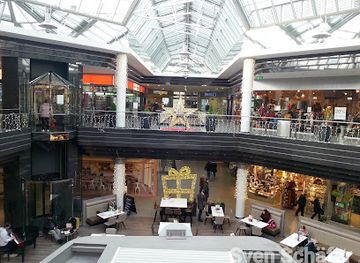
Südharz Galerie
Explore the Südharz Galerie, Nordhausen's premier shopping mall with diverse stores, dining options, and a vibrant atmosphere for an unforgettable experience.

Get your free copy of our complete guide to Harz, delivered straight to you.
Everything on this page, from attractions and restaurants to essentials and local phrases, in one PDF you can read offline, print or share.
Already have an account? Sign in
Your Harz guide is ready.
We'll send it to · Not you? Sign out

Getting your guide ready…
We are putting together a fresh copy of the Harz guide. This can take up to a minute.
This can take a few moments. If your browser asks, choose Allow so the download can start. You'll find the guide in your Downloads folder.
Nothing happened? Download it again
Sorry, the guide is taking longer than usual. Please try again in a minute, or get it by email instead.
Harz essentials
Currency and Payment
Safety
Emergency Situations
Do's and Don'ts
Local Tips
From Eve
Local phrases worth knowing
You don't need to get them perfect. A few words go a long way, and locals appreciate the effort.
Basics
| English | Local | Say it |
|---|---|---|
| Hello | Hallo | [Ha-lo] |
| Goodbye | Auf Wiedersehen | [Owf Veeder-zane] |
| Yes | Ja | [Yah] |
| No | Nein | [Nine] |
| Please/You're welcome | Bitte | [Bi-te] |
| Thank you | Danke | [Dahn-ke] |
| Excuse me/Sorry | Entschuldigung | [Ent-shool-dee-gung] |
| How are you? | Wie geht's? | [Vee gates?] |
| Fine. And you? | Gut. Und dir? | [Gooot. Oond deer?] |
| Do you speak English? | Sprechen Sie Englisch? | [Shpre-chen Zee Eng-lish?] |
| I don't understand | Ich verstehe nicht | [Ikh fer-shtay-eh nikht] |
Eating & Drinking
| English | Local | Say it |
|---|---|---|
| I'd like to see the menu, please | Ich hätte gerne die Speisekarte, bitte | [Ikh heh-teh geh-ner dee Spy-ze-kar-teh, bi-te] |
| I don't eat meat | Ich esse kein Fleisch | [Ikh es-se kайн FLYSH] |
| Cheers! | Prost! | [Prohst] |
| I would like to pay, please | Ich möchte bezahlen, bitte | [Ikh mer-chte be-zah-len, bi-te] |
Emergencies
| English | Local | Say it |
|---|---|---|
| Help! | Hilfe! | [Hil-fe] |
| Go away! | Geh weg! | [Gay vek] |
| Call the Police! | Rufen Sie die Polizei! | [Roo-fen Zee dee Po-lee-tsai] |
| Call a doctor! | Rufen Sie einen Arzt! | [Roo-fen Zee eye-nen Artzt] |
| I'm lost | Ich habe mich verlaufen | [Ikh ha-bee mikh fer-lau-fen] |
| I'm ill | Ich bin krank | [Ikh bin krangk] |
Shopping
| English | Local | Say it |
|---|---|---|
| I'd like to buy... | Ich möchte ... kaufen | [Ikh mer-chte ... kau-fen] |
| I'm just looking | Ich schaue nur | [Ikh shau-eh noor] |
| How much is it? | Wie viel kostet es? | [Vee feel kost-et es?] |
| That's too expensive | Das ist zu teuer | [Das ist tsoo toy-er] |
| Can you lower the price? | Könnten Sie den Preis senken? | [Kern-ten Zee den Prize sen-ken?] |
Time & Numbers
| English | Local | Say it |
|---|---|---|
| What time is it? | Wie spät ist es? | [Vee shpaht ist es?] |
| It's one o'clock | Es ist ein Uhr | [Es ist ine Oor] |
| Half past (10) | Halb nach (10) | [Halb nahkh (10)] |
| Morning | Morgen | [Mor-gen] |
| Afternoon | Nachmittag | [Nahkh-mit-tahg] |
| Evening | Abend | [Ah-bent] |
| Yesterday | Gestern | [Ges-tern] |
| Today | Heute | [Hoy-te] |
| Tomorrow | Morgen | [Mor-gen] |
| 1 | Eins | [Eyns] |
| 2 | Zwei | [Zvy] |
| 3 | Drei | [Dry] |
| 4 | Vier | [Veer] |
| 5 | Fünf | [Finf] |
| 6 | Sechs | [Zex] |
| 7 | Sieben | [Zee-ben] |
| 8 | Acht | [Acht] |
| 9 | Neun | [Noyn] |
| 10 | Zehn | [Tsen] |
Transport & Directions
| English | Local | Say it |
|---|---|---|
| Where's a/the...? | Wo ist ein/der ...? | [Vo ist ine/der ...?] |
| What's the address? | Wie lautet die Adresse? | [Vee lowt-et dee Ah-dres-se?] |
| Can you show me (on the map)? | Könnten Sie mir (auf der Karte) zeigen? | [Kern-ten Zee meer (owf der Kar-te) tsigh-en?] |
| When's the next (bus)? | Wann kommt der nächste (Bus)? | [Vahn kommt der nay-sh-te (Boos)?] |
| A ticket (to ....) | Ein Ticket (nach ...) | [Ayn Ti-ket (nahkh ...)] |
History of Harz
Early Settlement and Sacred Landscapes
People used the Harz and its surrounding foothills long before written records, exploiting forests, pasture, water and accessible mineral deposits. Archaeological evidence from the wider region includes prehistoric settlements, burial sites and traces of early metalworking, while later communities established routes through the valleys and around the mountain margins. The uplands were not an untouched wilderness: woodland clearance, grazing and small-scale extraction gradually shaped the landscape. Many later settlements grew where roads, streams and mineral resources met, creating the geographical foundations for the mining towns and market centres that followed.
Ottonian and Imperial Harz, Tenth to Eleventh Centuries
During the Ottonian and Salian periods, the Harz became an important centre of royal authority within the medieval German kingdom. Goslar developed near the rich Rammelsberg ore deposit and was associated with imperial residences, assemblies and the Imperial Palace. Quedlinburg also gained significance through its royal foundation and religious institutions. Control of mineral wealth, forests and strategic routes gave the region political importance beyond its mountainous setting. The surviving palaces, churches and town plans around the Harz reflect the close relationship between resource extraction, royal power and religious foundations.
Medieval Mining and Town Formation
From the Middle Ages, mining became the decisive economic force in much of the Harz. Silver, copper, lead and other ores attracted investment, technical expertise and migrant labour, while towns expanded around mines, smelters and trading routes. Water management became essential: ponds, channels and drainage works stored and directed water to power machinery and remove it from underground workings. The Upper Harz mining districts developed particularly complex systems. Their surviving shafts, waterworks, administrative buildings and historic townscapes explain why the Harz is among Germany’s most important industrial and mining heritage regions.
Reformation and Territorial Division
The sixteenth century brought religious and political change to the Harz, as many towns and territories adopted Protestant ideas while Catholic institutions remained influential in other areas. The mountains were divided among several princely states and ecclesiastical territories rather than governed as one unit. Mining continued to finance local rulers and communities, but the industry was subject to fluctuating metal prices, technical challenges and environmental pressures. The resulting mixture of confessions, jurisdictions and economic interests helped produce the varied architectural and cultural character visible between the northern, eastern and southern Harz.
Mining Expansion and Industrial Engineering
Mining intensified during the early modern and nineteenth-century periods, supported by improved drainage, pumping and transport. The Harz’s historic water management systems were expanded and adapted to serve mines more efficiently, while new roads and railways connected mountain settlements with industrial markets. Goslar, Clausthal-Zellerfeld and other centres acquired institutions, workshops and housing associated with mining administration and technical education. Although many mines eventually became uneconomic, their landscape legacy remains visible in spoil heaps, shafts, reservoirs, museums and engineered waterways.
The Rise of Mountain Tourism
From the nineteenth century, improved rail and road connections turned the Harz into a major destination for walkers, spa visitors and summer holidaymakers. Resorts such as Braunlage, Bad Harzburg and Bad Lauterberg developed accommodation and recreational infrastructure, while the Brocken became a celebrated destination for excursions and landscape views. Narrow-gauge railways helped link remote mountain settlements and continue to serve as a cultural feature of the region. Tourism did not replace the older mining identity but added a new economy based on scenery, health, outdoor activity and historic towns.
The Harz During German Division
After 1945, the Harz was divided between the British and Soviet occupation zones and later between West and East Germany. The Inner German border crossed the mountain region, restricting movement and separating communities, transport links and parts of the traditional tourist landscape. The Brocken became a highly controlled military and communications site in East Germany, inaccessible to ordinary visitors. Following reunification in 1990, border barriers were removed, routes reopened and conservation initiatives expanded, creating the cross-state Harz National Park and restoring access to places previously closed for decades.
Harz in Photos
Browse through our photo collection highlighting the charm and character of the destination.
Neighbouring regions of Harz
The closest regions to Harz, if you have time for more than one.
-

-

-

-

-


Swipe for more regions
Explore more

Explore more of Germany
Experience Germany: where history meets innovation, and urban energy blends with natural beauty. Discover diverse cultures, delicious cuisine, and stunning landscapes.
Explore Germany