
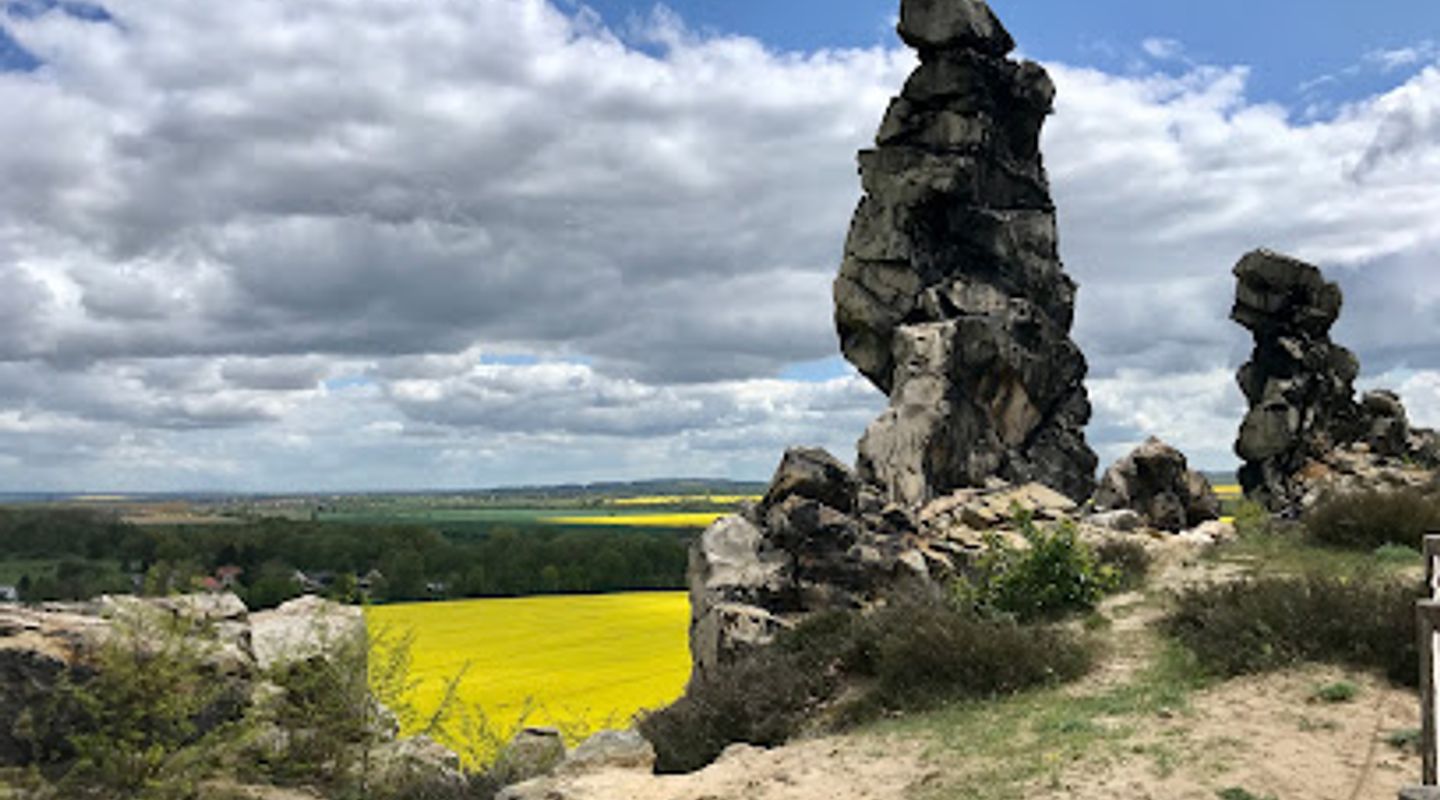
Teufelsmauer, Harz Travel Guide
Explore the Teufelsmauer, a legendary rock formation in the Harz Mountains, offering stunning views, rich history, and captivating legends for an unforgettable German adventure.
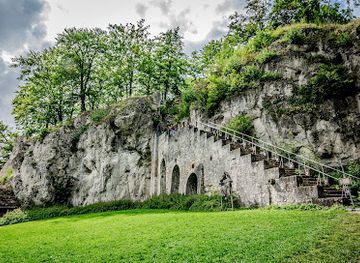
The Teufelsmauer, or Devil's Wall, is a striking rock formation stretching across the Harz Foreland in Germany. This natural monument, composed of hard sandstones, has captivated visitors for centuries with its unique geological features and the legends woven around its origin. Hiking trails wind along the Teufelsmauer, offering stunning views and a chance to explore the diverse landscape. Whether you're drawn to the area's rich history, the allure of its mythical past, or simply the beauty of its natural scenery, the Teufelsmauer promises an unforgettable experience. The most impressive part lies between Thale and Neinstedt, offering curious rock formations with special names because of their appearance. The climb on the Teufelsmauer requires surefootedness and a head for heights, but without being "alpine" or even dangerous.
A brief summary to Teufelsmauer
- Thale, 06502, DE
- Click to display
- Click to display

Know before you go
Hi, I'm Eve. Here are a few practical things to know before exploring Teufelsmauer.
- Wear sturdy shoes, as the trails can be uneven and rocky, especially if you plan to explore the ridge paths.
- Bring water and snacks, as there are limited facilities directly on the Teufelsmauer trails.
- Visit during the off-season or early mornings to avoid crowds, especially on weekends and holidays.
- Check the weather forecast before you go, as conditions can change quickly in the Harz Mountains.
- Combine your visit with other attractions in the Harz region, such as the nearby towns of Thale, Quedlinburg or Blankenburg.
Do you manage this location?
Take control to get all the benefits, like improved information, better appearance, and stronger visibility across AI-powered discovery. Learn more about listing your business on Evendo
Activate your presenceOther nearby places you may find interesting
The closest places of the same kind, if this one is not quite what you had in mind.

Explore Teufelsmauer on the Map
A handpicked selection of must-see spots near Teufelsmauer, mapped for you.
Getting There
-
Walking
From the Teufelsmauer parking area in Thale, a clearly marked trail, 'TEUFELS MAUER STIEG,' begins near a wooden gate. Follow this sandy path, ascending some wooden stairs, and passing the Teufelsmauergarten (a small public garden) to reach the Königstein section. The walk from the parking area to Königstein takes approximately 10-15 minutes. This is a straightforward and popular route.
-
Public Transport
From Quedlinburg, take bus line 251 towards Weddersleben. Get off at the 'Weddersleben, Teufelsmauer' stop. From there, it's a short walk to the Teufelsmauer. Bus fare is approximately €3-5. Alternatively, take a train from Quedlinburg to Neinstedt. From Neinstedt, you can walk to Teufelsmauer.
-
Driving
If driving, navigate to the parking area in Thale. From Thale, follow the signs towards Weddersleben. Once in Weddersleben, look for signs directing you to Teufelsmauer and the designated parking area. Parking is free.
Discover more about Teufelsmauer













Your all‑in‑one travel companion app
Explore expert travel guides, compare and book tours, experiences, hotels, and more—all from the palm of your hand. Download now for seamless trip planning wherever your wanderlust takes you.


Explore More of Harz
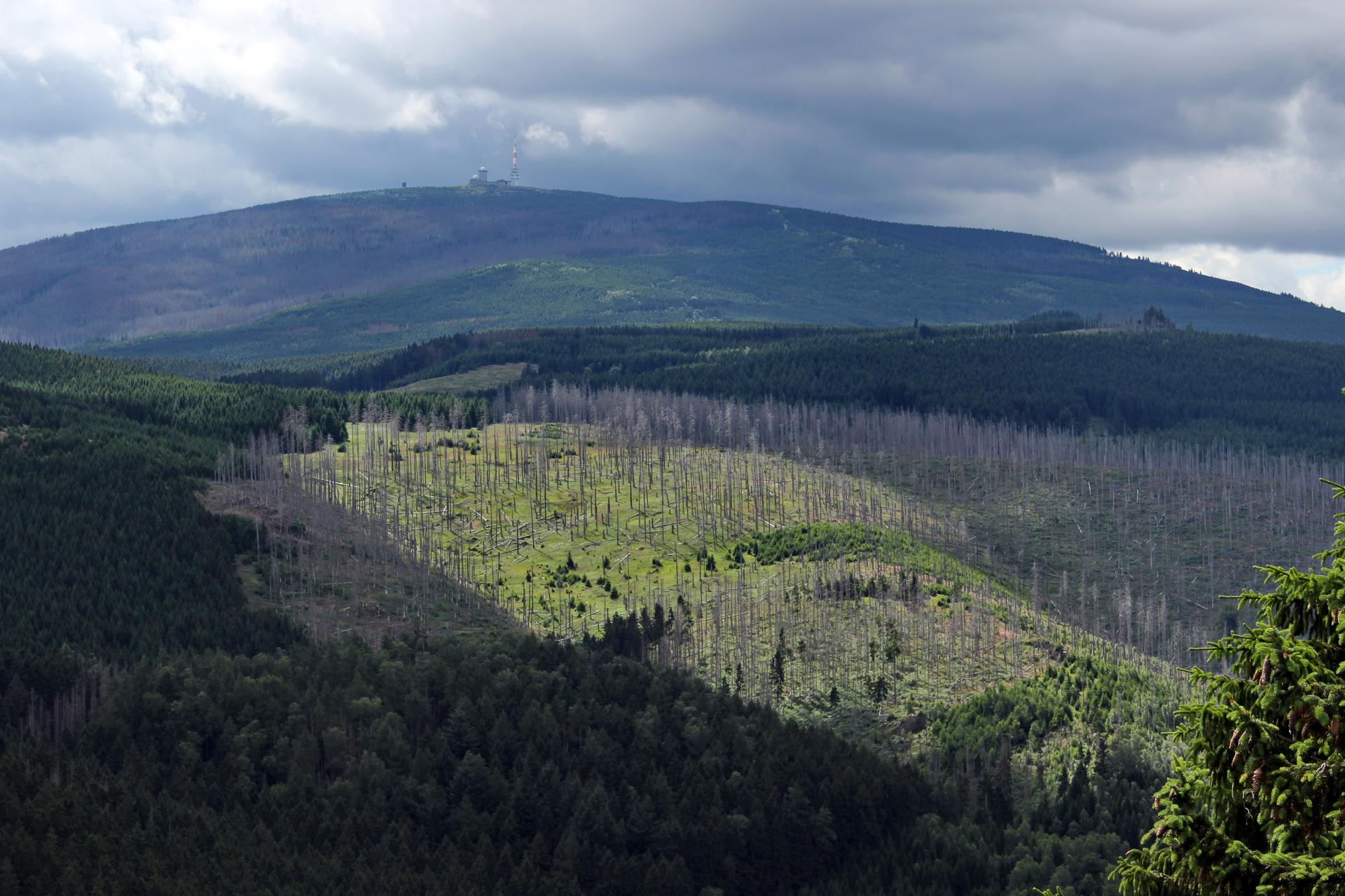
Looking beyond Teufelsmauer? Discover Harz for broader travel guides, local hot-spots, and regional highlights.
Explore Harz
Explore the breathtaking Anhaltinischer Saalstein in Quedlinburg, a scenic spot perfect for nature lovers and seekers of tranquility.

Explore the Harz region's captivating history and culture at the Harzeum museum in Thale, offering engaging exhibits, stunning mountain views, and a delightful journey through time.
