Background

Hessendenkmal: A Testament to History in Mainz-Finthen

Discover the Hessendenkmal in Mainz-Finthen, a historical landmark commemorating the Siege of Mainz in 1793 and the Hessian troops' role, offering a glimpse into the region's past.

4.3

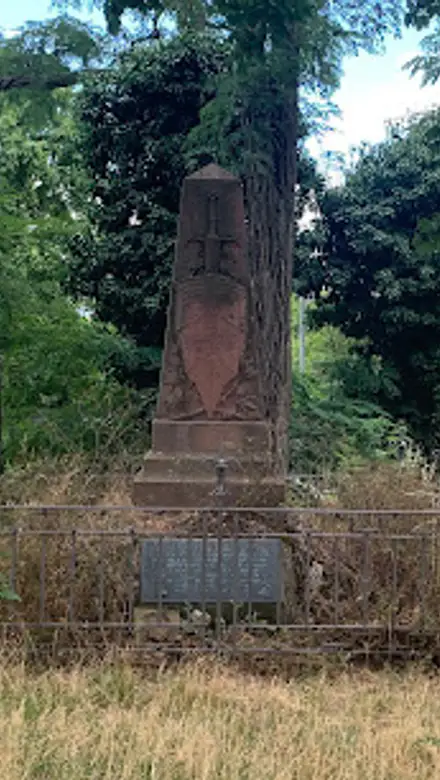
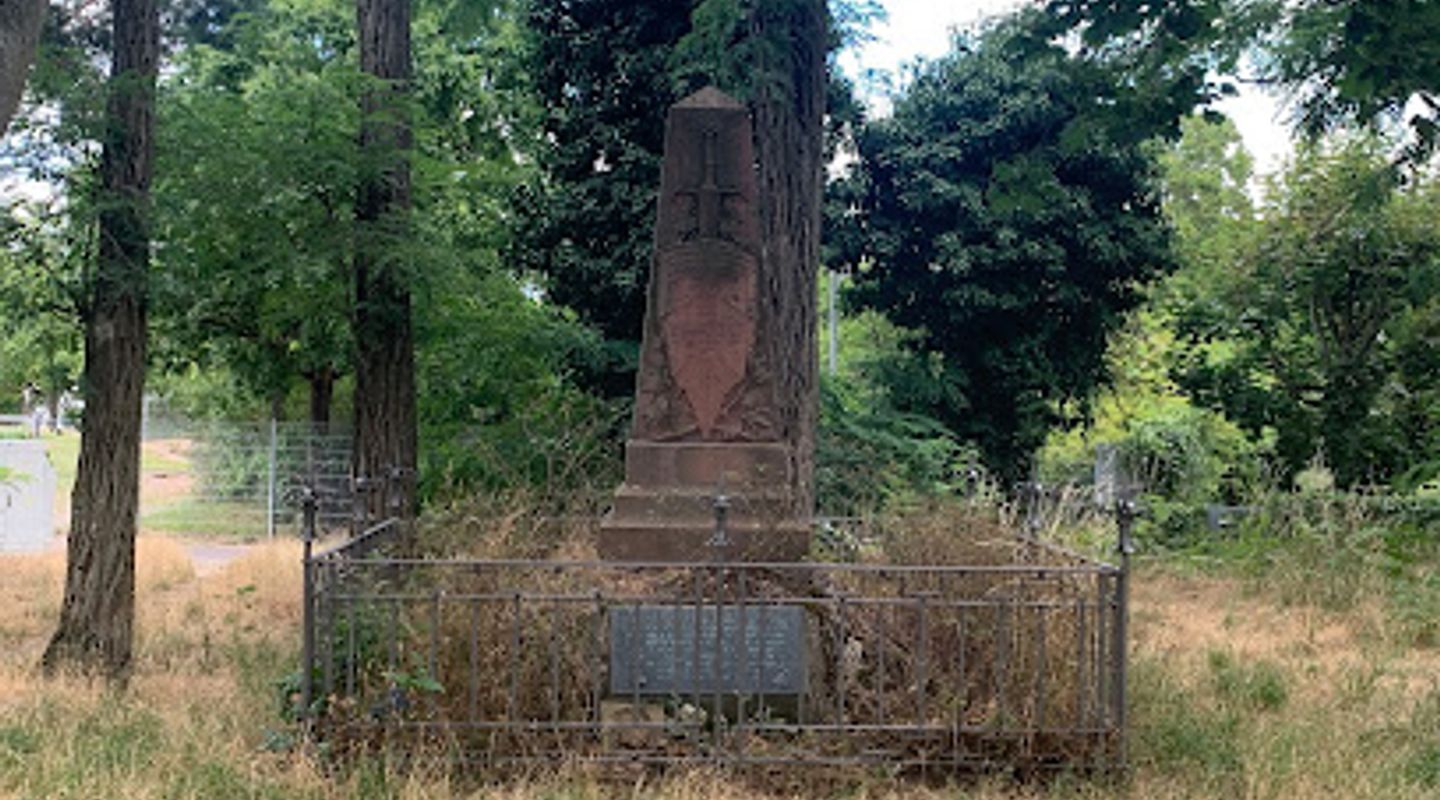
The Hessendenkmal, or Hessen Monument, in Mainz-Finthen, stands as a stoic reminder of the Siege of Mainz in 1793. Erected in 1858 by Grand Duke Ludwig III of Hesse-Darmstadt, the red sandstone obelisk commemorates his ancestor, Landgrave Ludwig X, and the Hessian troops' involvement in the siege. The monument marks the location where Landgrave Ludwig X had his encampment during the military action. Surrounded by a wrought-iron fence, the Hessendenkmal provides a tangible link to a pivotal moment in Mainz's past, bridging the gap between the modern cityscape and the historical events that shaped the region. A visit offers a moment of reflection on the shifting tides of power and the enduring legacy of those who participated in the siege. The monument is a reminder of the Mainzer Republic and the siege by allied German troops that led to the retreat of the French army.

A brief summary to Das Hessendenkmal

  • Sertoriusring, Mainz, 55126, DE

Local tips

  • Combine your visit with a walk through Finthen to experience local life.
  • Read about the Siege of Mainz and the Mainzer Republik before your visit to enhance your understanding.
  • Visit on a clear day to enjoy the peaceful atmosphere and surrounding views.
widget icon

Getting There

  • Public Transport

    From Mainz Hauptbahnhof (main train station), take bus line 56 towards Wackernheim or bus line 79 towards Finthen. Get off at the 'Finthen, am Hessendenkmal' stop, which is a short walk to the monument. A single bus fare is approximately €2.80.

  • Taxi/Ride-Share

    A taxi or ride-share from Mainz city center to the Hessendenkmal will cost approximately €15-€20, depending on traffic. The journey takes around 15-20 minutes.

  • Driving

    If driving, use Sertoriusring, 55126 Mainz as your destination. Limited free street parking is available near the monument. Be mindful of residential parking restrictions. Parking garages are not directly adjacent, but can be found in Finthen, a short walk away.

Unlock the Best of Das Hessendenkmal

Buy tickets

    No tickets available

Book tours with entry

    No tours available

Book tours without entry

    No tours available

Discover more about Das Hessendenkmal

Nestled in the Mainz suburb of Finthen, the Hessendenkmal, also known as the Hessenstein, offers a poignant glimpse into the region's complex history. This unassuming yet historically significant monument commemorates the Siege of Mainz in 1793, a pivotal event during the French Revolutionary Wars. Erected in 1858 by Grand Duke Ludwig III of Hesse-Darmstadt, the monument serves as a tribute to his ancestor, Landgrave Ludwig X, and the Hessian troops who played a crucial role in the siege. The monument itself is a stout obelisk crafted from red sandstone, resting upon a rugged base of broken stones. A shield adorned with a sword and oak leaves embellishes the front, bearing an inscription that references the Siege of Mainz. The original inscription, dating back to 1858, honors the location as the former campsite of Landgrave Ludwig X, later Grand Duke Ludwig I of Hesse and by Rhine, during the months of May, June, and July of the war year 1793. In 1993, on the 200th anniversary of the siege and the end of the Mainzer Republik, a commemorative plaque was added, acknowledging the siege of Mainz by allied German troops, which led to the retreat of the French occupying army. The location of the Hessendenkmal holds particular significance. It marks the spot where Landgrave Ludwig X established his encampment during the siege. From this vantage point, the Hessian troops participated in the encirclement of Mainz, contributing to the eventual withdrawal of the French forces. The monument, surrounded by an original wrought-iron fence restored in 2007, stands as a testament to the events that unfolded on this very ground. The historical backdrop to the Hessendenkmal is rich and multifaceted. In 1792, during the First Coalition War, French troops conquered and occupied the city and fortress of Mainz. The French occupation brought revolutionary ideas to Mainz, culminating in the establishment of the Mainzer Republik, an early attempt to establish a democratic state on German soil. However, this experiment was short-lived. In April 1793, allied German troops besieged Mainz, leading to its bombardment and eventual liberation from French control. The siege ended on July 22, 1793, with the withdrawal of the French army, marking the end of the Mainzer Republik. Visiting the Hessendenkmal offers a unique opportunity to connect with this complex history. While the monument itself is relatively simple, its significance lies in its connection to the events that shaped Mainz and the surrounding region. Standing before the obelisk, one can reflect on the shifting tides of power, the clash of ideologies, and the enduring legacy of those who participated in the siege. Beyond its historical significance, the Hessendenkmal also provides a tranquil escape from the hustle and bustle of modern life. Situated on the edge of Sertoriusring, the monument offers a peaceful setting for contemplation and reflection. The surrounding area, once a remote pine forest, has transformed into a residential neighborhood, yet the Hessendenkmal retains its sense of historical gravitas. To fully appreciate the Hessendenkmal, it is helpful to understand the broader context of the Siege of Mainz and the Mainzer Republik. This period in Mainz's history was marked by revolutionary fervor, political upheaval, and military conflict. The establishment of the Mainzer Republik, though brief, represented a bold attempt to embrace democratic ideals and challenge the established order. The siege of Mainz, in turn, underscored the fragility of this experiment and the enduring power of traditional forces. The Hessendenkmal serves as a reminder of this tumultuous period, inviting visitors to consider the complexities of history and the enduring relevance of the past. Whether you are a history enthusiast, a student of political science, or simply a traveler seeking a moment of reflection, the Hessendenkmal offers a unique and enriching experience. While in Finthen, consider exploring other attractions in the area. The suburb offers a mix of residential neighborhoods, green spaces, and local shops and restaurants. Take a stroll through the streets, sample local cuisine, and immerse yourself in the community atmosphere. Finthen provides a glimpse into everyday life in Mainz, offering a contrast to the city's more well-known tourist destinations. The Hessendenkmal, though often overlooked, stands as a powerful symbol of Mainz's rich and complex history. Its presence in Finthen serves as a reminder of the events that shaped the region and the enduring legacy of those who lived through them. A visit to this unassuming monument offers a unique opportunity to connect with the past and reflect on the forces that have shaped the present.

Popular Experiences near Das Hessendenkmal

Popular Hotels near Das Hessendenkmal

Select Currency