

Plön Castle Travel Guide
Free Guide: Discover Plön Castle, a majestic Renaissance landmark in Schleswig-Holstein, offering stunning lakeside views and a rich history as a ducal residence, royal retreat, and modern academy.


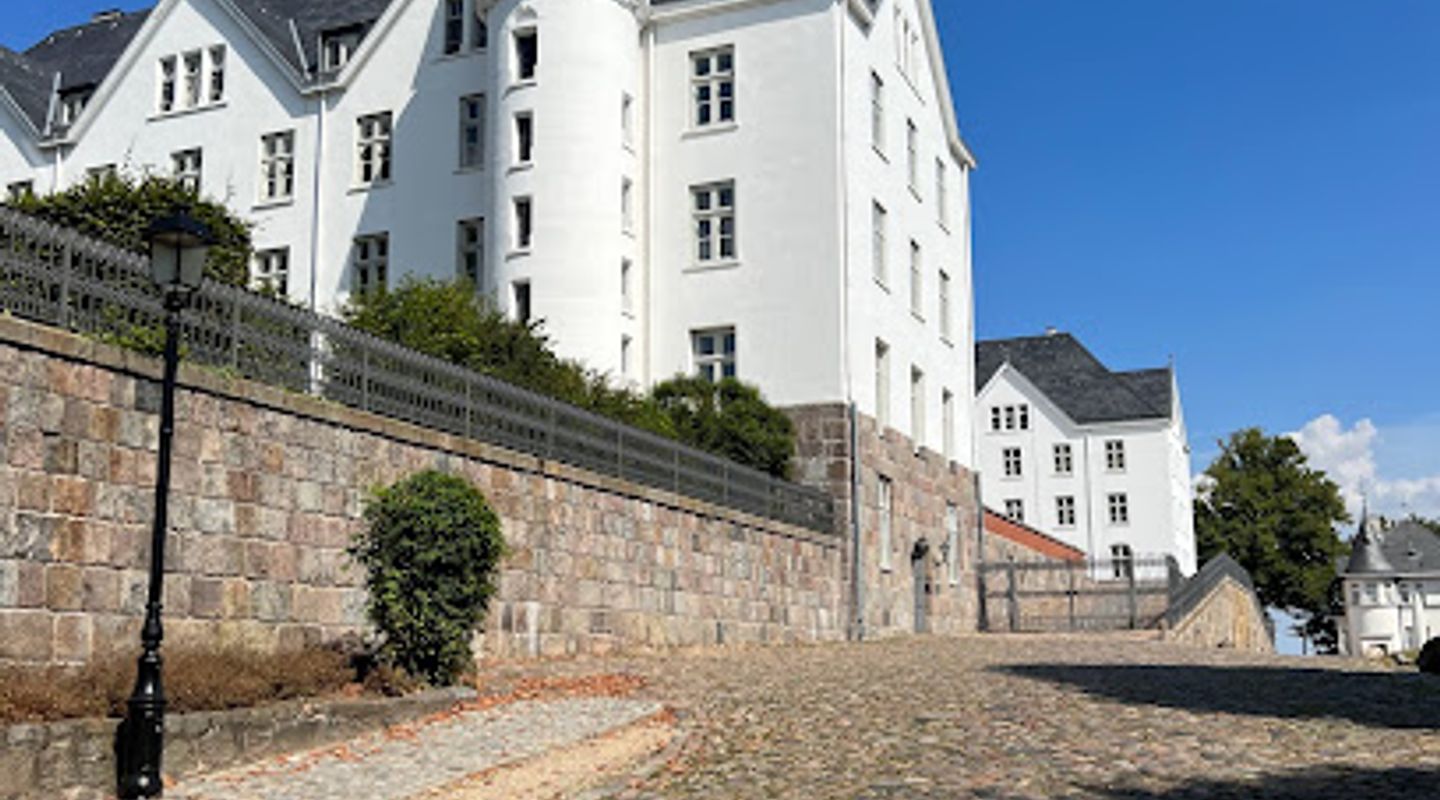
A brief summary of Plön Castle
Discover Plön Castle, a majestic Renaissance landmark in Schleswig-Holstein, offering stunning lakeside views and a rich history as a ducal residence, royal retreat, and modern academy.
Plön Castle, perched majestically on a hill overlooking the Großer Plöner See, is one of Schleswig-Holstein's largest and most historically significant castles. Built in the 17th century during the Thirty Years' War, this Renaissance-style castle has served as a ducal residence, a Danish royal summer retreat, a military academy, and a boarding school. Today, it houses the Fielmann Academy, an optometry training center, and welcomes visitors to explore its grounds and learn about its rich past. The castle offers panoramic views of the surrounding lakes and town, making it a must-see destination for history buffs and nature lovers alike. Explore the castle gardens, wander through the charming Old Town of Plön, and discover the natural beauty of the Holstein Switzerland region.
Opening hours
- MonClosed
- TueClosed
- WedClosed
- ThuClosed
- FriClosed
- Sat4 pm–7 pm
- Sun4 pm–7 pm
Opening hours as listed on the venue’s Google Business Profile. Hours can change for services and special events, so check with the venue before you go.
- Address
- Schloßgebiet 91, 24306 Plön
- Phone
- Website
Getting there
Walking
Public Transport
Taxi/Ride-Share
Driving
Discover more about Plön Castle
Overview
Plön Castle, or Schloss Plön in German, stands as a proud landmark in the heart of Schleswig-Holstein. Rising above the town of Plön and overlooking the shimmering Großer Plöner See, the castle's imposing silhouette is a captivating sight. Its history stretches back centuries, evolving from a Slavic fortress to the grand Renaissance structure that graces the landscape today. Originally, a Wendish defensive fortification called Plune occupied the island of Olsborg in Lake Plön during the 10th century. This early stronghold was destroyed in 1158, leading to the construction of a new castle on Bischofsberg, the present site of Plön Castle. Over the years, the castle underwent numerous transformations, reflecting the changing fortunes and ambitions of its occupants. The castle's current form took shape in the 17th century when Duke Joachim Ernst of Schleswig-Holstein-Plön commissioned its construction during the tumultuous Thirty Years' War. Completed in just three years, the new castle served as the residence for the ducal family. Although Plön Castle never achieved the political prominence of Gottorf Castle, it became a significant cultural center, boasting an impressive library and a collection of scientific instruments. Under the reign of Duke Frederick Charles, the last of the Plön line, the castle experienced a cultural renaissance in the 18th century. The interior was lavishly redesigned in the Rococo style, and new buildings, including the Marstall (stable), Reithaus (riding house), and Prinzenhaus (Prince's House), were added to the complex. Following the death of Frederick Charles without a male heir in 1761, the castle's ownership reverted to the Danish royal house. For a time, it served as a residence for the mentally deranged son of Frederick Augustus I of Oldenburg. In 1840, Plön Castle became the official summer residence of King Christian VIII of Denmark, who renovated the castle in a Neoclassical style. After the Second Schleswig War in 1864, the castle fell into Prussian hands and was transformed into a military school for cadets. The sons of German Emperor William II were educated here in the late 19th century, and the Prinzenhaus was expanded to accommodate them. In the 20th century, Plön Castle served various purposes, including a state educational institution and a National Political Institute under the Nazi regime. It survived both World Wars without significant damage and was briefly used as headquarters for British occupation troops after World War II. In 2002, the Fielmann Academy acquired Plön Castle and meticulously converted it into a training and qualification center for optometry. While preserving the castle's historical character, the academy has opened its doors to visitors, offering guided tours and access to the castle grounds. Today, Plön Castle stands as a testament to the region's rich history and architectural heritage. Visitors can explore the castle gardens, admire the panoramic views of the Großer Plöner See, and delve into the castle's fascinating past. The castle also hosts cultural events and exhibitions, making it a vibrant center of activity. Beyond the castle itself, Plön offers a wealth of attractions for visitors to enjoy. The charming Old Town features narrow cobblestone streets, historic buildings, and the beautiful Nikolaikirche (St. Nicholas Church). The Großer Plöner See, the largest lake in Schleswig-Holstein, provides opportunities for swimming, sailing, boat tours, and other water activities. The surrounding Holstein Switzerland region is a paradise for hikers and cyclists, with its rolling hills, lush forests, and picturesque lakes. Plön is easily accessible by train, with regular connections to Kiel and Lübeck. The town is also well-connected by road, with ample parking available near the castle. Whether you're interested in history, nature, or simply relaxing by the lake, Plön offers a memorable experience for all.
Evendo Review Centre
 Google
Guest reviews
Explore Plön Castle on the map
A handpicked selection of must-see spots near Plön Castle, mapped for you.
Get your free copy of our complete guide to Plön Castle, delivered straight to you.
Everything on this page, from opening hours and how to get there to Eve’s tips and the best time to go, in one PDF you can read offline, print or share.
Already have an account? Sign in
Your Plön Castle guide is ready.
We'll send it to · Not you? Sign out

Getting your guide ready…
We are putting together a fresh copy of the Plön Castle guide. This can take up to a minute.
This can take a few moments. If your browser asks, choose Allow so the download can start. You'll find the guide in your Downloads folder.
Nothing happened? Download it again
Sorry, the guide is taking longer than usual. Please try again in a minute, or get it by email instead.
Other nearby places you may find interesting
The closest places of the same kind, if this one is not quite what you had in mind.
-
-
-
-
-


Swipe for more places
More to explore near Plön Castle

 Best experiences near Plön Castle
 Best hotels near Plön Castle
 Best landmarks near Plön Castle
 Best attractions near Plön Castle
 Best shops near Plön Castle
 Best restaurants near Plön Castle
 Best bars near Plön Castle
Do you manage this location?
Take control to get all the benefits, like improved information, better appearance, and stronger visibility across AI-powered discovery.
Explore more

Explore more of Holstein
Discover Holstein in Northern Germany: A Blend of Natural Beauty, Rich History, and Culinary Delights Await You.
Explore Holstein
Explore more of Germany
Experience Germany: where history meets innovation, and urban energy blends with natural beauty. Discover diverse cultures, delicious cuisine, and stunning landscapes.
Explore Germany
