Background

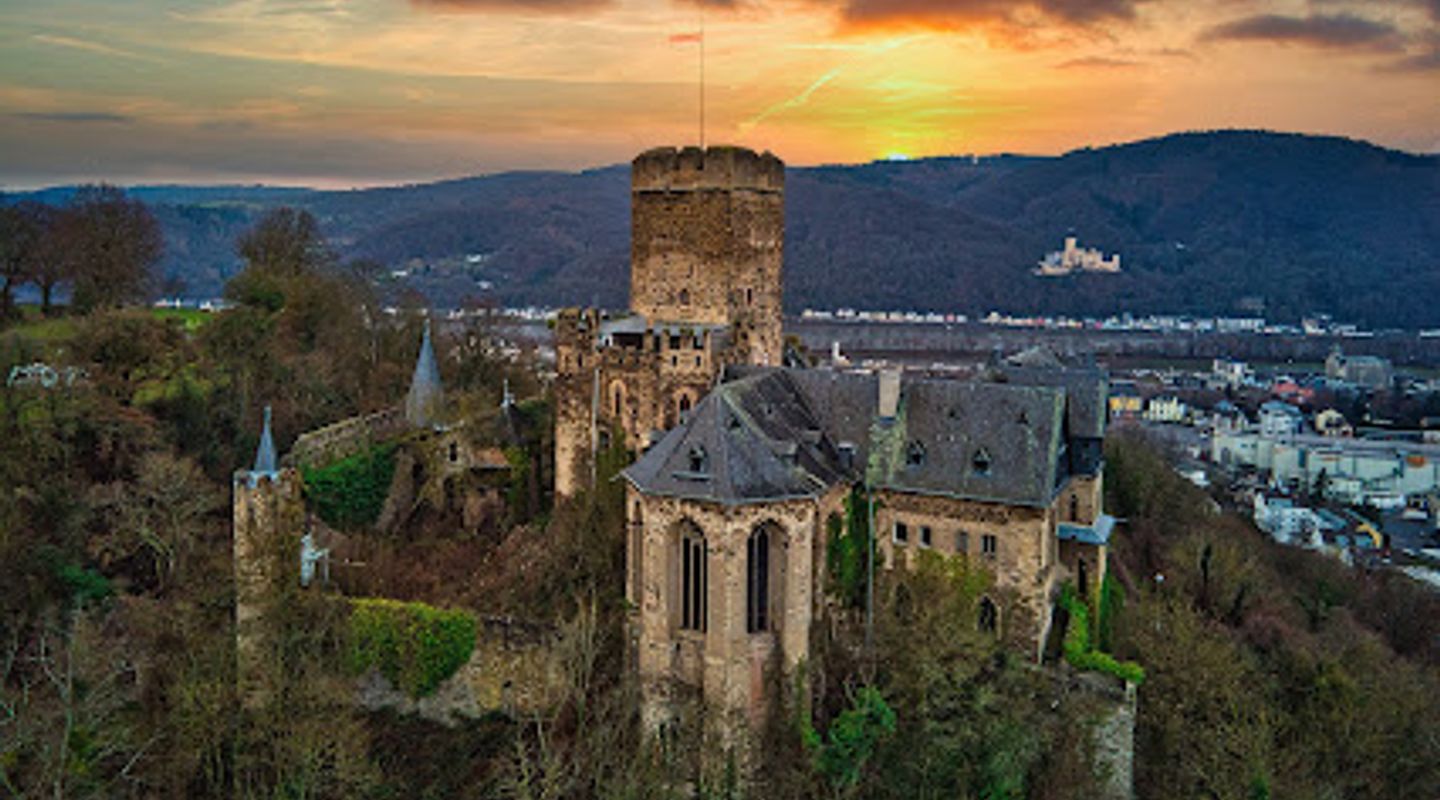
Burg Lahneck: A Rhine Valley Jewel

Discover Burg Lahneck, a majestic medieval castle overlooking the Rhine and Lahn rivers, steeped in history, legends, and offering breathtaking panoramic views.

4.3

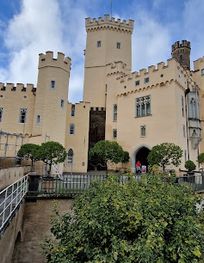
Perched high above the confluence of the Lahn and Rhine rivers, Burg Lahneck is a captivating medieval castle offering stunning views and a rich tapestry of history and legend. Built in the 13th century by Archbishop Siegfried III of Eppstein, it served to protect the archbishopric's territory and nearby silver mines. Over the centuries, the castle has witnessed battles, sieges, and the rise and fall of empires. Legends abound, including tales of the last Knights Templar seeking refuge within its walls and the tragic story of Idilia Dubb, a Scottish girl who met her untimely demise within the castle's keep. Today, Burg Lahneck stands as a testament to the region's storied past, drawing visitors with its well-preserved architecture, intriguing history, and panoramic vistas. Explore its chapel, knights' hall, and climb the pentagonal keep for an unforgettable experience of Rhine Romanticism. Guided tours reveal the castle's secrets, while the adjacent restaurant offers regional specialties with breathtaking views.

A brief summary to Burg Lahneck

Local tips

  • Wear comfortable shoes for climbing the steep pathways and stairs within the castle.
  • Check the opening hours in advance, especially if visiting outside the peak summer season.
  • Combine your visit with a Rhine River cruise for a unique perspective of the castle and surrounding landscape.
  • Allow at least 2-3 hours to fully explore the castle and enjoy the views.
  • Enjoy a meal at the Burgrestaurant Lahneck for regional cuisine and stunning views.
widget icon

Getting There

  • Walking

    From the Lahnstein town center or the Oberlahnstein train station, follow the signs towards Burg Lahneck. The walk is uphill and takes approximately 20-30 minutes. The path leads through residential streets and then a wooded area before arriving at the castle entrance. Be prepared for a moderately steep climb.

  • Public Transport

    Take bus line 513 from Lahnstein Niederlahnstein Im Lag Nord to Lahnstein Friedland Hinter Lahneck. Check local transit schedules for the most up-to-date information. From the bus stop, it's a short walk to the castle.

  • Taxi/Ride-Share

    A taxi or ride-share from Lahnstein to Burg Lahneck will take approximately 10 minutes and cost around €10-€15. Specify 'Burg Lahneck' as your destination. Note that availability may be limited, especially during off-peak hours.

Unlock the Best of Burg Lahneck

Buy tickets

    No tickets available

Book tours with entry

    No tours available

Book tours without entry

    No tours available

Discover more about Burg Lahneck

Burg Lahneck, a majestic medieval fortress, stands proudly overlooking the point where the Lahn River meets the Rhine, near the town of Lahnstein. Its strategic location has made it a silent witness to centuries of history, its stones echoing with tales of battles, legends, and the ebb and flow of power in the Rhine Valley. Constructed in 1226 by Archbishop Siegfried III of Eppstein of Mainz, Burg Lahneck was initially built to safeguard the Archbishopric's territory and protect the lucrative silver mines in the vicinity. The castle's design, featuring an oblong rectangle, is typical of the Hohenstaufen era, while its pentagonal bergfried (keep) is a rare architectural feature for castles of this period. The castle chapel, dedicated to Saint Ulrich of Augsburg, was consecrated in 1245, marking an important milestone in the castle's early history. Throughout its existence, Burg Lahneck has been at the center of numerous historical events. In 1298, King Adolf of Nassau visited the castle shortly before his death in the Battle of Göllheim against King Albert I of Habsburg. In 1309, the castle was stormed by King Albert I of Habsburg after the Burgrave of Lahneck, Friedrich Schilling of Lahnstein, participated in a conspiracy against him. Schilling was executed for his involvement. One of the most enduring legends associated with Burg Lahneck involves the Knights Templar. According to the tale, when Pope Clement V ordered the dissolution of the Knights Templar in 1312, the last twelve Templars sought refuge within the castle walls. They swore an oath never to leave the castle alive and perished in a heroic last stand against the forces of Archbishop Peter of Aspelt of Mainz. This legend adds an air of mystery and intrigue to the castle's already rich history. In 1475, Archbishop Theodoric of Isenburg-Büdingen reinforced the castle with two outer walls following a conflict with his rival archbishop, Adolph II of Nassau. However, despite these fortifications, Burg Lahneck suffered significant damage during the Thirty Years' War in 1633 at the hands of Swedish and Imperial troops. The castle was attacked again in 1662, and by 1688, it lay in ruins. The castle's romantic appeal has also made it a source of inspiration for artists and writers. On July 18, 1774, Johann Wolfgang von Goethe, the renowned German poet, penned his poem "Geistesgruß" (Ghost's Greeting) after being captivated by the sight of Burg Lahneck during his travels along the Lahn River. The poem reflects the castle's haunting beauty and its connection to the region's history and legends. The tragic story of Idilia Dubb, a young Scottish girl, further cemented Burg Lahneck's place in popular imagination. In June 1851, Idilia, who was vacationing in the area with her family, disappeared while sketching the Rhine River valley. A lengthy search proved fruitless, and her parents returned to Scotland heartbroken. Nearly a decade later, in 1860, workers restoring the wooden stairwell in the castle's keep discovered Idilia's skeleton. It was determined that she had climbed to the top of the keep, and the stairwell had collapsed behind her, trapping her. She kept a diary recounting her final days, including desperate pleas for help that went unheard. The discovery of her remains and the poignant details of her diary entry made her story famous. Between 1852 and 1937, Burg Lahneck underwent extensive restoration in the English Gothic style. Since 1850, the castle has been privately owned and has been carefully maintained to preserve its historical character. Today, visitors can explore the castle's interior, including the chapel, knights' hall, and climb the pentagonal keep for panoramic views of the Rhine and Lahn valleys. Guided tours offer insights into the castle's history and legends, bringing its stories to life. Beyond its historical and architectural significance, Burg Lahneck offers a unique experience of Rhine Romanticism. The castle's location, perched high above the river confluence, provides breathtaking views of the surrounding landscape. The combination of medieval architecture and neo-Gothic additions creates a visually stunning landmark that embodies the romantic spirit of the Rhine Valley. Visitors can also enjoy the culinary offerings at the Burgrestaurant Lahneck, located just outside the castle walls. The restaurant serves regional and classic specialties, as well as homemade cakes, in a cozy tavern setting with a terrace overlooking the Rhine and Lahn valleys. Burg Lahneck is easily accessible from nearby towns and cities, making it a popular destination for day trips and longer stays. Whether arriving by car, train, or boat, visitors will be rewarded with an unforgettable experience of history, legend, and natural beauty. Visiting Burg Lahneck is more than just a sightseeing trip; it's a journey through time, a chance to connect with the past, and an opportunity to appreciate the beauty and romance of the Rhine Valley. From its strategic origins to its captivating legends and stunning views, Burg Lahneck offers a unique and enriching experience for all who visit. The castle is open to the public from April to November, except on Mondays. Admission fees are €12 for adults and €6 for children up to 14 years old. Guided tours are available and last approximately 40 minutes. Whether you're a history buff, a lover of legends, or simply seeking breathtaking views, Burg Lahneck is a must-see destination in the Rhine Valley. Its rich history, stunning architecture, and captivating stories will leave a lasting impression on all who visit.

Popular Experiences near Burg Lahneck

Popular Hotels near Burg Lahneck

Select Currency