Salzspeicher, Lubeck Travel Guide
Explore Lübeck's historic Salzspeicher, six brick buildings that once stored salt, the 'white gold' that fueled the city's Hanseatic League dominance and Baltic trade.
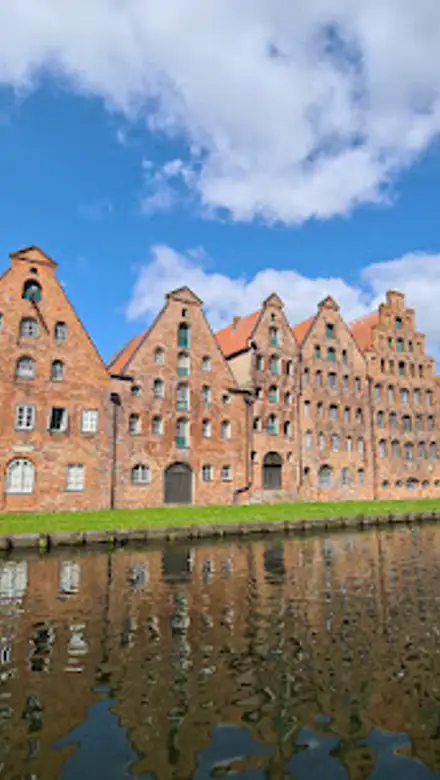
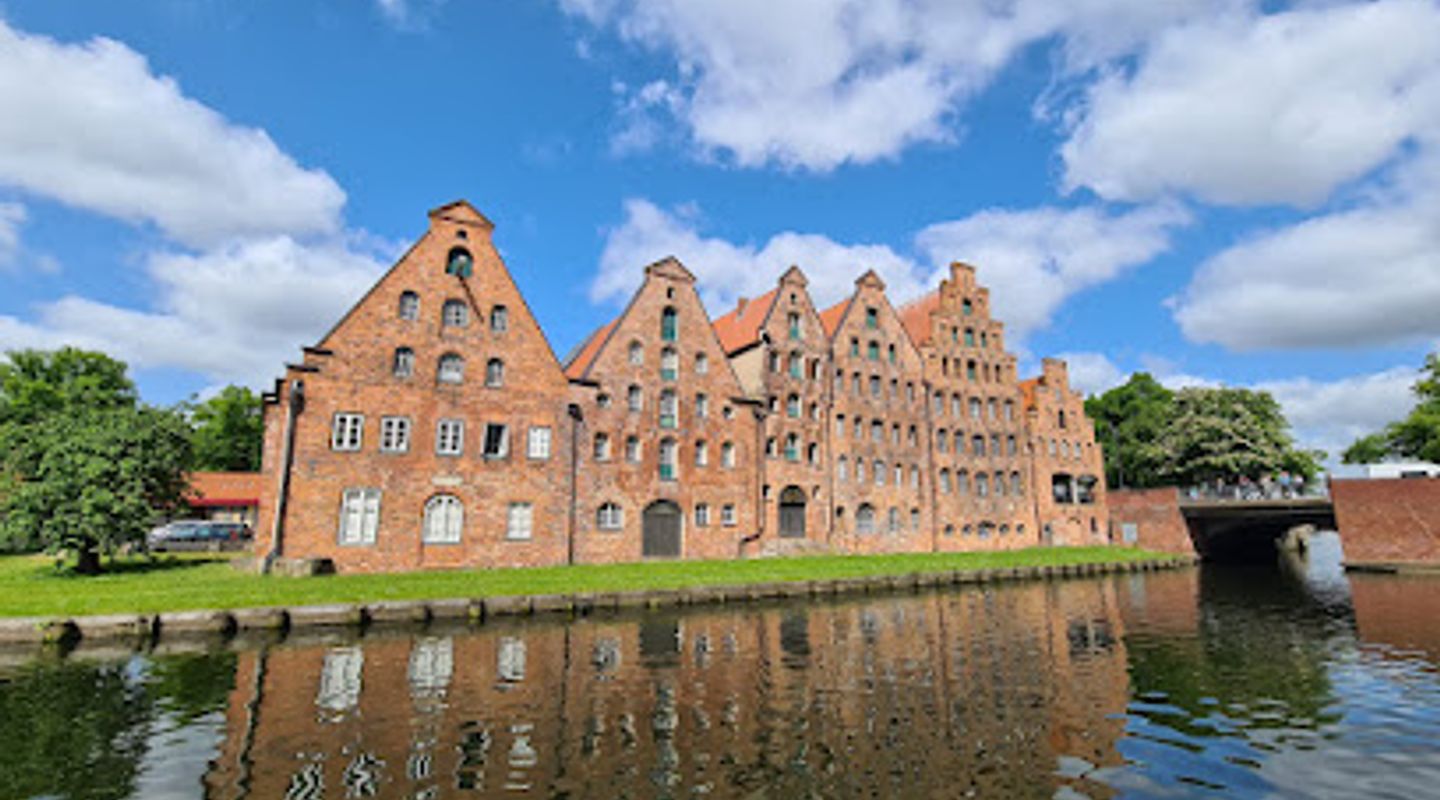
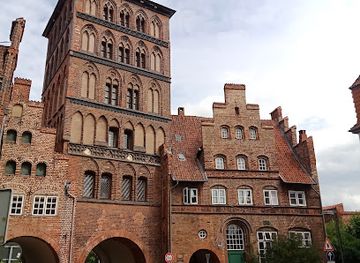
The Salzspeicher, or salt storehouses, of Lübeck are a striking row of six historic brick buildings that stand as testaments to the city's Hanseatic past. Built between the 16th and 18th centuries, these structures once held the precious salt that fueled Lübeck's trade empire. Mined in Lüneburg, the salt arrived via the Stecknitz Canal and was then shipped throughout the Baltic region, preserving food and building fortunes. Today, the Salzspeicher are a protected landmark, their gabled facades a reminder of Lübeck's rich history and architectural heritage. Located near the iconic Holstentor, they are easily accessible and offer a glimpse into the city's prosperous past, now housing shops and businesses.
A brief summary to Salzspeicher
- Wallstraße 1, Lübeck, Lübecker Altstadt, 23560, DE
- Click to display
- Click to display
- Tuesday 10 am-5 pm
- Wednesday 10 am-5 pm
- Thursday 10 am-5 pm
- Friday 10 am-5 pm
- Saturday 10 am-5 pm
- Sunday 10 am-5 pm

Know before you go
Hi, I'm Eve. Here are a few practical things to know before exploring Salzspeicher.
- Visit during the early morning or late afternoon for the best light for photographing the Salzspeicher, especially with the Holstentor in the background.
- Combine your visit to the Salzspeicher with a walk along the Trave River for scenic views of Lübeck's Old Town.
- Explore the shops and cafes housed within the Salzspeicher to experience the blend of history and modern life.
Do you manage this location?
Take control to get all the benefits, like improved information, better appearance, and stronger visibility across AI-powered discovery. Learn more about listing your business on Evendo
Activate your presenceOther nearby places you may find interesting
The closest places of the same kind, if this one is not quite what you had in mind.


Explore Salzspeicher on the Map
A handpicked selection of must-see spots near Salzspeicher, mapped for you.
Unlock the Best of Salzspeicher
Buy tickets
-
No tickets available
Book tours with entry


Getting There
-
Walking
From Lübeck Hauptbahnhof (main train station), the Salzspeicher is approximately a 15-20 minute walk. Exit the station and head towards the Holstentor, Lübeck's iconic city gate. Pass through the Holstentor, and the Salzspeicher will be immediately on your right, lining the Trave River. The walk is straightforward and well-signposted.
-
Public Transport
From Lübeck Hauptbahnhof, take any bus heading towards the city center (Altstadt). Several bus lines stop near the Holstentor, including lines 1, 4, 5, 6, 9, 10, 11, 12, 15, 16, 30, 31, 32, 39 and 40. Get off at the 'Holstentorplatz' stop. From there, the Salzspeicher are a short walk across the Holstenbrücke (bridge). A single bus fare is approximately €2-3. Tickets can be purchased from the bus driver or via the Stadtverkehr Lübeck mobile app.
-
Taxi/Ride-Share
A taxi or ride-share from Lübeck Hauptbahnhof to the Salzspeicher takes approximately 5-10 minutes, depending on traffic. The cost is typically between €11-€15. Taxis are readily available at the train station.
-
Driving
If driving, parking is available in several garages near the Old Town, including the 'Am Holstentor' parking garage and the 'Haerder Center' parking garage. From either garage, it's a short walk to the Salzspeicher. Parking fees typically range from €2-3 per hour, with a day ticket costing around €6 at selected car parks. Be aware that parking in the immediate vicinity of the Holstentor can be limited, especially during peak tourist season.
Discover more about Salzspeicher













Your all‑in‑one travel companion app
Explore expert travel guides, compare and book tours, experiences, hotels, and more—all from the palm of your hand. Download now for seamless trip planning wherever your wanderlust takes you.


Explore More of Lubeck
Looking beyond Salzspeicher? Discover Lubeck for broader travel guides, local hot-spots, and regional highlights.
Explore Lubeck
Discover the Bismarckdenkmal in Lübeck, a historical landmark celebrating the legacy of Otto von Bismarck amidst serene gardens, offering a glimpse into Germany's past.

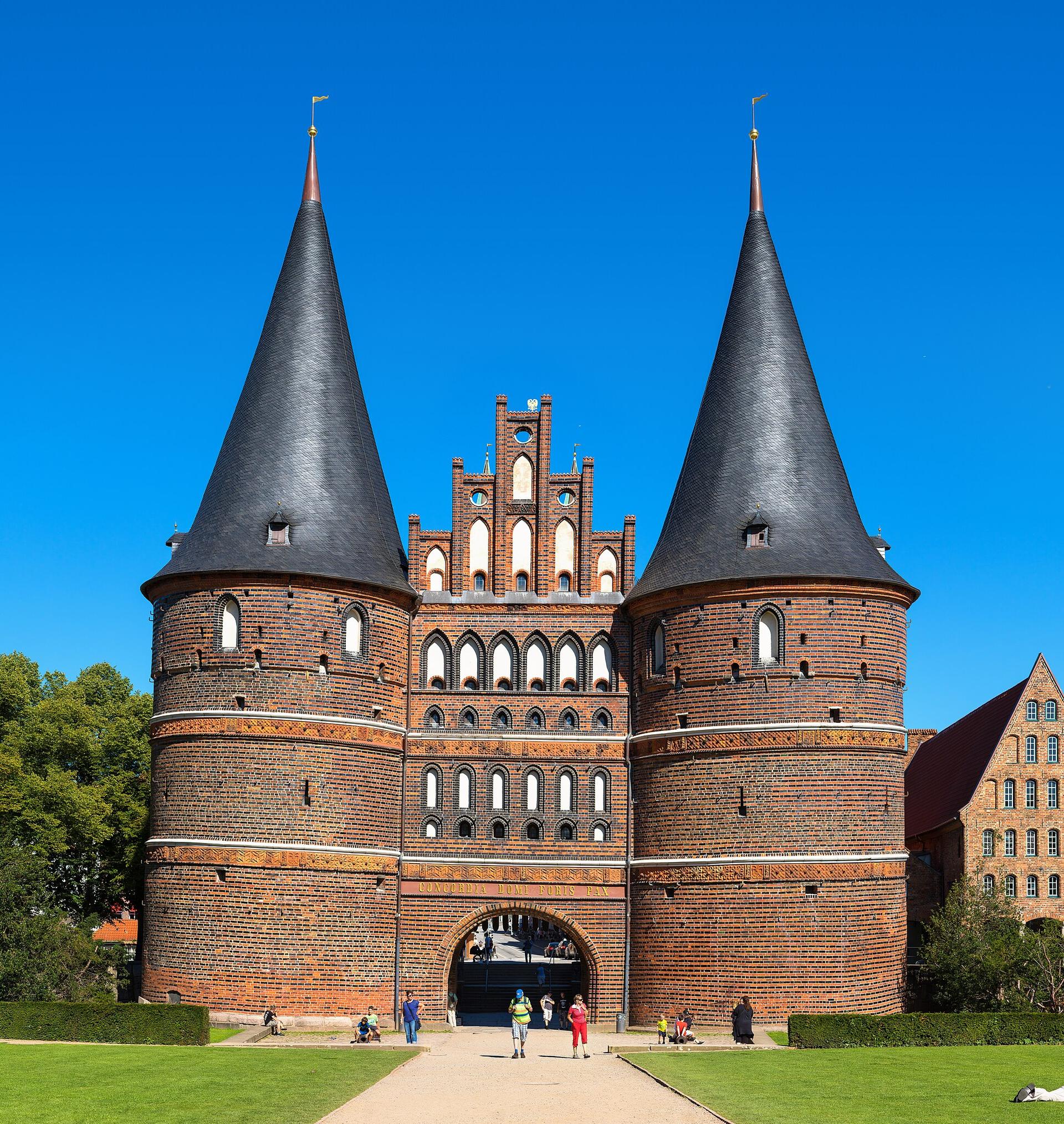
Discover Lübeck's captivating history at the Museum Holstentor, an iconic landmark showcasing the city's Hanseatic heritage, architectural grandeur, and enduring legacy.