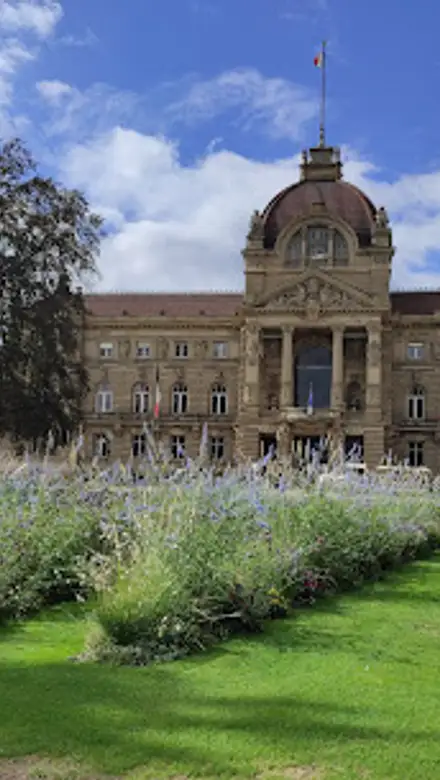
Palais du Rhin Travel Guide
Free Guide: Discover the Palais du Rhin in Strasbourg: a majestic former imperial palace showcasing neo-Renaissance architecture and a rich Franco-German history on Place de la République.


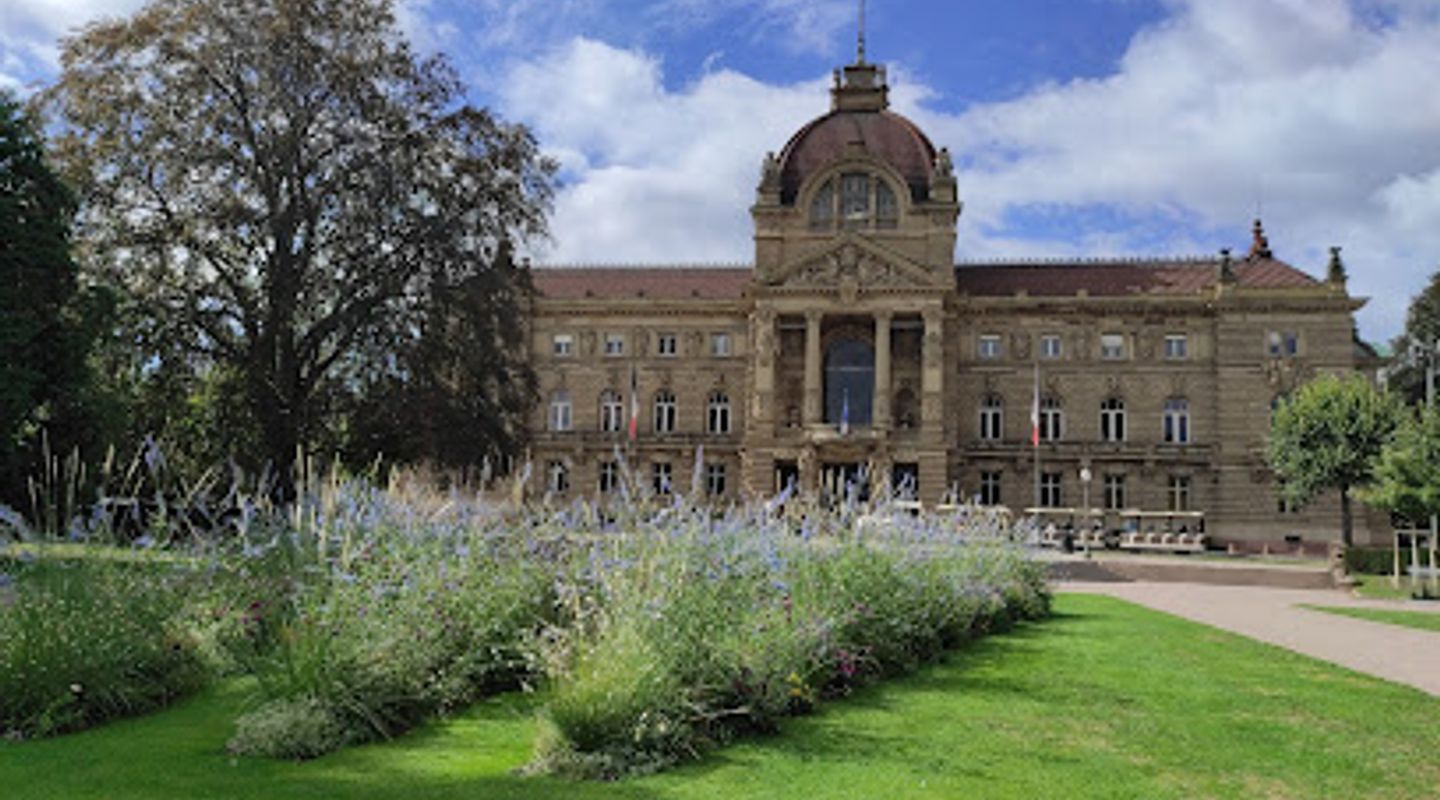
A brief summary of Palais du Rhin
Discover the Palais du Rhin in Strasbourg: a majestic former imperial palace showcasing neo-Renaissance architecture and a rich Franco-German history on Place de la République.
The Palais du Rhin, a former imperial palace in Strasbourg's Neustadt district, stands as a powerful symbol of the city's complex history. Built during the German annexation of Alsace-Lorraine, it showcases imposing neo-Renaissance architecture intended to project imperial strength. Today, it houses government offices and hosts occasional cultural events. Visitors can admire its grand facade, explore the surrounding gardens, and reflect on the layers of history embedded in this impressive landmark. Its location on Place de la République makes it easily accessible and a focal point for exploring the city's German-era architecture. While interior access may be limited, the Palais du Rhin remains a compelling site for those interested in Strasbourg's unique Franco-German heritage.
Opening hours
- Mon9 am–12 pm, 2 pm–5 pm
- Tue9 am–12 pm, 2 pm–5 pm
- Wed9 am–12 pm, 2 pm–5 pm
- Thu9 am–12 pm, 2 pm–5 pm
- Fri9 am–12 pm, 2 pm–4 pm
- SatClosed
- SunClosed
Opening hours as listed on the venue’s Google Business Profile. Hours can change for services and special events, so check with the venue before you go.
- Address
- 1 Pl. de la République, 67000 Strasbourg, France
- Phone
- Website
Getting there
Public Transport
Walking
Taxi/Ride-Share
Driving
Discover more about Palais du Rhin
Overview
The Palais du Rhin, originally known as the Kaiserpalast (Imperial Palace), is a monumental building located in Strasbourg's Neustadt (New City) district. Constructed between 1883 and 1889, it stands as a powerful symbol of Strasbourg's complex and often turbulent history, particularly its position at the crossroads of French and German influence. The palace was commissioned by Wilhelm I, the German Emperor, following the Franco-Prussian War of 1870-71, which resulted in the annexation of Alsace-Lorraine by the German Empire. Intended as an official residence for the Emperor during his visits to the region, the Palais du Rhin was designed to project the power and prestige of the German Empire in its newly acquired territory. The architect, Hermann Eggert, drew inspiration from the neo-Renaissance style, creating a building that is both imposing and aesthetically refined. The architecture of the Palais du Rhin is characterized by its grand scale, symmetrical design, and elaborate ornamentation. The facade features a wealth of sculptural details, including allegorical figures, coats of arms, and intricate carvings. The building is constructed from yellow sandstone, a material commonly used in Strasbourg's architecture, which gives it a warm and inviting appearance. The most prominent feature of the Palais du Rhin is its massive dome, which dominates the Strasbourg skyline. The dome is supported by a series of arches and columns, and it is adorned with decorative elements that reflect the imperial ambitions of the German Empire. Inside, the Palais du Rhin was designed to impress. The interior features a series of grand halls, reception rooms, and private apartments, all lavishly decorated with ornate furnishings, rich fabrics, and exquisite works of art. The grand staircase, illuminated by a vast glass roof, is particularly noteworthy. The Emperor's lounge, designed in the German Renaissance style, and the Empress's lounge, inspired by the Rococo period, are also highlights of the interior. Although public access to the interior is now limited, the grandeur of the palace can still be appreciated from the outside. Throughout its history, the Palais du Rhin has served a variety of functions. Although it was originally intended as an imperial residence, it was only occasionally used by the German Emperors. During World War I, the palace was converted into a military hospital. After the war, when Alsace-Lorraine was returned to France, the Palais du Rhin was renamed and repurposed to house various government offices and cultural institutions. Today, it is home to the Direction régionale des affaires culturelles (DRAC) Grand Est, the regional branch of the French Ministry of Culture. The Palais du Rhin is surrounded by a large park, which provides a tranquil oasis in the heart of Strasbourg. The park features manicured lawns, flower beds, and mature trees, creating a pleasant setting for a stroll or a moment of relaxation. The park also contains several sculptures and monuments, including a memorial to the victims of World War II. The Palais du Rhin is located on the Place de la République, a large square that is also home to several other important buildings, including the National Theater of Strasbourg and the Bibliothèque Nationale et Universitaire (National and University Library). The Place de la République is a focal point of Strasbourg's Neustadt district, which was developed during the German period. The district is characterized by its wide boulevards, grand buildings, and harmonious architectural style. A visit to the Palais du Rhin offers a fascinating glimpse into Strasbourg's complex history and its unique cultural identity. The palace stands as a reminder of the city's past as a contested territory, but it also serves as a symbol of Franco-German reconciliation and European unity. Whether you are interested in architecture, history, or simply want to experience the grandeur of a bygone era, the Palais du Rhin is a must-see destination in Strasbourg. The building is a testament to the ambition of the German Empire, the resilience of the city of Strasbourg, and the enduring power of architecture to shape our understanding of the past. While visiting, take the time to explore the surrounding Neustadt district, a UNESCO World Heritage site, and discover the other architectural gems that reflect Strasbourg's unique blend of French and German influences. The Palais du Rhin is not just a building; it's a gateway to understanding the rich tapestry of Strasbourg's past and present. Today, the Palais du Rhin is a reminder of Strasbourg's past and a symbol of its present. It is a place where history, culture, and politics converge, and it is a must-see destination for anyone visiting the city.
Evendo Review Centre
 Google
Guest reviews
Explore Palais du Rhin on the map
A handpicked selection of must-see spots near Palais du Rhin, mapped for you.
Get your free copy of our complete guide to Palais du Rhin, delivered straight to you.
Everything on this page, from opening hours and how to get there to Eve’s tips and the best time to go, in one PDF you can read offline, print or share.
Already have an account? Sign in
Your Palais du Rhin guide is ready.
We'll send it to · Not you? Sign out

Getting your guide ready…
We are putting together a fresh copy of the Palais du Rhin guide. This can take up to a minute.
This can take a few moments. If your browser asks, choose Allow so the download can start. You'll find the guide in your Downloads folder.
Nothing happened? Download it again
Sorry, the guide is taking longer than usual. Please try again in a minute, or get it by email instead.
Unlock the best of Palais du Rhin
Skip-the-line tickets, guided tours with entry, and walking tours of the area, booked in a few clicks.


Other nearby places you may find interesting
The closest places of the same kind, if this one is not quite what you had in mind.
-
-
-
-
-


Swipe for more places
More to explore near Palais du Rhin

 Best experiences near Palais du Rhin

 Best hotels near Palais du Rhin

 Best landmarks near Palais du Rhin

 Best attractions near Palais du Rhin

 Best shops near Palais du Rhin

 Best restaurants near Palais du Rhin

 Best bars near Palais du Rhin
Do you manage this location?
Take control to get all the benefits, like improved information, better appearance, and stronger visibility across AI-powered discovery.
Explore more

Explore more of Moselle
Discover the Moselle Valley in Germany: a scenic paradise of vineyards, historic castles, and charming villages nestled along the serene Moselle River.
Explore Moselle
Explore more of Germany
Experience Germany: where history meets innovation, and urban energy blends with natural beauty. Discover diverse cultures, delicious cuisine, and stunning landscapes.
Explore Germany