Frauenkirche Travel Guide
Free Guide: Discover Munich's iconic Frauenkirche, a symbol of resilience with stunning Gothic architecture, the legendary Devil's Footprint, and panoramic city views from its historic towers.


A brief summary of Frauenkirche
Discover Munich's iconic Frauenkirche, a symbol of resilience with stunning Gothic architecture, the legendary Devil's Footprint, and panoramic city views from its historic towers.
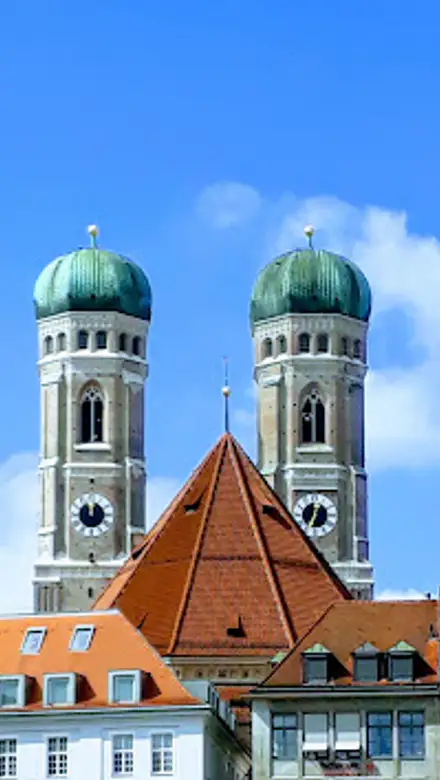
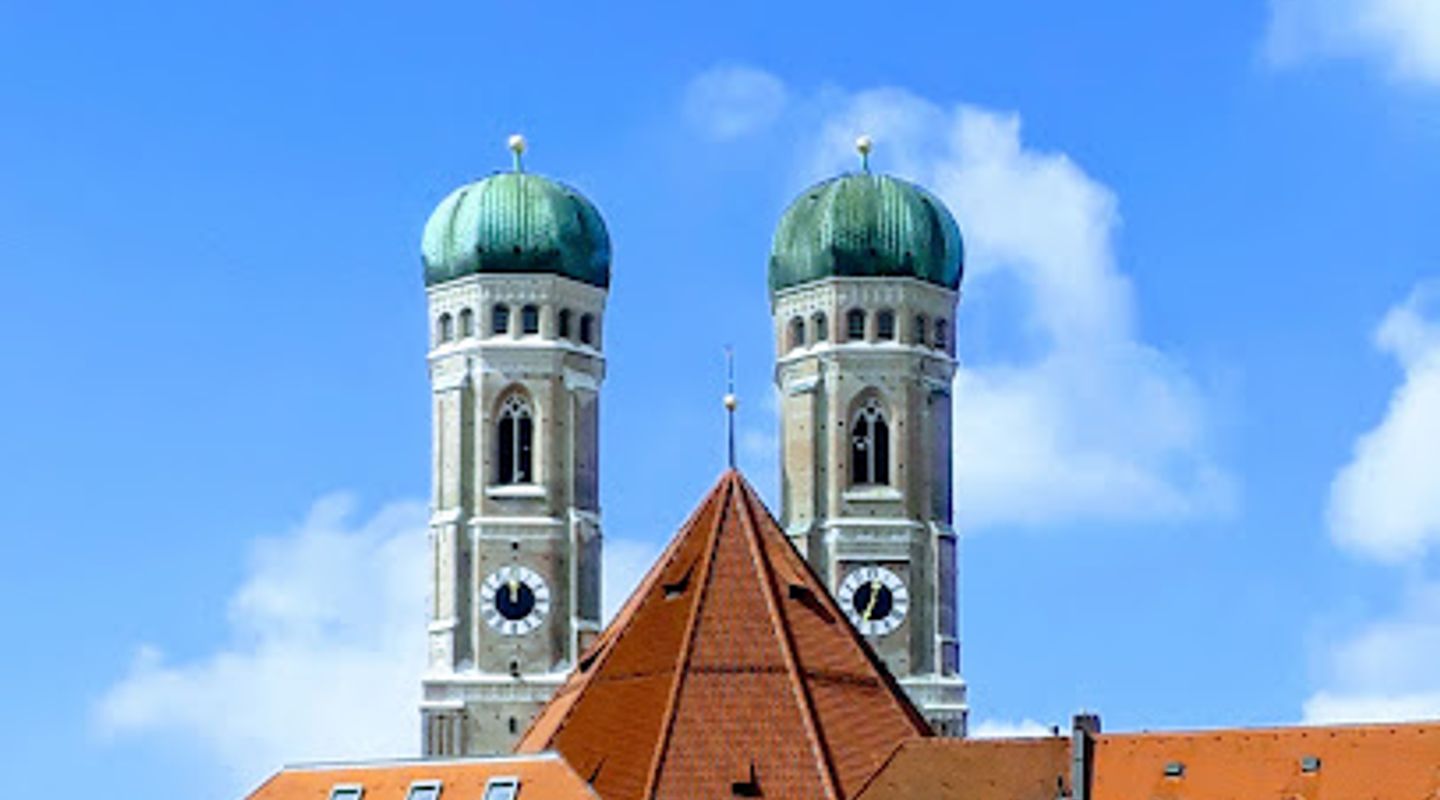
The Frauenkirche, or Cathedral of Our Lady, is Munich's most recognizable landmark, its twin towers dominating the city skyline. Built in the late Gothic style in the 15th century, the red-brick church stands as a symbol of Munich's resilience, having been painstakingly restored after severe damage in World War II. Visitors are drawn to its towering presence, the intriguing legend of the Devil's Footprint, and the panoramic views from the south tower. The interior, while simple, houses significant historical artifacts, including the tomb of Holy Roman Emperor Louis IV and stunning stained-glass windows. A visit offers a glimpse into Munich's rich history and architectural prowess, making it a must-see destination for any traveler. Its iconic towers, each nearly 100 meters tall, have shaped Munich's identity for centuries, and a local referendum ensures no building exceeds their height.
- Address
- Frauenplatz 1, 80331 München
- Phone
- Website
Getting there
Public Transport
Walking
Taxi/Ride-Share
Driving
Discover more about Frauenkirche
Overview
The Frauenkirche, formally known as the Cathedral of Our Dear Lady (Dom zu Unserer Lieben Frau), is more than just a church; it's a symbol of Munich, its history etched into every brick and soaring arch. Rising from the heart of the city's old town, the Frauenkirche's twin towers, capped with distinctive onion-shaped domes, have been a fixture of the Munich skyline for centuries. Construction of this late Gothic masterpiece began in 1468, led by architect Jörg von Halsbach. The choice of red brick as the primary building material was a practical one, driven by a scarcity of stone quarries in the region. Remarkably, the main structure was completed in just two decades, a testament to the skill and dedication of the builders. The iconic domes, however, weren't added until 1525, drawing inspiration from the Dome of the Rock in Jerusalem, then believed to be the site of Solomon's Temple. The Frauenkirche has witnessed pivotal moments in Bavarian history. Cannons were mounted on its roofless towers during the War of the Succession of Landshut. Severely damaged during World War II, the cathedral was carefully reconstructed, a symbol of Munich's enduring spirit. The interior, while more austere than some other Bavarian churches, reflects the Gothic emphasis on verticality and light. Soaring columns draw the eye upward to the vaulted ceilings, while stained-glass windows cast colorful patterns across the nave. One of the church's most famous features is the "Devil's Footprint" (Teufelstritt), a mysterious black mark near the entrance. Legend has it that the Devil himself wagered with the builder that the church would have no windows. Standing in a specific spot, columns obscure the view of the windows, leading the Devil to believe he had won. In a fit of rage upon realizing his deception, he stamped his foot, leaving the permanent mark. Beyond the Devil's Footprint, the Frauenkirche houses a wealth of historical and artistic treasures. The Wittelsbach Monument, a grand memorial, commemorates the contributions of this important Bavarian dynasty. The bishop's crypt beneath the cathedral serves as the final resting place for members of the Wittelsbach family and Archbishops of Munich and Freising. The Frauenkirche also boasts four organs, and the sounds of cathedral music often fill the vast space, particularly during Sunday services and special occasions. Visitors can ascend the south tower for panoramic views of Munich and the surrounding Alps. The ascent involves a climb of 89 steps followed by a ride in a lift. From the top, the city unfolds in a tapestry of red rooftops, green parks, and winding streets. On a clear day, the distant peaks of the Alps provide a stunning backdrop. The north tower is not accessible to the public. The Frauenkirche remains an active place of worship, serving as the cathedral for the Archdiocese of Munich and Freising. Visitors are welcome to attend services and experience the spiritual atmosphere of this historic building. However, it's important to be respectful of worshippers and refrain from sightseeing during services. The Frauenkirche's significance extends beyond its religious function. It is a symbol of Munich's identity, its resilience, and its architectural heritage. A local ordinance prohibits the construction of buildings taller than the Frauenkirche within the city center, ensuring that its iconic towers will continue to dominate the skyline for generations to come. A visit to the Frauenkirche is a journey through Munich's past, a celebration of its present, and a testament to its enduring spirit.
Evendo Review Centre
 Google
Guest reviews
Explore Frauenkirche on the map
A handpicked selection of must-see spots near Frauenkirche, mapped for you.
Get your free copy of our complete guide to Frauenkirche, delivered straight to you.
Everything on this page, from opening hours and how to get there to Eve’s tips and the best time to go, in one PDF you can read offline, print or share.
Already have an account? Sign in
Your Frauenkirche guide is ready.
We'll send it to · Not you? Sign out

Getting your guide ready…
We are putting together a fresh copy of the Frauenkirche guide. This can take up to a minute.
This can take a few moments. If your browser asks, choose Allow so the download can start. You'll find the guide in your Downloads folder.
Nothing happened? Download it again
Sorry, the guide is taking longer than usual. Please try again in a minute, or get it by email instead.
Unlock the best of Frauenkirche
Skip-the-line tickets, guided tours with entry, and walking tours of the area, booked in a few clicks.
 Tour with entry
Self-Guided Tours In Munich With 100 Captivating Audio Stories
from $3.19 Tour with entry
Munich Highlights Audio Guide and Self Guided Tour
from $5.33 Tour with entry
Munich Self-Guided Audio Experience
from $5.70 Tour with entry
Munich Beer Halls and Baroque Old Town Self Guided Tour
from $6.64


Other nearby places you may find interesting
The closest places of the same kind, if this one is not quite what you had in mind.
-
-
-
-
-


Swipe for more places
More to explore near Frauenkirche

 Best experiences near Frauenkirche
 Best hotels near Frauenkirche
 Best landmarks near Frauenkirche
 Best attractions near Frauenkirche
 Best shops near Frauenkirche
 Best restaurants near Frauenkirche
 Best bars near Frauenkirche
Do you manage this location?
Take control to get all the benefits, like improved information, better appearance, and stronger visibility across AI-powered discovery.
Explore more

Explore more of Munich Countryside
Discover the tranquility and charm of the Munich countryside, where rolling hills, historic castles, and traditional Bavarian culture await you.
Explore Munich Countryside
Explore more of Germany
Experience Germany: where history meets innovation, and urban energy blends with natural beauty. Discover diverse cultures, delicious cuisine, and stunning landscapes.
Explore Germany