

Dörenschlucht Travel Guide
Free Guide: Discover the Dörenschlucht: A historic gorge in the Teutoburg Forest offering scenic hiking trails, natural springs, and a glimpse into Germany's past near Detmold.


A brief summary of Dörenschlucht
Discover the Dörenschlucht: A historic gorge in the Teutoburg Forest offering scenic hiking trails, natural springs, and a glimpse into Germany's past near Detmold.
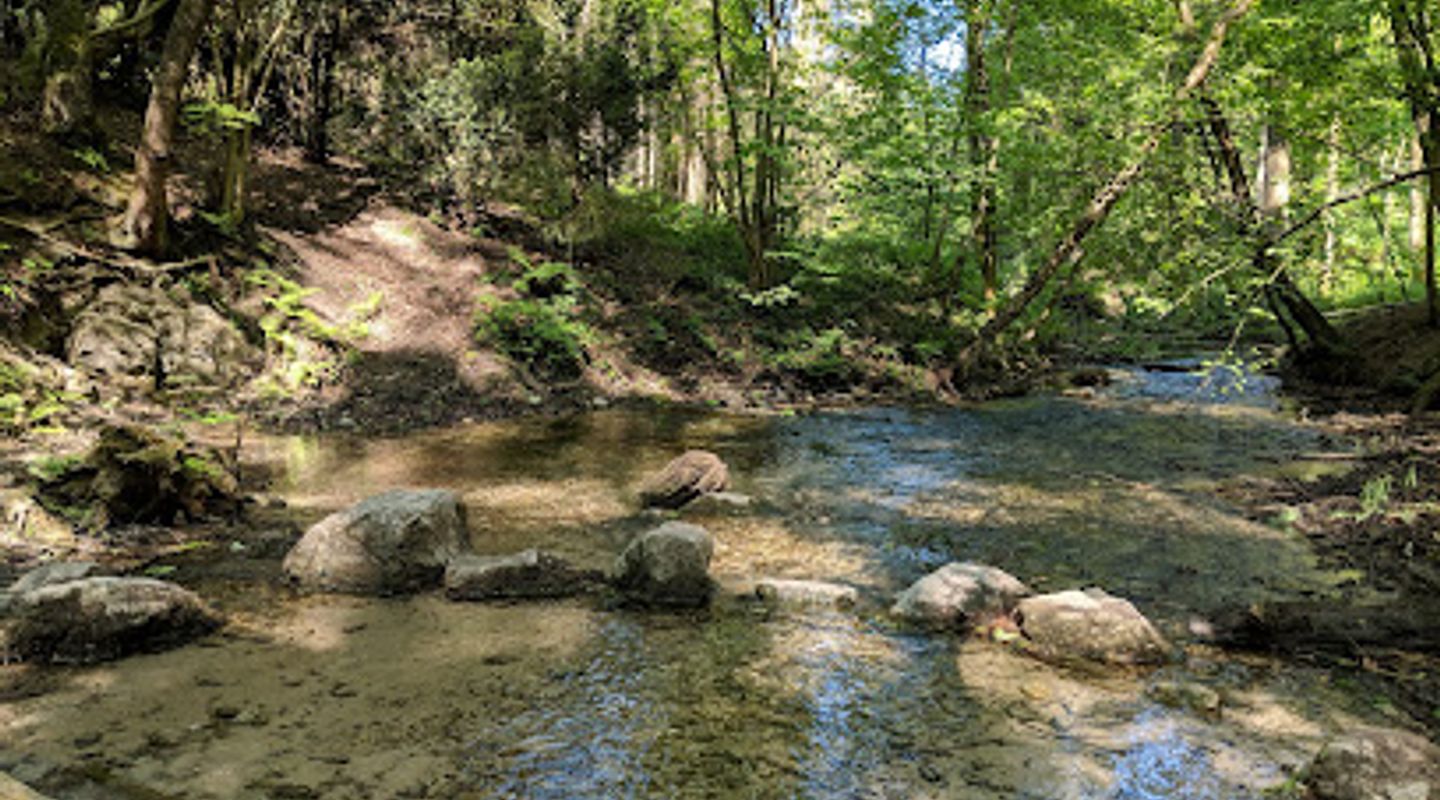
The Dörenschlucht, nestled in the Teutoburg Forest near Detmold, is a captivating natural gorge steeped in history and scenic beauty. Carved by glacial meltwater during the Ice Age, this mountain pass offers a unique hiking experience through lush forests and alongside the clear Rethlager springs. Historically significant as part of the ancient trade route Frankfurter Weg, the Dörenschlucht also bears witness to more recent history with a small soldiers' cemetery from World War II. Today, it's a protected nature reserve, inviting visitors to explore its diverse flora and fauna, discover traces of early human settlements, and enjoy the tranquility of this natural haven. Whether you're a seasoned hiker or a nature enthusiast, the Dörenschlucht provides a refreshing escape and a glimpse into the region's rich past, making it a worthwhile destination for any travel guide.
Opening hours
- Every dayOpen 24 hours
Opening hours as listed on the venue’s Google Business Profile. Hours can change for services and special events, so check with the venue before you go.
- Address
- Quellenstraße 61, 32758 Detmold
Getting there
Driving
Public Transport
Walking
Discover more about Dörenschlucht
Overview
The Dörenschlucht, a natural gorge and mountain pass in the heart of the Teutoburg Forest, offers a compelling blend of natural beauty, historical significance, and outdoor recreational opportunities. Located near Detmold, Germany, this picturesque area has been shaped by geological forces and human activity over millennia, creating a landscape that is both fascinating and serene. Geologically, the Dörenschlucht owes its existence to the Ice Age. During the Drenthe stage of the Saale glaciation, a glacier extended through the Porta Westfalica and transverse valleys of the Wiehen Hills, reaching the Teutoburg Forest. As the glacier melted, its meltwater flowed southwestward through the passes, carrying large quantities of sand that were deposited in the lower-lying Senne region. This process formed the Dörenschlucht and nearby Stapelager Schlucht, Oerlinghauser Pass, and Bielefelder Pass. The name "Dörenschlucht" itself is rooted in local dialect. "Dören" (also spelled "Döhren") is a Low German term used in East Westphalia-Lippe to describe a pass through a mountain range, derived from the Low German word "Dör," meaning door. This aptly describes the Dörenschlucht's function as a natural gateway through the Teutoburg Forest. The Dörenschlucht is framed by several prominent hills: the Große Ehberg (339.6 m) to the southeast, the Kleine Ehberg (217.4 m) to the northwest, and the Hörster Berg (315.1 m) to the west. To the south lies the Senne landscape, characterized by the Senne Training Area and the Generalfeldmarschall-Rommel-Kaserne in Augustdorf. Historically, the Dörenschlucht has served as an important transportation route. The ancient trade route Frankfurter Weg, also known as Weinstraße, connecting Frankfurt am Main with Bremen and Lübeck, passed through the gorge. This route facilitated trade and communication across the region for centuries. The area also holds traces of early human settlements. Near the Rethlager springs within the Dörenschlucht, remnants of Middle Stone Age hut layouts, dating back to approximately 8000 to 5000 BC, were discovered and excavated by Heinrich Schwanold in the early 20th century. Additionally, a number of burial mounds from the older Bronze Age are located in the gorge, attesting to its continued significance throughout prehistory. More recently, the Dörenschlucht witnessed conflict during the final days of World War II. A small soldiers' cemetery serves as a reminder of a battle in which a Waffen-SS unit, attempting to halt the advance of American troops, was forced to retreat into a nearby quarry after seven American Sherman tanks were destroyed. Thirty-five members of the Waffen-SS and an unknown number of Americans lost their lives in the engagement. Today, a 26.07-hectare section of the Dörenschlucht is designated as the Dörenschlucht Nature Reserve (LIP-023). This protected area encompasses the sources of the Rethlager Bach (Rethlager stream) and is home to a diverse array of flora and fauna. Visitors can explore the gorge via marked hiking trails, immersing themselves in the tranquility of the forest and enjoying the natural beauty of the surroundings. The Rethlager springs, located within the nature reserve, are karst springs that maintain a consistently cold water temperature throughout the year. They are a significant natural feature and contribute to the unique ecosystem of the Dörenschlucht. The Dörenschlucht offers a variety of hiking experiences, catering to different skill levels and interests. The Hermannsweg, one of Germany's most popular long-distance hiking trails, passes through the area, providing access to stunning views and cultural landmarks. Shorter circular routes are also available, allowing visitors to explore the gorge and its surroundings at a more leisurely pace. For those interested in history and culture, the nearby Hermannsdenkmal, a monumental statue commemorating the Battle of the Teutoburg Forest, is a must-see attraction. The LWL Open-Air Museum in Detmold offers a fascinating glimpse into the region's past, with reconstructed historical buildings and exhibits. The Dörenschlucht is easily accessible from Detmold and surrounding towns. Public transportation options are available, and parking facilities are located near the entrance to the gorge. Visitors should be aware that the trails can be steep and uneven in places, so appropriate footwear is recommended. Whether you are a nature lover, a history buff, or simply seeking a peaceful escape from the hustle and bustle of everyday life, the Dörenschlucht offers a rewarding and enriching experience. Its unique combination of natural beauty, historical significance, and recreational opportunities makes it a valuable addition to any travel guide focused on the Teutoburg Forest region. The Dörenschlucht is more than just a scenic gorge; it is a living testament to the power of nature and the enduring presence of history. Its geological formations, ancient trade routes, traces of early settlements, and wartime remnants all contribute to its unique character and appeal. By exploring the Dörenschlucht, visitors can gain a deeper appreciation for the natural and cultural heritage of the Teutoburg Forest and the Lippe region.
Evendo Review Centre
 Google
Guest reviews
Explore Dörenschlucht on the map
A handpicked selection of must-see spots near Dörenschlucht, mapped for you.
Get your free copy of our complete guide to Dörenschlucht, delivered straight to you.
Everything on this page, from opening hours and how to get there to Eve’s tips and the best time to go, in one PDF you can read offline, print or share.
Already have an account? Sign in
Your Dörenschlucht guide is ready.
We'll send it to · Not you? Sign out

Getting your guide ready…
We are putting together a fresh copy of the Dörenschlucht guide. This can take up to a minute.
This can take a few moments. If your browser asks, choose Allow so the download can start. You'll find the guide in your Downloads folder.
Nothing happened? Download it again
Sorry, the guide is taking longer than usual. Please try again in a minute, or get it by email instead.
Other nearby places you may find interesting
The closest places of the same kind, if this one is not quite what you had in mind.
-
-
-
-
-


Swipe for more places
More to explore near Dörenschlucht

 Best experiences near Dörenschlucht
 Best hotels near Dörenschlucht
 Best landmarks near Dörenschlucht
 Best attractions near Dörenschlucht
 Best shops near Dörenschlucht
 Best restaurants near Dörenschlucht
 Best bars near Dörenschlucht
Do you manage this location?
Take control to get all the benefits, like improved information, better appearance, and stronger visibility across AI-powered discovery.
Explore more

Explore more of Teutoburg Forest
Explore Teutoburg Forest, where Germany's rich history meets natural beauty. Discover ancient battlefields, scenic trails, and charming towns in this enchanting wilderness.
Explore Teutoburg Forest
Explore more of Germany
Experience Germany: where history meets innovation, and urban energy blends with natural beauty. Discover diverse cultures, delicious cuisine, and stunning landscapes.
Explore Germany
