

Free Castel Travel Guide & Mobile App
Plan your Castel trip with Evendo. Get free guides to top attractions, restaurants, hotels, and bars. Web access or download the mobile app.


Castel, Guernsey combines granite heritage, Cobo Bay beaches, coastal forts and rural lanes with rich island history, sea views and memorable sightseeing.
Coastal Character
Castel is one of Guernsey’s ten parishes, occupying much of the island’s western side between the broad sweep of Cobo Bay and the sands of Vazon Bay. Rather than a compact town, it is a landscape of small settlements, granite houses, narrow lanes, sheltered coves and open farmland. The parish’s western shoreline faces the Atlantic, bringing long evening light, changing tides and some of Guernsey’s most accessible coastal scenery. Cobo Bay is the best-known stretch of coast, with a sandy beach backed by a promenade and a cluster of places to eat and drink, while Vazon offers a wider shore and a strong connection with the island’s surfing culture.Read more about Castel
Granite, Churches and Coastal Defences
Exploring the Parish
When is the best time to visit Castel?
Best: June–August · 19–21°C| Month | High (°C) | Rainfall (mm) |
|---|---|---|
| January | 11 | 81 |
| February | 10 | 70 |
| March | 11 | 60 |
| April | 14 | 50 |
| May | 16 | 40 |
| June (best) | 19 | 30 |
| July (best) | 21 | 30 |
| August (best) | 21 | 40 |
| September | 20 | 50 |
| October | 16 | 60 |
| November | 13 | 70 |
| December | 11 | 80 |
Getting to and around Castel
How to get there
Transportation
Best attractions in Castel
Castel’s attractions are closely tied to its western coast and rural setting. Cobo Bay is the parish’s best-known beach, with a broad sandy shore, Atlantic views and a promenade that becomes especially atmospheric in the evening. Nearby Vazon Bay has a more open, windswept character and is associated with surfing and other beach recreation. Fort Hommet, on a headland above Vazon, combines earlier coastal defence with German occupation structures built into the Atlantic Wall, offering a tangible encounter with Guernsey’s wartime past. Inland, St Matthew’s Church and the lanes around it reveal the parish’s older agricultural identity, with granite buildings, banks and enclosed fields. Coastal walking links many of these places, though routes can be exposed and tide conditions matter. Castel’s appeal lies less in a dense concentration of attractions than in the way beach, farmland, church and military landscape form one connected western Guernsey experience.
-
Nature preserve
Fauxquets Valley
Discover Guernsey's hidden gem: Fauxquets Valley, a peaceful nature preserve with scenic walks, camping, and tranquil beauty.
15 min walk · 1.2 km from city centre
Best landmarks in Castel
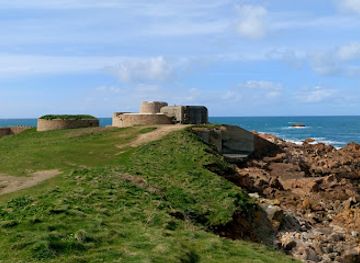
St Matthew’s Church is Castel’s principal ecclesiastical landmark, its granite presence reflecting the parish system that shaped Guernsey’s religious and civic life; the present building belongs to the early nineteenth-century rebuilding of parish churches. Fort Hommet is the most prominent military landmark, occupying a strategic headland above Vazon Bay. Its layered defences illustrate how an earlier coastal strongpoint was incorporated into German fortification plans during the occupation of 1940–45 and the construction of the Atlantic Wall. Cobo Bay is a natural landmark as much as a beach, recognised by its curved shore, open western outlook and relationship with the island’s changing tides. Across the parish, granite farmhouses, boundary walls and traditional lanes form a quieter vernacular heritage, showing how Castel’s identity grew from agriculture and coastal settlement rather than monumental urban development.
-
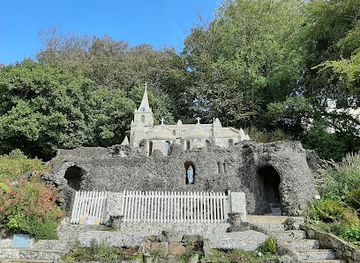
Chapel
The Little Chapel
Discover the enchanting Little Chapel in Guernsey, a unique blend of artistry and tranquility nestled in a serene garden setting.
7 min drive · 2.3 km from city centre
-
Historical place
Fort Hommet
Discover the historic Fort Hommet in Guernsey, a magnificent fortress offering stunning coastal views and a glimpse into military history.
6 min drive · 2.0 km from city centre
-
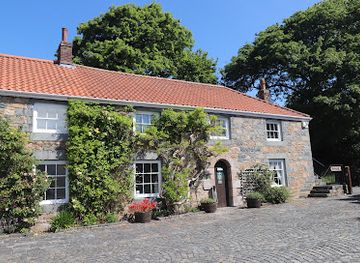
Heritage museum
National Trust of Guernsey - Folk and Costume Museum
Uncover the enchanting history of Guernsey through its Folk and Costume Museum, a must-visit destination for cultural enthusiasts.
8 min drive · 2.6 km from city centre
-
Public beach
Vazon Bay
Experience the breathtaking beauty of Vazon Bay, a serene public beach in Guernsey, perfect for relaxation, swimming, and enjoying scenic coastal views.
14 min walk · 1.1 km from city centre
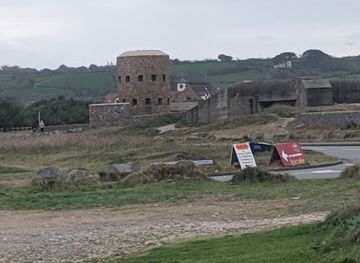
Explore Castel on the map
Plan your Castel trip on one map. See where the top attractions, landmarks, restaurants, bars and hotels are, find what's near where you're staying, and book hotels and experiences in a few clicks.
Best hotels in Castel
Best restaurants in Castel
Castel’s dining scene is concentrated around the coastal settlements rather than a traditional town centre. Cobo Bay and Vazon provide places to eat with wide sea views, ranging from relaxed meals and café fare to pub-style food, while the parish’s rural lanes lead towards smaller local establishments and seasonal refreshment stops. Menus across Guernsey commonly draw on Channel Island produce, including seafood, dairy products, vegetables and locally raised meat, with Guernsey cream and butter reflecting the island’s long farming tradition. Visitors may also encounter dishes influenced by the island’s Norman-French heritage, alongside familiar British cooking and contemporary seasonal menus. The best-known food experiences are often linked to the landscape: a casual meal after a beach walk, a drink overlooking Cobo Bay or locally sourced produce bought from farm shops and stalls. St Peter Port offers the island’s broadest choice of restaurants when a wider evening selection is required.
-
Restaurant
Crabby Jack's
Discover Crabby Jack's in Vazon Bay – where fresh local seafood meets stunning coastal views in Guernsey.
5 min drive · 1.7 km from city centre
-
 Restaurant
Fleur du Jardin
Discover Fleur du Jardin: where local flavors meet warm hospitality in the heart of Castel, Guernsey.
8 min walk · 0.7 km from city centre
-
Restaurant
The Farmhouse
Discover exquisite dining at The Farmhouse in Guernsey, where local flavors meet charming hospitality in a picturesque setting.
6 min drive · 1.9 km from city centre
-
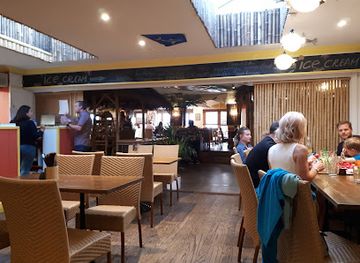
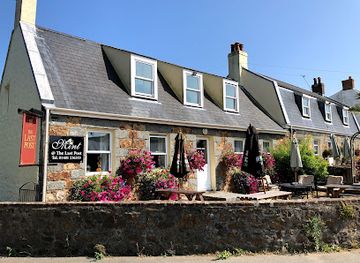
Restaurant
The Last Post - Mint Brasserie
Experience culinary excellence at The Last Post - Mint Brasserie in St Andrews, Guernsey - where local flavors meet warm hospitality.
8 min drive · 2.6 km from city centre
Best bars in Castel
Castel has a restrained evening scene centred on coastal pubs, hotel bars and places around Cobo Bay rather than a concentrated nightlife district. The west-facing shore encourages relaxed sunset drinks and informal meals, while local venues may host occasional live music or community events, particularly during the busier visitor season. Vazon is quieter after daytime beach activity, and much of the parish settles into a rural pace after dark. Visitors seeking late-night clubs, theatre performances or a wider programme of cultural entertainment generally travel to St Peter Port, where Guernsey’s main concentration of bars and performance venues is found. Evening travel requires planning because services across rural parts of the island can be less frequent later in the day. The atmosphere is sociable and unhurried, with coastal views and conversation more characteristic than an intensive club scene.
-
Hotel
Fleur du Jardin
Experience the charm of Fleur du Jardin, a delightful hotel, pub, and restaurant nestled in the scenic beauty of Guernsey.
8 min walk · 0.7 km from city centre
-
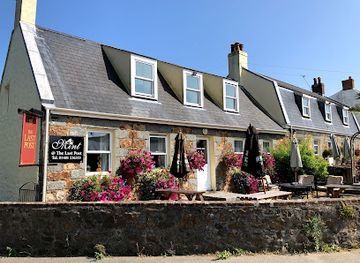
Bar
The Last Post - Mint Brasserie
Discover culinary delights at The Last Post - Mint Brasserie in Guernsey, where bar charm meets restaurant comfort for an unforgettable dining experience.
8 min drive · 2.6 km from city centre
Best shops in Castel
Castel is not a major shopping destination, but its rural setting creates opportunities to find locally produced food and small-scale island goods through farm shops, seasonal stalls and independent outlets. Guernsey produce may include vegetables, fruit, preserves, dairy products, baked goods and other items shaped by the island’s horticultural tradition. Around Cobo Bay and the western coast, visitors may find practical beach supplies and informal refreshments rather than a broad retail selection. For clothing, books, specialist shops, galleries and a wider choice of souvenirs, St Peter Port is the island’s principal shopping centre. Visitors looking for meaningful purchases should consider local food, Guernsey-made crafts and products connected with the island’s maritime or agricultural identity, while checking provenance rather than assuming that every item sold in a visitor-oriented setting was made locally.
-
Clothing store
Smilers
Discover unique fashion finds at Smilers, the charming clothing store in Vazon, Guernsey, perfect for every style and occasion.
5 min drive · 1.7 km from city centre
-
Home goods store
Hedge Stall, Grasshopper Goods
Explore Hedge Stall, Grasshopper Goods in Guernsey for unique home goods that reflect local craftsmanship and charm. Perfect for souvenirs or gifts.
6 min drive · 1.8 km from city centre
-
Jewelry designer
Julie Luxon Jewellery
Explore a world of craftsmanship at Julie Luxon Jewellery in Kings Mills, Guernsey, where unique, handmade pieces await every jewelry lover.
3 min walk · 0.3 km from city centre
-
Home goods store
Canion
Explore Canion in Guernsey for unique home goods that capture the island's charm and craftsmanship, perfect for souvenirs or personal treasures.
6 min drive · 2.1 km from city centre
Get your free copy of our complete guide to Castel, delivered straight to you.
Everything on this page, from attractions and restaurants to essentials and local phrases, in one PDF you can read offline, print or share.
Already have an account? Sign in
Your Castel guide is ready.
We'll send it to · Not you? Sign out

Getting your guide ready…
We are putting together a fresh copy of the Castel guide. This can take up to a minute.
This can take a few moments. If your browser asks, choose Allow so the download can start. You'll find the guide in your Downloads folder.
Nothing happened? Download it again
Sorry, the guide is taking longer than usual. Please try again in a minute, or get it by email instead.
Castel essentials
Currency and Payment
Safety
Emergency Situations
Do's and Don'ts
Local Tips
From Eve
Local phrases worth knowing
You don't need to get them perfect. A few words go a long way, and locals appreciate the effort.
Basics
| English | Local | Say it |
|---|---|---|
| Hello | Bonjour | [bon-zhoor] |
| Goodbye | Au revoir | [oh reh-vwah] |
| Yes | Oui | [wee] |
| No | Non | [nohn] |
| Please/You're welcome | S'il vous plaît / De rien | [seel voo pleh / duh ree-ehn] |
| Thank you | Merci | [mehr-see] |
| Excuse me/Sorry | Excusez-moi / Désolé | [ehk-skew-zay mwah / deh-zoh-lay] |
| How are you? | Comment ça va? | [koh-mohn sah vah] |
| Fine. And you? | Bien. Et vous? | [byen. ay voo] |
| Do you speak English? | Parlez-vous anglais? | [par-lay voo ahn-glay] |
| I don't understand | Je ne comprends pas | [zhuh nuh kohm-prahn pah] |
Eating & Drinking
| English | Local | Say it |
|---|---|---|
| I'd like to see the menu, please | Je voudrais voir le menu, s'il vous plaît | [zhuh voo-dray vwahr luh muh-new, seel voo pleh] |
| I don't eat meat | Je ne mange pas de viande | [zhuh nuh mahnj pah duh vyand] |
| Cheers! | Santé! | [sahn-tay] |
| I would like to pay, please | Je voudrais payer, s'il vous plaît | [zhuh voo-dray pay-yay, seel voo pleh] |
Emergencies
| English | Local | Say it |
|---|---|---|
| Help! | Au secours! | [oh suh-koor] |
| Go away! | Allez-vous en! | [ah-lay vooz ahn] |
| Call the Police! | Appelez la police! | [ah-peh-lay lah poh-lees] |
| Call a doctor! | Appelez un médecin! | [ah-peh-lay uh may-suh-dan] |
| I'm lost | Je suis perdu | [zhuh swee pair-doo] |
| I'm ill | Je suis malade | [zhuh swee mah-lahd] |
Shopping
| English | Local | Say it |
|---|---|---|
| I'd like to buy... | Je voudrais acheter... | [zhuh voo-dray zheh-tey...] |
| I'm just looking | Je regarde juste | [zhuh ruh-gard zhewst] |
| How much is it? | Combien ça coûte? | [kohm-byen sah koot] |
| That's too expensive | C'est trop cher | [say troh shay] |
| Can you lower the price? | Pouvez-vous baisser le prix? | [poo-vay voo be-say luh pree] |
Time & Numbers
| English | Local | Say it |
|---|---|---|
| What time is it? | Quelle heure est-il? | [kel er ay-teel] |
| It's one o'clock | Il est une heure | [eel ay tun er] |
| Half past (10) | Dix et demi | [dee ay dem-ee] |
| Morning | Matin | [mah-tan] |
| Afternoon | Après-midi | [ah-pray mee-dee] |
| Evening | Soir | [swah] |
| Yesterday | Hier | [yair] |
| Today | Aujourd'hui | [oh-zhoor-dwee] |
| Tomorrow | Demain | [duh-mahn] |
| 1 | Un | [uhn] |
| 2 | Deux | [duh] |
| 3 | Trois | [trwah] |
| 4 | Quatre | [kat] |
| 5 | Cinq | [sank] |
| 6 | Six | [sees] |
| 7 | Sept | [set] |
| 8 | Huit | [wheat] |
| 9 | Neuf | [nuff] |
| 10 | Dix | [dee] |
Transport & Directions
| English | Local | Say it |
|---|---|---|
| Where's a/the...? | Où est...? | [oo ay...] |
| What's the address? | Quelle est l'adresse? | [kel ay lad-res] |
| Can you show me (on the map)? | Pouvez-vous me montrer (sur la carte)? | [poo-vay voo muh mohn-tray (sur lah kart)] |
| When's the next (bus)? | Quand est le prochain (bus)? | [kahn ay luh pro-shan (bus)] |
| A ticket (to ....) | Un billet (pour ....) | [uhn bee-yay (poor)] |
History of Castel
A Parish Shaped by the Sea
Castel developed as one of Guernsey’s historic ecclesiastical parishes within the island’s Norman and later English administrative traditions. Its name is generally associated with a castle or fortified place, although the parish’s visible identity has always been more agricultural and coastal than urban. Fertile ground inland supported small farms, while the western shore provided access to fishing, seaweed gathering and maritime traffic. Guernsey’s position in the Channel placed it within the orbit of Normandy before the Norman Conquest of England in 1066, and the island retained a distinctive Norman-French cultural and legal heritage for centuries. That legacy remains apparent in local place names, traditional field patterns and the survival of parish-based institutions.
Parish Church and Rural Society
For centuries, Castel’s parish church and surrounding settlements provided the central framework for rural life. The present St Matthew’s Church belongs to the period of nineteenth-century rebuilding, when growing populations and changing religious needs led to substantial renewal of parish churches across Guernsey. Around it, farms and cottages developed within a landscape divided by banks, lanes and granite walls. Agriculture remained important, with Guernsey’s mild climate supporting vegetables, fruit and livestock, while coastal resources supplemented household economies. The parish’s dispersed form reflects this history: unlike St Peter Port, it grew through farms, hamlets and shoreline communities rather than a dense commercial centre.
From Farming to Horticulture
During the nineteenth century, Guernsey’s agriculture became increasingly commercial. Improved transport and maritime links allowed island growers to send produce to markets in Britain, while protected cultivation helped develop the island’s reputation for tomatoes, flowers and other early crops. Castel shared in this transformation, though its fields and smallholdings continued to coexist with older farming practices. The growth of horticulture altered the appearance and economy of the island, bringing prosperity to some families and encouraging investment in glasshouses, roads and shipping connections. Remnants of the agricultural landscape still appear in Castel’s lanes, granite buildings and enclosed fields, even as tourism and residential development have become more prominent.
German Occupation and Coastal Fortifications
Guernsey was occupied by German forces from 1940 until liberation in May 1945. Because the island formed part of the German Atlantic Wall, the western coast around Castel acquired bunkers, gun positions, observation posts and other defensive works, particularly around Fort Hommet and the approaches to Vazon Bay. The occupation brought military control, shortages, forced labour and profound disruption to civilian life; many islanders were evacuated to Britain before the occupation, while others remained under increasingly restrictive conditions. The surviving fortifications are now among the clearest physical reminders of this period, set within a landscape that otherwise appears rural and peaceful.
A Modern Coastal Parish
After liberation, Castel gradually adjusted to a more service-based and visitor-oriented economy. Agriculture remained visible, but beaches, coastal scenery and wartime heritage became important parts of the parish’s public identity. Improved roads and regular bus services connected Castel more closely with St Peter Port and Guernsey’s other parishes, while homes and visitor accommodation spread along parts of the coast. Today, the parish retains its historic granite architecture and open countryside alongside beach facilities, cafés and recreational activity. Its history is therefore read not in a single monument but across the relationship between church, farm, shoreline and military landscape.
Castel in Photos
Browse through our photo collection highlighting the charm and character of the destination.
Cities near Castel
The closest cities to Castel, if you have time for more than one stop.
-

-

-

-

-


Swipe for more cities
Explore more

Explore more of Guernsey
Discover Guernsey, where French and British cultures blend seamlessly amidst stunning coastal scenery, rich history, and delectable cuisine in the charming Channel Islands.
Explore Guernsey