

Free Joliet Travel Guide & Mobile App
Plan your Joliet trip with Evendo. Get free guides to top attractions, restaurants, hotels, and bars. Web access or download the mobile app.


Joliet, Illinois blends Route 66 heritage, historic architecture, theatre, museums and riverfront walks with easy access to Chicago-area attractions and nature.
A City Shaped by Water, Stone and Industry
Joliet stands along the Des Plaines and DuPage rivers in northeastern Illinois, roughly 40 miles south-west of central Chicago. Its identity was shaped by transportation and industry: waterways, railways, the Illinois and Michigan Canal, limestone quarries and steelworks all helped turn a small settlement into one of the region's major urban centres. The rivers still define the city, while the historic downtown preserves an impressive collection of nineteenth- and early twentieth-century buildings.Read more about Joliet
Architecture, Theatre and Route 66
Green Spaces and Regional Connections
When is the best time to visit Joliet?
Best: May–June, September · 23–28°C| Month | High (°C) | Rainfall (mm) |
|---|---|---|
| January | 1 | 47 |
| February | 3 | 42 |
| March | 10 | 59 |
| April | 16 | 83 |
| May (best) | 23 | 104 |
| June (best) | 28 | 101 |
| July | 29 | 104 |
| August | 28 | 101 |
| September (best) | 24 | 88 |
| October | 17 | 76 |
| November | 9 | 64 |
| December | 3 | 57 |
Getting to and around Joliet
How to get there
Transportation
Best attractions in Joliet
Joliet offers a varied day of sightseeing across its historic centre and broad river-valley landscape. The Joliet Area Historical Museum introduces the city's Indigenous, canal, limestone, prison and industrial stories, while the Old Joliet Prison provides an atmospheric look at the nineteenth-century penitentiary complex and its later place in popular culture. The ornate Rialto Square Theatre remains a major downtown cultural attraction, with its marble interiors and performance programme. Route 66 enthusiasts can explore the Illinois Rock & Roll Museum on Route 66 and other surviving reminders of the road's passage through the city. At the Joliet Iron Works Historic Site, interpretive trails lead through the remains of a once-enormous steel complex. Pilcher Park Nature Center offers woodland paths and environmental exhibits, and the Des Plaines River corridor adds open space and a quieter counterpoint to the city's masonry, railways and industrial heritage.
-
Tourist attraction
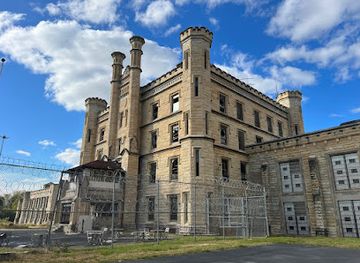
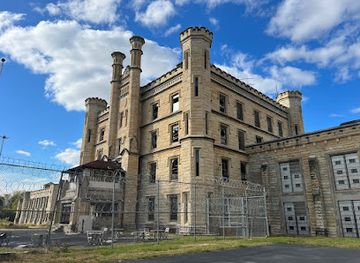
Old Joliet Prison
Visit Old Joliet Prison, a haunting historical landmark that reveals the intriguing stories of its infamous past in Joliet, Illinois.
21 min drive · 7.0 km from city centre
-
Tourist attraction
Old Joliet Prison
Discover the haunting history and unique architecture of the Old Joliet Prison, a must-see attraction in Joliet, Illinois for history enthusiasts.
21 min drive · 7.0 km from city centre
-
Amusement center
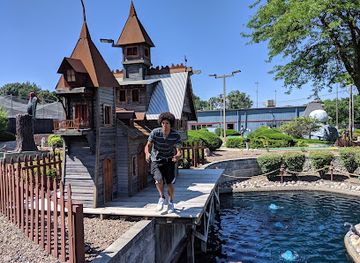
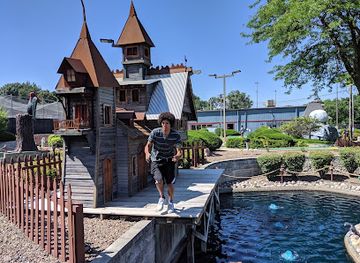
Haunted Trails Family Entertainment Center & Picnics
Discover family-friendly fun and thrills at Haunted Trails Family Entertainment Center in Joliet, Illinois - where excitement meets adventure!
19 min drive · 6.2 km from city centre
-
Tourist attraction
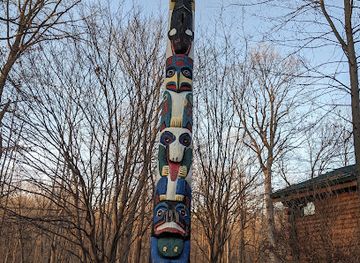
Pilcher Park Nature Center
Explore the natural beauty and tranquility of Pilcher Park Nature Center in Joliet, Illinois, a perfect escape for outdoor lovers and families alike.
31 min drive · 11 km from city centre

Best landmarks in Joliet
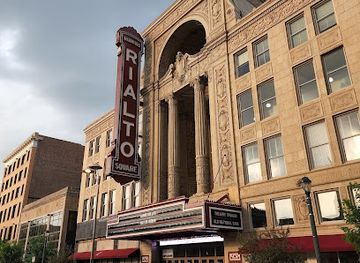
Joliet's most distinctive landmarks are closely tied to its limestone, transport and industrial past. The Old Joliet Prison is an imposing nineteenth-century complex built of local limestone, its crenellated walls and institutional architecture making it one of the city's most recognisable symbols. The Rialto Square Theatre, opened in 1926, is a lavish atmospheric theatre whose ornamental interior reflects the grand entertainment palaces of the period. The Joliet Area Historical Museum occupies the former Ottawa Street Methodist Church, an impressive Romanesque Revival building that connects civic architecture with local interpretation. At the Joliet Iron Works Historic Site, foundations, blast-furnace remnants and interpretive trails mark the scale of the former steelworks. The Des Plaines River, the historic rail stations and surviving downtown commercial buildings complete a landscape in which waterways, rail transport, industry and public culture remain visibly connected.
-
Performing arts theater
Rialto Square Theatre
Experience the grandeur of a bygone era at the Rialto Square Theatre, a meticulously restored vaudeville palace in the heart of Joliet.
17 min drive · 5.7 km from city centre
-
Tourist attraction
Old Joliet Prison
Explore the imposing architecture and dark history of the Old Joliet Prison, a filming location for 'The Blues Brothers' and 'Prison Break'.
21 min drive · 7.0 km from city centre
-
Amusement center
Haunted Trails Family Entertainment Center & Picnics
Joliet's Haunted Trails: Non-stop family fun with go-karts, mini-golf, laser tag, and more in a Halloween-themed amusement park!
19 min drive · 6.2 km from city centre
-
Baseball
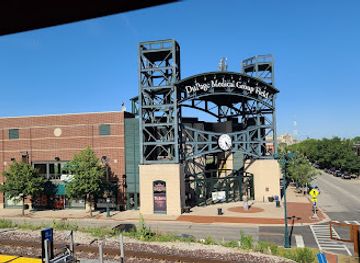
Joliet Slammers Baseball
Catch exciting Frontier League baseball with the Joliet Slammers at Duly Health and Care Field in downtown Joliet. Affordable family fun!
18 min drive · 6.1 km from city centre
Explore Joliet on the map
Plan your Joliet trip on one map. See where the top attractions, landmarks, restaurants, bars and hotels are, find what's near where you're staying, and book hotels and experiences in a few clicks.
Best hotels in Joliet
Best restaurants in Joliet
Joliet's dining scene reflects its industrial, immigrant and suburban history rather than a single dish or formal cuisine. Around downtown and the city's established neighbourhoods, visitors find American comfort food, Italian-American cooking, Mexican and Latin American restaurants, casual cafés, bakeries and contemporary local eateries. The area's long-standing immigrant communities have helped make pizza, pasta, sandwiches, tacos and other everyday specialities part of the local food landscape. Route 66 adds a roadside dimension, with diners and casual stops associated with the historic highway tradition, while larger commercial districts provide familiar chain restaurants alongside independent businesses. The most characterful meals are often found in places where family recipes, counter service and neighbourhood regulars matter more than elaborate presentation. Dining locations are dispersed, so restaurant choice is closely tied to the district being visited and whether the journey is centred on downtown, Route 66 or the suburban shopping corridors.
-
Steak
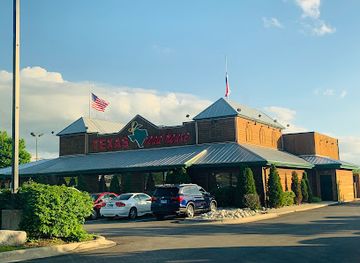
Texas Roadhouse
Experience authentic American cuisine at Texas Roadhouse in Joliet—where every meal is a celebration of flavor and hospitality.
20 min drive · 6.7 km from city centre
-
American
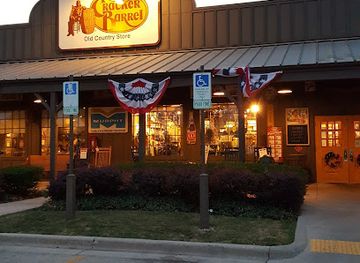
Cracker Barrel Old Country Store
Discover the charm of Cracker Barrel Old Country Store: where Southern cuisine meets nostalgic shopping in Joliet, Illinois.
9 min drive · 3.1 km from city centre
-
Grill
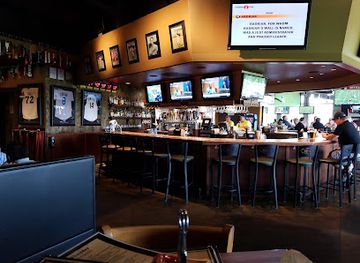
Heroes West Sports Grill
Experience the perfect blend of great food and sports at Heroes West Sports Grill in Joliet, Illinois.
10 min drive · 3.4 km from city centre
-
Mexican
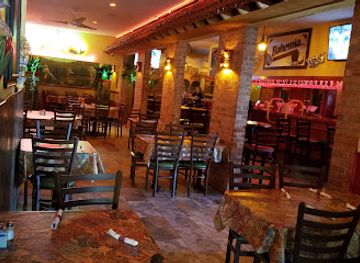
La Mex
Experience authentic Mexican flavors at La Mex in Joliet, where vibrant culture meets delicious cuisine in a warm and welcoming atmosphere.
12 min walk · 0.9 km from city centre
Best bars in Joliet
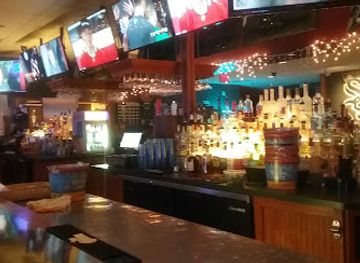
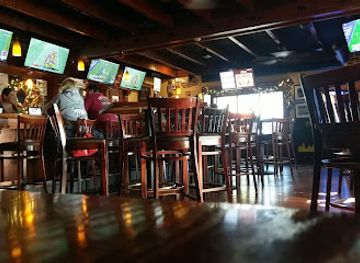
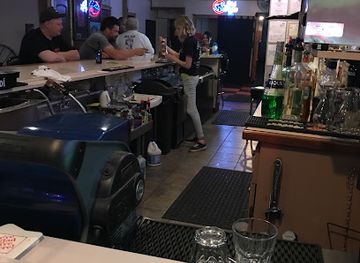
Joliet's evening scene is moderate in scale and centred more on local bars, restaurants, live entertainment and theatre than on a large nightclub district. Downtown provides the strongest cultural focus, with performances at the Rialto Square Theatre and occasional concerts, comedy and community events creating activity after business hours. Small bars and taverns offer familiar American social spaces, while restaurants provide quieter evenings and drinks with dinner. Seasonal festivals, sporting events and performances can bring additional energy to the city, but venues and programmes change over time. Visitors should expect a spread-out suburban nightlife pattern rather than a single entertainment quarter: a car or planned ride is often useful between venues, and normal United States licensing rules apply, including age restrictions for alcohol. The city’s Route 66 identity also gives some evening venues a roadside, music-oriented character.
-
Restaurant
Jameson's Pub
Discover the vibrant atmosphere and delicious menu at Jameson's Pub, a top dining and entertainment destination in Joliet, Illinois.
6 min drive · 2.1 km from city centre
-
Irish pub
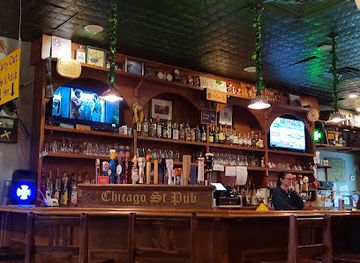
Chicago Street Pub
Discover the charm of Chicago Street Pub in Joliet, where authentic Irish cuisine meets a warm, inviting atmosphere for an unforgettable experience.
17 min drive · 5.7 km from city centre
-
Grill
Longshots
Experience the lively atmosphere at Longshots, where delicious grilled dishes and refreshing drinks meet in Joliet's vibrant dining scene.
7 min drive · 2.5 km from city centre
-
Bar
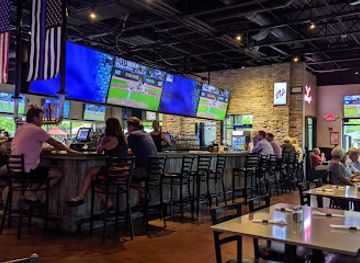
Fritz's Pour House Bar
Discover the vibrant atmosphere and delicious custom burgers at Fritz's Pour House Bar in Joliet, a must-visit for food lovers and fun seekers.
13 min drive · 4.4 km from city centre
Best nightclubs in Joliet
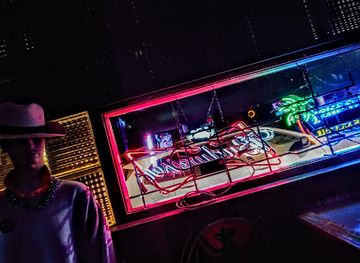
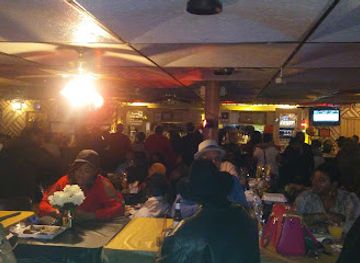
Joliet's evening scene is moderate in scale and centred more on local bars, restaurants, live entertainment and theatre than on a large nightclub district. Downtown provides the strongest cultural focus, with performances at the Rialto Square Theatre and occasional concerts, comedy and community events creating activity after business hours. Small bars and taverns offer familiar American social spaces, while restaurants provide quieter evenings and drinks with dinner. Seasonal festivals, sporting events and performances can bring additional energy to the city, but venues and programmes change over time. Visitors should expect a spread-out suburban nightlife pattern rather than a single entertainment quarter: a car or planned ride is often useful between venues, and normal United States licensing rules apply, including age restrictions for alcohol. The city’s Route 66 identity also gives some evening venues a roadside, music-oriented character.
-
Gay bar
Bobby's Tap
Discover Bobby's Tap, a lively gay bar in Joliet offering vibrant nightlife, friendly faces, and unforgettable events in a welcoming atmosphere.
13 min drive · 4.4 km from city centre
-
Bar
Saloon 2
Discover the lively ambiance and affordable drinks at Saloon 2, a must-visit bar in Joliet, Illinois for an unforgettable night out.
28 min drive · 9.5 km from city centre
-
Club
Beacon Club
Discover Joliet's Beacon Club, where electrifying nightlife meets unforgettable dance experiences in a vibrant atmosphere.
18 min drive · 5.9 km from city centre
-
Night club
Terrace Inn Lounge
Discover the lively atmosphere of Terrace Inn Lounge, Joliet's top night club for dancing, drinks, and unforgettable entertainment.
18 min drive · 6.0 km from city centre
Best shops in Joliet
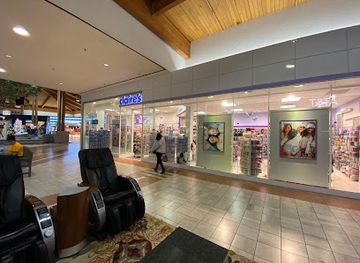
Shopping in Joliet ranges from independent downtown businesses and Route 66 memorabilia to large suburban retail districts. The historic centre is the best place to browse local-oriented shops, galleries, seasonal events and businesses occupying older commercial buildings, while the Illinois Rock & Roll Museum on Route 66 provides a natural stop for music-related souvenirs and cultural merchandise. Louis Joliet Mall and the surrounding commercial area offer a broader selection of national retailers, department-store-style shopping and everyday services. Visitors interested in local character should look for Illinois-made food products, Route 66 signs and prints, music memorabilia, handmade goods and products connected with the city's industrial or theatrical heritage. Traditional open-air market activity is more seasonal and event-dependent than a permanent bazaar culture, so dates and locations should be checked locally rather than assumed.
-
Shopping mall
Louis Joliet Mall
Discover the vibrant Louis Joliet Mall, a shopping haven with diverse stores, dining, and entertainment options in Joliet, Illinois.
19 min drive · 6.5 km from city centre
-
Shopping mall
North Ridge Plaza
Explore North Ridge Plaza in Joliet, IL - a vibrant shopping mall with diverse stores, dining options, and family-friendly entertainment.
12 min drive · 4.0 km from city centre
-
Gift shop
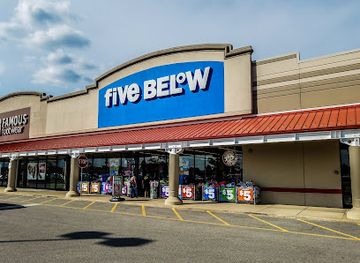
Five Below
Discover endless fun at Five Below, where everything is $5 or less! Shop unique gifts, trendy accessories, toys, and delicious snacks in a vibrant atmosphere.
20 min drive · 6.5 km from city centre
-
Sports card store
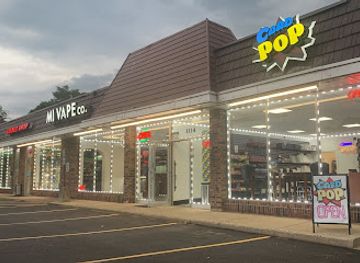
Card Pop USA
Explore Card Pop USA in Joliet, a sports card paradise offering a vast collection and a welcoming community for collectors of all levels.
10 min drive · 3.4 km from city centre
Get your free copy of our complete guide to Joliet, delivered straight to you.
Everything on this page, from attractions and restaurants to essentials and local phrases, in one PDF you can read offline, print or share.
Already have an account? Sign in
Your Joliet guide is ready.
We'll send it to · Not you? Sign out

Getting your guide ready…
We are putting together a fresh copy of the Joliet guide. This can take up to a minute.
This can take a few moments. If your browser asks, choose Allow so the download can start. You'll find the guide in your Downloads folder.
Nothing happened? Download it again
Sorry, the guide is taking longer than usual. Please try again in a minute, or get it by email instead.
Joliet essentials
Currency and Payment
Safety
Emergency Situations
Do's and Don'ts
Local Tips
From Eve
Local phrases worth knowing
You don't need to get them perfect. A few words go a long way, and locals appreciate the effort.
Basics
| English | Local | Say it |
|---|---|---|
| Hello | Hey | [hey] |
| Goodbye | See ya | [see ya] |
| Yes | Yep | [yep] |
| No | Nope | [nope] |
| Please/You're welcome | Please | [please] |
| Thank you | Thanks | [thanks] |
| Excuse me/Sorry | Excuse me | [excuse me] |
| How are you? | How's it going? | [hows it going] |
| Fine. And you? | Good. You? | [good you] |
| Do you speak English? | You speak English? | [you speak english] |
| I don't understand | I don't get it | [i dont get it] |
Eating & Drinking
| English | Local | Say it |
|---|---|---|
| I'd like to see the menu, please | Can I see the menu? | [can i see the menu] |
| I don't eat meat | I don't eat meat | [i dont eat meat] |
| Cheers! | Cheers! | [cheers] |
| I would like to pay, please | I'll pay now | [ill pay now] |
Emergencies
| English | Local | Say it |
|---|---|---|
| Help! | Help! | [help] |
| Go away! | Leave me alone! | [leave me alone] |
| Call the Police! | Call the Cops! | [call the cops] |
| Call a doctor! | Get a doctor! | [get a doctor] |
| I'm lost | I'm lost | [im lost] |
| I'm ill | I'm sick | [im sick] |
Shopping
| English | Local | Say it |
|---|---|---|
| I'd like to buy... | I wanna buy... | [i wanna buy] |
| I'm just looking | Just looking | [just looking] |
| How much is it? | How much? | [how much] |
| That's too expensive | Too pricey | [too pricey] |
| Can you lower the price? | Can you do a deal? | [can you do a deal] |
Time & Numbers
| English | Local | Say it |
|---|---|---|
| What time is it? | What's the time? | [whats the time] |
| It's one o'clock | It's one | [its one] |
| Half past (10) | Half ten | [half ten] |
| Morning | Morning | [morning] |
| Afternoon | Afternoon | [afternoon] |
| Evening | Evening | [evening] |
| Yesterday | Yesterday | [yesterday] |
| Today | Today | [today] |
| Tomorrow | Tomorrow | [tomorrow] |
| 1 | One | [one] |
| 2 | Two | [two] |
| 3 | Three | [three] |
| 4 | Four | [four] |
| 5 | Five | [five] |
| 6 | Six | [six] |
| 7 | Seven | [seven] |
| 8 | Eight | [eight] |
| 9 | Nine | [nine] |
| 10 | Ten | [ten] |
Transport & Directions
| English | Local | Say it |
|---|---|---|
| Where's a/the...? | Where's the...? | [wheres the] |
| What's the address? | What's the address? | [whats the address] |
| Can you show me (on the map)? | Can you point it out? | [can you point it out] |
| When's the next (bus)? | When's the next (bus)? | [whens the next bus] |
| A ticket (to ....) | One ticket (to ....) | [one ticket to] |
History of Joliet
Indigenous Land and Early Settlement
The area around present-day Joliet lies within the historic homeland of Indigenous peoples, including the Potawatomi, Miami and Illinois Confederation communities. The Des Plaines River valley provided a natural route through the landscape long before European settlement. In the early nineteenth century, French Canadian fur trader and interpreter Louis Jolliet's name became associated with the region, although the later city was not founded by him. American settlement expanded after Illinois achieved statehood, encouraged by river transport, fertile land and the prospect of improved connections between Lake Michigan and the Illinois River.
The Canal and the Founding of Joliet
Joliet was laid out in the 1830s as settlement accelerated along the Des Plaines River. Its growth was transformed by construction of the Illinois and Michigan Canal, which opened in 1848 and linked the Chicago River with the Illinois River, creating a navigable route between the Great Lakes and the Mississippi system. The canal brought labour, commerce and investment, while the developing town became an important stopping point between Chicago and the interior. Joliet was incorporated as a city in 1852, and its early prosperity was closely tied to transport, mills, warehouses and river trade.
Limestone, Railways and Urban Growth
The region's abundant limestone became one of Joliet's defining resources. Quarries supplied building stone for Chicago and other growing communities, while the arrival of railways strengthened the city's role as a distribution and manufacturing centre. Rail connections also encouraged population growth and linked Joliet to national markets. Many of the downtown buildings, churches and civic structures associated with the city’s nineteenth-century character date from this period of expansion. The canal eventually declined after the opening of the Chicago Sanitary and Ship Canal in 1900, but rail transport and industrial production continued to shape Joliet.
Steelmaking and Industrial Joliet
Industrial development reached a new scale when the Joliet Iron and Steel Works began production in the 1860s. The works later became part of the Illinois Steel Company and subsequently United States Steel, employing generations of workers and attracting migrants from Europe and elsewhere. Steelmaking influenced neighbourhoods, local politics, housing and civic life, making Joliet an important industrial city in the Chicago region. Production eventually ceased in the early 1980s as the American steel industry contracted. The Joliet Iron Works Historic Site now preserves foundations and industrial remnants, interpreting an era that had once dominated the city's economy.
Prisons, Civic Buildings and Cultural Life
Joliet also developed institutions that shaped its public identity. The Illinois State Penitentiary, now commonly called the Old Joliet Prison, opened in 1858 and operated for more than a century. Its Gothic Revival-style limestone complex became one of the city's most recognisable structures and later appeared in popular film and television. Elsewhere, civic investment produced grand public buildings and the Rialto Square Theatre, which opened in 1926 as a vaudeville and motion-picture palace. These places reflect the city's transition from a frontier-era settlement into an industrial municipality with a mature cultural and institutional life.
Route 66 and a Changing City
The establishment of U.S. Route 66 in 1926 connected Joliet to the new age of long-distance motoring and reinforced its position between Chicago and the American West. Roadside businesses, service stations and attractions became part of the local landscape, while the route later acquired a powerful place in American cultural memory. Deindustrialisation altered Joliet during the late twentieth century, but the city retained its transport significance and expanded as a regional centre. Historic preservation, museums, theatre, riverfront improvements and Route 66 interpretation now sit alongside contemporary suburban growth.
Joliet in Photos
Browse through our photo collection highlighting the charm and character of the destination.
Cities near Joliet
The closest cities to Joliet, if you have time for more than one stop.
-

-

-

-

-


Swipe for more cities
Explore more

Explore more of Illinois
Discover Illinois: From Chicago's iconic skyline to the tranquil beauty of its countryside, experience the diverse allure of the Prairie State.
Explore Illinois