

Sadar Bazaar (Jabalpur) Travel Guide - Free
Explore Sadar Bazaar in Jabalpur with Evendo's free guide. Find the best shops, historic streets, restaurants, and gems on web or mobile.


Sadar Bazaar, Jabalpur blends cantonment history, Christ Church, busy local markets, Indian street food and everyday shopping in central Madhya Pradesh.
A Market Shaped by the Cantonment
Sadar Bazaar occupies a distinctive place in Jabalpur: a long-established commercial quarter whose streets reflect the city's military, administrative and trading history. The name Sadar, commonly used in North Indian towns for a principal market or central bazaar, suits an area where everyday commerce has developed alongside the cantonment. Shops, eateries, offices and service businesses fill the main streets, while older institutional buildings and quieter residential lanes reveal a less hurried side of the district.Read more about Sadar Bazaar
Street Life and Local Shopping
Built Heritage and Everyday Jabalpur
Explore Sadar Bazaar on the map
A handpicked selection of must-see spots in Sadar Bazaar, mapped for you.
Best hotels in Sadar Bazaar
Sadar Bazaar essentials
Getting There
Getting Around
Safety
Emergency Situations
Do's and Don'ts
Local Tips

From Eve
Local phrases worth knowing
You don't need to get them perfect. A few words go a long way, and locals appreciate the effort.
Basics
| English | Local | Say it |
|---|---|---|
| Hello | नमस्ते | [Namaste] |
| Goodbye | अलविदा | [Alvida] |
| Yes | हाँ | [Haan] |
| No | नहीं | [Nahi] |
| Please/You're welcome | कृपया | [Kripya] |
| Thank you | धन्यवाद | [Dhanyavaad] |
| Excuse me/Sorry | माफ़ कीजिए | [Maaf kijiye] |
| How are you? | आप कैसे हैं? | [Aap kaise hain?] |
| Fine. And you? | ठीक हूँ। आप? | [Theek hoon. Aap?] |
| Do you speak English? | क्या आप अंग्रेज़ी बोलते हैं? | [Kya aap angrezi bolte hain?] |
| I don't understand | मुझे समझ में नहीं आया | [Mujhe samajh mein nahi aaya] |
Eating & Drinking
| English | Local | Say it |
|---|---|---|
| I'd like to see the menu, please | कृपया मेनू देखना चाहूँ | [Kripya menu dekhna chahoon] |
| I don't eat meat | मैं मांस नहीं खाता | [Main maans nahi khaata] |
| Cheers! | चियर्स! | [Cheers!] |
| I would like to pay, please | कृपया मैं भुगतान करना चाहूँ | [Kripya main bhugtan karna chahoon] |
Emergencies
| English | Local | Say it |
|---|---|---|
| Help! | मदद! | [Madad!] |
| Go away! | चले जाओ! | [Chale jao!] |
| Call the Police! | पुलिस को बुलाओ! | [Police ko bulao!] |
| Call a doctor! | डॉक्टर को बुलाओ! | [Doctor ko bulao!] |
| I'm lost | मैं खो गया हूँ | [Main kho gaya hoon] |
| I'm ill | मुझे बीमारी है | [Mujhe bimari hai] |
Shopping
| English | Local | Say it |
|---|---|---|
| I'd like to buy... | मैं खरीदना चाहूँ... | [Main khareedna chahoon...] |
| I'm just looking | मैं बस देख रहा हूँ | [Main bas dekh raha hoon] |
| How much is it? | यह कितने का है? | [Yeh kitne ka hai?] |
| That's too expensive | यह बहुत महंगा है | [Yeh bahut mehnga hai] |
| Can you lower the price? | क्या आप कीमत कम कर सकते हैं? | [Kya aap kimat kam kar sakte hain?] |
Time & Numbers
| English | Local | Say it |
|---|---|---|
| What time is it? | अब कितने बजे हैं? | [Ab kitne baje hain?] |
| It's one o'clock | एक बज रहे हैं | [Ek baj rahe hain] |
| Half past (10) | दस बजे आधा | [Das baje aadha] |
| Morning | सुबह | [Subah] |
| Afternoon | दोपहर | [Dopahar] |
| Evening | शाम | [Shaam] |
| Yesterday | कल | [Kal] |
| Today | आज | [Aaj] |
| Tomorrow | कल | [Kal] |
| 1 | एक | [Ek] |
| 2 | दो | [Do] |
| 3 | तीन | [Teen] |
| 4 | चार | [Char] |
| 5 | पाँच | [Paanch] |
| 6 | छह | [Chhah] |
| 7 | सात | [Saath] |
| 8 | आठ | [Aath] |
| 9 | नौ | [Nau] |
| 10 | दस | [Das] |
Transport & Directions
| English | Local | Say it |
|---|---|---|
| Where's a/the...? | ...कहाँ है? | [...kahan hai?] |
| What's the address? | पता क्या है? | [Pata kya hai?] |
| Can you show me (on the map)? | क्या आप मुझे दिखा सकते हैं (नक्शे पर)? | [Kya aap mujhe dikhha sakte hain (naksha par)?] |
| When's the next (bus)? | अगली (बस) कब है? | [Agli (bus) kab hai?] |
| A ticket (to ....) | एक टिकट (.... के लिए) | [Ek ticket (... ke liye)] |
History of Sadar Bazaar
An Early Nineteenth-Century Cantonment
Sadar Bazaar developed in association with Jabalpur’s cantonment, formed during the period when the British established a stronger military and administrative presence in the city in the early nineteenth century. Cantonments were planned as distinct settlements, with military land, institutional compounds, roads and housing arranged apart from older urban quarters. A market was needed to supply soldiers, officials, families and nearby residents, and Sadar gradually became the commercial face of this cantonment environment. Its continuing mixture of broad roads, compounds and retail streets reflects that original relationship between military infrastructure and civilian commerce.
Churches, Institutions and Civic Growth
As Jabalpur expanded under colonial administration, Sadar acquired religious and educational institutions alongside its shops and service businesses. Christ Church is an important reminder of this period, associated with the British and Anglo-Indian communities connected to the cantonment. The neighbourhood’s institutional landscape helped give it a more formal character than many traditional bazaar quarters, while roads linking Sadar with Civil Lines and other administrative areas encouraged movement and trade. The market therefore grew not as an isolated shopping street but as part of a wider settlement shaped by military, civic and social connections.
From Military Market to Urban Commercial Quarter
After Indian independence, the cantonment remained an important landholding and administrative presence, but Sadar’s commercial life increasingly served the wider population of Jabalpur. Retail expanded beyond military supply into clothing, food, household goods, personal services and small businesses used by surrounding neighbourhoods. The area’s older institutional identity did not disappear; instead, it became layered with post-independence urban growth. This transition explains Sadar’s present character, in which colonial-era planning and established churches coexist with crowded shopfronts, contemporary Indian brands and the practical rhythms of a busy city market.
Contemporary Sadar and Cantonment Identity
Today Sadar Bazaar is understood locally as both a market and part of the larger cantonment landscape. Its identity is shaped by the continuing presence of cantonment land and institutions, but also by intense everyday commercial activity and its proximity to Civil Lines, Wright Town and the central city. Redevelopment has brought new signage, traffic and modern retail into older streets without erasing the area’s historical layout. For visitors, the neighbourhood offers a useful glimpse of how Jabalpur’s military foundations, civic institutions and ordinary shopping life have remained interwoven.
Sadar Bazaar in Photos
Browse through our photo collection highlighting the charm and character of the destination.
Neighbourhoods near Sadar Bazaar
The closest neighbourhoods to Sadar Bazaar, if you have time for more than one stop.
-

-

-


Swipe for more neighbourhoods
Explore more
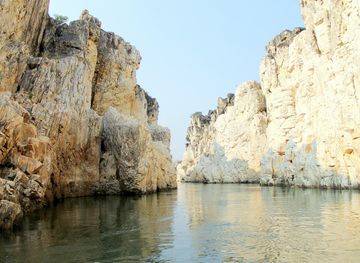
Explore more of Jabalpur
Jabalpur, India, pairs Gond heritage and Narmada landscapes with Marble Rocks, Dhuandhar Falls, forts, museums and lively local markets for visitors.
Explore Jabalpur