

Pink City (Jaipur) Travel Guide - Free
Explore Pink City in Jaipur with Evendo's free guide. Find the best shops, historic streets, restaurants, and gems on web or mobile.


Pink City Jaipur brings together walled-city history, royal palaces, Hawa Mahal, colourful bazaars, temples and craft traditions in Rajasthan, India.
A Planned Royal City
Pink City is the historic walled core of Jaipur, founded in 1727 by Maharaja Sawai Jai Singh II after the court moved from Amber. Its broad, geometrically arranged streets were planned according to principles of astronomy, trade and urban order, creating a markedly different character from the older hilltop capital beyond the city. Within the walls, monumental gateways lead into a dense town of courtyards, temples, palace buildings, workshops and bazaars, with the City Palace still occupying a central position.Read more about Pink City
Streets of Colour and Craft
Monuments Within the Walls
Best attractions in Pink City
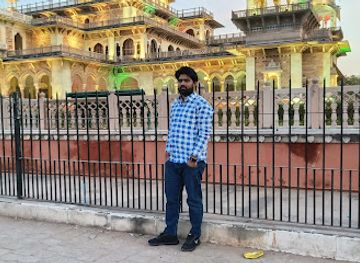
Pink City's principal attractions are concentrated within a walkable central area, beginning with the City Palace complex, whose courtyards, gateways and royal collections occupy a substantial part of the walled core. Directly opposite, Jantar Mantar preserves the monumental astronomical instruments commissioned by Sawai Jai Singh II, while Hawa Mahal offers the district's most recognisable façade and a view over the busy streets of Badi Chaupar and Johari Bazaar. Govind Dev Ji Temple introduces an active devotional dimension, with worship and ritual continuing within the palace precinct. The old gates, bazaars and chowks are attractions in their own right: Johari Bazaar is associated with jewellery, Tripolia Bazaar with metalware and household goods, and the streets around Chandpol with traditional craft activity. Visits are most rewarding when combined with unhurried walks through the planned grid rather than limited to the headline monuments.
-
Tourist attraction
Elefunenjoy| Elephant Sanctuary In Jaipur
Explore the Elefunenjoy Elephant Sanctuary in Jaipur, where responsible tourism meets unforgettable experiences with majestic elephants.
8 min drive · 2.7 km from neighbourhood centre
Best landmarks in Pink City
The City Palace is Pink City's defining architectural landmark, a layered complex of courtyards, gateways and palace buildings that expresses the continuing historical presence of Jaipur's ruling house. Nearby Jantar Mantar is significant not simply as a visitor attraction but as a rare monumental observatory whose large instruments embody Sawai Jai Singh II's interest in astronomical measurement. Hawa Mahal, built in 1799 during the reign of Sawai Pratap Singh, forms the public face of the palace quarter, with its perforated façade traditionally associated with royal women's observation of street life. The walled city's gates, including Ajmeri, Sanganeri, Chandpol and Surajpol, mark the planned perimeter, while Badi Chaupar and Chhoti Chaupar remain important urban spaces within it. Govind Dev Ji Temple adds a living religious landmark, linking the palace district to Jaipur's Vaishnav devotional traditions.
-
Monument
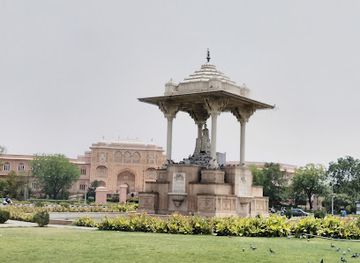
Sawai Jai Singh Ji Statue
Discover the grandeur of the Sawai Jai Singh Ji Statue, a historical landmark in Jaipur, celebrating the legacy of Rajasthan's visionary ruler.
6 min drive · 1.9 km from neighbourhood centre
Explore Pink City on the map
A handpicked selection of must-see spots in Pink City, mapped for you.
Best hotels in Pink City
Best restaurants in Pink City
Eating in Pink City ranges from established vegetarian dining rooms and sweet shops to snack stalls, tea counters and cafés serving visitors around Hawa Mahal and the City Palace. The market streets are particularly associated with Rajasthani and North Indian flavours, including kachori, samosa, ghevar, lassi and other sweets, though hygiene, spice levels and preparation methods vary from one vendor to another. Laxmi Misthan Bhandar, commonly known as LMB, is a long-established name on Johari Bazaar and is associated with vegetarian Rajasthani and North Indian fare. Smaller eateries around the bazaars provide practical breaks between monuments, while contemporary cafés tend to cluster around the most visited central streets. The neighbourhood's food culture is closely tied to its trading life: breakfast and snack businesses serve shopkeepers, temple visitors and shoppers as much as tourists, and the best-known dishes are often designed for quick eating rather than lengthy meals.
-
Family-friendly
Muhammadi Palace
Savor authentic Mughlai cuisine at Muhammadi Palace - where family-friendly dining meets royal flavors in Jaipur's Pink City.
8 min drive · 2.7 km from neighbourhood centre
-
Restaurant
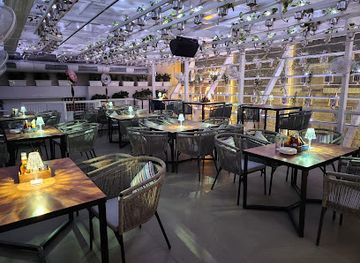
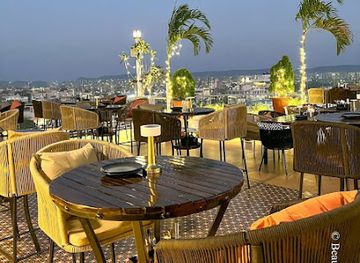
Dagla - The Rooftop Jaipur
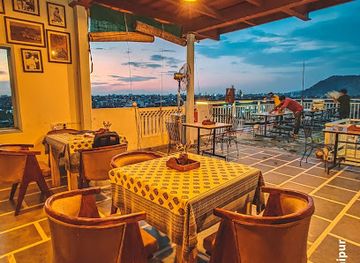
Experience Jaipur from above at Dagla - The Rooftop, where delicious cuisine meets breathtaking views in a vibrant atmosphere.
8 min drive · 2.6 km from neighbourhood centre
Best bars in Pink City
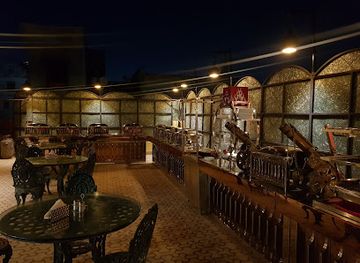
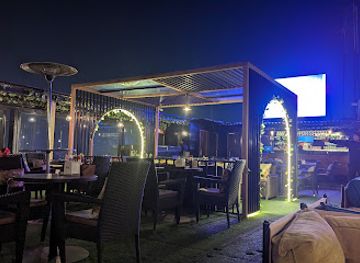
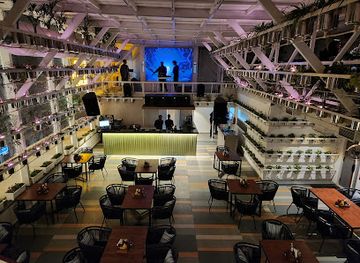
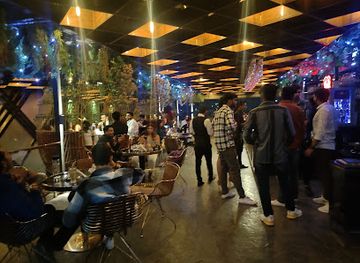
Pink City is not Jaipur's main late-night clubbing district, and the historic core generally becomes quieter than the city's newer hotel and entertainment areas after the principal bazaars close. Evening life is more visible through illuminated monuments, temple activity, café dining and restaurants around Hawa Mahal, City Palace and the central chowks than through a dense concentration of bars. Baradari, a contemporary dining and drinking venue within the City Palace precinct, represents the polished end of the neighbourhood's evening offer, while other licensed venues may operate inside hotels or restaurants rather than as independent nightlife destinations. Visitors seeking live music, larger bars or clubs may need to travel outside the walled city towards modern commercial districts. Night walks should stay on well-used streets, with transport arranged in advance if returning to accommodation beyond Pink City.
-
Lounge
The Night Jar Reloaded
Experience the Best of Jaipur's Nightlife at The Night Jar Reloaded: A Stylish Lounge and Restaurant Offering Exquisite Cuisine and Innovative Cocktails.
6 min drive · 2.1 km from neighbourhood centre
-
Cocktail bar
360° - Best cocktail bar & lounge| Panoramic Rooftop
Experience panoramic views and exquisite cocktails at 360°, Jaipur's premier rooftop lounge and cocktail bar, blending luxury with local flavors.
7 min drive · 2.2 km from neighbourhood centre
-
Bar
F Bar And Lounge
Experience Jaipur's upscale nightlife at F Bar And Lounge, where exquisite drinks and gourmet dining meet stunning city views.
6 min drive · 1.9 km from neighbourhood centre
-
Bar
DND Bar and Lounge
Discover the vibrant nightlife at DND Bar and Lounge in Jaipur, where great drinks meet stunning views and a lively atmosphere.
8 min drive · 2.6 km from neighbourhood centre
Best nightclubs in Pink City
Pink City is not Jaipur's main late-night clubbing district, and the historic core generally becomes quieter than the city's newer hotel and entertainment areas after the principal bazaars close. Evening life is more visible through illuminated monuments, temple activity, café dining and restaurants around Hawa Mahal, City Palace and the central chowks than through a dense concentration of bars. Baradari, a contemporary dining and drinking venue within the City Palace precinct, represents the polished end of the neighbourhood's evening offer, while other licensed venues may operate inside hotels or restaurants rather than as independent nightlife destinations. Visitors seeking live music, larger bars or clubs may need to travel outside the walled city towards modern commercial districts. Night walks should stay on well-used streets, with transport arranged in advance if returning to accommodation beyond Pink City.
-
Lounge
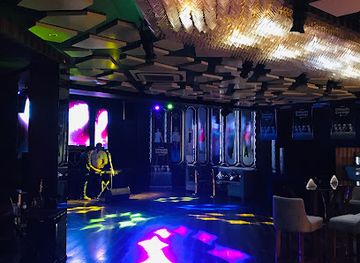
Blackout club in Jaipur
Discover the vibrant nightlife of Jaipur at Blackout Club, where exquisite dining meets a lively rooftop bar experience.
6 min drive · 1.9 km from neighbourhood centre
-
Lounge
The Night Jar Reloaded
Experience the vibrant nightlife of Jaipur at The Night Jar Reloaded, where luxury dining meets lively entertainment in an exquisite atmosphere.
6 min drive · 2.1 km from neighbourhood centre
-
Club
Roso Jaipur
Discover the pulse of Jaipur's nightlife at Roso Jaipur, a premier club with thrilling music, exquisite cocktails, and an electrifying atmosphere.
18 min walk · 1.5 km from neighbourhood centre
-
Night club
CLUB YARA
Discover the vibrant nightlife of Jaipur at Club Yara, where music, dancing, and socializing come together in an unforgettable experience.
6 min drive · 2.1 km from neighbourhood centre

Pink City essentials
Getting There
Getting Around
Safety
Emergency Situations
Do's and Don'ts
Local Tips

From Eve
Local phrases worth knowing
You don't need to get them perfect. A few words go a long way, and locals appreciate the effort.
Basics
| English | Local | Say it |
|---|---|---|
| Hello | नमस्ते | [Namaste] |
| Goodbye | अलविदा | [Alvida] |
| Yes | हां | [Haan] |
| No | नहीं | [Nahi] |
| Please/You're welcome | कृपया/स्वागत है | [Kripya/Swagat hai] |
| Thank you | धन्यवाद | [Dhanyavad] |
| Excuse me/Sorry | क्षमा करें/माफ़ कीजिए | [Kshama karein/Maaf kijiye] |
| How are you? | आप कैसे हैं? | [Aap kaise hain?] |
| Fine. And you? | ठीक हूँ। और आप? | [Theek hoon. Aur aap?] |
| Do you speak English? | क्या आप अंग्रेज़ी बोलते हैं? | [Kya aap angrezi bolte hain?] |
| I don't understand | मुझे समझ में नहीं आया | [Mujhe samajh mein nahi aaya] |
Eating & Drinking
| English | Local | Say it |
|---|---|---|
| I'd like to see the menu, please | कृपया मेन्यू दिखाएं | [Kripya menu dikhayein] |
| I don't eat meat | मैं मांस नहीं खाता | [Main maans nahi khaata] |
| Cheers! | चियर्स! | [Cheers!] |
| I would like to pay, please | कृपया मुझे भुगतान करने दें | [Kripya mujhe bhugtan karne dein] |
Emergencies
| English | Local | Say it |
|---|---|---|
| Help! | बचाओ! | [Bachao!] |
| Go away! | दूर हो जाओ! | [Door ho jao!] |
| Call the Police! | पुलिस को बुलाओ! | [Police ko bulao!] |
| Call a doctor! | डॉक्टर को बुलाओ! | [Doctor ko bulao!] |
| I'm lost | मैं खो गया/गई हूँ | [Main kho gaya/gayi hoon] |
| I'm ill | मुझे बीमारी है | [Mujhe bimari hai] |
Shopping
| English | Local | Say it |
|---|---|---|
| I'd like to buy... | मैं खरीदना चाहूँगा/चाहूँगी... | [Main khareedna chahunga/chahoongi...] |
| I'm just looking | मैं बस देख रहा/रही हूँ | [Main bas dekh raha/rahi hoon] |
| How much is it? | यह कितने का है? | [Yeh kitne ka hai?] |
| That's too expensive | यह बहुत महंगा है | [Yeh bahut mehnga hai] |
| Can you lower the price? | क्या आप कीमत कम कर सकते हैं? | [Kya aap keemat kam kar sakte hain?] |
Time & Numbers
| English | Local | Say it |
|---|---|---|
| What time is it? | अभी कितने बजे हैं? | [Abhi kitne baje hain?] |
| It's one o'clock | एक बजे हैं | [Ek baje hain] |
| Half past (10) | दस बजे के बाद है | [Das baje ke baad hai] |
| Morning | सुबह | [Subah] |
| Afternoon | दोपहर | [Dopahar] |
| Evening | शाम | [Shaam] |
| Yesterday | कल | [Kal] |
| Today | आज | [Aaj] |
| Tomorrow | कल | [Kal] |
| 1 | एक | [Ek] |
| 2 | दो | [Do] |
| 3 | तीन | [Teen] |
| 4 | चार | [Char] |
| 5 | पाँच | [Paanch] |
| 6 | छह | [Chhah] |
| 7 | सात | [Saath] |
| 8 | आठ | [Aath] |
| 9 | नौ | [Nau] |
| 10 | दस | [Das] |
Transport & Directions
| English | Local | Say it |
|---|---|---|
| Where's a/the...? | कहाँ है...? | [Kahan hai...?] |
| What's the address? | पता क्या है? | [Pata kya hai?] |
| Can you show me (on the map)? | क्या आप मुझे दिखा सकते हैं (नक्शे पर)? | [Kya aap mujhe dikha sakte hain (naksha par)?] |
| When's the next (bus)? | अगली (बस) कब है? | [Agli (bus) kab hai?] |
| A ticket (to ....) | एक टिकट (....के लिए) | [Ek ticket (....ke liye)] |
History of Pink City
Jaipur Founded in 1727
Pink City's history begins with Sawai Jai Singh II's decision to establish Jaipur in 1727, replacing the hill settlement of Amber as the principal seat of Kachhwaha power. The new city was laid out on the plain with unusually broad streets, regular blocks and nine rectangular sectors, often called chowkris, reflecting both practical planning and the ruler's interest in astronomy and urban theory. The enclosed settlement brought royal administration, merchants, artisans, religious institutions and military functions into a single, ordered centre. Its position on trade routes linking northern India with the region around Ajmer and Delhi helped the new capital develop as a commercial as well as political city.
Walls, Gates and Palace Institutions
During the eighteenth century, Jaipur's walls and gates defined the relationship between the royal compound and the increasingly busy town around it. The City Palace became the administrative and ceremonial heart, while Jantar Mantar expressed Jai Singh II's scientific ambitions through monumental astronomical instruments. Gates including Ajmeri, Sanganeri, Chandpol, Surajpol and the Tripolia gateway controlled movement through the enclosure, although Tripolia traditionally served the royal household more directly. Markets grew along the planned axes, with jewellers, metalworkers, textile traders and food sellers occupying specialised stretches that still influence the character of Johari Bazaar and neighbouring commercial streets.
The City Turns Pink
Jaipur's celebrated colour scheme is associated with the visit of Albert Edward, Prince of Wales, in 1876. The city was painted in a terracotta-pink shade regarded as hospitable, and the treatment was subsequently maintained through local regulation and civic custom. The colour spread across the principal façades inside the walls, giving the planned streets a visual unity that survives despite later alterations, signage and traffic. This period also reinforced Jaipur's public image as a princely capital connected to the British imperial ceremonial world, while its established communities of merchants and craftspeople continued to sustain everyday economic life within the enclosure.
Heritage City and Living Centre
After independence, Pink City remained a working commercial and residential district rather than becoming solely a museum quarter. Congestion, changing retail patterns, new infrastructure and pressure on historic buildings have altered parts of the streetscape, while conservation efforts have sought to protect the walled city's plan, façades and monuments. The Historic City of Jaipur was inscribed on the UNESCO World Heritage List in 2019, recognising the relationship between its planned urban form, architecture, markets, crafts and continuing social life. That designation does not freeze the neighbourhood in the past: temples, businesses, workshops and homes still occupy the historic fabric.
Pink City in Photos
Browse through our photo collection highlighting the charm and character of the destination.
Neighbourhoods near Pink City
The closest neighbourhoods to Pink City, if you have time for more than one stop.
-

-

-

-

-


Swipe for more neighbourhoods
Explore more

Explore more of Jaipur
Jaipur reveals Rajput heritage through rose-hued palaces, bazaars and living craft traditions, with Amber Fort and royal architecture defining sightseeing.
Explore Jaipur