

Assi Ghat (Varanasi) Travel Guide - Free
Explore Assi Ghat in Varanasi with Evendo's free guide. Find the best shops, historic streets, restaurants, and gems on web or mobile.


Assi Ghat in Varanasi brings sunrise by the Ganges, evening aarti, riverside walks, music, cafés and access to the city’s southern ghats and heritage.
Between River and City
At the southern end of Varanasi’s celebrated riverfront, Assi Ghat occupies the meeting point of the Ganges and the Assi stream, traditionally understood as one of the city’s five principal ghats. The neighbourhood around it is less formal than a mapped administrative district: it is a riverside quarter shaped by Assi Ghat, the lanes leading towards Lanka and the Banaras Hindu University area, and the adjoining ghats to the north. Its broad stone steps open towards one of the city’s most recognisable landscapes, where boats pass across the water and the rising sun illuminates the eastern bank.Read more about Assi Ghat
Morning Rituals and Everyday Life
A Southern Base for Exploring Varanasi
Best attractions in Assi Ghat
Assi Ghat itself is the neighbourhood’s principal attraction, with broad steps facing the Ganges and a changing panorama of boats, pilgrims, bathers and the distant eastern bank. Morning visits reveal yoga, devotional singing and river rituals, while the evening Ganga aarti brings lamps, chanting and a formal ceremony to the waterfront. From the ghat, visitors can walk north to Tulsi Ghat and onwards towards Shivala, passing shrines, riverside residences and smaller platforms that show the continuity of Varanasi’s sacred river edge. Boat trips provide a different view of the southern ghats and the palaces and temples lining the bank. The lanes behind Assi add a more contemporary layer, with cafés, tea stalls, small bookshops and cultural spaces frequented by students and visitors. The nearby Sankat Mochan Hanuman Temple and Banaras Hindu University are relevant southern Varanasi sights, but lie beyond the immediate ghat quarter.
-
Tourist attraction
Shri Satyanarayan Tulsi Manas Mandir
Explore the serene Shri Satyanarayan Tulsi Manas Mandir in Varanasi, a captivating Hindu temple with exquisite architecture and a tranquil atmosphere.
9 min walk · 0.7 km from neighbourhood centre
-
Tourist attraction
Chet Singh Ghat
Explore the spiritual and historical wonders of Chet Singh Ghat in Varanasi, a picturesque destination along the sacred Ganges River.
9 min walk · 0.7 km from neighbourhood centre
-
Tourist attraction
Tulsi Ghat
Explore Tulsi Ghat, a spiritual and historical gem along the Ganges River in Varanasi, where tradition and serenity meet.
3 min walk · 0.3 km from neighbourhood centre
-
Tourist attraction
Assi ghat main
Immerse yourself in the spiritual and cultural tapestry of Varanasi at Assi Ghat, where the sacred Ganges flows in harmony with life.
2 min walk · 0.1 km from neighbourhood centre


Best landmarks in Assi Ghat
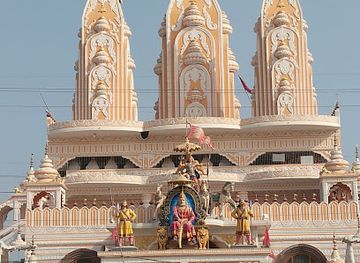
Assi Ghat is the defining physical landmark, its long flight of stone steps marking the southern meeting point of the sacred city and the Ganges. The ghat’s significance lies in its ritual use and its relationship with the Assi stream, even though the watercourse itself is far less visible than the river. Immediately north, Tulsi Ghat is associated with Tulsidas and retains religious and literary importance within the southern riverfront. The adjoining ghats around Shivala contain palace-like riverside buildings, temples and layered masonry that reflect centuries of patronage along the Ganges. Small shrines and temple entrances appear throughout the lanes behind the steps, linking domestic neighbourhood life with the river’s ceremonial edge. The wider built landscape is notable for its mixture of embankments, religious structures, residences and boat landings rather than for a single uniform architectural style.
-
Religious destination
Assi Ghat, Varanasi
Discover the spiritual and cultural essence of Varanasi at Assi Ghat, a vibrant destination for pilgrims and travelers alike.
1 min walk · 0.1 km from neighbourhood centre
-
Religious destination
Dashashwamedh Ghat
Experience the spiritual heart of Varanasi at Dashashwamedh Ghat, where rituals and the Ganges converge in a mesmerizing display of culture and devotion.
6 min drive · 2.1 km from neighbourhood centre
-
Religious destination
Chet Singh Ghat
Discover the spiritual heart of Varanasi at Chet Singh Ghat, a historical landmark by the Ganges River, rich in culture and tradition.
9 min walk · 0.7 km from neighbourhood centre
-
Religious destination
Tulsi Ghat
Experience the spiritual essence and rich culture at Tulsi Ghat, a serene destination by the Ganges in Varanasi, where history and devotion intertwine.
3 min walk · 0.3 km from neighbourhood centre


Explore Assi Ghat on the map
A handpicked selection of must-see spots in Assi Ghat, mapped for you.
Best hotels in Assi Ghat
Best restaurants in Assi Ghat
Dining around Assi Ghat combines simple north Indian meals, Banarasi snacks, tea, lassi and a sizeable café culture shaped by students, pilgrims and international visitors. The lanes behind the riverfront contain informal eateries and small restaurants serving vegetarian thalis, kachori, puri, samosa and other familiar local foods, while cafés tend to offer a broader mix of Indian and international dishes. Street food is part of the experience, but visitors should choose busy stalls with good food turnover and take sensible care with water and raw ingredients. Banarasi paan is strongly associated with the city and can be found in local shops, although its ingredients and preparation may be unfamiliar to first-time visitors. The dining scene is practical rather than formal, with the strongest appeal coming from its proximity to the river, late-morning tea culture and easy transition between a meal, a riverside walk and the evening ceremonies.
-
Pizza
Pizzeria Vaatika Cafe
Experience the vibrant flavors of Varanasi at Pizzeria Vaatika Cafe, where delicious pizzas meet cozy atmosphere and local charm.
2 min walk · 0.2 km from neighbourhood centre
-
Indian
Itihaas Alley Kitchen
Discover authentic Indian flavors at Itihaas Alley Kitchen in Varanasi - where every dish tells a story.
3 min walk · 0.3 km from neighbourhood centre
-
Restaurant
ROOT Restaurant and River Club
Discover culinary bliss at ROOT Restaurant and River Club, where exquisite flavors meet breathtaking views along the Ganges in Varanasi.
1 min walk · 0.1 km from neighbourhood centre
-
Restaurant
TeaQuila Cafe and Bistro
Discover the perfect blend of flavors at TeaQuila Cafe and Bistro in Varanasi - where every meal tells a story.
1 min walk · 0.1 km from neighbourhood centre


Best bars in Assi Ghat
Assi Ghat is not a conventional bar-and-nightclub district, and its evenings are shaped more by religious ceremony, conversation, music and cafés than by clubbing. The Ganga aarti provides the main organised spectacle after sunset, followed by informal gatherings in tea houses and small cafés around the lanes behind the ghat. Live classical music, devotional singing, poetry and cultural programmes may be encountered through local institutions or temporary events, but schedules and venues vary. Alcohol is not central to the public riverfront atmosphere, and visitors should not assume that drinking is appropriate near temples, bathing areas or ceremonies. The riverside becomes quieter away from the busiest café streets, though the steps remain a working sacred space rather than a late-night entertainment precinct. For a more extensive nightlife selection, visitors generally need to travel elsewhere in Varanasi.
-
Pizza
Pizzeria Vaatika Cafe
Experience the best of Varanasi with delicious pizzas, fresh pastries, and aromatic coffee at Pizzeria Vaatika Cafe.
2 min walk · 0.2 km from neighbourhood centre
-
Bar
Captain Nova - Bar & Lounge
Experience the vibrant nightlife of Varanasi at Captain Nova, where delicious cuisine meets electrifying music and a lively atmosphere.
13 min walk · 1.0 km from neighbourhood centre
-
Restaurant
TeaQuila Cafe and Bistro
Discover the serene ambiance and delicious cuisine at TeaQuila Cafe and Bistro, a must-visit gem near Assi Ghat in Varanasi.
1 min walk · 0.1 km from neighbourhood centre
-
Cafe
Aum Cafe
Experience the tranquility of Varanasi at Aum Cafe, where vegetarian delights and serene ambiance create a perfect getaway.
2 min walk · 0.2 km from neighbourhood centre


Best nightclubs in Assi Ghat
Assi Ghat is not a conventional bar-and-nightclub district, and its evenings are shaped more by religious ceremony, conversation, music and cafés than by clubbing. The Ganga aarti provides the main organised spectacle after sunset, followed by informal gatherings in tea houses and small cafés around the lanes behind the ghat. Live classical music, devotional singing, poetry and cultural programmes may be encountered through local institutions or temporary events, but schedules and venues vary. Alcohol is not central to the public riverfront atmosphere, and visitors should not assume that drinking is appropriate near temples, bathing areas or ceremonies. The riverside becomes quieter away from the busiest café streets, though the steps remain a working sacred space rather than a late-night entertainment precinct. For a more extensive nightlife selection, visitors generally need to travel elsewhere in Varanasi.
-
Bar
Captain Nova - Bar & Lounge
Dive into Varanasi's vibrant nightlife at Captain Nova - Bar & Lounge, where music, drinks, and a lively atmosphere create unforgettable moments.
13 min walk · 1.0 km from neighbourhood centre
-
Lounge
Club 65 The Restro & Bar
Experience the vibrant nightlife at Club 65, Varanasi's top lounge and bar, offering a unique blend of relaxation, great food, and lively atmosphere.
9 min walk · 0.7 km from neighbourhood centre
-
 Night club
ABCD BAR
Discover the vibrant nightlife at ABCD Bar in Varanasi - where unforgettable moments and electrifying vibes await you.
7 min drive · 2.3 km from neighbourhood centre
-
Night club
shooters club
Discover the electric atmosphere of Shooters Club in Varanasi, where vibrant music and lively crowds create an unforgettable nightlife experience.
11 min walk · 0.9 km from neighbourhood centre


Best shops in Assi Ghat
Shopping around Assi Ghat is modest and closely tied to daily life, pilgrimage and the needs of visitors rather than to a large formal retail district. Small stalls and shops sell flowers, lamps, incense, prayer items, rudraksha beads, devotional pictures and practical goods for river ceremonies. The lanes also contain tea shops, paan sellers, snack counters and independent businesses serving the student and residential population. Visitors may find Banarasi textiles and handicrafts in Varanasi’s broader markets, but Assi should not be presented as the city’s principal silk-shopping quarter; specialist textile shopping is more strongly associated with other parts of Varanasi. Bargaining may be possible in informal stalls, though it is best conducted politely and with an understanding that prices can vary according to material and workmanship. The area’s appeal lies in its small-scale, street-level commerce and the connection between retail, ritual and everyday neighbourhood use.
-
Saree Shop
The Shakuntla Sarees(C-O The Bed silk & pasmina)
Explore the exquisite craftsmanship of The Shakuntla Sarees in Varanasi, where every piece tells a story of tradition and artistry.
2 min walk · 0.1 km from neighbourhood centre
-
Clothing store
Fabindia, Bhadaini Ghat, Varanasi
Discover the essence of Indian craftsmanship at Fabindia in Varanasi, where tradition meets modern style in clothing and home decor.
7 min walk · 0.5 km from neighbourhood centre
-
Book store
Harmony The Book Shop
Explore a treasure trove of literature at Harmony The Book Shop, where Varanasi's literary spirit comes alive in a cozy, inviting atmosphere.
1 min walk · 0.1 km from neighbourhood centre
-
Craft store
Bala Ji Handicraft
Discover authentic Indian handicrafts at Bala Ji Handicraft in Varanasi - a haven for art lovers and souvenir seekers alike.
5 min walk · 0.4 km from neighbourhood centre


Assi Ghat essentials
Getting There
Getting Around
Safety
Emergency Situations
Do's and Don'ts
Local Tips

From Eve
Local phrases worth knowing
You don't need to get them perfect. A few words go a long way, and locals appreciate the effort.
Basics
| English | Local | Say it |
|---|---|---|
| Hello | नमस्ते | [namaste] |
| Goodbye | अलविदा | [alvida] |
| Yes | हाँ | [haan] |
| No | नहीं | [nahin] |
| Please/You're welcome | कृपया | [krupaya] |
| Thank you | धन्यवाद | [dhanyavad] |
| Excuse me/Sorry | क्षमा करें | [kshama karein] |
| How are you? | आप कैसे हैं? | [aap kaise hain?] |
| Fine. And you? | ठीक हूँ। आप? | [thik hun. aap?] |
| Do you speak English? | आप अंग्रेज़ी बोलते हैं? | [aap angrezi bolte hain?] |
| I don't understand | मुझे समझ नहीं आया | [mujhe samajh nahi aaya] |
Eating & Drinking
| English | Local | Say it |
|---|---|---|
| I'd like to see the menu, please | कृपया मेन्यू देखना चाहूँ | [krupaya menu dekhna chahoon] |
| I don't eat meat | मैं मांस नहीं खाता/खाती | [main maans nahi khata/khati] |
| Cheers! | चियर्स! | [cheers!] |
| I would like to pay, please | कृपया मैं भुगतान करना चाहूँ | [krupaya main bhugtan karna chahoon] |
Emergencies
| English | Local | Say it |
|---|---|---|
| Help! | बचाओ! | [bachao!] |
| Go away! | चले जाओ! | [chale jao!] |
| Call the Police! | पुलिस को बुलाओ! | [police ko bulao!] |
| Call a doctor! | डॉक्टर को बुलाओ! | [doctor ko bulao!] |
| I'm lost | मैं खो गया/गई हूँ | [main kho gaya/gayi hoon] |
| I'm ill | मुझे बीमारी है | [mujhe bimari hai] |
Shopping
| English | Local | Say it |
|---|---|---|
| I'd like to buy... | मैं ... खरीदना चाहूँ | [main ... khareedna chahoon] |
| I'm just looking | मैं सिर्फ देख रहा/रही हूँ | [main sirf dekh raha/rahi hoon] |
| How much is it? | यह कितना है? | [yah kitna hai?] |
| That's too expensive | यह बहुत महंगा है | [yah bahut mahanga hai] |
| Can you lower the price? | क्या आप कीमत कम कर सकते/सकती हैं? | [kya aap kimat kam kar sakte/sakti hain?] |
Time & Numbers
| English | Local | Say it |
|---|---|---|
| What time is it? | कितने बजे हैं? | [kitne baje hain?] |
| It's one o'clock | एक बजे हैं | [ek baje hain] |
| Half past (10) | दस बजे तक | [das baje tak] |
| Morning | सुबह | [subah] |
| Afternoon | दोपहर | [dopahar] |
| Evening | शाम | [shaam] |
| Yesterday | कल | [kal] |
| Today | आज | [aaj] |
| Tomorrow | कल | [kal] |
| 1 | एक | [ek] |
| 2 | दो | [do] |
| 3 | तीन | [teen] |
| 4 | चार | [char] |
| 5 | पाँच | [paanch] |
| 6 | छह | [chhe] |
| 7 | सात | [saat] |
| 8 | आठ | [aath] |
| 9 | नौ | [nau] |
| 10 | दस | [das] |
Transport & Directions
| English | Local | Say it |
|---|---|---|
| Where's a/the...? | कहाँ है ...? | [kahan hai ...?] |
| What's the address? | पता क्या है? | [pata kya hai?] |
| Can you show me (on the map)? | क्या आप मुझे दिखा सकते/सकती हैं (नक्शे पर)? | [kya aap mujhe dikha sakte/sakti hain (naksha par)?] |
| When's the next (bus)? | अगली (बस) कब है? | [agli (bus) kab hai?] |
| A ticket (to ....) | एक टिकट (... के लिए) | [ek ticket (... ke liye)] |
History of Assi Ghat
The Assi Stream and Sacred Geography
Assi Ghat takes its name from the Assi stream, traditionally identified as the southern boundary of the sacred city of Varanasi where it meets the Ganges. The stream is now much less prominent than the river, but its symbolic importance remains embedded in the name and ritual geography of the area. Assi is associated with the wider tradition of the Panchatirtha, the pilgrimage route linking five especially significant ghats. The ghat’s importance therefore comes not only from its river views but from its place within the religious mapping of Kashi, the ancient sacred name for Varanasi. Pilgrims and residents have long used the steps for bathing, prayer and offerings, while the southern riverfront also connected the city to settlements and routes beyond the old core.
Tulsidas and the Southern Ghats
The ghats south of Assi are closely connected with the memory of Goswami Tulsidas, the sixteenth-century poet traditionally associated with the composition of the Ramcharitmanas, a widely revered retelling of the Ramayana in Awadhi. Tulsi Ghat, immediately north of Assi, preserves this association through its name and religious institutions, while the broader southern riverfront developed as a zone of temples, monasteries and patron-sponsored ghats. These places were not isolated monuments: they formed part of a continuous ritual landscape in which recitation, devotional music, bathing and festival processions linked the river steps with the city’s neighbourhoods. Tulsidas’s legacy helped give the southern ghats a literary and devotional identity that still informs ceremonies and cultural memory.
Patronage and the Built Riverfront
Much of Varanasi’s visible riverfront took shape through the construction and rebuilding of ghats by rulers, aristocratic families, religious institutions and wealthy patrons, especially from the eighteenth and nineteenth centuries. Assi and its neighbouring ghats acquired masonry steps, shrines, residences and riverside platforms within this wider period of investment in the sacred city. The architecture is varied rather than uniform, combining stone embankments with temple compounds, palace-like buildings, domes and practical access points to the river. This patronage created the layered urban edge seen today, where public ritual spaces sit beside residential structures and institutions. The riverfront also supported boatmen, priests, traders, pilgrims and artisans whose work made the ghats functioning social spaces rather than purely monumental scenery.
A Modern Student and Cultural Quarter
In the modern period, Assi’s position near the southern approaches to Varanasi and the Banaras Hindu University area contributed to its reputation as a meeting place for students, artists, musicians, pilgrims and international visitors. Tea stalls, cafés, guesthouses and small businesses grew around the older religious landscape, giving the lanes behind the ghat a more informal and youthful character than some parts of the central riverfront. Cultural activity remains tied to Banaras traditions of music, Sanskrit learning, poetry and religious performance, although contemporary commerce and tourism have altered the area’s appearance and rhythms. The neighbourhood’s present identity is therefore a layered one: a sacred riverside edge, a working local environment and a popular base for experiencing Varanasi.
Assi Ghat in Photos
Browse through our photo collection highlighting the charm and character of the destination.
Neighbourhoods near Assi Ghat
The closest neighbourhoods to Assi Ghat, if you have time for more than one stop.
-

-

-


Swipe for more neighbourhoods
Explore more

Explore more of Varanasi
Varanasi, India’s ancient city on the Ganges, offers sacred ghats, temple traditions, classical music, living history and memorable cultural experiences.
Explore Varanasi