

Dashashwamedh Ghat (Varanasi) Travel Guide - Free
Explore Dashashwamedh Ghat in Varanasi with Evendo's free guide. Find the best shops, historic streets, restaurants, and gems on web or mobile.


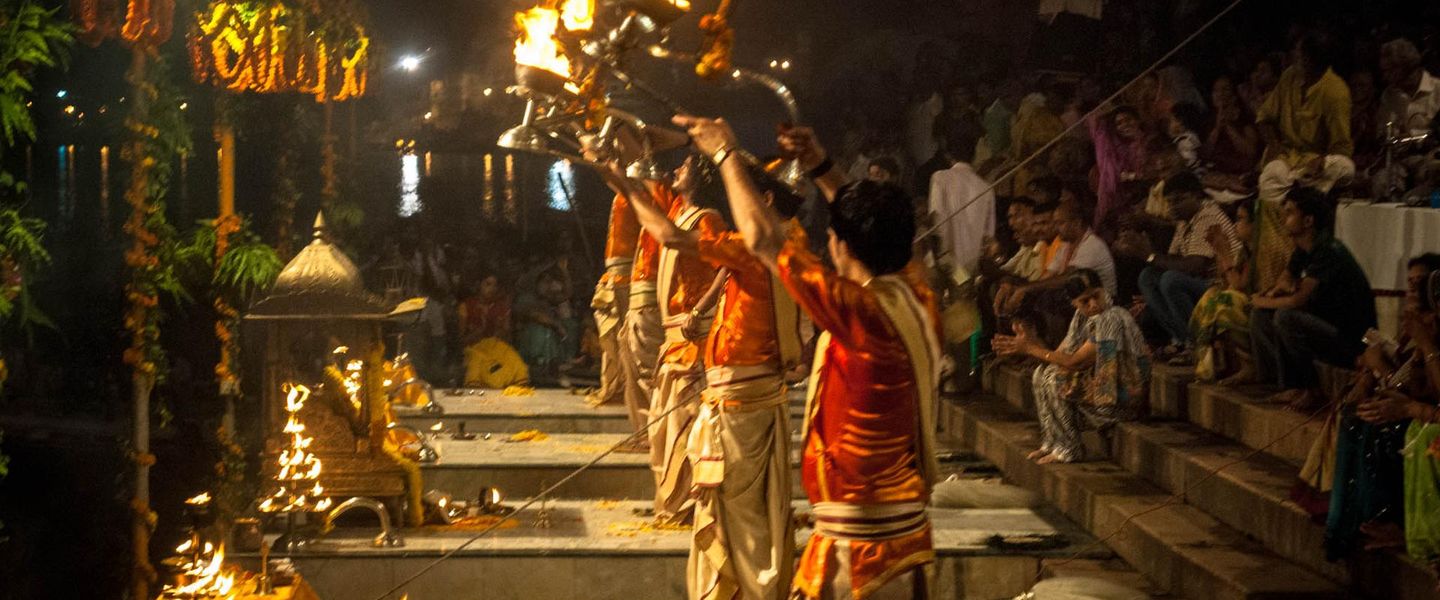


Dashashwamedh Ghat in Varanasi brings together Ganga Aarti, sunrise boat rides, sacred rituals, temple lanes and the living culture of the Ganges.
The Ganges at the Centre
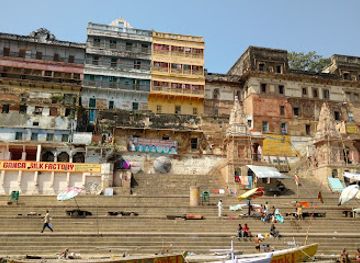
Dashashwamedh Ghat is one of Varanasi’s principal riverfront steps, descending into the Ganges at the centre of the old city. It is less a conventional neighbourhood than a concentrated public stage: pilgrims arrive for ritual bathing, priests conduct ceremonies, boatmen negotiate the water, flower sellers prepare offerings and visitors move through the surrounding lanes towards temples, markets and guesthouses. The ghat’s open stone terraces provide the clearest sense of how closely religious practice and ordinary urban life overlap in Varanasi.Read more about Dashashwamedh Ghat
Ghats, Lanes and Living Ritual
A Compact Historic Quarter
Best attractions in Dashashwamedh Ghat
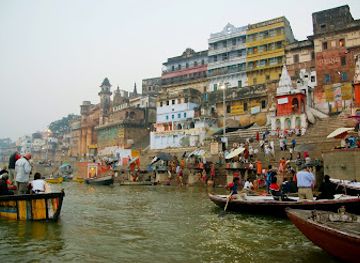
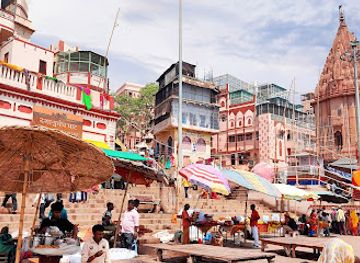
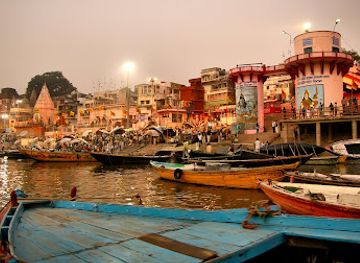
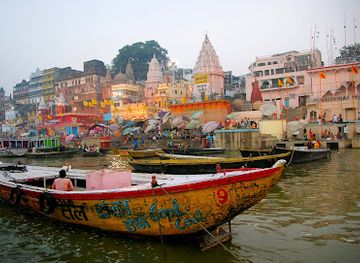
Dashashwamedh Ghat itself is the principal attraction, with wide stone steps opening onto the Ganges and providing a changing view of ritual bathing, prayer, boats and river traffic. Dawn brings a quieter, workaday atmosphere, while the evening Ganga Aarti fills the riverfront with lamps, incense, bells and chanting. A short walk inland leads through Vishwanath Gali and the lanes around the Kashi Vishwanath Temple precinct, although access to the temple is subject to its own security and visitor procedures. Along the river, nearby ghats can be explored on foot or from a boat, each with a different architectural and ritual character. Flower offerings, small shrines, riverside platforms and the constantly shifting relationship between water level and stone steps provide much of the visual interest. The area rewards slow observation more than a hurried checklist of sights.
-
Hindu temple
Dashashwamedh Ghat
Experience the spiritual essence of Varanasi at Dashashwamedh Ghat, where tradition, devotion, and breathtaking rituals come alive along the Ganges River.
1 min walk · 0.1 km from neighbourhood centre
-
Tourist attraction
Dr. Rajendra Prasad Ghat
Experience the tranquility and cultural richness of Dr. Rajendra Prasad Ghat in Varanasi, a must-visit destination on the banks of the Ganges.
1 min walk · 0.1 km from neighbourhood centre
-
Tourist attraction
Prayag Ghat
Experience spirituality and history at Prayag Ghat, a sacred riverside destination in Varanasi, where rituals and traditions come to life.
1 min walk · 0.1 km from neighbourhood centre
-
Hindu temple
Ahilyabai Ghat
Discover the spiritual heart of Varanasi at Ahilyabai Ghat, a historic riverside sanctuary filled with rituals, beauty, and profound cultural experiences.
1 min walk · 0.1 km from neighbourhood centre
Best landmarks in Dashashwamedh Ghat
Dashashwamedh Ghat’s principal landmark is its broad flight of stone steps descending to the Ganges, a riverfront structure repeatedly shaped by patronage, rebuilding and the practical demands of pilgrimage. The platforms used for Ganga Aarti have become recognisable features of the evening skyline, but the ghat’s significance also lies in its ordinary shrines, water access and continuing use by worshippers. Inland, the lanes towards the Kashi Vishwanath Temple area form part of one of Varanasi’s most important sacred precincts, though the temple itself should be treated as a nearby religious landmark with separate access arrangements. The surrounding old-city architecture is a mixture of temple fronts, merchant buildings, guesthouses, balconies and narrow passages rather than a single uniform style. Together, these elements show how river worship, urban commerce and pilgrimage have been physically interwoven.
-
Religious destination
Dashashwamedh Ghat
Experience the spiritual heart of Varanasi at Dashashwamedh Ghat, where vibrant rituals meet serene waters, creating an unforgettable cultural journey.
1 min walk · 0.1 km from neighbourhood centre
-
Historical landmark
Dr. Rajendra Prasad Ghat
Discover the tranquility and spiritual essence of Dr. Rajendra Prasad Ghat, a historical landmark along the sacred Ganges River in Varanasi.
1 min walk · 0.1 km from neighbourhood centre
-
Historical place
Prayag Ghat
Discover the spiritual heart of Varanasi at Prayag Ghat, a historical site where tradition meets breathtaking beauty along the sacred Ganges River.
1 min walk · 0.1 km from neighbourhood centre
-
Hindu temple
Ahilyabai Ghat
Experience the serene beauty and spiritual heart of Varanasi at Ahilyabai Ghat, a historic temple alongside the sacred Ganges River.
1 min walk · 0.1 km from neighbourhood centre
Explore Dashashwamedh Ghat on the map
A handpicked selection of must-see spots in Dashashwamedh Ghat, mapped for you.
Best hotels in Dashashwamedh Ghat
Best restaurants in Dashashwamedh Ghat
Eating around Dashashwamedh is closely tied to the old city’s pilgrimage traffic and dense bazaar lanes. Small vegetarian eateries, tea stalls, sweet shops and snack counters serve foods associated with North Indian and Banarasi tastes, including kachori, jalebi, lassi and savoury chaat, while rooftop cafés and simple restaurants around the approaches offer views towards the river or the busy lanes. The most concentrated choices are found around Godowlia, Vishwanath Gali and the adjoining market streets rather than on the ghat steps themselves. Menus and standards vary, so freshly prepared food from busy establishments is generally a practical choice, and visitors should check ingredients when dietary requirements are important. Meals here are often part of the wider pilgrimage streetscape: bells, flower sellers, temple queues and passing processions remain close to the dining room.
-
 Guest house
Shri Guest House & Roof Top Restaurant
Discover serene comfort at Shri Guest House & Roof Top Restaurant with stunning views and authentic local cuisine in vibrant Varanasi.
1 min walk · 0.1 km from neighbourhood centre
Best bars in Dashashwamedh Ghat
Dashashwamedh is not a conventional nightlife district, and alcohol is not the defining feature of its evenings. After dark, the ghat remains focused on Ganga Aarti, prayer, boat viewing and the movement of pilgrims through the old-city lanes. Tea stalls, lassi shops, sweet shops and modest rooftop cafés provide the more characteristic places to pause, while nearby market streets continue to trade after the ceremony. Visitors seeking bars or clubs should look elsewhere in Varanasi rather than expecting a concentrated scene around the riverfront. Evening crowds can be substantial, particularly near the aarti, and the atmosphere is devotional and public rather than oriented towards late-night entertainment. Respectful clothing, moderate noise and careful movement are appropriate around the steps and surrounding temples.
-
Guest house
Shri Guest House & Roof Top Restaurant
Experience Varanasi's charm at Shri Guest House & Roof Top Restaurant, where comfort meets breathtaking views of the Ganges.
1 min walk · 0.1 km from neighbourhood centre
Best shops in Dashashwamedh Ghat
Shopping around Dashashwamedh is concentrated in the lanes leading towards Godowlia and Vishwanath Gali, where religious commerce and everyday retail share narrow streets. Visitors encounter garlands, brass lamps, prayer items, rudraksha beads, incense, small images and offerings for temple and river rituals, alongside fabrics, sweets, snacks and household goods. Varanasi’s silk tradition is represented in the wider old-city market network, although shoppers should distinguish locally made textiles from generic souvenirs and ask clear questions about material and provenance. The ghat itself is not a conventional shopping street; its sellers are closely connected to ritual use of the river. Crowds, handcarts and temple-bound foot traffic make browsing a slow process, and respectful bargaining is more appropriate in independent stalls than in situations involving religious services or offerings.
-
General store
Ganesh Sahni
Explore Ganesh Sahni in Varanasi's stunning Ghats for unique local crafts and essentials amidst a rich cultural backdrop.
1 min walk · 0.1 km from neighbourhood centre
-
Boutique
Kripa Corner
Discover unique treasures and handcrafted souvenirs at Kripa Corner, a charming boutique in the heart of Varanasi's Ashutosh Market.
1 min walk · 0.1 km from neighbourhood centre
Dashashwamedh Ghat essentials
Getting There
Getting Around
Safety
Emergency Situations
Do's and Don'ts
Local Tips

From Eve
Local phrases worth knowing
You don't need to get them perfect. A few words go a long way, and locals appreciate the effort.
Basics
| English | Local | Say it |
|---|---|---|
| Hello | नमस्ते | [Namaste] |
| Goodbye | अलविदा | [Alvida] |
| Yes | हाँ | [Haan] |
| No | नहीं | [Nahi] |
| Please/You're welcome | कृपया | [Kripya] |
| Thank you | धन्यवाद | [Dhanyavaad] |
| Excuse me/Sorry | क्षमा कीजिए | [Kshama kiijiye] |
| How are you? | आप कैसे हैं? | [Aap kaise hain?] |
| Fine. And you? | ठीक हूँ। और आप? | [Theek hoon. Aur aap?] |
| Do you speak English? | क्या आप अंग्रेज़ी बोलते हैं? | [Kya aap angrezi bolte hain?] |
| I don't understand | मुझे समझ में नहीं आया | [Mujhe samajh mein nahi aaya] |
Eating & Drinking
| English | Local | Say it |
|---|---|---|
| I'd like to see the menu, please | कृपया मेन्यू दिखाइए | [Kripya menu dikhaiye] |
| I don't eat meat | मैं मांस नहीं खाता/खाती | [Main maans nahi khaata/khaati] |
| Cheers! | चियर्स! | [Cheers!] |
| I would like to pay, please | कृपया मैं भुगतान करना चाहूँ | [Kripya main bhugtaan karna chaahoon] |
Emergencies
| English | Local | Say it |
|---|---|---|
| Help! | बचाओ! | [Bachao!] |
| Go away! | चले जाओ! | [Chale jao!] |
| Call the Police! | पुलिस को बुलाओ! | [Police ko bulaao!] |
| Call a doctor! | डॉक्टर को बुलाओ! | [Doctor ko bulaao!] |
| I'm lost | मैं खो गया/गई हूँ | [Main kho gaya/gayi hoon] |
| I'm ill | मुझे बीमारी है | [Mujhe bimari hai] |
Shopping
| English | Local | Say it |
|---|---|---|
| I'd like to buy... | मैं खरीदना चाहूँगा/चाहूँगी... | [Main khareedna chaahunga/chaahoongi...] |
| I'm just looking | मैं बस देख रहा/रही हूँ | [Main bas dekh raha/rahi hoon] |
| How much is it? | यह कितने का है? | [Yeh kitne ka hai?] |
| That's too expensive | यह बहुत महंगा है | [Yeh bahut mehnga hai] |
| Can you lower the price? | क्या आप कीमत कम कर सकते हैं? | [Kya aap keemat kam kar sakte hain?] |
Time & Numbers
| English | Local | Say it |
|---|---|---|
| What time is it? | अभी कितने बजे हैं? | [Abhi kitne baje hain?] |
| It's one o'clock | एक बजे हैं | [Ek baje hain] |
| Half past (10) | दस बजे तक हो गया है | [Das baje tak ho gaya hai] |
| Morning | सुबह | [Subah] |
| Afternoon | दोपहर | [Dopahar] |
| Evening | शाम | [Shaam] |
| Yesterday | कल | [Kal] |
| Today | आज | [Aaj] |
| Tomorrow | कल | [Kal] |
| 1 | एक | [Ek] |
| 2 | दो | [Do] |
| 3 | तीन | [Teen] |
| 4 | चार | [Char] |
| 5 | पाँच | [Paanch] |
| 6 | छह | [Chhah] |
| 7 | सात | [Saath] |
| 8 | आठ | [Aath] |
| 9 | नौ | [Nau] |
| 10 | दस | [Das] |
Transport & Directions
| English | Local | Say it |
|---|---|---|
| Where's a/the...? | ...कहाँ है? | [...kahan hai?] |
| What's the address? | पता क्या है? | [Pata kya hai?] |
| Can you show me (on the map)? | क्या आप मुझे दिखा सकते हैं (नक्शे पर)? | [Kya aap mujhe dikha sakte hain (naksha par)?] |
| When's the next (bus)? | अगली (बस) कब है? | [Agli (bus) kab hai?] |
| A ticket (to ....) | एक टिकट (.... के लिए) | [Ek ticket (.... ke liye)] |
History of Dashashwamedh Ghat
A Ghat Shaped by Sacred Tradition
Dashashwamedh is traditionally linked with Brahma’s sacrifice of ten horses, a sacred origin story reflected in the name: dashashwamedh means roughly “ten horse sacrifices”. The historical development of the present riverfront is more complex than the legend, since the ghats were repeatedly rebuilt and endowed by rulers, nobles and religious patrons. Its position near the central pilgrimage and market quarter helped make it one of the principal points of access to the Ganges, joining river rituals with the dense urban life of Kashi, the ancient name associated with Varanasi.
Rebuilding the Riverfront
Much of the monumental appearance associated with Dashashwamedh Ghat emerged through the rebuilding and patronage of the eighteenth and nineteenth centuries, when regional rulers and wealthy Hindu patrons invested in Varanasi’s riverfront. Stone steps, platforms, shrines and riverside buildings replaced or consolidated earlier waterfront structures, making ritual access more durable during changing river levels. The ghat’s importance was reinforced by its proximity to the lanes leading towards the Vishwanath temple precinct and the commercial routes around Godowlia.
Pilgrimage and Urban Commerce
As Varanasi developed into a major pilgrimage centre under colonial-era conditions, Dashashwamedh Ghat remained closely connected to the city’s religious economy. Pilgrims, priests, boatmen, flower sellers, vendors and lodging houses formed an interdependent urban network around the steps and adjoining lanes. The riverfront was not an isolated monument but part of a working quarter in which ritual bathing, offerings, temple visits, trade and domestic life took place within a compact area. This mixture of sacred and commercial activity continues to define the ghat’s character.
The Contemporary Ceremonial Waterfront
In the modern era, Dashashwamedh Ghat has become particularly associated with the public evening Ganga Aarti, whose organised presentation draws large crowds while retaining its devotional purpose. Improved riverfront management, tourism and changing transport patterns have altered how visitors reach and experience the steps, but the ghat remains a place of daily worship rather than a preserved historic set. Its contemporary identity rests on the continuing use of the river, the surrounding pilgrimage lanes and the ceremonies that connect present-day Varanasi with older religious traditions.
Dashashwamedh Ghat in Photos
Browse through our photo collection highlighting the charm and character of the destination.
Neighbourhoods near Dashashwamedh Ghat
The closest neighbourhoods to Dashashwamedh Ghat, if you have time for more than one stop.
-

-

-


Swipe for more neighbourhoods
Explore more

Explore more of Varanasi
Varanasi, India’s ancient city on the Ganges, offers sacred ghats, temple traditions, classical music, living history and memorable cultural experiences.
Explore Varanasi