

Seminyak (Bali) Travel Guide - Free
Explore Seminyak in Bali with Evendo's free guide. Find the best shops, historic streets, restaurants, and gems on web or mobile.


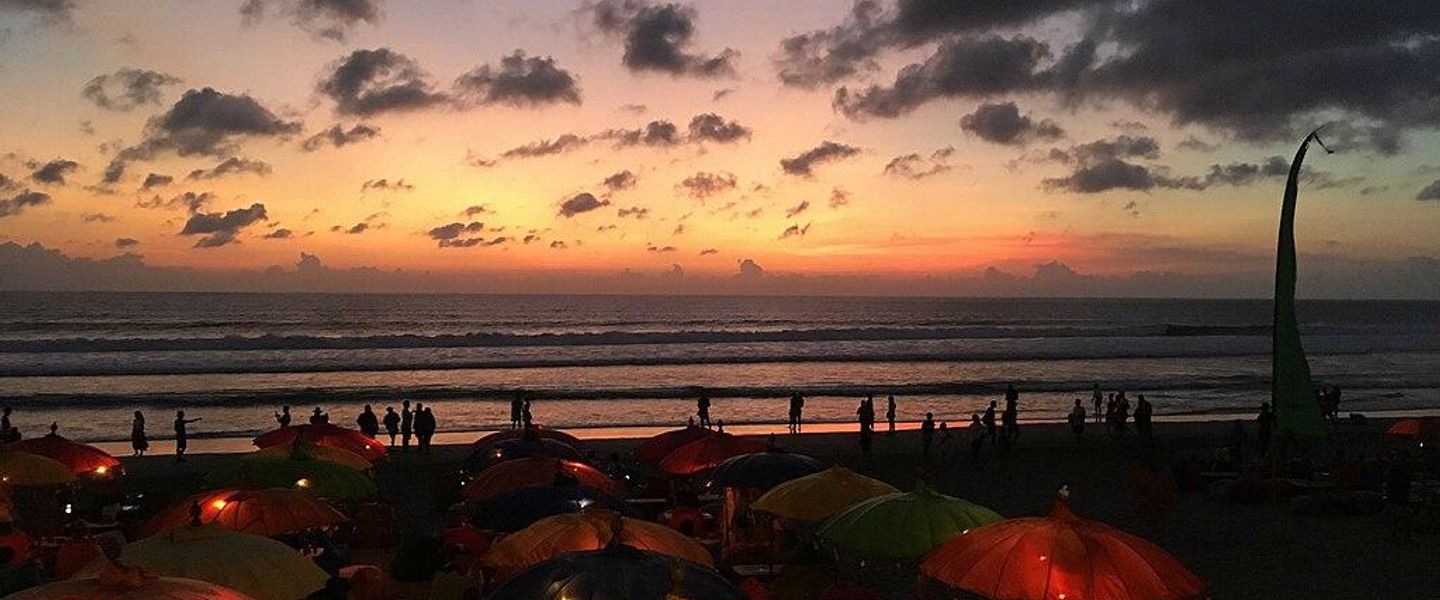


Seminyak, Bali blends Petitenget Temple, surf beaches, design boutiques, celebrated dining and sunset beach clubs with Balinese village life and culture.
Beachfront Character
Seminyak occupies a lively stretch of Bali’s south-west coast, north of Kuta and Legian, where broad beaches meet a network of busy lanes, rice-field remnants and temple compounds. Its identity is more layered than its reputation for sunset drinks suggests. Seminyak Beach and Double Six Beach attract surfers, walkers and sunset crowds, while Petitenget Beach has a more contemplative presence beside the old temple of the same name. Waves, ceremonial offerings and shifting light provide the area’s defining coastal rhythm.Read more about Seminyak
Streets, Style and Culture
Food and Evening Life
Best attractions in Seminyak
Seminyak’s principal attractions are concentrated along its beaches and cultural corridors rather than in a single museum precinct. Seminyak Beach and Double Six Beach offer broad sandy spaces for walking, watching surfers and experiencing the evening light, while Petitenget Beach provides access to the northern shoreline beside one of the area’s most significant temples. Petitenget Temple remains an active place of worship and should be visited with appropriate respect. Art enthusiasts can explore galleries such as Nyaman Gallery, known for contemporary Indonesian and international work, alongside smaller design and craft spaces scattered through the commercial lanes. Jalan Kayu Aya and Jalan Petitenget reward slow exploration, with carved gateways, boutique façades, cafés and glimpses of residential Bali between larger venues. The neighbourhood’s appeal lies in this contrast between public beachfront life, creative commerce and living religious landscapes.
-
Tourist attraction
The Flea Market
Discover unique treasures and immerse yourself in Balinese culture at The Flea Market in Seminyak, Bali's vibrant shopping hub.
15 min walk · 1.2 km from neighbourhood centre
-
Tourist attraction
Masceti Temple
Discover the spiritual heritage of Bali at Masceti Temple, a stunning Hindu sanctuary surrounded by lush landscapes and rich traditions.
5 min drive · 1.8 km from neighbourhood centre
-
Tourist attraction
Seminyak Beach
Unwind and explore the stunning Seminyak Beach in Bali, where luxury meets adventure amidst breathtaking sunsets and vibrant beach life.
11 min walk · 0.9 km from neighbourhood centre
-
Tourist attraction
Kayu Aya Beach
Experience tranquility and vibrant beach culture at Kayu Aya Beach in Seminyak, Bali - the perfect destination for sun, surf, and relaxation.
15 min walk · 1.2 km from neighbourhood centre


Best landmarks in Seminyak
Petitenget Temple is Seminyak’s most important historical and cultural landmark, an active Balinese Hindu temple whose ceremonial architecture and coastal setting connect the modern resort district with the area’s older religious landscape. Its compound should be treated as a place of worship rather than simply a sightseeing stop. The beaches themselves are also defining landmarks: Seminyak Beach, Double Six Beach and Petitenget Beach form a continuous coastal reference point, although each has a different surrounding atmosphere. Traditional gateways, roadside shrines and family compounds appear among the newer commercial buildings, offering a visual record of the neighbourhood’s transformation. The distinctive contemporary architecture of major beach clubs and hotels is less a heritage category than a marker of Seminyak’s commercial development, showing how the former village landscape has been adapted for international hospitality.
-
Restaurant
La Favela
Experience the vibrant nightlife and exquisite dining at La Favela in Seminyak, Bali, where lush decor meets an unforgettable atmosphere.
10 min walk · 0.8 km from neighbourhood centre
-
Shopping mall
Seminyak Square
Discover shopping, dining, and entertainment at Seminyak Square, a must-visit destination in Bali's vibrant Seminyak district.
15 min walk · 1.2 km from neighbourhood centre
-
Shopping mall
Seminyak Village
Explore Seminyak Village: A Shopping Paradise in Bali Offering Unique Crafts, Fashion, and Delicious Culinary Delights.
16 min walk · 1.2 km from neighbourhood centre
-
Tourist attraction
Pantai Double - Six
Discover the vibrant atmosphere and stunning sunsets at Pantai Double - Six, Bali's premier beach destination for relaxation and adventure.
11 min walk · 0.9 km from neighbourhood centre


Explore Seminyak on the map
A handpicked selection of must-see spots in Seminyak, mapped for you.
Best hotels in Seminyak
Best restaurants in Seminyak
Seminyak has one of Bali’s broadest dining concentrations, combining Indonesian cooking with restaurants shaped by Australian, European and wider Asian influences. Traditional warungs and long-established local restaurants sit alongside design-conscious dining rooms, bakeries, cafés and open-air kitchens on Jalan Kayu Aya, Jalan Petitenget and the lanes around Seminyak Beach. Balinese specialities, nasi campur, grilled seafood and sambal-based dishes can be found alongside vegetarian menus, international comfort food and contemporary interpretations of Indonesian ingredients. Recognisable establishments include Made’s Warung Seminyak, Bambu and the restaurants around Petitenget, while smaller cafés provide a more informal rhythm during the day. The scene ranges from casual counter meals to destination dining, but its character is best understood as a meeting point between local culinary traditions, long-term tourism and Bali’s strong culture of hospitality.
-
Italian
Ultimo Restaurant
Discover authentic Italian cuisine in the heart of Seminyak at Ultimo Restaurant – where flavor meets elegance.
11 min walk · 0.9 km from neighbourhood centre
-
Pan Asian
Chandi
Experience the best of Pan Asian cuisine at Chandi in Seminyak - where traditional Indonesian flavors meet modern dining elegance.
13 min walk · 1.1 km from neighbourhood centre
-
South East Asian
BATIK Restaurant Bar
Discover the vibrant tastes of South East Asia at BATIK Restaurant Bar in Seminyak, Bali – where every dish tells a story.
13 min walk · 1.0 km from neighbourhood centre
-
Restaurant
Bloom Neighbourhood Cafe Seminyak
Experience the essence of Bali at Bloom Neighbourhood Cafe in Seminyak - where fresh ingredients meet cozy ambiance.
5 min walk · 0.4 km from neighbourhood centre


Best bars in Seminyak
Seminyak becomes an evening district without losing all of its residential character. Sunset draws visitors towards Seminyak and Petitenget beaches, where beach clubs and open-air terraces combine drinks, music and ocean views; Potato Head in Petitenget and Ku De Ta near Seminyak Beach are established examples of the area’s large-scale nightlife venues. Inland, Jalan Kayu Aya and surrounding lanes offer cocktail bars, terraces, casual pubs and restaurants that stay active into the evening, while Motel Mexicola brings a pronounced music-and-dining atmosphere to the central area. The scale ranges from relaxed sunset drinks to late-night dancing, although venues and events change over time. Traffic, noise and queues are most noticeable around the main commercial roads, whereas side streets can become quiet soon after dinner service ends.
-
Bar
La Plancha
Discover La Plancha in Seminyak, Bali—a vibrant bar and café known for its colorful ambiance, exquisite cocktails, and stunning beachfront sunsets.
10 min walk · 0.8 km from neighbourhood centre
-
Bar
Woobar
Experience the vibrant nightlife and breathtaking views at Woobar, Seminyak's premier beachfront bar and event venue in Bali.
7 min drive · 2.3 km from neighbourhood centre
-
Bar
Red Carpet Champagne Bar
Experience the ultimate luxury and nightlife at Red Carpet Champagne Bar in Seminyak, Bali – where exquisite drinks and vibrant ambiance meet.
10 min walk · 0.8 km from neighbourhood centre
-
Pub
The Orchard Bar & Restaurant
Experience the vibrant atmosphere of The Orchard Bar & Restaurant in Seminyak, where delicious food, refreshing drinks, and live music come together for an unforgettable evening.
10 min walk · 0.8 km from neighbourhood centre


Best nightclubs in Seminyak
Seminyak becomes an evening district without losing all of its residential character. Sunset draws visitors towards Seminyak and Petitenget beaches, where beach clubs and open-air terraces combine drinks, music and ocean views; Potato Head in Petitenget and Ku De Ta near Seminyak Beach are established examples of the area’s large-scale nightlife venues. Inland, Jalan Kayu Aya and surrounding lanes offer cocktail bars, terraces, casual pubs and restaurants that stay active into the evening, while Motel Mexicola brings a pronounced music-and-dining atmosphere to the central area. The scale ranges from relaxed sunset drinks to late-night dancing, although venues and events change over time. Traffic, noise and queues are most noticeable around the main commercial roads, whereas side streets can become quiet soon after dinner service ends.
-
Night club
Red Carpet Champagne Bar
Discover the lively atmosphere of Red Carpet Champagne Bar in Seminyak, Bali, where exquisite champagne meets a vibrant nightlife experience.
10 min walk · 0.8 km from neighbourhood centre
-
Night club
Mirror Lounge & Club
Immerse yourself in the dazzling nightlife of Bali at Mirror Lounge & Club, where world-class DJs and stunning design create unforgettable memories.
6 min drive · 1.9 km from neighbourhood centre
-
Night club
Red Ruby
Discover the electrifying atmosphere of Red Ruby, a premier night club in Seminyak, Bali, where music, dance, and unforgettable memories await.
6 min drive · 1.9 km from neighbourhood centre
-
Night club
Jenja Club Kuta
Dive into Bali's nightlife at Jenja Club Kuta, where world-class DJs and an electrifying atmosphere await every party enthusiast.
12 min walk · 1.0 km from neighbourhood centre


Best shops in Seminyak
Shopping in Seminyak centres on independent fashion, jewellery, homeware, art and craft rather than a single traditional market. Jalan Kayu Aya, Jalan Raya Seminyak and Jalan Petitenget contain boutiques and concept-led stores where visitors find resort clothing, woven accessories, decorative objects, contemporary Balinese design and locally made gifts. Smaller galleries and craft-focused businesses are interspersed with cafés, spas and restaurants, making the main streets suited to browsing rather than a rapid shopping trip. The neighbourhood also has numerous souvenir outlets, but its stronger retail identity comes from the mix of Indonesian labels, international resort style and design influenced by Bali’s materials and visual traditions. Stock, ownership and opening arrangements change frequently, so visitors should treat Seminyak as a collection of streets and small businesses rather than a fixed shopping centre.
-
Boutique
BIASA+
Explore BIASA+ in Seminyak, Bali, where fashion meets art in a stunning boutique and gallery experience.
4 min walk · 0.4 km from neighbourhood centre
-
Boutique
De Awani Embroidery Bags & Coffee Seminyak Bali
Explore the artistry of Bali at De Awani Embroidery Bags & Coffee in Seminyak—where craftsmanship meets coffee culture in a vibrant boutique setting.
4 min walk · 0.4 km from neighbourhood centre
-
Gift shop
Toko Emporium
Explore Toko Emporium in Seminyak, Bali for unique gifts and authentic souvenirs that celebrate the island's vibrant culture.
11 min walk · 0.9 km from neighbourhood centre
-
Women's clothing store
Lemongrass Bali Boutique
Discover the essence of Bali fashion at Lemongrass Bali Boutique, where style meets local craftsmanship in the heart of Seminyak.
15 min walk · 1.2 km from neighbourhood centre


Seminyak essentials
Getting There
Getting Around
Safety
Emergency Situations
Do's and Don'ts
Local Tips

From Eve
Local phrases worth knowing
You don't need to get them perfect. A few words go a long way, and locals appreciate the effort.
Basics
| English | Local | Say it |
|---|---|---|
| Hello | Halo | [ha-lo] |
| Goodbye | Selamat tinggal | [se-la-mat ting-gal] |
| Yes | Ya | [ya] |
| No | Tidak | [tee-dak] |
| Please/You're welcome | Silakan | [si-la-kan] |
| Thank you | Terima kasih | [te-ri-ma ka-sih] |
| Excuse me/Sorry | Maaf | [ma-af] |
| How are you? | Apa kabar? | [a-pa ka-bar] |
| Fine. And you? | Baik. Bagaimana denganmu? | [ba-ik. ba-gai-ma-na den-gan-mu] |
| Do you speak English? | Apakah kamu bisa berbicara bahasa Inggris? | [a-pa-ka kamu bi-sa ber-bi-ca-ra ba-ha-sa ing-gris] |
| I don't understand | Saya tidak mengerti | [sa-ya tee-dak men-ger-tee] |
Eating & Drinking
| English | Local | Say it |
|---|---|---|
| I'd like to see the menu, please | Saya ingin melihat menu, tolong | [sa-ya in-gin me-li-hat me-nu, to-long] |
| I don't eat meat | Saya tidak makan daging | [sa-ya tee-dak ma-kan da-ging] |
| Cheers! | Selamat minum! | [se-la-mat mi-num] |
| I would like to pay, please | Saya ingin membayar, tolong | [sa-ya in-gin mem-ba-yar, to-long] |
Emergencies
| English | Local | Say it |
|---|---|---|
| Help! | Tolong! | [to-long] |
| Go away! | Pergi! | [per-gi] |
| Call the Police! | Panggil polisi! | [pang-gil po-li-si] |
| Call a doctor! | Panggil dokter! | [pang-gil dok-ter] |
| I'm lost | Saya tersesat | [sa-ya ter-se-sat] |
| I'm ill | Saya sakit | [sa-ya sa-kit] |
Shopping
| English | Local | Say it |
|---|---|---|
| I'd like to buy... | Saya ingin membeli... | [sa-ya in-gin mem-be-li] |
| I'm just looking | Saya hanya melihat-lihat | [sa-ya hun-ya me-li-hat-li-hat] |
| How much is it? | Berapa harganya? | [be-ra-pa har-ga-nya] |
| That's too expensive | Itu terlalu mahal | [i-tu ter-la-lu ma-hal] |
| Can you lower the price? | Bisa kurangi harganya? | [bi-sa kur-an-gi har-ga-nya] |
Time & Numbers
| English | Local | Say it |
|---|---|---|
| What time is it? | Jam berapa sekarang? | [jam be-ra-pa se-ka-rang] |
| It's one o'clock | Sekarang pukul satu | [se-ka-rang pu-kul sa-tu] |
| Half past (10) | Setengah (sepuluh) | [se-ten-gah (se-pu-luh)] |
| Morning | Pagi | [pa-gi] |
| Afternoon | Sore | [so-re] |
| Evening | Malam | [ma-lam] |
| Yesterday | Kemarin | [ke-ma-rin] |
| Today | Hari ini | [ha-ri i-ni] |
| Tomorrow | Besok | [be-sok] |
| 1 | Satu | [sa-tu] |
| 2 | Dua | [du-a] |
| 3 | Tiga | [ti-ga] |
| 4 | Empat | [em-pat] |
| 5 | Lima | [li-ma] |
| 6 | Enam | [e-nam] |
| 7 | Tujuh | [tu-juh] |
| 8 | Delapan | [de-la-pan] |
| 9 | Sembilan | [sem-bi-lan] |
| 10 | Sepuluh | [se-pu-luh] |
Transport & Directions
| English | Local | Say it |
|---|---|---|
| Where's a/the...? | Dimana ada/ada... | [di-ma-na a-da/a-da] |
| What's the address? | Berapa alamatnya? | [be-ra-pa a-la-mat-nya] |
| Can you show me (on the map)? | Bisa tunjukkan ke saya (di peta)? | [bi-sa tun-juk-kan ke sa-ya (di pe-ta)] |
| When's the next (bus)? | Kapan bus berikutnya? | [ka-pan bus be-ri-kut-nya] |
| A ticket (to ....) | Sebuah tiket (ke ....) | [se-bu-ah ti-ket (ke ....)] |
History of Seminyak
Agricultural Lands and Coastal Shrines
Before large-scale tourism, the Seminyak area formed part of the settled coastal landscape of southern Bali, with agriculture, palms, village compounds and access to the sea shaping everyday life. Its history is closely linked to nearby traditional communities and to temples serving local residents. Petitenget Temple, also known as Pura Petitenget, remains the clearest visible reminder of this older cultural landscape. The temple’s name and traditions are connected with the wider sacred and historical geography of the Petitenget coast, where religious practice existed long before the arrival of hotels and international visitors.
Tourism Moves North from Kuta
Seminyak’s major transformation began as tourism expanded northwards from Kuta and Legian during the late twentieth century. Roads improved, agricultural plots gave way to villas, restaurants and small hotels, and the coastline became part of Bali’s growing visitor economy. Unlike a planned resort district, Seminyak developed incrementally around existing village roads and compounds. This produced the mixed streetscape still visible today: dense commercial corridors sit beside shrines, family homes, narrow lanes and traces of former fields. The area gradually became associated with design, dining and a more upmarket form of coastal tourism.
A Creative and Hospitality District
From the 1990s onwards, Seminyak attracted interior designers, fashion retailers, restaurateurs, galleries and villa developers, helping establish a creative and hospitality identity distinct from Kuta’s earlier package-tourism profile. Jalan Kayu Aya and Petitenget became particularly important commercial corridors, while the beach supported a growing evening economy. This development brought employment and investment but also rising land values, traffic pressure and rapid alteration of the built environment. The neighbourhood’s contemporary character therefore reflects both commercial reinvention and the persistence of Balinese religious, familial and ceremonial life.
Contemporary Seminyak
Seminyak now forms part of the densely developed south-western tourism belt of Bali, with its local identity shaped by international travel, Indonesian enterprise and continuing village institutions. The 2002 Bali bombings and later tourism disruptions affected the wider southern resort economy, including Seminyak, demonstrating how closely the neighbourhood is tied to the island’s visitor trade. Subsequent growth brought larger hospitality venues, beach clubs and expanded dining, while concerns about congestion, waste, water use and cultural continuity became increasingly visible. Temples, offerings and community ceremonies remain integral to the area rather than historical remnants detached from daily life.
Seminyak in Photos
Browse through our photo collection highlighting the charm and character of the destination.
Neighbourhoods near Seminyak
The closest neighbourhoods to Seminyak, if you have time for more than one stop.
-

-

-

-

-


Swipe for more neighbourhoods
Explore more

Explore more of Bali
Discover Bali, the Island of Gods, where stunning beaches, vibrant culture, and lush landscapes create a tropical paradise for every traveler.
Explore Bali