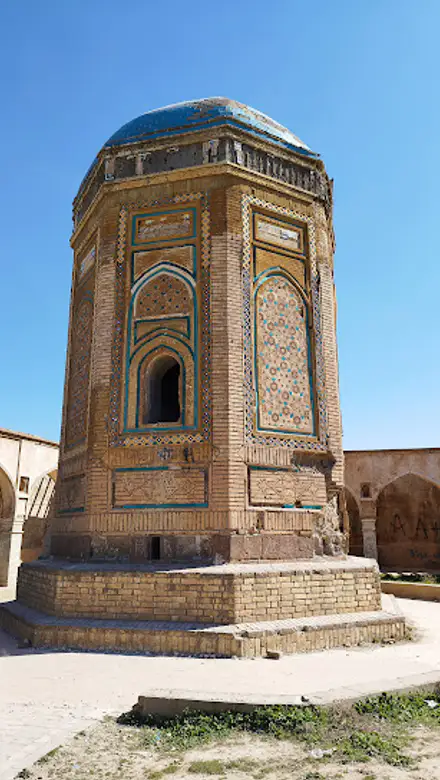
Kirkuk Citadel Travel Guide
Free Guide: Explore the ancient Kirkuk Citadel, a historic fortress in Iraq with millennia of stories etched in its walls and a tentative UNESCO World Heritage Site.


A brief summary of Kirkuk Citadel
Explore the ancient Kirkuk Citadel, a historic fortress in Iraq with millennia of stories etched in its walls and a tentative UNESCO World Heritage Site.
The Kirkuk Citadel, located in the heart of Kirkuk, Iraq, is considered the oldest part of the city. Rising 40 meters (130 ft) above the surrounding landscape, this ancient structure stands as a testament to the region's rich history, dating back to at least the 9th century BCE.
Opening hours
- Every dayOpen 24 hours
Opening hours as listed on the venue’s Google Business Profile. Hours can change for services and special events, so check with the venue before you go.
- Address
- F99V+FX9, Kirkuk, Kirkuk Governorate, 36001
Getting there
Walking
Taxi
Discover more about Kirkuk Citadel
Overview
Kirkuk Citadel, a prominent historical landmark in Kirkuk, Iraq, has been a silent witness to the ebb and flow of civilizations for millennia. Situated on a 40-meter-high artificial mound near the Khasa River, the citadel's origins are debated, with some historians attributing its construction to the Gutian people around 3,500 years ago, while others claim it was built by the Assyrian king Ashurnasirpal II between 884 and 858 BCE.Throughout its history, the citadel has served as a military stronghold, a royal residence, and a melting pot of cultures. King Seleucus I Nicator fortified it with 72 towers, and the Ottomans later left their mark on its walls. The citadel has been home to diverse ethnic groups, including Kurds, Turkmen, Assyrians, and Arabs, each contributing to its unique cultural fabric. Historical accounts mention visits by Timur in 1393 during his military expedition.Within the citadel's walls lie several significant structures, including the Great Mosque (possibly known as the Mosque of Virgin Mary), the Green Dome, the Prophet Daniel Mosque (believed to contain his tomb), the Al-Aryan Mosque, the Al-Qaysariyah Market, and the Chaldean Church. These religious sites hold importance for both Muslims and Christians, serving as places of pilgrimage and worship. The citadel has four main entrances, including the Stone Door and Bab al-Toub.In recent times, the Kirkuk Citadel has faced challenges, including damage from conflicts and neglect. In the late 1990s, Saddam Hussein launched a campaign to "beautify" the citadel, resulting in the forced removal of many Kurdish and Turkoman residents and the destruction of numerous houses. However, efforts are underway to restore the citadel and preserve its cultural heritage. In April 2021, the 42.5-hectare citadel site was added to the tentative list of UNESCO World Heritage Sites.
Evendo Review Centre
 Google
Guest reviews
Explore Kirkuk Citadel on the map
A handpicked selection of must-see spots near Kirkuk Citadel, mapped for you.
Get your free copy of our complete guide to Kirkuk Citadel, delivered straight to you.
Everything on this page, from opening hours and how to get there to Eve’s tips and the best time to go, in one PDF you can read offline, print or share.
Already have an account? Sign in
Your Kirkuk Citadel guide is ready.
We'll send it to · Not you? Sign out

Getting your guide ready…
We are putting together a fresh copy of the Kirkuk Citadel guide. This can take up to a minute.
This can take a few moments. If your browser asks, choose Allow so the download can start. You'll find the guide in your Downloads folder.
Nothing happened? Download it again
Sorry, the guide is taking longer than usual. Please try again in a minute, or get it by email instead.
Other nearby places you may find interesting
The closest places of the same kind, if this one is not quite what you had in mind.
-
-
-
-
-


Swipe for more places
More to explore near Kirkuk Citadel

 Best experiences near Kirkuk Citadel
 Best hotels near Kirkuk Citadel
 Best landmarks near Kirkuk Citadel
 Best attractions near Kirkuk Citadel
 Best shops near Kirkuk Citadel
 Best restaurants near Kirkuk Citadel
 Best bars near Kirkuk Citadel
Do you manage this location?
Take control to get all the benefits, like improved information, better appearance, and stronger visibility across AI-powered discovery.
Explore more
Explore more of Babel
Explore the ancient wonders and rich history of Babel, Iraq, where the remnants of the Mesopotamian Empire stand as a testament to human civilization's early achievements.
Explore Babel
Explore more of Iraq
Explore the cradle of civilization in Iraq, where ancient history, rich culture, and diverse landscapes create an unforgettable travel experience.
Explore Iraq