

Victory Arch Travel Guide
Free Guide: Discover the Victory Arch in Baghdad, a monumental symbol of Iraq's resilience and a poignant reminder of its rich, complex history.


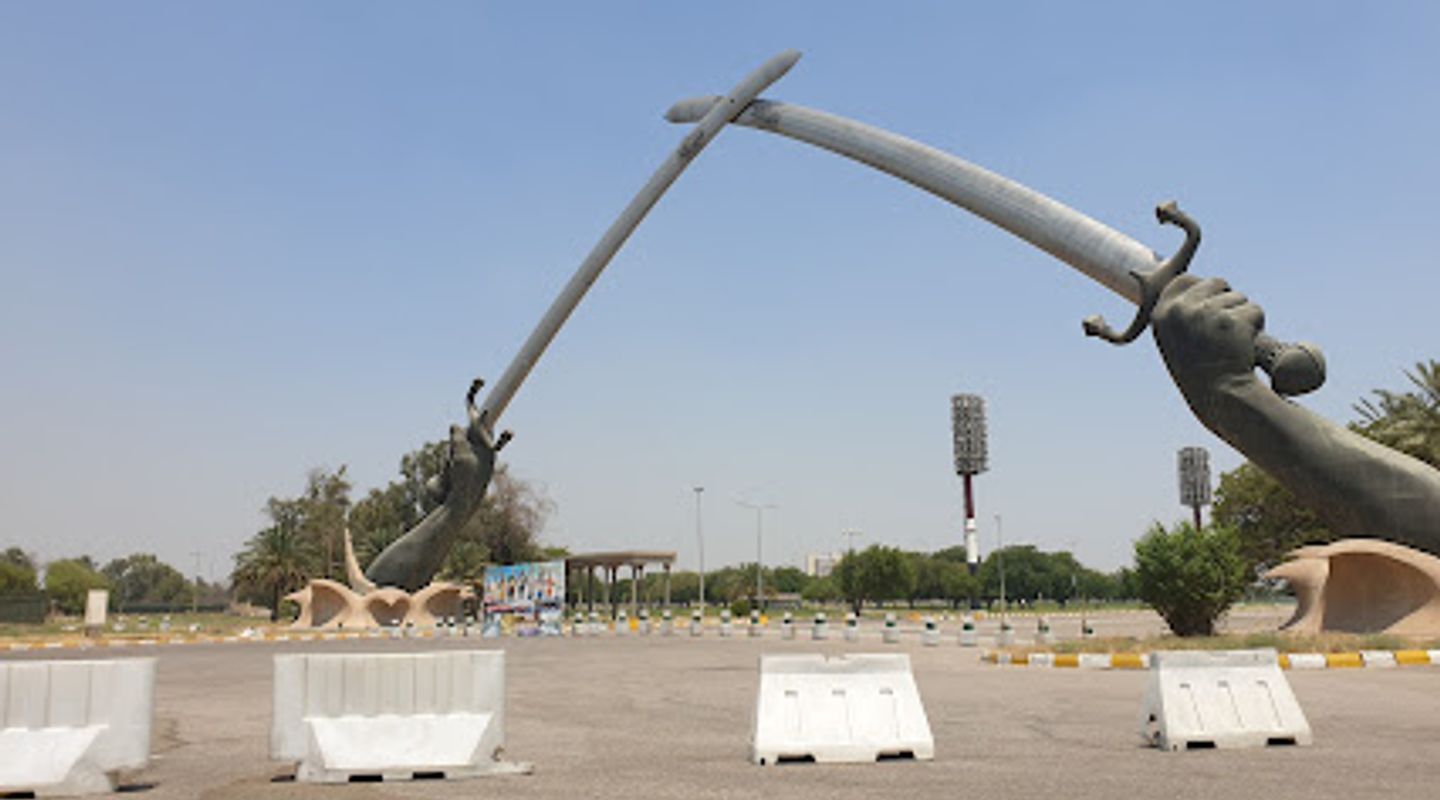
A brief summary of Victory Arch
Discover the Victory Arch in Baghdad, a monumental symbol of Iraq's resilience and a poignant reminder of its rich, complex history.
The Victory Arch, also known as the Swords of Qādisiyyah, is a striking monument in Baghdad commemorating the Iran-Iraq War. Consisting of two massive hands holding crossed swords, it serves as a reminder of Iraq's strength and resilience, though it remains a controversial symbol.
Opening hours
- Every dayOpen 24 hours
Opening hours as listed on the venue’s Google Business Profile. Hours can change for services and special events, so check with the venue before you go.
- Address
- 894P+4H4, Baghdad, Baghdad Governorate
Getting there
Taxi
Public Transport
Discover more about Victory Arch
Overview
The Victory Arch, officially known as the Swords of Qādisiyyah (Qaws al-Naṣr), stands as a powerful, if controversial, landmark in the heart of Baghdad. Popularly called the Hands of Victory or the Crossed Swords, the monument consists of two arches, each formed by a pair of outstretched hands holding 43-meter-long swords. These arches mark the entrances to the Grand Festivities Square, a parade ground constructed to commemorate Iraq's involvement in the Iran-Iraq War.Commissioned by Saddam Hussein, the Victory Arch was designed by Iraqi sculptor Adil Kamil and constructed between 1986 and 1989. The monument is laden with symbolism, referencing the Battle of al-Qādisiyyah in 636 AD, a pivotal moment in the Muslim conquest of Persia. Saddam Hussein aimed to draw a parallel between this ancient victory and the contemporary conflict with Iran. The hands are said to be modeled after Saddam Hussein's own, further cementing the monument's connection to his regime.For visitors, the Victory Arch offers a unique glimpse into Iraq's complex history. While the monument initially presented a triumphalist narrative related to the Iran-Iraq war, it has evolved to represent the Iraqis who have fallen in any war throughout the country's history. Today, it stands as a testament to the resilience and strength of the Iraqi people, inviting reflection on the nation's past and present.
Evendo Review Centre
 Google
Guest reviews
Explore Victory Arch on the map
A handpicked selection of must-see spots near Victory Arch, mapped for you.
Get your free copy of our complete guide to Victory Arch, delivered straight to you.
Everything on this page, from opening hours and how to get there to Eve’s tips and the best time to go, in one PDF you can read offline, print or share.
Already have an account? Sign in
Your Victory Arch guide is ready.
We'll send it to · Not you? Sign out

Getting your guide ready…
We are putting together a fresh copy of the Victory Arch guide. This can take up to a minute.
This can take a few moments. If your browser asks, choose Allow so the download can start. You'll find the guide in your Downloads folder.
Nothing happened? Download it again
Sorry, the guide is taking longer than usual. Please try again in a minute, or get it by email instead.
Other nearby places you may find interesting
The closest places of the same kind, if this one is not quite what you had in mind.
-
-
-
-
-


Swipe for more places
More to explore near Victory Arch

 Best experiences near Victory Arch
 Best hotels near Victory Arch
 Best landmarks near Victory Arch
 Best attractions near Victory Arch
 Best shops near Victory Arch
 Best restaurants near Victory Arch
 Best bars near Victory Arch
Do you manage this location?
Take control to get all the benefits, like improved information, better appearance, and stronger visibility across AI-powered discovery.
Explore more
Explore more of Tigris Region
Discover the Tigris Region in Iraq: A timeless journey through ancient ruins, vibrant cities, and rich cultural landscapes along the historic Tigris River.
Explore Tigris Region
Explore more of Iraq
Explore the cradle of civilization in Iraq, where ancient history, rich culture, and diverse landscapes create an unforgettable travel experience.
Explore Iraq
