
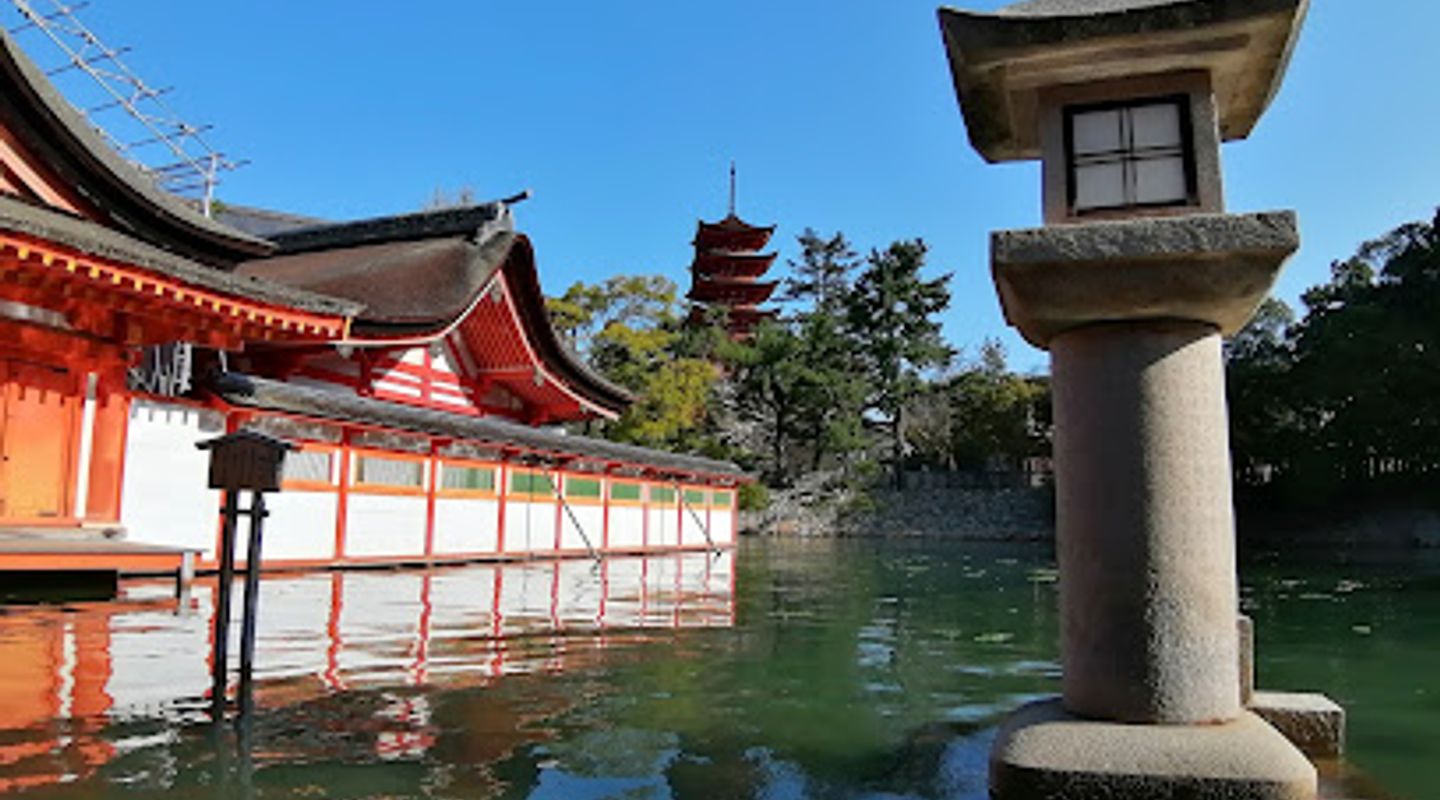
Itsukushima Jinja, Kai Travel Guide
Discover the serene beauty of Itsukushima Shrine, a floating marvel and UNESCO World Heritage site on the sacred island of Miyajima.
Itsukushima Shrine, a UNESCO World Heritage site on Miyajima Island, is famed for its iconic 'floating' torii gate and exquisite Shinto architecture. Built over water, the shrine seems to float at high tide, offering a mesmerizing blend of natural beauty and spiritual significance that has attracted pilgrims and visitors for centuries.
A brief summary to Itsukushima Jinja
- 1-1 Miyajimacho, Hatsukaichi, Miyajimacho, Hiroshima, 739-0588, JP
- Click to display
- Click to display
- Monday 6:30 am-6 pm
- Tuesday 6:30 am-6 pm
- Wednesday 6:30 am-6 pm
- Thursday 6:30 am-6 pm
- Friday 6:30 am-6 pm
- Saturday 6:30 am-6 pm
- Sunday 6:30 am-6 pm

Know before you go
Hi, I'm Eve. Here are a few practical things to know before exploring Itsukushima Jinja.
- Check the tide tables before visiting to see the iconic torii gate 'floating' at high tide or walk up to it during low tide.
- Arrive early in the morning or stay overnight to avoid the crowds and experience the tranquil atmosphere of Miyajima Island.
- Take a cruise around the bay for a unique perspective of the shrine and torii gate from the water.
- Try local specialties like oysters and conger eel rice (anago meshi) at the Omotesando shopping street.
- Be aware of the wild deer roaming freely on the island, and avoid feeding them.
Do you manage this location?
Take control to get all the benefits, like improved information, better appearance, and stronger visibility across AI-powered discovery. Learn more about listing your business on Evendo
Activate your presenceOther nearby places you may find interesting
The closest places of the same kind, if this one is not quite what you had in mind.

Explore Itsukushima Jinja on the Map
A handpicked selection of must-see spots near Itsukushima Jinja, mapped for you.
Unlock the Best of Itsukushima Jinja
Buy tickets
-
No tickets available
Book tours with entry


Getting There
-
Public Transport
To reach Itsukushima Shrine, start by taking a train to Miyajimaguchi Station from Hiroshima Station. The JR Sanyo Line is the most convenient, with a 25-minute ride costing ¥420. From Miyajimaguchi Station, walk a few minutes to the Miyajimaguchi Ferry Terminal. Both JR West Miyajima Ferry and Miyajima Matsudai Kisen operate ferries to Miyajima Island, with a 10-minute journey costing ¥200 one way. A round trip is ¥400. Don't forget the ¥100 visitor tax, usually included in the ticket price. Upon arrival at Miyajima Ferry Terminal, Itsukushima Shrine is a 15-minute walk along the coast.
-
Walking
From the Miyajima Ferry Terminal, exit and turn right to follow the main coastal path. The walk to Itsukushima Shrine is approximately 15 minutes. Enjoy the scenic views of the Seto Inland Sea and the surrounding mountains as you stroll along the paved path. You'll pass shops and restaurants lining the way. The iconic 'floating' torii gate will become visible in the distance, guiding you towards the shrine. There are no additional costs for this segment, as it's a straightforward and pleasant walk.
Discover more about Itsukushima Jinja













Your all‑in‑one travel companion app
Explore expert travel guides, compare and book tours, experiences, hotels, and more—all from the palm of your hand. Download now for seamless trip planning wherever your wanderlust takes you.


Explore More of Kai
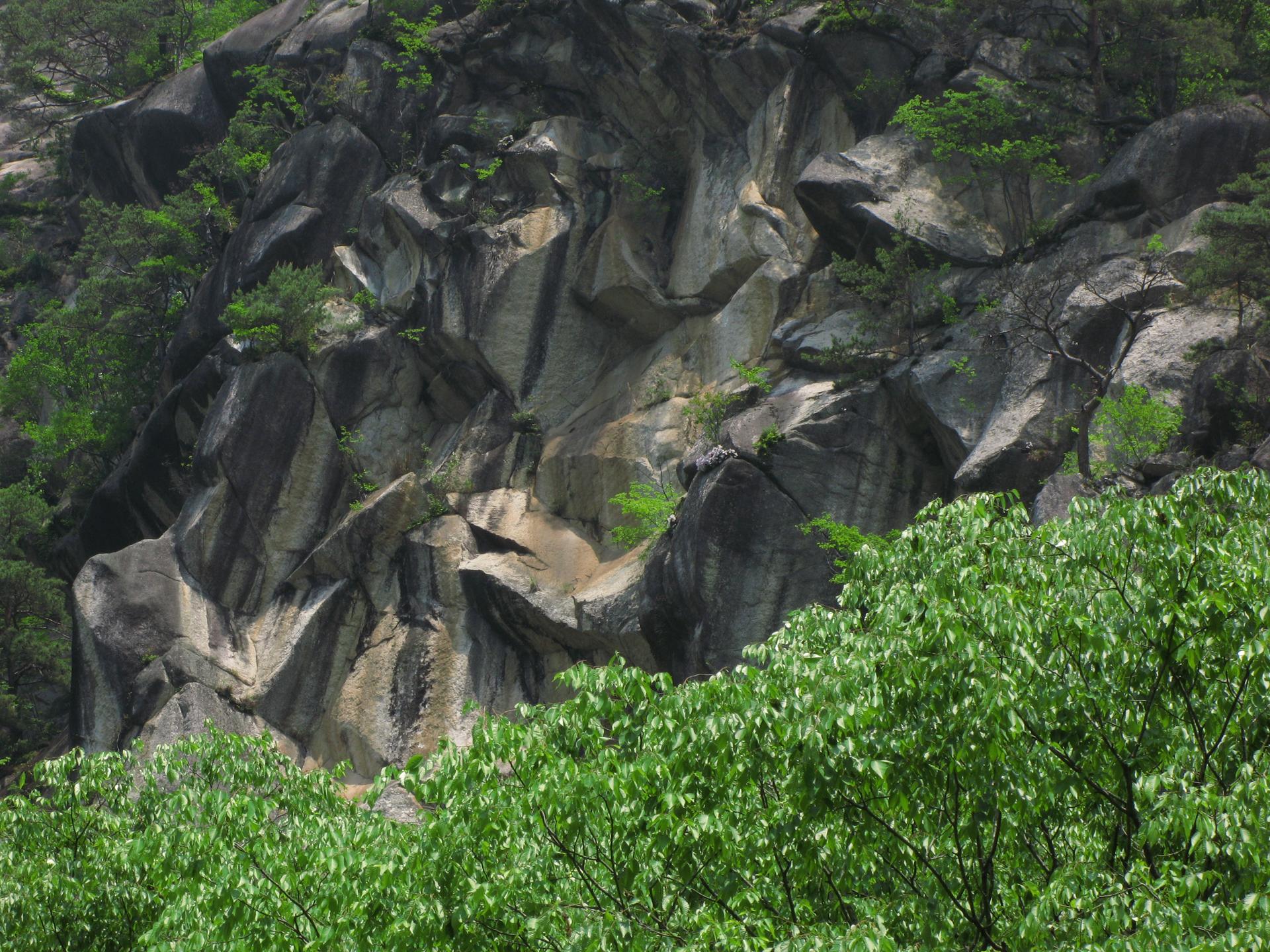
Looking beyond Itsukushima Jinja? Discover Kai for broader travel guides, local hot-spots, and regional highlights.
Explore Kai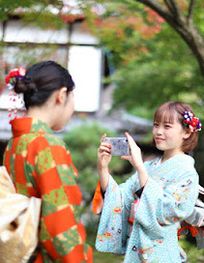
Experience the serene beauty of Japan's tea culture at Okeiko Japan in Miyajima, where tradition meets tranquility in a stunning natural setting.
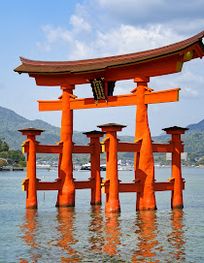
Discover the iconic 'floating' shrine of Itsukushima, a UNESCO World Heritage site on the sacred island of Miyajima.
